
If your stomach drops when someone says “exam day,” it’s usually not the German that scares you. It’s the uncertainty.
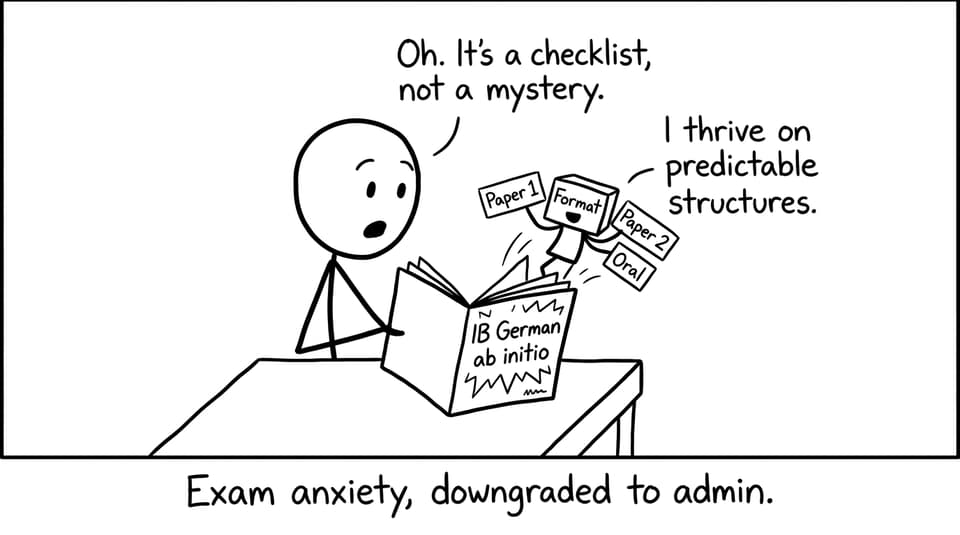
The fastest way to calm that uncertainty is to make the exam predictable. And the IB has already done that for you: the IB German ab initio assessment is a clear three-part structure that rewards simple, accurate communication.
This 2025 guide walks you through the IB German ab initio exam format (Paper 1, Paper 2, and the Individual Oral) and shows how to train for it like an IB Language B student who wants results, not stress.
IB German ab initio exam format (2025) at a glance
Here’s the checklist you want taped to your wall:
-
Paper 1: Writing (25%)
-
1 hour
-
One task, 200-250 words
-
-
Paper 2: Receptive skills (50%)
-
1 hour 45 minutes
-
Reading comprehension + Listening comprehension
-
-
Individual Oral (25%)
-
Teacher-conducted and recorded
-
15 minutes prep with a visual stimulus
-
4-6 minutes speaking
-
If you want a home base you can return to while revising, start with IB German ab initio Resources.
Paper 1 (Writing): what IB Language B German ab initio tests
Paper 1 is the “can you communicate clearly under pressure?” test. In IB Language B, marks are rarely about being fancy. They’re about being understandable, organised, and appropriate.
What you do in Paper 1
-
Write one text of 200-250 words
-
Use a required format such as: email, blog post, article, diary entry
-
Match the audience, purpose, and register (formal vs informal)
On RevisionDojo, you can practice text-type structure and exam expectations using IB German ab initio Essays, Reports & Proposals notes and then drill it with targeted practice.
Paper 1 habits that move marks fast
-
Plan in German, but keep it simple: 3 body points is enough.
-
Choose accuracy over ambition: clean present tense beats broken complex sentences.
-
Use connectors like tools, not decoration: zuerst, dann, danach, schließlich, weil, aber.
If you want a broader writing mindset for IB Language B, keep this open: How to Avoid Common Mistakes in Language B Writing.
Paper 2 (Reading and Listening): how to score without understanding “everything”
Paper 2 is half your grade, which is why it feels heavy. But it’s also the most trainable part of the IB German ab initio exam format because the skills are repetitive: gist, detail, inference, tone.
Reading: what it looks like
Expect short, real-world style texts: ads, emails, blogs, notices, short articles. Questions reward your ability to:
-
Identify main idea
-
Find specific details
-
Track attitude and purpose
A smart way to train is to do short bursts of reading practice, then correct with ruthless honesty. RevisionDojo students often pair reading practice with IB Language B Exams: Format, Timing, Strategy to keep timing realistic.
Listening: what it looks like
-
Short recordings (conversations, announcements, interviews)
-
Each extract is usually played twice
-
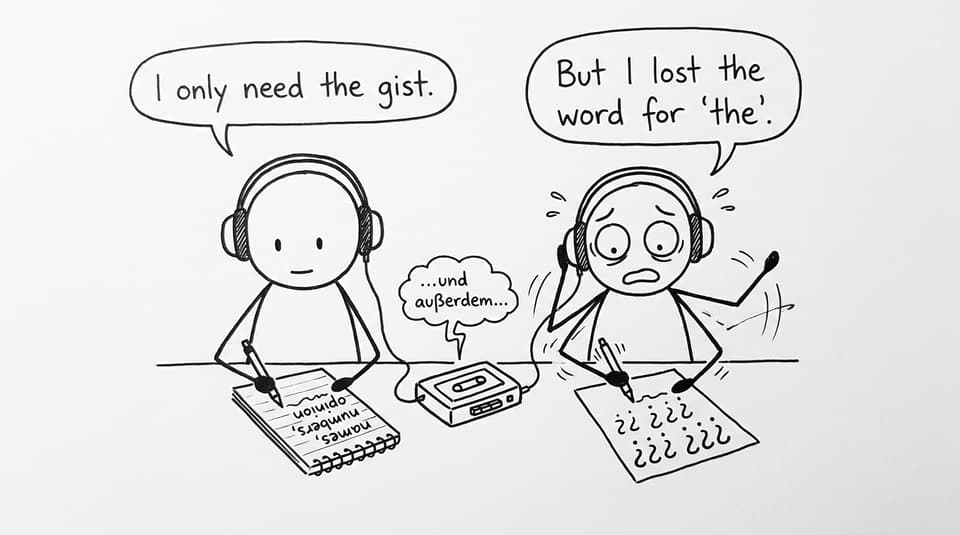
You’re tested on gist + key information (names, numbers, opinions, changes)
For a deeper breakdown of what listening questions actually reward in IB Language B, see How IB Language Listening Exams Are Structured and IB Language B Listening Practice: Best Strategies.
Individual Oral (25%): the predictable conversation you can train for
The oral can feel personal, which makes it easy to overthink. But the structure is stable: a visual stimulus, then a guided conversation.
What happens in the oral
-
15 minutes to prepare from a visual stimulus
-
Total speaking time: 4-6 minutes
-
Typically includes:
-
1-2 minutes describing the image
-
3-4 minutes discussion and follow-up questions
-
Oral skills examiners reward (especially at ab initio)
-
Clear description and narration
-
Opinions + simple justifications (Ich denke, dass… weil…)
-
Interaction: responding, asking for clarification, continuing the exchange
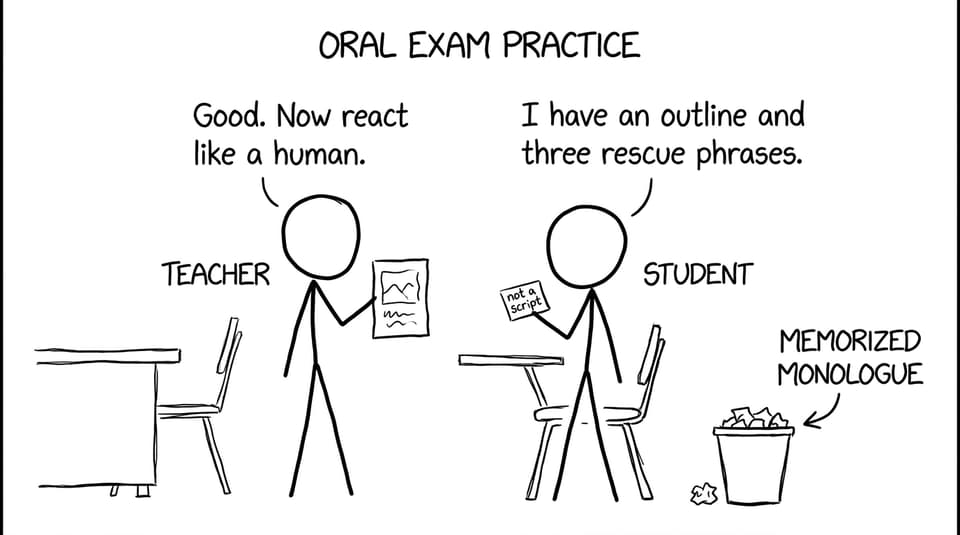
A practical oral prep loop (very IB Language B friendly):
-
2 minutes: describe what you literally see
-
2 minutes: explain what it suggests (problem, benefit, conflict)
-
2 minutes: link to a theme and personal experience
-
Add 3 “repair phrases” for when you blank
To go deeper on the German oral specifically, use IB Languages: Succeed in IB German Ab Initio Oral 2025.
How to revise the IB German ab initio exam format with RevisionDojo
The students who improve fastest usually stop “revising German” and start rehearsing the exam format.
A simple loop inside RevisionDojo looks like this:
-
Study Notes to learn the required language and text types
-
Flashcards to lock in theme vocabulary and connector phrases
-
Questionbank to repeat exam-style comprehension and writing choices until they feel normal
-
AI Chat when you get stuck mid-task and need a quick explanation
-
Grading tools to understand what the criteria reward in your writing
-
Predicted Papers and Mock Exams to build timing and calm
-
Coursework Library and Tutors when you need deeper feedback and direction
If you want to build the platform habit, start with Questionbank | RevisionDojo and then expand into full exam practice.
FAQ
Is IB German ab initio the same as IB Language B?
IB German ab initio sits within the wider world of IB Language B style assessment, but it’s designed for true beginners. That matters because the exam rewards clear, basic communication rather than sophisticated range. The structure (writing, receptive skills, oral) is familiar across IB language courses, which is why many IB Language B strategies transfer well. However, ab initio expects simpler grammar and more everyday vocabulary. If you focus on accuracy, task completion, and organisation, you can score very well without sounding advanced. The key is practicing the actual IB German ab initio exam format so nothing feels new on exam day.
What should I memorise for Paper 1 without sounding robotic?
Memorise frameworks, not full paragraphs. In IB Language B, it’s safer to have reusable openings, closings, and connector banks than to memorise a complete response. For example, learn two formal email openings, two informal ones, and a reliable closing for each. Then memorise “expansion patterns” like opinion + reason + example, which you can adapt to any prompt. This keeps your writing flexible while still fast under time pressure. After each timed practice, note your recurring mistakes and turn them into Flashcards so you stop repeating them.
How do I improve listening if I panic when I miss words?
First, accept the real rule of Paper 2 listening: you are not supposed to catch every word. IB Language B listening questions are built to reward gist and key details, so train your brain to hunt for anchors like numbers, names, places, and opinion phrases. Use a two-pass method: on the first play, write only gist and anchors; on the second, confirm and fill gaps. Practise with short clips and strict timing so the exam feels familiar. After each clip, write a 3-sentence summary in simple German to prove you understood the meaning, not the vocabulary list. Over time, panic decreases because you’re no longer measuring success as “perfect comprehension.”
Final takeaway: make the format your advantage
The IB German ab initio exam format is not a trick. It’s a routine: Paper 1 writing, Paper 2 reading and listening, and a short Individual Oral. Once you treat it like a rehearsable system, you start walking into the room like an IB Language B student with a plan.
If you want that plan in one place, use RevisionDojo as your training ground: learn with Study Notes, drill with the Questionbank, retain with Flashcards, unblock with AI Chat, and pressure-test with Mock Exams and Predicted Papers. Start here: IB German ab initio Resources.