
A reading list can look deceptively simple. A few novels, a play, perhaps a collection of poetry. Then your child begins talking about authorial choices, global issues, translated works, unseen analysis, and an oral assessment worth a substantial part of the final grade.
If you are wondering what is IB English A Literature like, the clear answer is this: it is a demanding but structured course in close reading, literary interpretation, comparative thinking, and persuasive communication. Students do not simply explain what happens in a book. They examine how writers use language, form, structure, voice, and context to create meaning.
For parents, the reassuring part is that success does not depend on having a mysterious gift for literature. It grows from careful reading, regular retrieval, thoughtful discussion, and repeated analytical writing. Once the course is understood as a collection of trainable skills, it becomes much less opaque.
IB English A: Literature at a glance
Here is the course in practical terms:
- It is a Group 1 Diploma Programme subject designed for students studying literature in a language suited to advanced academic work.
- It is available at Standard Level (SL) and Higher Level (HL).
- Students study literary works from different forms, periods, places, and cultures.
- Assessment includes unseen literary analysis, a comparative essay, and an individual oral.
- HL students also complete a 1,200 to 1,500-word essay.
- The central skill is explaining how specific authorial choices shape meaning.
- Strong performance requires more than memorizing plots, quotations, or device definitions.
The current IB course is organized around three areas of exploration: readers, writers and texts; time and space; and intertextuality. These are not three isolated units. They are different ways of asking why literature means what it means, and why readers may interpret the same work differently.
What students actually do in class
Much of the course begins with reading, but the visible reading is only the surface. Students annotate passages, discuss alternative interpretations, research relevant contexts, compare works, plan arguments, and write analytical responses.
A class might examine how a narrator controls what readers know, how the structure of a play creates tension, or why a poet repeatedly returns to one image. The question is rarely just, “What is the theme?” It is more often, “How does the writer construct that idea, and what are the consequences of doing it this way?”
This distinction matters. Plot knowledge is necessary, but it is not the destination. Students must move from observation to interpretation and then evaluation. RevisionDojo’s guide to developing insightful literary arguments shows how an observation can become a defensible thesis rather than a list of techniques.
The reading load
According to the current IB course overview, SL students study nine literary works and HL students study thirteen. The selection must represent varied literary forms, periods, and places, and it includes literature originally written in the language studied as well as translated literature.
The number of books is only one part of the workload. A short poem may require more concentrated analysis than a long chapter. A play may need to be considered as performance, not merely as words printed on a page. Students may also revisit the same work for different purposes throughout the course.
Parents can explore how many texts IB English Literature students study for a clearer picture of how the reading list is constructed.
How IB English A: Literature is assessed
The assessment model is predictable once its pieces are separated. Both levels include two written examinations and an individual oral. HL adds a formal essay.
| Component | Standard Level | Higher Level |
|---|---|---|
| Paper 1 | One unseen literary passage, 1 hour 15 minutes, 35% | Two unseen literary passages, 2 hours 15 minutes, 35% |
| Paper 2 | Comparative essay, 1 hour 45 minutes, 35% | Comparative essay, 1 hour 45 minutes, 25% |
| Individual oral | 15 minutes, 30% | 15 minutes, 20% |
| HL essay | Not required | 1,200 to 1,500 words, 20% |
These figures are based on the IB’s current Language A: Literature subject brief. Schools manage the timing of coursework and oral assessment within the programme, so families should also consult the school’s own calendar.
Paper 1: guided literary analysis
Paper 1 tests whether students can interpret unfamiliar literature under timed conditions. SL students choose and analyze one of two unseen passages. HL students analyze both passages.
A guiding question offers a focus, but students still need to form an argument, select evidence, and explain how literary choices produce effects. Regular exposure to different genres is therefore more valuable than memorizing a rigid essay template. Students can build this skill through IB English A: Literature Paper 1 notes and questions and the practical guide to analyzing unseen literary texts.
Paper 2: the comparative essay
Paper 2 asks students to choose one general question and compare two works studied during the course. Copies of those works are not taken into the examination, so students need secure knowledge of plot, form, characters, patterns, significant moments, and authorial methods.
Good preparation is not quotation collecting without context. It is building flexible connections between works. A student should be able to compare how two writers approach power, belonging, conflict, memory, identity, or another concern while remaining responsive to the exact question. The IB English A: Literature Paper 2 Questionbank gives families a concrete view of the kinds of comparative thinking students practise.
The individual oral
The individual oral lasts 15 minutes: a 10-minute prepared response followed by five minutes of teacher questions. In Literature, students explore how a shared global issue is presented through two literary works. One work must originally have been written in the language studied, while the other is studied in translation.
This is not simply a speech learned by heart. The student must demonstrate knowledge, analysis, focus, organization, and effective language while connecting selected extracts to the wider works. RevisionDojo’s Individual Oral notes and practice resources make the task easier to visualize.
The Higher Level essay
HL students write a 1,200 to 1,500-word essay on one work studied. It rewards a focused line of inquiry, sustained interpretation, relevant textual evidence, and analysis of authorial choices.
The challenge is intellectual control. A broad topic such as identity must become a precise question about how a particular feature of a work constructs identity. The essay is completed over time, but it still requires independent judgment and careful drafting.
Is HL much harder than SL?
HL is meaningfully larger, not merely a slightly harder version of SL. The IB recommends 240 teaching hours for HL and 150 for SL. HL students study four additional works, analyze two unseen passages in Paper 1, and complete the HL essay.
SL remains academically substantial. Its individual oral carries 30% of the final grade, and its two examination papers together account for 70%. A student who chooses SL still needs disciplined reading, analytical writing, and confident oral communication.
The better level depends on the whole Diploma combination. Students who enjoy sustained reading, tolerate frequent essay writing, and may pursue literature or another writing-intensive field could find HL rewarding. Students balancing demanding HL sciences, mathematics, or other essay subjects may prefer SL. The English A: Literature SL versus HL guide can help families discuss that decision without assuming that one level is universally right.
What students tend to find difficult
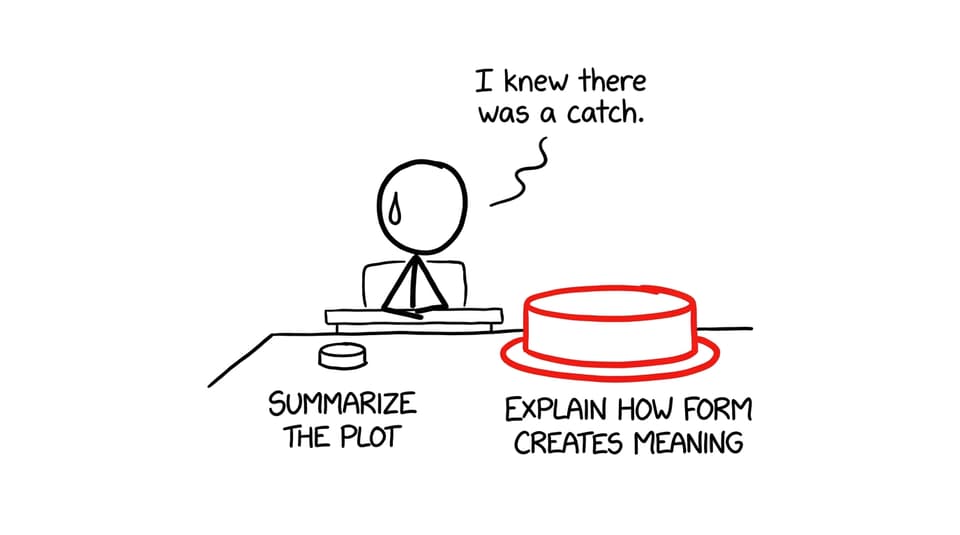
The hardest transition is often moving from identifying a feature to explaining its significance. Writing “the author uses imagery” is an observation. A useful analysis explains what the image suggests, how it affects the reader’s understanding, how it supports the argument, and why it matters within the work.
Other common difficulties include:
- remembering enough detail for comparative writing;
- managing unfamiliar passages under time pressure;
- connecting extracts to whole works in the oral;
- maintaining a clear thesis rather than retelling the story;
- balancing English preparation with five other subjects and the Diploma core.
These problems respond well to specific practice. The guide to mastering literary devices in IB English helps students move beyond feature spotting, while a calm IB English exam preparation routine turns a large subject into manageable weekly tasks.
How parents can support without taking over
The most useful parental support is usually structural rather than editorial. Help protect reading time. Ask your child to explain an interpretation aloud. Encourage early practice instead of a surge of activity just before an assessment.
A few questions can be surprisingly productive:
- What choice has the writer made here?
- What effect does that choice create?
- Could the passage support another interpretation?
- Which second work would make an interesting comparison?
- What feedback are you trying to apply this week?
Parents do not need to know every text. In fact, explaining an argument to someone unfamiliar with the work can reveal whether the student’s reasoning is genuinely clear.
See what IB English support actually looks like
Before committing to a study platform, it is reasonable to want more than promises. The RevisionDojo IB English A: Literature resource hub lets parents and students see the support directly: organized Study Notes, topic-based Flashcards, and practice questions connected to the course.
A student can review a concept in the notes, retrieve it through Flashcards, and then apply it in the Questionbank. AI Chat can clarify a difficult idea, while grading tools provide feedback on written practice. Predicted Papers and Mock Exams support timed preparation, and the Coursework Library offers examples of how successful analytical work is structured. When individual guidance is needed, RevisionDojo Tutors can help turn broad teacher feedback into a practical next step.
That combination matters because English improves through cycles: read, interpret, write, receive feedback, and try again. RevisionDojo brings those stages together, making it the ultimate IB resource for students who need both clear explanations and purposeful practice.
A demanding course, but not an unknowable one
IB English A: Literature asks students to read attentively, think independently, and communicate with precision. The workload is real, particularly at HL, but the course is not a two-year test of whether someone was born “good at English.” Its central abilities can be learned.
For a parent, the best next step is simple: look at the assessment structure, ask how your child currently organizes reading and practice, and explore the actual resources available. Once the course becomes visible, it usually becomes less intimidating. And once practice becomes regular, confidence has something solid to grow from.