


Unseen texts have a special talent: they feel personal.
Not because the writer knows you, but because the moment you start reading, the clock turns your thoughts into a performance. You become hyper-aware of every line you don’t understand. Every technique you can’t name. Every “good point” that arrives too late.
In IB English, that moment is not a sign you’re unprepared. It’s the start of the job.
This guide gives you practical, exam-ready tips for analyzing unseen texts in IB English Literature (especially Paper 1). You’ll learn a calm method for reading, annotating, building a thesis, and writing paragraphs that sound like you actually mean them. Along the way, you’ll see how RevisionDojo can turn practice into a system: Study Notes for technique refreshers, Flashcards for recall, Questionbank drills for speed, AI Chat for feedback, and Grading tools to tighten your writing.
The unseen text checklist (save this for every practice)
If you want a simple loop you can repeat under pressure, use this:
-
Identify text type, purpose, audience, and context in 60 seconds
-
Read once for situation and tone (no panic-annotating)
-
Read again for patterns: repetition, contrast, shifts, imagery, structure
-
Choose one main interpretation you can defend
-
Write a one-sentence thesis: what + how + why it matters
-
Build 2-3 body paragraphs around techniques (not “themes” alone)
-
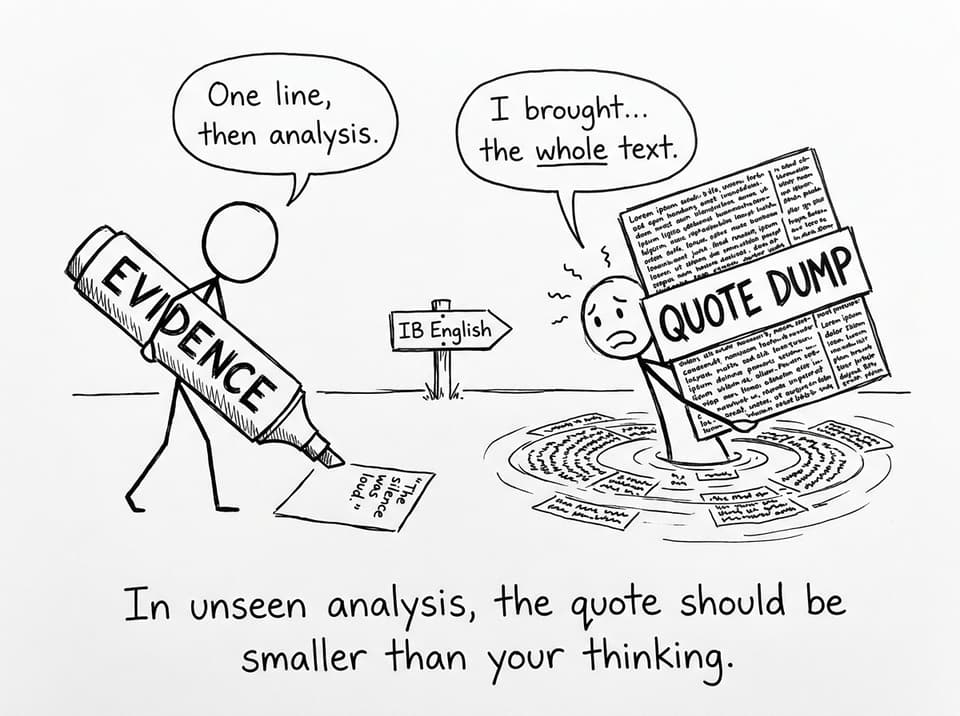
Use short evidence, then do deep analysis
-
End by explaining the bigger implication of the writer’s choices
For Paper 1 orientation and practice pathways, keep the English Paper 1 hub open while you revise.
What unseen analysis is really testing in IB English
Unseen analysis in IB English isn’t a treasure hunt for “hidden meanings.” It’s a demonstration of control.
The examiner is looking for whether you can:
-
understand the passage accurately
-
select meaningful authorial choices
-
explain how those choices shape meaning and reader impact
-
organize ideas into a logical argument
-
write clearly, in a steady academic voice
If you’re preparing specifically for Paper 1, RevisionDojo’s Mastering IB English Paper 1: A Complete Guide is a strong companion to this post.
Tip 1: Read like a director, not a tourist (first pass)
On the first read, your job is not to annotate everything. Your job is to understand the situation.
Ask:
-
Who is speaking (or narrating)?
-
What is happening, literally?
-
What is the emotional temperature?
-
What seems to be the writer’s purpose?
This is the “director” mindset: you’re watching the scene and noticing how it’s staged. In IB English, a surprising amount of clarity comes from simply getting the basics right early.
If you struggle to start strong, borrow structure from IB English: Strong Introductions and Conclusions so your first paragraph doesn’t wander.
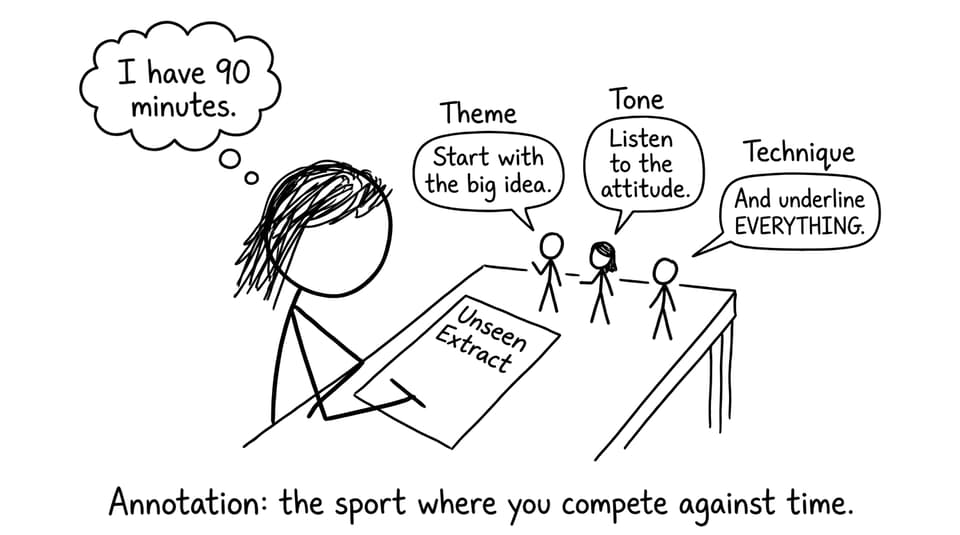
Tip 2: Annotate for patterns, not trivia (second pass)
On the second read, annotate with a single question in mind:
What repeats or changes, and why?
Patterns are where strong unseen analysis starts. In IB English, you get more marks for noticing a shift and proving its effect than for naming ten devices with no explanation.
Look for:
-
tonal pivots (warm to cold, comic to bitter, reflective to accusatory)
-
repeated images (light/dark, sound/silence, hunger/consumption)
-
contrasts (public vs private voice, past vs present, ideal vs reality)
-
structural moves (a turn halfway through, a final line that reframes earlier meaning)
If poetry appears, don’t rely on vibes. Use a structure-first method like IB English: Commentary on Poetic Form and Structure to keep your analysis concrete.
Tip 3: Build your thesis as a “meaning machine”
A strong thesis in IB English does three quiet things:
-
states an interpretation (what the text suggests)
-
names the craft (how the writer builds that suggestion)
-
signals significance (why it matters)
A reliable thesis template:
The writer uses [two or three techniques] to [develop an interpretation], ultimately [revealing/criticizing/questioning] [bigger idea].
If your thesis tends to become a summary, train the skill directly with What Makes an Effective Thesis Statement? and then practice generating 10 one-sentence theses from random extracts.
RevisionDojo tip: turn thesis templates into Flashcards so your brain can retrieve them under exam stress.
Tip 4: Choose fewer techniques and analyze them harder
In IB English, depth beats breadth.
A common mistake is creating a “shopping list paragraph”:
-
metaphor
-
imagery
-
diction
-
symbolism
-
tone
...with no chain of reasoning.
Instead, pick 2-3 techniques that clearly control meaning. Then run the same analysis chain each time:
choice, then effect, then meaning
Example (generic, but usable):
-
Choice: short sentences after a long, flowing description
-
Effect: the pace snaps; the voice sounds certain or panicked
-
Meaning: the writer narrows the reader’s attention to a moral or emotional turning point
If you want to avoid the most common mark-leaks, scan IB English: Common Essay Mistakes to Avoid before your next timed practice.
Tip 5: Use a paragraph engine that doesn’t collapse under time
A dependable paragraph structure keeps your thinking from getting lost.
Use a PEEL-style rhythm (Point, Evidence, Explanation, Link), but make the “Explanation” do real work:
-
translate the quote into meaning
-
zoom into one or two words
-
connect to tone, audience, or purpose
-
link back to your thesis
Need a full essay structure refresher? How to Write a Good Essay for IB English Literature is a strong blueprint.
RevisionDojo tip: write one paragraph, then submit it to the Grading tools (or the dedicated IB English Literature Paper 1 Grader) to find which criterion you’re under-serving.
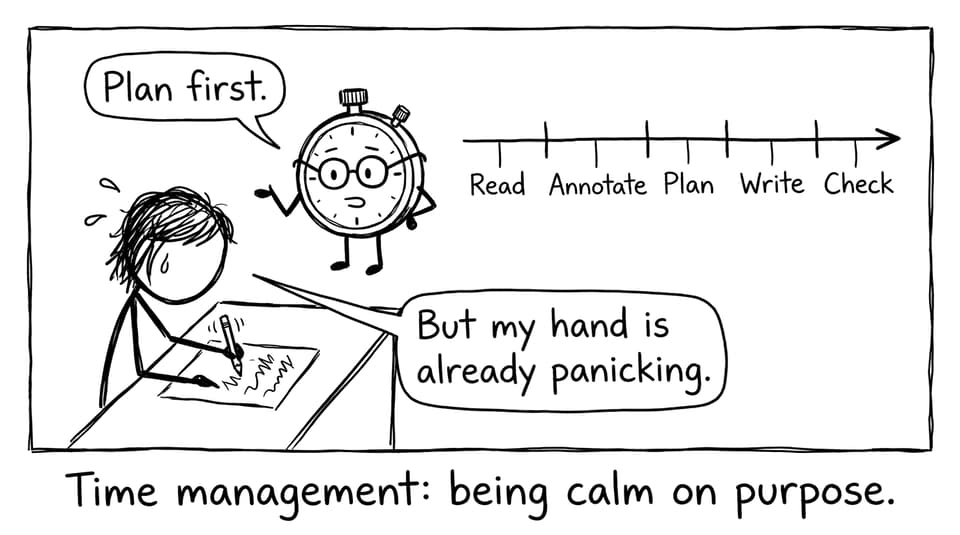
Tip 6: Time management is a reading skill, not a personality trait
Timed unseen analysis punishes two extremes:
-
spending too long annotating and writing an unplanned essay
-
planning forever and writing a rushed final draft
A workable split for many students:
-
10-15 min: read + annotate
-
5 min: thesis + outline
-
45-55 min: write
-
5 min: check clarity and links to the question
Practice that rhythm until it feels boring. Boring is good. Boring means you’re in control.
For a weekly routine built around this skill, use IB English Paper 1: Best Ways to Prepare.
Tip 7: Practice unseen texts the way athletes practice plays
Most students “practice” unseen texts by doing full essays only. That’s like training for a marathon by running a marathon.
Mix full runs with drills:
-
5-minute drill: annotate for tone shifts only
-
8-minute drill: write three thesis options, choose the best
-
12-minute drill: write one body paragraph with tight evidence
-
20-minute drill: plan + write intro and two paragraphs
RevisionDojo makes this easier because you can set targeted practice using the Questionbank (start here: English Paper 1 Questionbank) and then escalate into longer sessions.
If you’re revising more broadly for exams, Preparing for IB English A: Literature Exams helps you place unseen analysis inside a bigger plan.
A quick mini-framework you can apply to any unseen text
When you feel stuck, use this “four-lens” reset:
-
Voice: Who speaks? What attitude leaks through?
-
Structure: Where does it turn, intensify, or simplify?
-
Language: What words feel loaded, repeated, or unusually precise?
-
Purpose: What does the writer seem to want the reader to feel or do?
Then connect two lenses together. That’s where real IB English insight lives: not “tone is sad,” but “a restrained, detached tone makes the grief feel controlled, suggesting the speaker has practiced not breaking.”
Closing: Turn unseen analysis into a calm routine
The secret of unseen texts is that they stop feeling unseen once your process becomes familiar.
In IB English, confidence is rarely a personality trait. It’s usually a record of repetitions: reading with purpose, annotating for patterns, writing a thesis you can defend, and building paragraphs that show how technique creates meaning.
If you want that repetition to be structured (and faster), RevisionDojo is built for it: sharpen technique with Study Notes, drill skills in the Questionbank, automate recall with Flashcards, get unstuck with AI Chat, simulate exam pressure with Mock Exams and Predicted Papers, refine drafts with Grading tools, and lean on the Coursework Library and Tutors when you need real guidance.
Start small: one unseen text, one thesis, two paragraphs. Then do it again. That’s how IB English becomes manageable.