



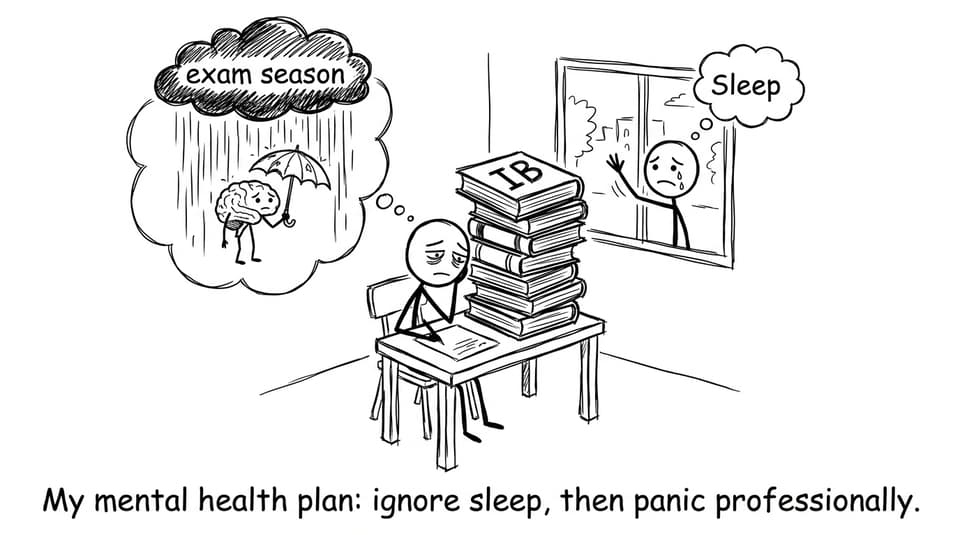
A week before exams, your brain starts bargaining.
“Just one more hour tonight.”
Then the hour becomes two. Sleep gets traded for a shaky sense of control. You wake up with the strange feeling that your body is in the room, but your mind is already sitting the paper.
That’s when mental health stops being an abstract idea and becomes a practical skill. Not a “nice-to-have,” but the thing that decides whether your revision turns into calm marks or frantic noise.
This guide is for IB students who want to do well without burning out. It’s not about pretending stress doesn’t exist. It’s about learning to manage it, protect your health, and keep your mental health steady enough to perform when it matters.
A quick exam-stress checklist (save this)
If you only take one thing from this article, take this:
-
Notice your stress signals early (body, thoughts, habits)
-
Use a 60-second calm reset (breath + posture + tiny next step)
-
Study with proof (active recall, not rereading)
-
Build predictable routines: sleep, food, movement, breaks
-
Reduce noise: phone limits, fewer tabs, fewer “comparison” triggers
-
Get support sooner than you think you need it
RevisionDojo makes the “proof-based” part easier because your studying can live in one loop: Study Notes for clarity, Flashcards for recall, Questionbank for exam-style practice, AI Chat when you’re stuck, and Mock Exams plus Predicted Papers when it’s time to train under pressure.
The signs your exam stress is crossing the line
Exam stress is normal. Your body is trying to help you focus.
But mental health starts to slide when stress becomes your default setting rather than a temporary spike.
Watch for patterns like:
-
Headaches, tight jaw/shoulders, stomach discomfort
-
Sleep trouble (can’t fall asleep, or wake up “wired”)
-
Racing thoughts, irritability, tears that surprise you
-
Procrastination that feels like paralysis
-
Losing appetite, or constant snacking for comfort
-
Social withdrawal, or feeling “numb” around friends
-
You study a lot but can’t remember anything the next day
If that last one hits close to home, this piece pairs well with IB: I Study All Day but Remember Nothing because it explains why the brain blanks when it’s overloaded.
Mental health tips that actually work during IB exams
Use a 60-second calm reset (before you “try harder”)
When stress spikes, your first move should be physical, not intellectual. Your nervous system needs a signal that you’re safe.
Try this:
-
Exhale slowly once (longer than the inhale)
-
Do one round of box breathing: 4 in, 4 hold, 4 out, 4 hold
-
Drop your shoulders and unclench your jaw
-
Choose one tiny next action: “Write the plan,” “Do 5 questions,” “Open notes for 10 minutes”
This is also the core of what many students use in How to Stay Calm During IB Exams. The point isn’t to erase anxiety. It’s to stop it from steering.
Shrink the workload: one subject, one topic, one output
Stress grows when tasks are vague: “revise chemistry” is infinite. Your brain reads infinity as danger.
Instead, define an output:
-
“Do 12 Questionbank questions on equilibrium.”
-
“Review 30 flashcards on cell respiration.”
-
“Write one timed paragraph using the correct command term.”
If you want a structure that reduces decision fatigue, borrow the framework from Revision Tips: Build a Study Routine That Works. A predictable routine is quietly powerful for mental health, because it replaces daily panic with a repeatable plan.
Build a study schedule that protects sleep (not fights it)
IB students often treat sleep like “time I can steal back.” But sleep is where your brain consolidates memory. If you keep taking from it, your revision becomes less efficient, which creates more stress, which steals more sleep. It’s a loop.
A sane schedule has three features:
-
A start time (so revision happens)
-
An end time (so you can recover)
-
Buffer space (so one bad day doesn’t wreck the week)
For a practical template, see The Ultimate Daily IB Study Schedule: Maximize Productivity and Minimize Stress. If you want something adaptive, Using Jojo AI to Create a Personalized Study Schedule shows how students build flexible plans that adjust when life happens.
Study with “proof,” not vibes (active recall wins)
Rereading can feel soothing. It also hides what you don’t know.
For better mental health, you want certainty. Certainty comes from proof:
-
Use RevisionDojo Questionbank to practise by topic and paper skill
-
Use Flashcards daily for spaced repetition
-
Use Study Notes only to patch what your questions exposed
-
Use AI Chat to clarify misconceptions quickly, before they grow into dread
This “learn, recall, apply, review” loop is explained well in RevisionDojo App: The Smarter Way to Prep for IB Exams. The emotional benefit is underrated: when you can see your accuracy rise, your mind stops inventing disasters.
Take breaks that are real breaks
A break that’s just switching to a different screen doesn’t reset your brain. It keeps your attention fragmented.
Try a 5-10 minute break after 45-50 minutes:
-
Water
-
Light movement (walk, stretch)
-
Snack with protein/fibre
-
Look outside (distance vision helps reduce strain)
Then return with one clear task.
Move your body to change the mood (small counts)
Exercise is not a punishment for procrastinating. It’s a lever.
A 10-minute walk can lower tension, improve sleep quality, and help you return with more focus. During exams, consistency matters more than intensity.
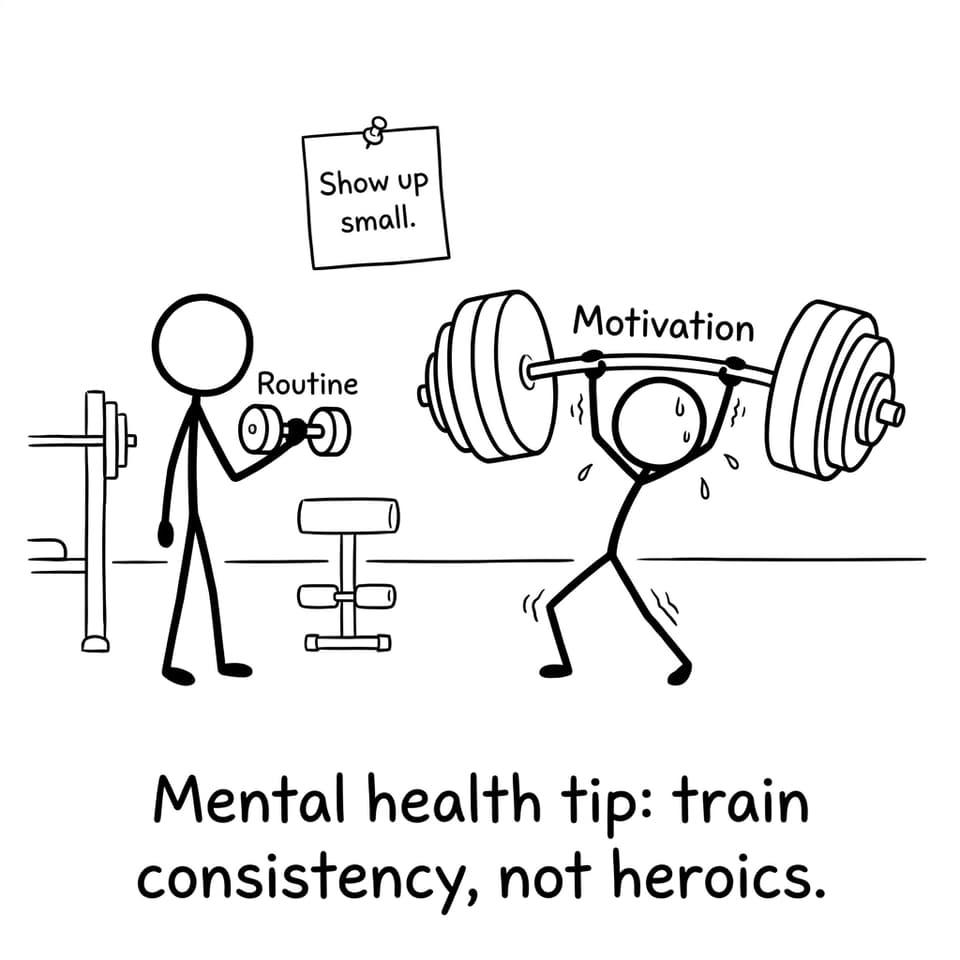
If you’re exhausted, do the smallest possible version: one lap around the block, a short stretch routine, or a few minutes of mobility. Your mental health benefits from “I showed up” more than “I smashed it.”
Eat like your brain has an exam (because it does)
You don’t need a perfect diet. You need stable energy.
Aim for:
-
Regular meals (especially breakfast on exam days)
-
Hydration (dehydration mimics fatigue)
-
Fewer caffeine spikes and sugar crashes
Think simple: yoghurt + fruit, nuts, eggs, sandwiches, rice bowls, soup. The goal is fewer biological surprises on a day that already feels high-stakes.
Use positive self-talk that sounds like you
Affirmations only work if they’re believable.
Swap harsh, absolute thoughts (“I’m going to fail”) for accurate ones:
-
“I feel anxious because I care.”
-
“I don’t need perfection. I need marks.”
-
“I can do the next question.”
This supports mental health because it keeps your identity separate from your performance. You’re a student doing hard work, not a verdict waiting to happen.
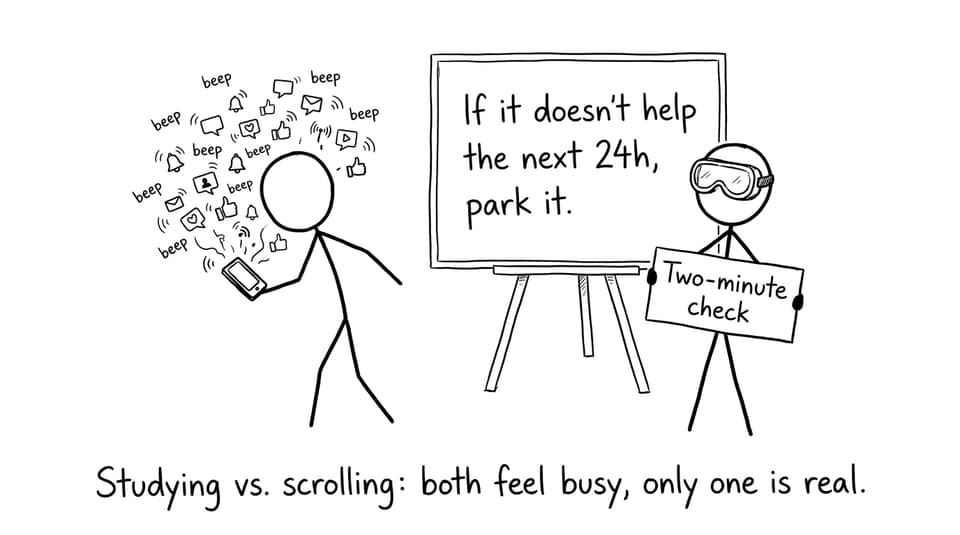
Limit social media like it’s a study resource (because it is)
The fastest way to feel behind is to watch other people’s highlight reels.
Try one rule during exam season:
- Check social media once or twice a day, timed, then stop
Or do a “two-minute check” only after a study block.
Train under pressure before exam day (timed exposure)
Many students think anxiety means they’re unprepared. Sometimes it simply means the exam environment feels unfamiliar.
Fix that with timed practice:
-
Short timed sections a few times a week
-
One longer timed session weekly to build stamina
RevisionDojo’s Exam Mode is designed for exactly this: realistic pacing, a timer, and the habit of continuing even when a question feels uncomfortable.
If you need a bigger strategy shift, read How to Beat IB Exam Anxiety (Without Burning Out). It frames anxiety as something you can train, not something you have to “solve” overnight.
Building resilience: four habits that compound
Journal for five minutes (messy is fine)
Write what’s loud in your head. Then write the next step.
This does two things for mental health: it externalizes worry (so it stops looping) and it converts emotion into action. Over time, you’ll notice patterns: which subjects trigger you, which times of day are hardest, which habits calm you fastest.
Use music as a reset ritual
Choose one playlist for breaks or low-intensity tasks. Keep it consistent.
The brain likes cues. When the same music repeatedly pairs with “I’m safe and working,” it becomes a shortcut back to focus.
Mindfulness, but practical
Mindfulness doesn’t have to be a 30-minute meditation.
It can be 60 seconds of noticing: feet on the floor, shoulders down, breath slowing, one task chosen. If you want a more exam-specific approach, Why Your Brain Freezes During IB Exams explains how to restart when panic interrupts thinking.
Turn uncertainty into feedback
A big driver of exam stress is not knowing what “good” looks like.
That’s where RevisionDojo’s Grading tools and feedback loops matter: you can practise, get guidance on what earns marks, and adjust quickly. Add Tutors when you need a human to diagnose a repeating issue, or use the Coursework Library to reduce background stress from overlapping deadlines.
Closing: protect mental health like it’s part of the syllabus
IB exams reward knowledge, yes. But they also reward the ability to show up repeatedly: to sleep, to eat, to practise under time, to recover after a bad session, to start again.
That is mental health in exam season, not a separate project, but the foundation under every study block.
If you want a system that makes that foundation easier to build, use RevisionDojo as your daily loop: Study Notes to understand, Flashcards to remember, Questionbank to practise, AI Chat to unblock, and Mock Exams plus Predicted Papers to make exam conditions familiar. Stress shrinks when your preparation becomes visible.
Your goal isn’t to feel nothing. Your goal is to feel steady enough to do the next right thing, again and again, until the exams are over.