
A Theatre Internal Assessment can be unusually difficult for a parent to support. You may understand essays, revision timetables, and exam nerves, yet feel less certain when your child starts discussing performance space, lighting, audience impact, and theatre-maker intentions.
The reassuring answer is that you do not need theatre expertise. The most useful support is practical rather than artistic: understand the task, help your child plan backward from school deadlines, ask questions that clarify their thinking, protect the independence of their work, and encourage them to seek criterion-based feedback.
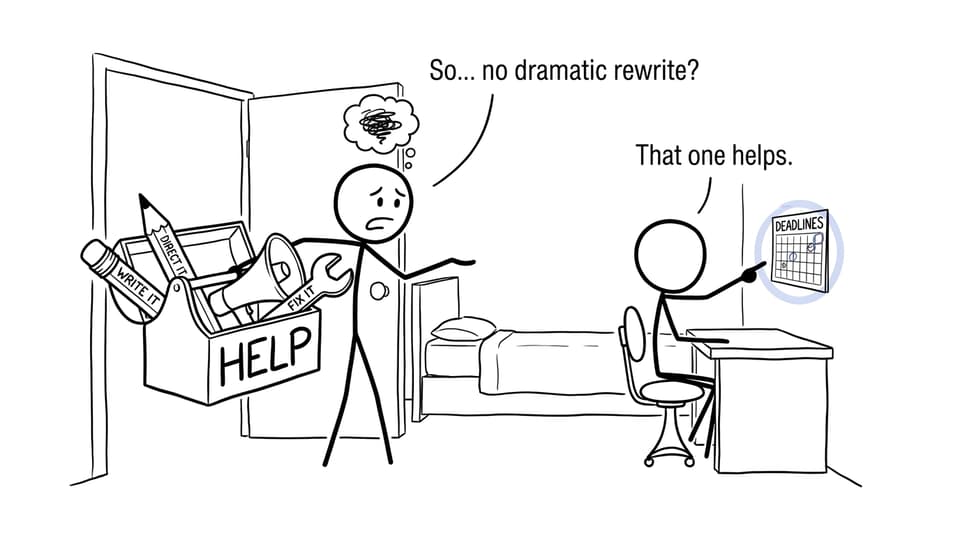
That boundary matters. Your role is not to become the director. It is to create the conditions in which your child can make, test, explain, and refine their own decisions.
What parents should know first
Under the current IB Theatre course, the Internal Assessment for both Standard Level and Higher Level is the Production Proposal. Students choose a published play text they have not previously studied and develop a feasible vision for designing and theoretically staging the complete play for a live audience. They propose the production rather than actually staging it.
The proposal can contain up to 12 pages of written text and images, with written text not exceeding 4,000 words, plus a list of sources. It contributes 30% of the final Theatre grade at SL and 20% at HL. The current course is explained more broadly in RevisionDojo's IB Theatre syllabus overview.
Parents sometimes confuse this task with the Collaborative Project. That project involves creating and performing original theatre, but it is externally assessed under the current course. When discussing deadlines or requirements, use the name Production Proposal so everyone is talking about the same component.
A quick parent checklist
- Ask your child for the school's internal milestones, not only the final deadline.
- Encourage regular, short work sessions rather than a final-week rush.
- Discuss intentions and audience impact without supplying artistic ideas.
- Check that every borrowed image, quotation, and idea is acknowledged.
- Leave all writing, design decisions, and final judgments to your child.
- Direct subject questions to the Theatre teacher.
- Use structured, rubric-aware support when your child needs another feedback layer.
Understand what the Production Proposal is assessing
A strong proposal is not simply an attractive collection of costume sketches or set images. It must communicate a coherent, practical interpretation of a play.
The assessment considers three connected areas. First, the student identifies key ideas in the entire text and establishes clear theatre-maker intentions. Second, they present and justify an overarching production design, including the performance space and relevant production elements. Third, they explain in detail how one specific moment would combine performance and production choices to create tension, emotion, atmosphere, or meaning for an audience.
The important word is connection. A lighting choice is not valuable merely because it looks striking. It becomes useful when the student can explain how it serves the stated intention and shapes the audience's experience.
This is why broad praise such as “That looks creative” rarely helps. A better prompt is: “How does this choice support the meaning you want the audience to understand?” Students can also consult RevisionDojo's complete guide to scoring well in IB Theatre for a wider view of how interpretation, research, and communication fit together.
Supporting IB Theatre IA without taking over
Good support increases independence. Unhelpful support replaces it.
The IB's academic integrity guidance expects parents to help children understand policies, plan manageable workloads, and avoid misconduct. It also says parents should abstain from providing or obtaining undue or unauthorized assistance. In practical terms, you may help your child organize time or articulate an idea aloud, but you should not write passages, create designs, choose the interpretation, or substantially edit the submission.
| Helpful parent support | Support that crosses the line |
|---|---|
| Asking your child to explain an artistic decision | Supplying the artistic decision yourself |
| Helping create a calendar from school deadlines | Completing sections when the child falls behind |
| Pointing out that an explanation is unclear | Rewriting the explanation in your own language |
| Reminding the student to cite an image | Finding and inserting unacknowledged material |
| Encouraging teacher or rubric-based feedback | Hiring someone to produce or extensively edit the work |
If you are uncertain, ask the school what forms of discussion and feedback it permits. School deadlines and draft-feedback procedures can differ, even though the assessment requirements are established by the IB.
Ask questions that make artistic thinking visible
Parents often assume that feedback requires specialist knowledge. Usually, careful listening is enough.
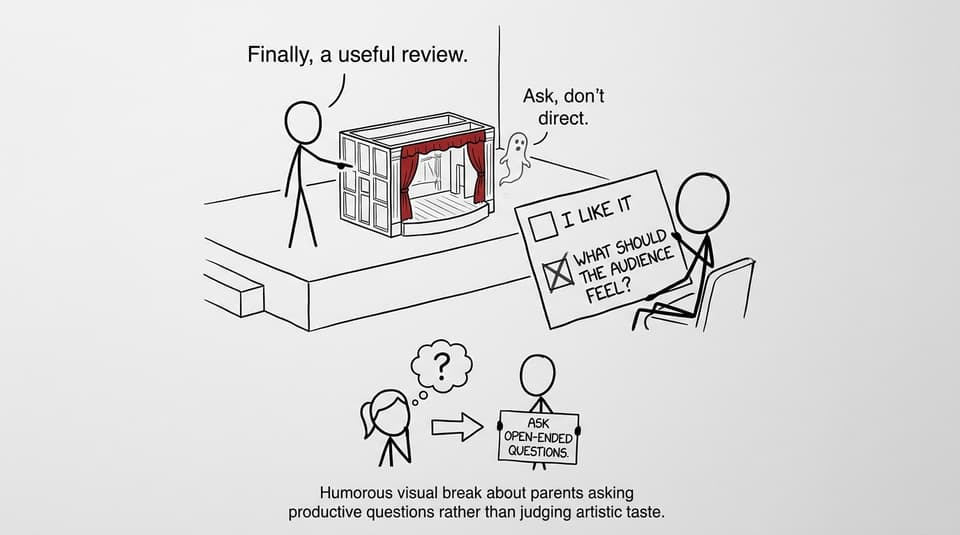
Invite your child to explain the proposal as though you were an audience member encountering the production for the first time. Listen for gaps between intention and execution. If your child says the production should make the audience feel trapped, but cannot explain how the space, performers, sound, or lighting would create that effect, you have found a useful area for further thought.
Try questions such as:
- What are the central ideas you see across the whole play?
- What do you want the audience to think or feel?
- Why is this performance space suitable for that intention?
- How would the actors use body, voice, movement, or positioning?
- What would the audience see and hear in the chosen moment?
- Is this design feasible in a live theatre?
- Which piece of evidence from the text supports this choice?
- What changed between your first idea and your current one?
These are prompts, not instructions. They return ownership to the student. RevisionDojo's guidance on critical reflection in IB Theatre can help students move from describing a choice to examining why it works.
Build a calm production schedule
Creative coursework expands to fill whatever time remains. There is always another visual to adjust or paragraph to polish. The solution is to divide the proposal into visible stages.
Start with the school's dates and work backward. A reasonable sequence includes reading and annotating the play, identifying its key ideas, establishing theatre-maker intentions, developing the overall design, selecting and planning one specific moment, assembling the document, checking citations, and proofreading the final digital version.
Use weekly outcomes rather than vague instructions to “work on Theatre.” For example, an outcome could be: “By Sunday, explain the intended audience experience in one minute and identify three textual moments that support it.” That is measurable without dictating the content.
RevisionDojo's IB Theatre study strategies offer ways to balance practical exploration, research, and documentation. If coursework is colliding with exam preparation, a low-stress IB study schedule can help the family see the entire workload rather than treating each deadline as an isolated emergency.
Use short check-ins, not constant monitoring
Agree on one or two brief check-ins each week. Ask what was completed, what comes next, and whether a teacher question is blocking progress. Then step away.
Constant reminders can turn parental concern into background noise. Predictable check-ins preserve accountability while giving the student room to think. They also make it easier to notice genuine problems, such as repeated avoidance, uncertainty about requirements, or a growing conflict between coursework and sleep.
Help your child edit without becoming the editor
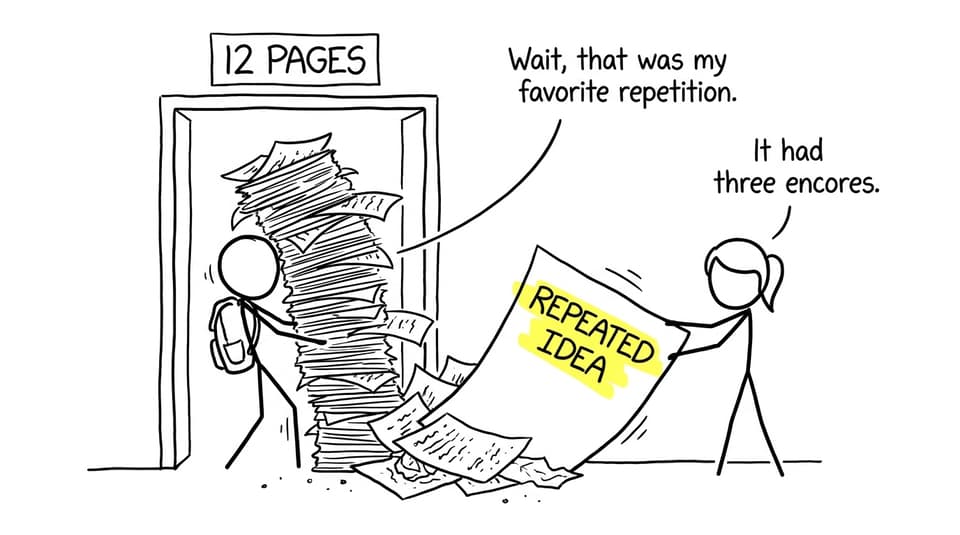
The 12-page limit makes selection important. Students need enough visual evidence and explanation to communicate the production, but every element should earn its place.
A parent can perform a useful clarity check by identifying where they became confused. Say, “I could not see how this costume decision connects to your intention,” rather than rewriting the passage. Ask your child to explain the missing link aloud and decide how to revise it.
A final student-led review should check:
- whether the proposal addresses the entire play as well as one chosen moment;
- whether design and performance choices are justified rather than merely listed;
- whether visuals are legible and integrated into the explanation;
- whether text, annotations, labels, and citations fit within the permitted pages;
- whether all sources are listed and acknowledged at the point of use;
- whether the digital document remains readable on screen.
RevisionDojo's broader IB Internal Assessment guides can reinforce the habit of reading requirements and criteria before making final edits.
Protect wellbeing during the process
Not every stalled evening is a motivation problem. Your child may be unable to choose between competing interpretations, unsure how to translate visual thinking into writing, or worried that an original idea sounds insufficiently academic.
Ask what kind of difficulty they are facing: understanding, deciding, explaining, organizing, or simply starting. Different problems need different responses. A student who is confused should contact the teacher. A student overwhelmed by the whole document may need to define one small next action. A tired student may need sleep more than another hour at the laptop.
Watch for persistent sleep disruption, withdrawal, panic, or a level of distress that interferes with daily life. Coursework support is not a substitute for appropriate pastoral or professional care. RevisionDojo also provides practical guidance on managing IB exam stress and health.
When you do not know enough Theatre to help
“I don't know this subject well enough” is not a parental failure. It is a sign that the student needs a resource built for the subject rather than improvised help at home.
RevisionDojo offers Theatre-specific IA structuring and feedback tools that help students examine organization, criterion alignment, and areas requiring clearer justification. The IB Coursework Grader can provide structured feedback on a draft, while RevisionDojo's AI Chat can help a student unpack terminology or turn feedback into a revision plan. The student must still assess every suggestion, follow the school's AI and academic-integrity rules, cite permitted AI use where required, and keep the submitted work entirely their own.
That support sits within a larger IB system. RevisionDojo brings together Study Notes, Flashcards, the Questionbank, Predicted Papers, Mock Exams, Grading tools, the Coursework Library, and Tutors, so coursework preparation does not become disconnected from the rest of the Diploma. Parents can explore the dedicated IB support hub for families to understand how those resources fit together.
The best parental help is rarely the most visible. It is the calm calendar, the thoughtful question, the protected evening, and the refusal to take ownership away from the student. Give your child that foundation, then let their theatrical vision remain unmistakably theirs.