

A Level 7 in IB Theatre starts before you feel ready
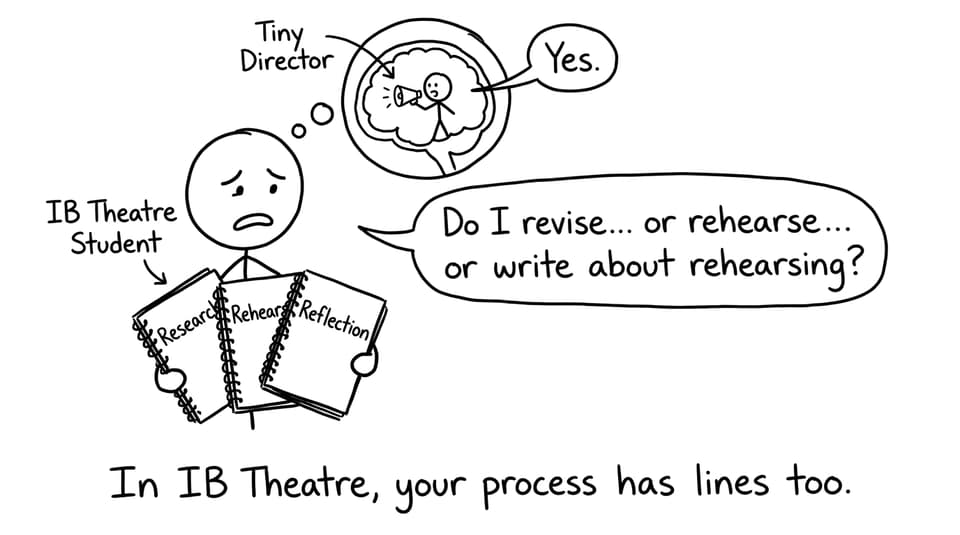
There’s a moment in IB Theatre when the room goes quiet after a run. Everyone waits for the teacher’s feedback, but you’re thinking about something else: Will any of this become marks? Not just the performance, but the messy middle: the choices you tried, the mistakes you noticed, the research rabbit holes, the argument you had with your group, the fix that finally worked.
A Level 7 student isn’t the one who never struggles. In IB Theatre, the Level 7 student is the one who can prove their struggle meant something: grounded in theatre theory, tested in practice, and articulated with clear intention and evaluation.
If you want the bigger picture of what the course demands, start with IB Theatre: An In-Depth Syllabus Overview. Then come back here and treat this guide like your rehearsal call sheet.
Quick Level 7 checklist for IB Theatre
Use this every week, not just near deadlines. A Level 7 in IB Theatre is built through repeatable habits.
-
Learn the criteria language and write in it (intention, context, impact, evaluation).
-
Anchor choices in research (practitioners, traditions, performance conventions).
-
Run experiments on purpose (one variable at a time, then reflect).
-
Collect evidence as you go (notes, sketches, photos, feedback, annotated scripts).
-
Prove your individual contribution inside collaboration.
-
Turn reflection into analysis: what changed, why, and what you’d refine next.
If your issue is consistency, borrow a structure from Best Study Strategies for IB Theatre Students (SL & HL).
How examiners really reward IB Theatre work
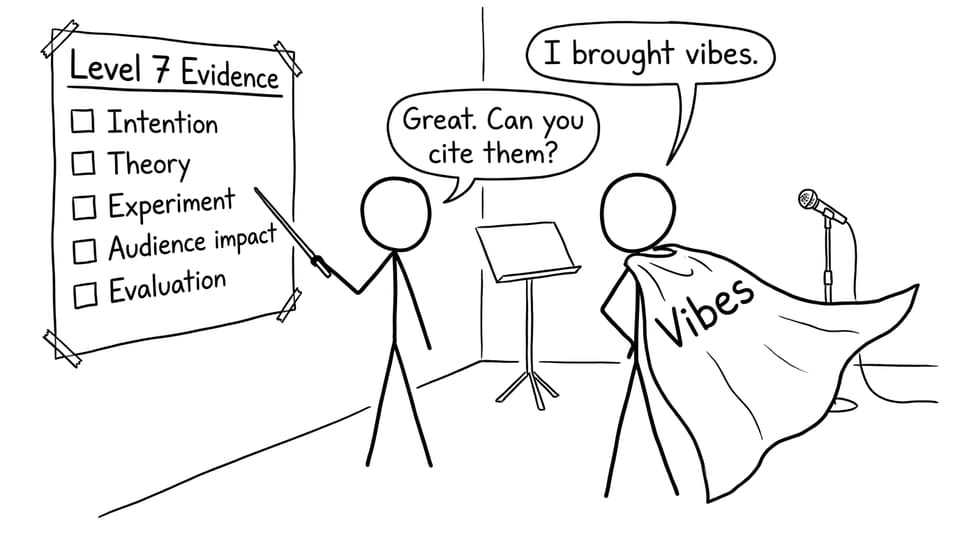
Examiners can’t grade your passion. They grade your evidence.
Across IB Theatre tasks, the same pattern appears: students who score highest are the ones who make their thinking visible. That means you don’t just show what you did. You show:
-
what you intended,
-
what you researched,
-
what you tested,
-
what the audience would perceive,
-
what you learned and improved.
If you’re unsure what “top marks” looks like numerically, use IB Theatre Grade Boundaries to set realistic targets, and (for SL benchmarks) check IB Theatre SL Grade Boundaries 2025.
Research that actually lifts your marks (not just your bibliography)
In IB Theatre, research isn’t a decorative paragraph at the start. It’s a lever. The right theory helps you make stronger choices faster.
A simple rule: research should change a decision.
Instead of listing a practitioner, write a chain of logic:
-
I researched X convention.
-
I tested it through Y rehearsal experiment.
-
It affected Z audience response.
-
So I refined A choice.
If you’re building your Research Presentation, keep your notes organized with Best Ways to Organize Your Research for the IB Theatre Research Presentation. If your work is tradition-based, deepen your analysis with Connecting Culture and Context in IB Theatre Research and choose wisely using Best World Theatre Traditions to Research for IB Theatre Assessments.
The Level 7 secret: treat your process like the performance
Most students document at the end. Level 7 students document while it’s alive.
Try this after every session in IB Theatre (10 minutes, timer on):
-
Intention (1 sentence): what were you aiming for?
-
Experiment (2 sentences): what did you change or test?
-
Impact (2 sentences): what would an audience notice or feel?
-
Evaluation (2 sentences): what worked, what didn’t, and why?
-
Next step (1 sentence): what will you try next time?
This is where RevisionDojo becomes more than “revision.” Use AI Chat to pressure-test your intention (“Is this specific enough to stage?”). Use Flashcards for practitioners, conventions, and vocabulary. Use Study Notes to tighten weak theory quickly. And when you need structure, RevisionDojo’s Grading tools help you judge your writing like an examiner, not like a tired student.
Staging and collaboration: be generous, but be traceable
A common trap in IB Theatre is confusing “we did a lot” with “I can show my impact.” In group work, you must be both collaborative and accountable.
Do this:
-
Keep a running “my contribution” log (decisions you proposed, problems you solved, feedback you acted on).
-
Save versions (draft blocking notes, design iterations, rehearsal plans).
-
Write reflections that explain trade-offs (“We cut X because Y improved clarity for the audience”).
If you’re working from a play text, use How to Approach Staging Play Texts in IB Theatre Coursework and pair it with Best Ways to Analyze a Play Text for Performance Intentions. Those two links alone can rescue weeks of vague rehearsal.
HL students: the Solo Theatre Piece is where Level 7s separate
For HL, the Solo Theatre Piece demands a clean translation from theory to stage. A Level 7 Solo isn’t “deep” because it feels serious. It’s deep because the examiner can see the theorist in the choices.
Build it with intention using:
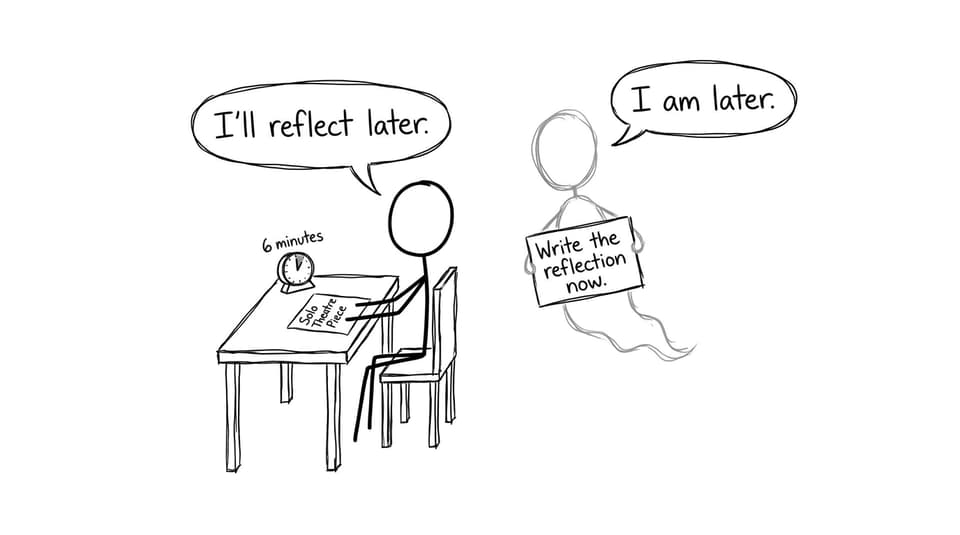
And yes: write the reflection while you rehearse, not after you “finish.”
Conclusion: make your IB Theatre work easy to reward
A Level 7 in IB Theatre isn’t a mystery. It’s a pattern: clear intention, research that changes decisions, experiments that generate evidence, and reflection that proves learning.
If you want a simple next step, open your current draft and add three things today: one sharper intention statement, one research-to-choice link, and one honest evaluation of audience impact. Then use RevisionDojo to keep the loop running: Study Notes for fast theory, Flashcards for recall, AI Chat to clarify your writing, Grading tools to think like an examiner, and the Coursework Library plus Tutors when you need examples and guidance.
In IB Theatre, your process is your proof. Build it like it matters, and your marks will follow.