


In IB Theatre, the marks rarely go to the loudest performance in the room. They go to the clearest thinking.
Most students realise this late: they’ve got pages of rehearsal “updates,” a few photos, and the vague sense that they worked hard. But examiners aren’t grading effort. They’re grading evidence of intention: why you chose what you chose, how theory shaped it, what changed because of feedback, and what you’d do differently next time.
That’s why critical reflection is the quiet superpower of IB Theatre. It turns your process from a diary into an argument: this is what I tried, this is what it meant, and this is how I know.
Quick checklist for higher-mark IB Theatre reflection
Use this after every rehearsal, research session, or run-through in IB Theatre:
-
Name the choice you made (acting, directing, design, structure, ensemble).
-
Explain the reason (intention + problem you were solving).
-
Link to theory or practitioner influence (specific principle, not just a name).
-
Describe the impact on the audience you wanted and what you observed.
-
Identify one limitation (what didn’t work and why).
-
Write the next experiment (a concrete change for the next session).
If you want a broader routine that keeps your documentation consistent across the year, pair this with Best Study Strategies for IB Theatre Students (SL & HL).
Why IB Theatre examiners reward critical reflection
At its core, IB Theatre asks you to inquire, develop, present, and evaluate. Reflection is where evaluation becomes visible.
When you reflect critically, you prove three things examiners look for:
-
Intentionality: your choices weren’t accidental.
-
Transfer: research and rehearsal actually changed what you did.
-
Growth: you can diagnose weaknesses and iterate like a theatre-maker.
If you’re still mapping out how the course is structured, it helps to read Dive into the World of IB Theatre: An In-Depth Syllabus Overview so your reflection aligns with the bigger assessment picture.
The reflection upgrade: description -> analysis -> evaluation
A useful way to think about IB Theatre reflection is as a three-step upgrade.
Start with what happened (but don’t stay there)
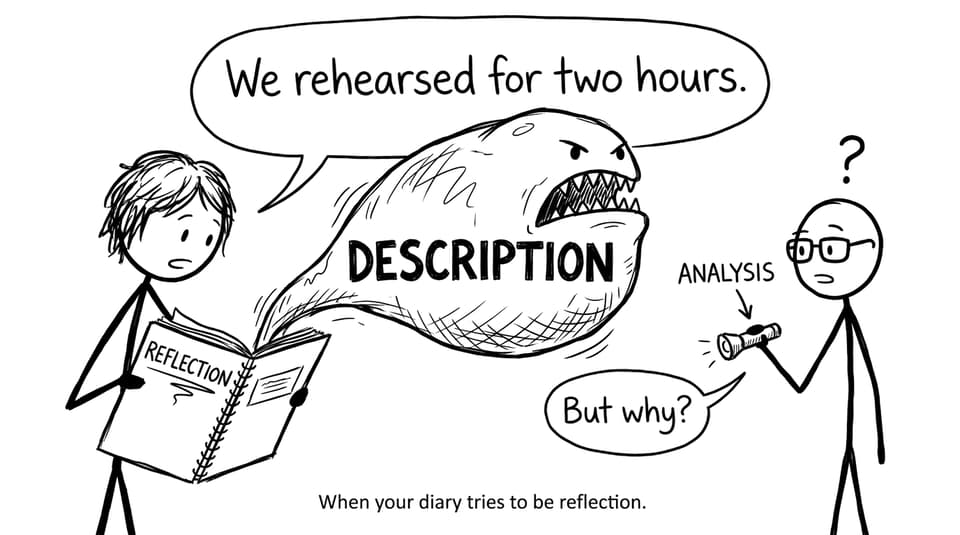
Description is necessary, but it’s only the entrance.
Instead of: “We rehearsed Act 1 and blocked the scene.”
Try: “We re-blocked the confrontation to reduce upstage traffic because the audience focus kept splitting during the key line.”
You’re still describing, but now the description contains a problem.
Then explain why it mattered
This is where theory belongs. Not as decoration, but as a lever.
For example: “I drew on Brecht’s use of interruption to prevent emotional absorption. When we added narration, the scene became clearer politically, but the rhythm flattened.”
Notice the difference: you’re not name-dropping. You’re showing cause and effect.
If you’re working on research and cultural framing, you’ll find strong models in Connecting Culture and Context in IB Theatre Research.
Finally, evaluate and set the next experiment
Evaluation is the sentence that earns marks because it proves learning.
“Next rehearsal I will keep the narration but tighten phrasing and add a sharper physical score to restore pace while maintaining alienation.”
That last clause is gold in IB Theatre: it shows you can hold two truths at once: keep the intention, refine the method.
Three practical methods that keep IB Theatre reflection sharp
The “What, So what, Now what” loop
This is the fastest way to avoid diary writing.
-
What: the choice and what changed.
-
So what: meaning, theory link, audience impact.
-
Now what: next step as a testable experiment.
Write it in 6-10 lines. Short is fine if it’s specific.
The “audience lens” question
After any run-through, answer one question:
“What did the audience probably misunderstand, and what choice caused that?”
Then connect it to staging, proxemics, design, or structure. If you need a deeper guide for this part of IB Theatre, use How to Analyze Audience Impact in Your Solo Theatre Piece (the skill transfers to every component).
The “feedback translation” move
Don’t quote feedback and move on. Translate it into a choice.
-
Feedback: “The ending felt sudden.”
-
Translation: “Our non-linear structure lacked a clear transition beat.”
-
Action: “Add a repeated sound motif (diegetic) to signal the shift and prepare the audience.”
Common reflection mistakes (and the fix)
Mistake: saving reflection for the end
In IB Theatre, late reflection becomes vague because you can’t remember the real turning points.
Fix: schedule 10 minutes after every rehearsal. Treat it like cooldown, not homework.
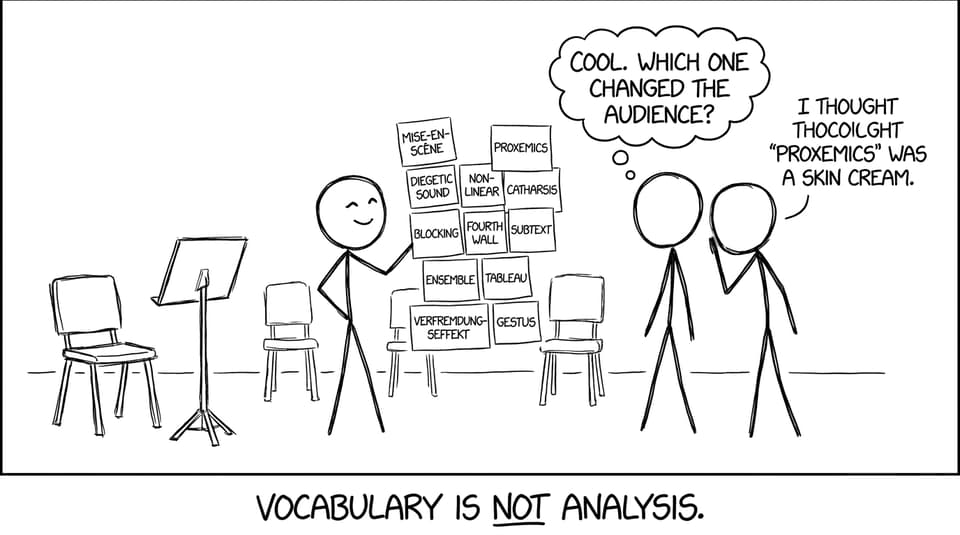
Mistake: listing theatre terminology without meaning
Vocabulary helps, but only if it’s attached to an effect.
Fix: every term must answer “What changed for the audience?” or “What problem did this solve?”
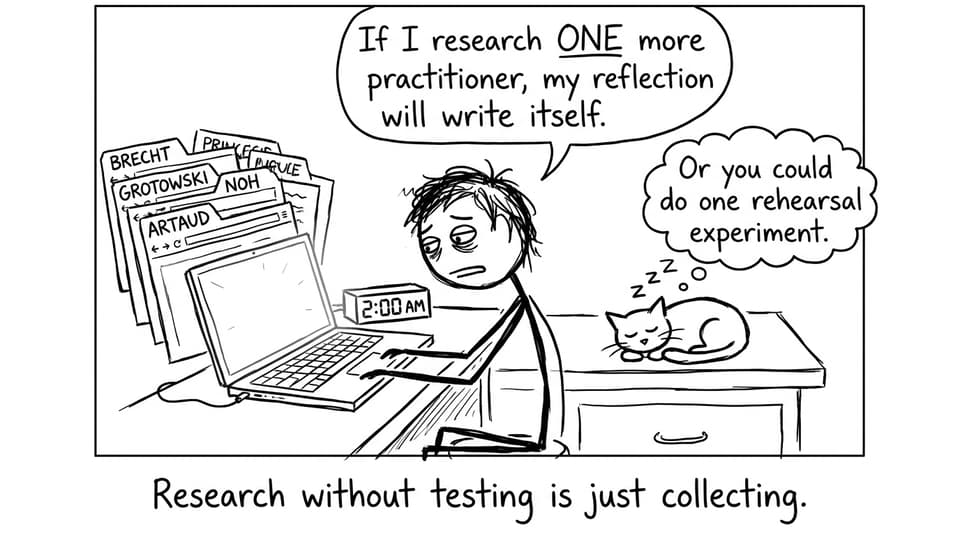
Mistake: researching without testing
A stack of practitioners is not a process.
Fix: one practitioner principle per rehearsal, one experiment, one evaluation.
For structured documentation models, especially for performance-based tasks, see How to Document Your Creative Process for the IB Theatre Solo Piece and How to Aim for a Level 7 in the IB Theatre Solo Theatre Piece.
How RevisionDojo helps you reflect like a top scorer
The hard part of IB Theatre reflection is not knowing what to write. It’s knowing what to notice.
RevisionDojo is built to make that easier in a practical, repeatable way:
-
Use Study Notes to clarify practitioners, conventions, and key vocabulary quickly.
-
Use Flashcards to keep theatre terms and principles active in your memory (so your reflection sounds precise under time pressure).
-
Use the Questionbank to practise exam-style thinking: intention, evidence, evaluation.
-
Use AI Chat when you’re stuck turning a rehearsal moment into analytical wording.
-
Use Grading tools to self-check your writing against criteria and avoid blind spots.
-
Use Predicted Papers and Mock Exams to practise reflective analysis under realistic conditions.
-
Use the Coursework Library to compare what “good evidence” looks like.
-
Use Tutors when you need targeted feedback on clarity and depth.
If you’re aiming for specific targets, it can also help to keep an eye on IB Theatre Grade Boundaries and the component breakdown in How to Score a Level 7 in IB Theatre: Complete Guide.
Closing: turn your IB Theatre process into proof
The difference between a mid-level portfolio and a high-scoring IB Theatre portfolio is rarely talent. It’s the habit of turning each rehearsal into proof: proof of intention, proof of theory in action, proof of audience awareness, proof of growth.
If you want a system that makes that habit easier, build your routine inside RevisionDojo: review with Study Notes, retain with Flashcards, apply with the Questionbank, clarify with AI Chat, and sharpen with Grading tools, Mock Exams, and Predicted Papers. Your process is already happening. The marks come from how clearly you can reflect on it; in IB Theatre, that clarity is the performance behind the performance.