
A Psychology Internal Assessment can make a capable student look unusually stuck. The difficulty is not always psychology itself. It is the collision of research design, ethics, evidence, statistics, academic writing, and deadlines inside one assignment.
If you are a parent wondering how to help, the clearest answer is this: support the process, protect the student's ownership, and direct subject-specific questions toward approved guidance. Supporting IB Psychology IA work does not require you to understand every theory or research method. Your most useful role is to help your child plan manageable steps, explain their own reasoning, follow ethical and academic-integrity rules, and seek feedback before confusion becomes panic.
One complication matters immediately. IB Psychology is in a syllabus transition, and the IA requirements differ by assessment session. Students following the course for first assessment in 2027 complete a research proposal, while students in an earlier session may be working under the previous experimental-investigation format. Always confirm the applicable requirements with the Psychology teacher or IB coordinator. RevisionDojo's IB Psychology IA guide for first assessment 2027 can then help your child interpret the relevant structure.
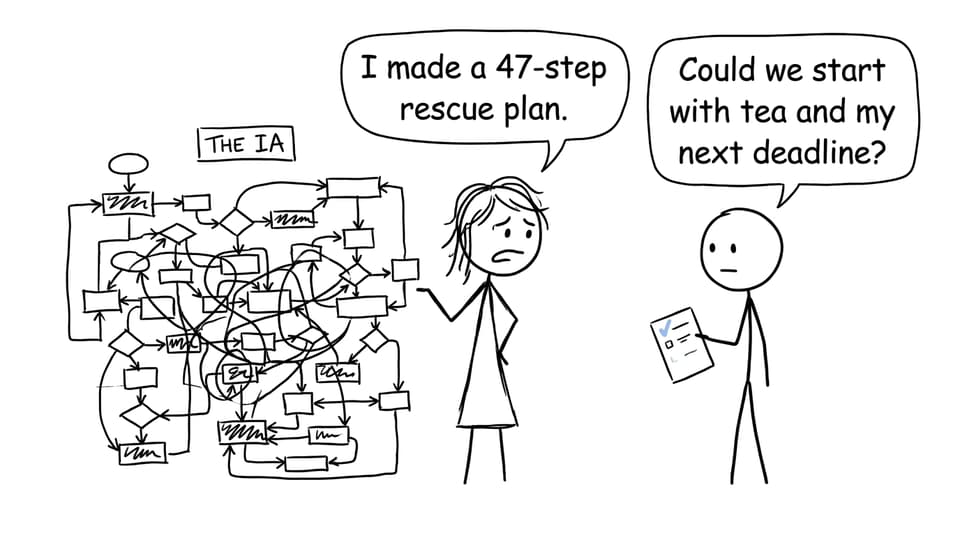
A Parent's IB Psychology IA Support Checklist
Before trying to solve anything, focus on these practical actions:
- Confirm the student's assessment session, syllabus, school deadline, and approved IA format.
- Ask your child to explain the investigation or proposal in plain language.
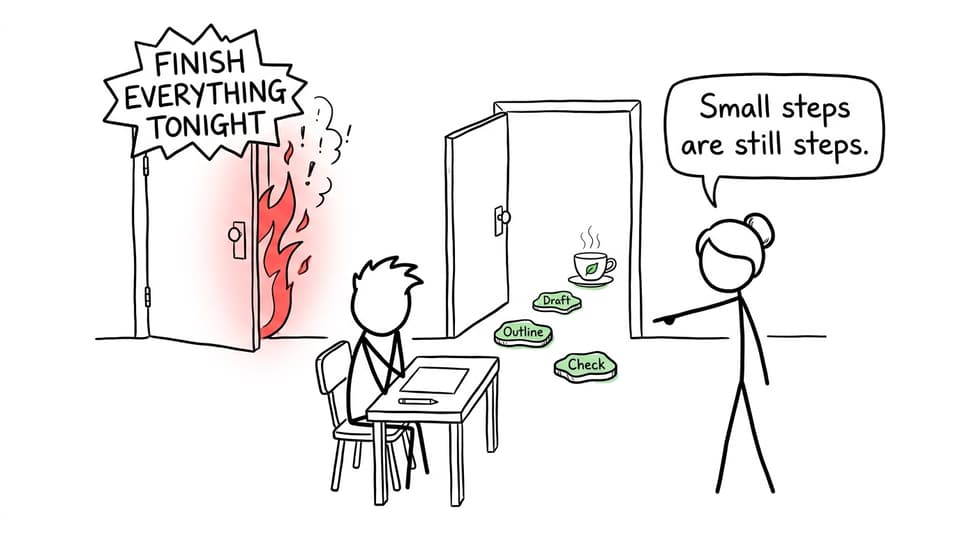
- Break the work into visible milestones rather than one intimidating deadline.
- Encourage early questions to the teacher about ethics, methods, and criteria.
- Provide time, a workable study environment, and emotional steadiness.
- Discuss academic integrity and keep all final decisions and writing with the student.
- Use Psychology-specific feedback tools when the student needs structured guidance.
- Protect a small amount of continuing exam revision during the IA period.
This is the heart of good IB internal assessment help: not supplying answers, but creating conditions in which the student can produce better answers independently.
Start by Understanding Which Psychology IA Applies
Parents often search online and find contradictory advice. In this case, the contradiction may be real rather than careless. Older Psychology materials describe an experimental investigation and individual report. Materials for first assessment in 2027 describe a research proposal focused on a population of interest and an appropriate research method.
That difference changes the student's task. It can affect the structure, permissible methods, assessment criteria, and type of evidence required. A beautifully organized checklist for the wrong syllabus is still the wrong checklist.
Ask your child three simple questions:
- Which examination session are you entered for?
- Which Psychology subject guide is your class using?
- What instructions and interim deadlines has your teacher provided?
If the answers are unclear, encourage your child to contact the teacher directly. Parents can also use RevisionDojo's broader IB Internal Assessment guide collection to understand how coursework criteria, structure, and examiner expectations fit together. The teacher remains the authority on the version being taught at school.
Help Your Child Explain the Investigation Clearly
A student who can explain a project simply usually understands its foundations. A student who hides behind complicated terminology may still be uncertain about what the investigation is trying to accomplish.
You do not need to test their psychological knowledge. Instead, invite them to explain:
- the population or participants of interest
- the purpose of the proposed or completed investigation
- the psychological idea behind it
- the chosen research method
- the evidence or data involved
- the main ethical considerations
- what the findings could and could not establish
Use neutral prompts such as, "Why is that method suitable?" or "What would make that conclusion too strong?" These questions require the student to think without giving them material to submit.
If key concepts remain uncertain, direct them to RevisionDojo's IB Psychology resources, where Study Notes, Flashcards, lessons, and Questionbank practice can strengthen the knowledge surrounding the coursework. Understanding comes before polishing.
Build a Timeline That Makes Progress Visible
Long assignments produce a peculiar kind of stress. Because the final deadline is distant, every evening can feel optional until suddenly none of them are.
Replace "work on the IA" with milestones that describe an observable outcome. Depending on the applicable course, these might include confirming the purpose, selecting and justifying a method, reviewing research, drafting one section, checking citations, applying teacher feedback, and completing a final criteria review.
| Parent can support | Student must own |
|---|---|
| Recording school deadlines on a shared calendar | Deciding what academic work each milestone requires |
| Protecting two or three focused work periods | Researching, drafting, analyzing, and revising |
| Asking whether a milestone was completed | Judging the quality of the academic content |
| Encouraging an early teacher question | Communicating directly with the teacher |
| Helping preserve sleep and ordinary routines | Submitting authentic work on time |
RevisionDojo's guidance on time management for IB students offers practical ways to divide major assignments into weekly steps. The aim is not parental surveillance. It is to make delay easier to notice and progress easier to trust.
Support Ethical Research Without Becoming the Research Supervisor
Psychology coursework carries responsibilities beyond formatting. Research involving people must respect the ethical requirements established by the current guide and the school. Depending on the task, students may need to address informed consent, withdrawal, privacy, confidentiality, potential harm, debriefing, or the suitability of a proposed method.
A parent should not independently approve a study or recruit participants. That belongs within the school's supervision process. Your role is to encourage caution and ask whether the teacher has approved the relevant choices before the student proceeds.
Useful questions include:
- Has your teacher approved this method or proposal?
- How will participants' rights and well-being be protected?
- Are you collecting only the information you genuinely need?
- How will identities and data remain protected?
- Have you followed the exact ethical rules for your syllabus?
If your child cannot answer, the next step is not improvisation. It is a conversation with the teacher.
Know the Boundary Between Support and Authorship
There is a quiet temptation in coursework. A parent notices an awkward paragraph, rewrites it, and believes they have merely helped with clarity. Yet the improvement may no longer reflect the student's independent ability.
IB academic integrity applies to deliberate and inadvertent behavior that could create an unfair advantage. Parents can discuss ideas, routines, citations, and the need for authentic work. They should not write sections, generate analysis, select conclusions, or transform a draft into language the student could not independently produce.
A safe boundary is to respond as a reader rather than a co-author. You might say, "I lost the thread here," but not supply the replacement argument. You can ask whether every source is acknowledged, but you should not build the references on the student's behalf. RevisionDojo's guide to how parents can support IB academic integrity provides a useful framework for these conversations.
Encourage Criteria-Based Revision, Not Endless Editing
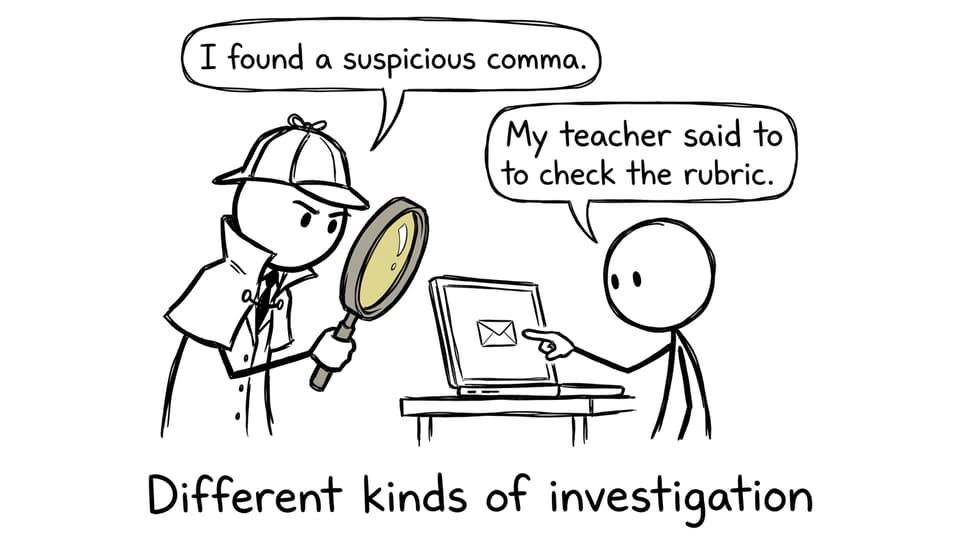
Students frequently revise whatever is easiest to see: wording, headings, spacing, and sentence length. These details matter eventually, but the assessment criteria usually reveal more consequential gaps.
Ask your child to complete a criteria audit:
- Where does the draft meet each requirement?
- What claim is supported by evidence?
- Is the choice of method explained rather than merely named?
- Are limitations linked to their consequences?
- Does the conclusion stay within what the design or proposal can justify?
- Are citations complete and consistent?
Internal assessments are initially marked by teachers and externally moderated by the IB. RevisionDojo's explanation of how IA moderation works helps families understand why alignment with official criteria matters more than making the prose sound impressive.
For more focused feedback, students can use the IB Psychology IA Grader to review structure and criteria in a Psychology-specific context. Feedback should prompt the student's next decision, not make that decision for them. School rules on permitted AI use and external feedback must always come first.
Keep the IA From Consuming Exam Preparation
An IA deadline can expand until it occupies every available hour. That may feel responsible, but it can quietly weaken performance elsewhere. The better approach is a temporary shift in priorities, not the abandonment of every other subject.
During an intense coursework week, a student might preserve a modest exam routine: short Flashcard sessions, a small Questionbank set, or one timed response. RevisionDojo's step-by-step IB exam study guide explains how understanding, recall, application, and error review can fit into repeatable study blocks.
The wider RevisionDojo platform connects that routine. Psychology Study Notes and Flashcards reinforce concepts; the Questionbank develops application; AI Chat can clarify difficult terminology; and Mock Exams or Predicted Papers support timed preparation. Its Grading tools, Coursework Library, and Tutors provide deeper assistance when a student needs feedback or human guidance. The important principle remains unchanged: tools should strengthen independent judgment rather than replace it.
When Your Child Is Stuck, Diagnose the Type of Problem
"I can't do this" often combines several different problems. Ask which one is actually present:
- Knowledge problem: The student does not understand the theory, concept, or method.
- Structure problem: They know the material but cannot organize it around the criteria.
- Decision problem: Several options seem plausible, and they need teacher clarification.
- Feedback problem: They cannot tell what is currently weak.
- Capacity problem: Exhaustion or anxiety is preventing productive work.
Each problem needs a different response. More writing will not fix a misunderstood method. More resources will not fix severe fatigue. Editing sentences will not resolve an unapproved research decision.
If stress is persistent, intense, or affecting sleep and everyday functioning, involve the school counselor, coordinator, or an appropriate health professional. Academic support works best when well-being is treated as part of the plan rather than the price of success.
Calm Structure Is More Valuable Than Expert Knowledge
Parents do not need to become Psychology teachers. They need to help their child find the correct requirements, divide the work into manageable stages, preserve ethical boundaries, and ask for qualified feedback at the right time.
That is what effective support looks like: close enough to notice when the process is failing, but far enough back for the work to remain genuinely the student's.
When "I don't know enough about Psychology to help" is the central concern, RevisionDojo offers a practical next step. Begin with the current Psychology IA guide, then use Psychology-specific structuring and feedback tools to identify what the student should review. Combined with RevisionDojo's subject resources and tutoring support, this creates a clear path from uncertainty to independent action, without asking a parent to supply the academic answers.