
Your teacher hands back your IA with a number on it, and for a moment it feels solid, like you can finally stop thinking about it.
Then someone says, “But it gets moderated.”
That single sentence can make your IA feel like it’s floating. The truth is calmer: IA moderation is not a secret re-mark of your personal work. It’s a global fairness check designed to make sure an IA scored in one school means roughly the same thing as an IA scored anywhere else.
IA moderation in one quick checklist
If you only remember one flow, remember this:
-
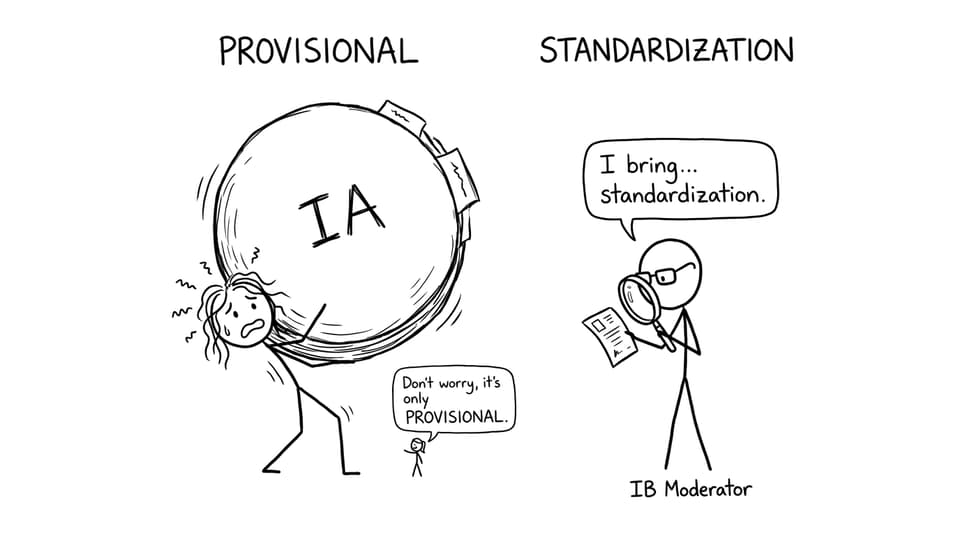
Your teacher marks every IA using the official rubric (provisional mark).
-
Your school submits all IA marks to the IB.
-
The IB requests a sample of work from your cohort.
-
An IB moderator checks whether marking matches global standards.
-
If needed, the IB applies an adjustment to the whole cohort.
-
That moderated IA mark combines with exam performance to shape your final grade.
For deeper coursework support across subjects, start with IB IA Guides and the broader IB Coursework Guides.
What happens before moderation: your teacher marks the IA
First, your subject teacher grades your IA against the IB criteria. This is not “opinion grading” when done properly; it’s criterion-based marking.
Two things can be true at once:
-
Teachers are trained and often very accurate.
-
Small differences in interpretation happen between schools.
That’s why your teacher’s IA mark is best understood as a well-informed estimate until moderation finishes. If you want to build your IA so it’s easier to mark consistently, a strong research question helps more than most students expect. Use How to Write a Strong IA Research Question as a practical starting point.
How the IB chooses what to review (and why you can’t influence it)
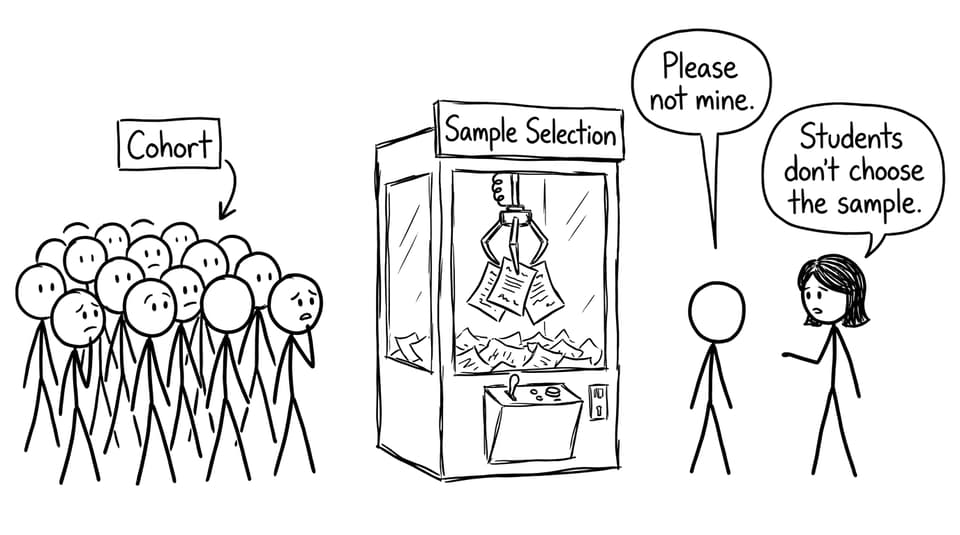
After internal marking, your school sends the IB two things: all IA marks and a sample of student work. The sample is meant to represent the whole cohort: high, middle, and low scoring work.
Students do not pick the sample. Teachers do not pick the sample. That’s the point.
If you’re unsure who actually evaluates what, Who Grades the IAs? breaks down the roles cleanly.
What the moderator is actually checking in your IA
An IB-appointed moderator re-marks the sampled IA work using the same rubric language. Their job is not to “catch you out.” It’s to check whether your school’s marking standard matches the IB’s global standard.
They look for patterns like:
-
criteria applied too generously or too harshly,
-
inconsistencies across the cohort,
-
unclear evidence for a criterion level.
A helpful mental model: moderation is calibration. The IB is aligning measuring tools, not judging effort.
If you want the longer, calmer version of this idea, How IA Moderation Works in the IB (Without the Panic) is worth reading.
What an “adjustment” means (and why it applies to everyone)
If the moderator sees a consistent gap between the teacher’s marks and the IB standard, the IB can apply a moderation adjustment.
Key facts IB students preparing for exams should know:
-
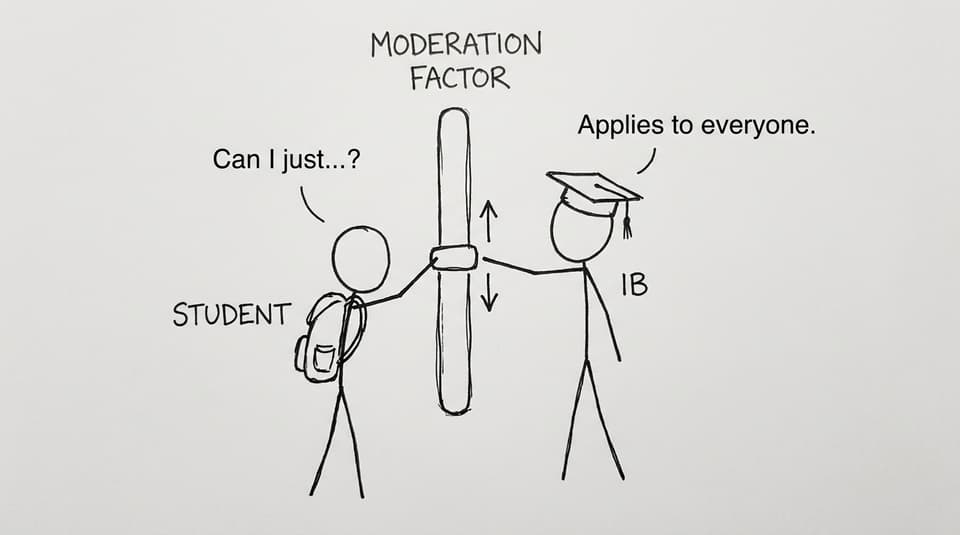
It usually applies to the entire cohort for that subject component.
-
Marks can go up or down.
-
The IB is not re-grading every IA individually; it’s aligning the cohort to the standard.
So how do you “protect” your IA? You make it easy to award marks consistently. That means obvious criterion evidence, clear structure, and explicit justification.
RevisionDojo is built around that kind of clarity: the Coursework Library helps you benchmark what top work looks like, and the Grading tools help you stress-test your IA against rubric strands before it’s too late. Start exploring via Coursework | RevisionDojo and browse examples at IB Coursework Examples: IA, EE and TOK Exemplars.
What moderation means for your exam season
Here’s the quiet strategy most high scorers follow: treat the IA as “submitted and steady,” then keep your exam prep system alive.
A good rhythm is:
-
use Study Notes to patch weak content,
-
drill with the Questionbank for accuracy under markscheme logic,
-
run timed practice with Mock Exams and Predicted Papers.
You can plug these into one place through Questionbank and IB Predicted Papers by IB Examiners (Free). If you need a full workflow, RevisionDojo App: The Smarter Way to Prep for IB Exams lays it out.
Final takeaway: build an IA that survives any marker
IA moderation exists so that your work is judged on the same scale as everyone else’s. That’s not something to fear; it’s a safeguard.
If you want your IA to hold steady, write for the rubric: make your reasoning visible, label evidence clearly, and remove ambiguity. Then protect your final grade by keeping exam practice consistent with RevisionDojo’s Study Notes, Flashcards, AI Chat, Questionbank, Grading tools, Mock Exams, Predicted Papers, Coursework Library, and Tutors.
Your IA matters. But clarity matters more, because clarity is what moderation rewards.