


Parents don’t usually cause academic misconduct in the IB. But they can accidentally create the conditions for it.
It often starts innocently: a late-night deadline, a tired student, a parent hovering nearby with the most loving question in the world: “Want me to help?” In exam season, that question can feel like a life raft. It can also feel like pressure.
IB academic integrity isn’t just a school policy. It’s a home atmosphere. It’s the daily message your family sends about what matters more: learning, or looking like you learned.
This guide is for IB students preparing for exams who want calm, practical support from parents without losing ownership of their work. It’s also for the parents who want to help without stepping over the line.
Quick checklist: what parents can do this week for IB integrity
Use this as a simple reset. It’s designed for real IB weeks, not ideal ones.
-
Agree on a definition: “Integrity means the work is mine, and I can explain it.”
-
Create a visible plan: deadlines, mini-deadlines, and buffer days.
-
Build a study routine that makes shortcuts unnecessary.
-
Set tech boundaries that reduce temptation without spying.
-
Encourage asking teachers early (not apologizing late).
-
Use ethical study tools: practice, feedback, and reflection, not copy-and-submit.
-
Decide in advance what “help” looks like (and what it doesn’t).
If you want a broader student guide to the same topic, pair this with How to Uphold Academic Integrity in IB Assessments.
What academic integrity means in the IB (in human terms)
The IB frames academic integrity as values and behaviors that support honest scholarship. That can sound abstract until you translate it into exam-season reality:
-
Your ideas are your own, even when you used sources.
-
Your words are your own, even when you learned from models.
-
Your decisions are traceable: you can explain how you got there.
-
Your help is transparent: you can say who helped and how.
For students, integrity is often a time-management problem wearing a morality costume. When you’re calm and ahead, you cite correctly, write in your own voice, and ask questions. When you’re drowning, you start bargaining with the rules.
If you want a deeper reflection on why this matters beyond grades, read Why Academic Integrity Matters in the IB: Lessons for Life and University.
The parent’s role: reduce pressure, protect ownership
There are two kinds of support in IB season:
Support that strengthens integrity
-
Helping you build a realistic schedule
-
Providing quiet time and fewer distractions
-
Asking you to teach back what you studied
-
Encouraging you to contact teachers early
-
Celebrating effort, not just outcomes
Support that weakens integrity (even when well-intended)
-
Rewriting sentences “to sound smarter”
-
Fixing structure by inserting paragraphs
-
“Just showing you how I would answer it” (then the student copies)
-
Treating the grade like the family’s score
Parents don’t need to police. They need to protect the one thing the IB is trying to develop: independent thinking.
A helpful way to set boundaries is to create a “help menu” together:
-
Parents can: quiz flashcards, time a practice set, read the rubric, ask questions.
-
Parents cannot: draft, rewrite, paraphrase sources, or provide “final wording.”
Why students slip: the pressures parents can actually change
Most IB integrity problems aren’t about bad character. They’re about predictable stress.
Time compression
The closer you get to a deadline, the more attractive shortcuts become. Parents can help by making time visible. Not motivational quotes, but a calendar with mini-deadlines.
Fear of disappointing people
Students rarely say it directly, but many feel they’re carrying expectations for their family. Parents can lower the temperature by separating identity from results: “We want you well and learning; the grade is information.”
Confusion about what counts
Some students genuinely don’t know where collaboration ends and collusion begins, or when AI use becomes misrepresentation. Parents can normalize asking: “Let’s check what your school allows.”
For a specific look at integrity expectations in major research work, see What Are IB’s Expectations for Academic Honesty in the Extended Essay (EE)?.
How to talk about IB integrity without making it a courtroom
A good conversation about IB integrity feels like coaching, not cross-examination.
Try questions that invite a process explanation:
-
“Show me how you found your sources.”
-
“Which part is your idea, and which part came from reading?”
-
“If your teacher asked you to defend this paragraph, what would you say?”
-
“Where are you most tempted to rush?”
Notice what these questions do: they keep ownership with the student. They also quietly teach the real standard of academic integrity in the IB, being able to explain your work.
And when the student admits they’re overwhelmed, the best parent move is not to rescue the assignment. It’s to rescue the plan.
Technology at home: boundaries that reduce temptation (and anxiety)
Tech is not the enemy of IB success. Unstructured tech is.
Parents can support academic integrity by setting boundaries that feel normal, not punitive:
-
A shared “focus window” (for example, 60-90 minutes) where phones are out of reach
-
A single-task rule: one assignment, one device, one tab cluster
-
A transparent approach to AI: use it to learn, plan, and check understanding, not to produce final assessed writing
If you’re unsure about mentioning AI use in reflections or research, read Should I Mention My Use of AI in CAS Reflections or EE Research?.

Studying ethically for IB exams: a parent-supported system that works
The fastest way to make integrity easier is to make progress measurable. That’s where a repeatable revision loop matters.
A simple IB routine that parents can support (without doing the work):
-
Learn: use Study Notes to clarify one topic quickly.
-
Remember: run daily Flashcards to keep recall alive.
-
Apply: do targeted practice in the Questionbank, not random questions.
-
Get unstuck: use AI Chat for explanations and then write answers in your own words.
-
Simulate pressure: use IB Predicted Papers and Mock Exams to build stamina.
This is the heart of how RevisionDojo supports IB students: it turns studying into a feedback loop rather than a guessing game. If you want the bigger picture of that loop, see RevisionDojo App: The Smarter Way to Prep for IB Exams.
Parents can help by asking for proof of the loop:
-
“Which topic did you learn?”
-
“Which flashcards did you review?”
-
“What mistakes did you repeat, and what changed today?”
That’s support. Not editing.
If you want a practical guide to question practice, read IB Question Bank: How to Use It Effectively.
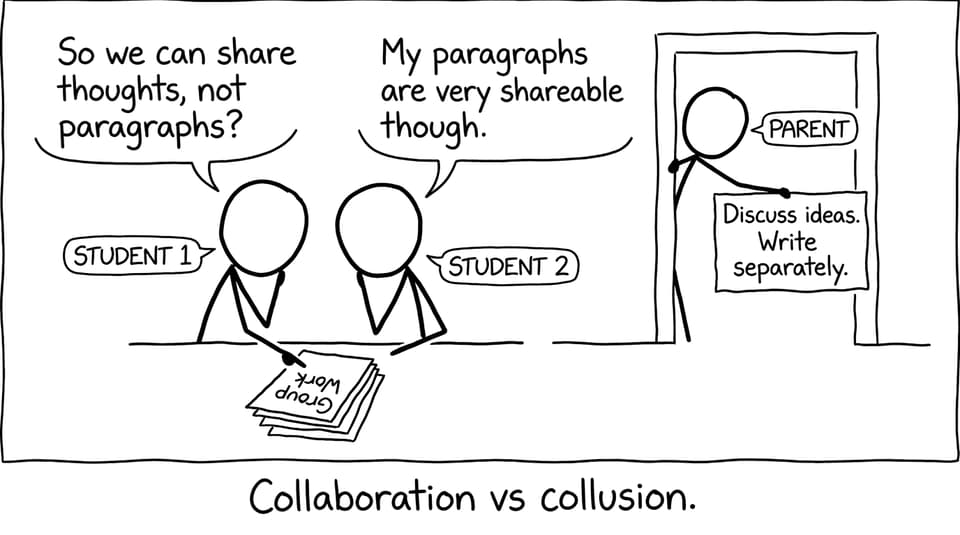
Collaboration at home: support without collusion
Group study can be healthy for IB exam prep. It becomes risky when students swap finished wording, calculations, or data.
A parent-friendly rule:
-
Discuss concepts together.
-
Compare approaches.
-
Write separately.
You’re allowed to learn together. You’re not allowed to submit the same work.
How RevisionDojo fits: ethical help that still boosts results
Some revision tools tempt you to skip the thinking. RevisionDojo is built to reward it.
-
The Questionbank pushes you to produce your own answers, then learn from mark-scheme-aligned feedback.
-
Study Notes give clarity without turning into a script you copy.
-
Flashcards make daily recall light enough to sustain.
-
AI Chat helps you understand faster, but you still have to write.
-
Grading tools let you improve drafts through rubric-aware feedback rather than guesswork.
-
Predicted Papers and Mock Exams make exam practice realistic and measurable.
-
The Coursework Library shows what quality looks like, reducing panic that can trigger shortcuts.
-
Tutors add a human plan when you need one, without crossing authorship lines.
If you want an integrity-focused explainer of the platform’s philosophy, read How RevisionDojo Helps You Maintain Academic Integrity While Studying.
Closing: IB integrity is easier when your home is calm
The quiet truth of the IB is that integrity is rarely tested when things are going well. It’s tested when you’re tired, behind, and scared of the consequences.
Parents can’t take exams for you, and they shouldn’t take authorship from you. But they can do something more powerful: make honesty feel possible by making the process manageable.
If you want an integrity-first exam routine, build it with RevisionDojo: Study Notes for clarity, Flashcards for daily recall, Questionbank practice for marks, AI Chat and Grading tools for fast feedback, and Predicted Papers plus Mock Exams for realistic rehearsal. The result is simple: more confidence, less temptation, and IB progress you can genuinely own.