The difficult part of helping with an IB Internal Assessment is not caring too little. It is caring so much that stepping in begins to feel responsible.
Your child may be facing a narrow research question, imperfect data, several deadlines, and exams that have not paused simply because coursework is due. You want to help. The safest and most useful answer is clear: support the process, protect the routine, and leave the academic decisions and writing to the student.
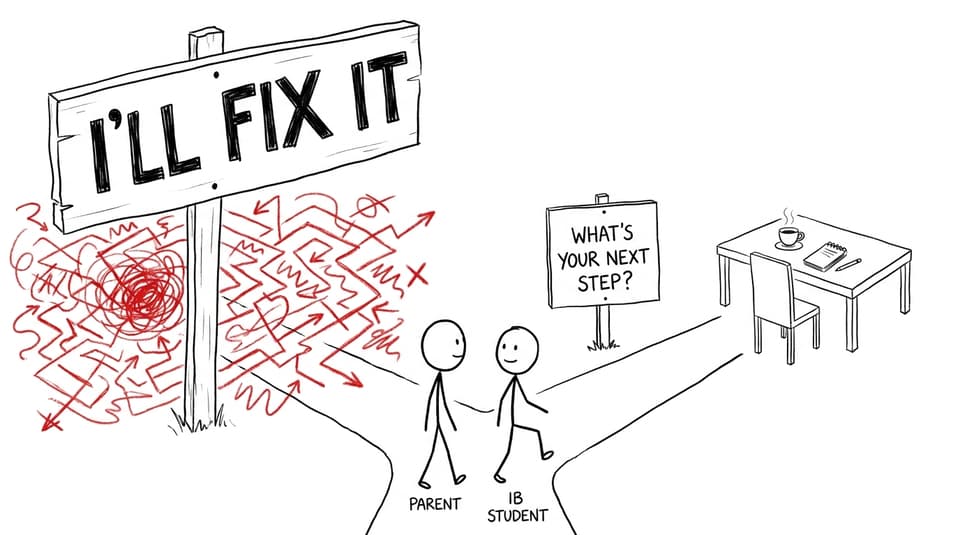
Supporting IA work well means helping your child plan manageable steps, asking questions that clarify their thinking, and directing subject-specific concerns to their teacher. It does not mean rewriting sentences, correcting the analysis, selecting conclusions, or arranging unauthorized assistance.
That boundary is not a limitation on parental support. It is what makes the support valuable.
A quick checklist for IB parents
Use this checklist when an IA deadline is approaching:
- Ask your child to explain the task, rubric, and next milestone.
- Put school deadlines on a shared calendar only with their agreement.
- Help divide the project into research, data collection, analysis, drafting, and checking stages.
- Protect regular working time, sleep, meals, and reasonable breaks.
- Discuss obstacles without trying to solve the academic problem yourself.
- Encourage early questions to the subject teacher or IB coordinator.
- Confirm that sources, quotations, data, and permitted AI use are acknowledged correctly.
- Never write, substantially edit, or commission any part of the assessment.
- Keep exam preparation moving alongside coursework.
Understand what an IB Internal Assessment requires
An Internal Assessment, commonly called an IA, is a subject-specific assessed task completed during the IB Diploma Programme. Its form varies significantly. Depending on the subject, a student might conduct an investigation, analyze data, produce an oral component, examine an organization, or develop a focused written inquiry.
The details therefore need to come from the current subject guide and the student's school, not from a generic template found online. Word limits, assessment criteria, teacher-feedback arrangements, and internal deadlines can differ by subject and cohort.
In many subjects, the teacher initially marks the work using the relevant criteria. The IB then uses moderation to check whether marking standards are being applied consistently. RevisionDojo's explanation of who marks an IA and how moderation works provides a helpful overview of this process.
This matters for parents because an IA is not simply a long homework assignment. It is assessed evidence of the student's decisions, understanding, and subject skills. A polished submission that the student cannot explain is not a successful form of support.
Supporting IA work without taking over
A useful distinction is the difference between process support and content intervention.
| Helpful process support | Support that crosses the line |
|---|---|
| Creating a calendar together | Setting the research question for the student |
| Asking what the rubric requires | Telling the student what argument to make |
| Providing a quiet place to work | Rewriting paragraphs or analysis |
| Encouraging a teacher meeting | Hiring someone to correct assessed content |
| Asking the student to explain a graph | Producing, altering, or selecting data |
| Reminding them to check citations | Adding sources or citations on their behalf |
The best questions preserve ownership. Try asking:
- “What is the next decision you need to make?”
- “Which criterion are you working on today?”
- “What part should you ask your teacher about?”
- “Can you explain what this result means in your own words?”
- “What would make this task small enough to begin?”
These questions do not supply an answer. They help the student find the next action, which is often what disappears when stress rises.
Research on autonomy-supportive parenting generally points in the same direction: adolescents benefit when parents acknowledge their perspective, provide structure, and encourage independent decisions rather than relying on controlling language. The lesson for IB diploma parents is practical. Warmth and boundaries can coexist.
Build a timeline that leaves room for thinking
A deadline is a date. A plan is a sequence.
Ask your child to work backward from the school's internal deadline and identify the major stages. A sensible outline might include:
- understanding the task and criteria;
- refining the research question with teacher guidance;
- locating and recording credible sources;
- designing the method or analytical approach;
- collecting information or data;
- drafting analysis and evaluation;
- using permitted feedback;
- checking citations, presentation, and required components;
- submitting ahead of the final cutoff where possible.
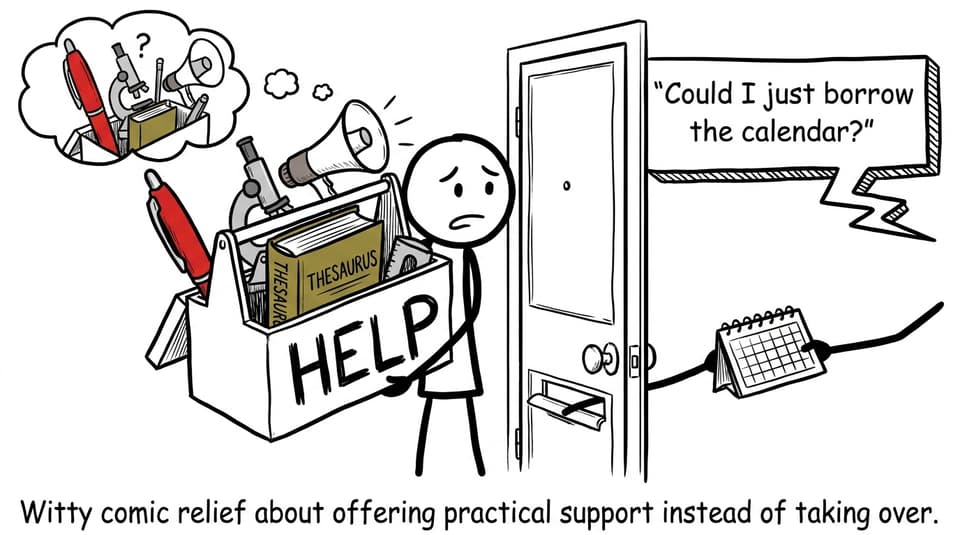
The plan should belong to the student. A parent can hold the calendar, but the student should estimate the tasks and update progress. This small detail preserves responsibility.
It also helps to define a minimum action for difficult evenings: organize two sources, label one graph, review one criterion, or write questions for the teacher. Small steps are not a lowering of standards. They prevent avoidance from becoming a crisis.
For students balancing coursework with exams, RevisionDojo's realistic IB study plan offers a broader structure, while its low-stress daily IB schedule can help turn intentions into repeatable study blocks.
Protect academic integrity and student authorship
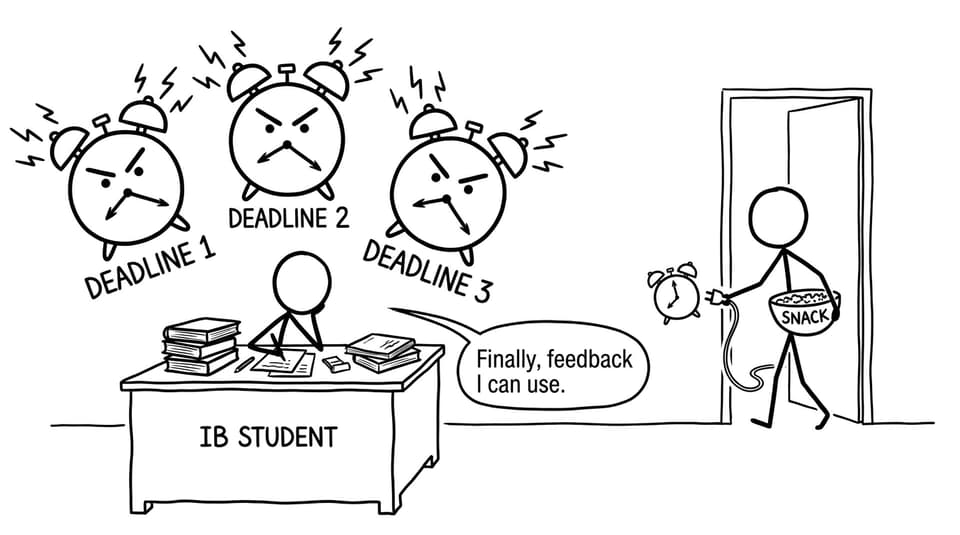
The IB expects submitted assessment work to be authentic. Its academic integrity guidance specifically places a responsibility on parents and guardians to understand relevant policies, support manageable workload planning, and avoid giving or obtaining unauthorized assistance.
That means parents should not:
- draft or rewrite assessed text;
- perform calculations or analysis for the student;
- heavily copy-edit language until the student's voice is replaced;
- provide uncredited ideas, data, images, or sources;
- ask a tutor or online service to repair the work;
- allow AI-generated material to be presented as the student's own.
The IB does not treat AI output as automatically belonging to the student. If generated text, images, or graphs are incorporated, the use must be clearly acknowledged and referenced according to applicable guidance. Schools may also set more specific rules, so the safest step is to ask the teacher before using AI on assessed work.
A simple household rule works well: technology may help the student understand feedback, but it must not become the author. Students can read RevisionDojo's guide to using AI safely for an IB IA and its broader IB academic integrity guide before uploading or generating anything.
Keeping outlines, source records, raw data, calculations, and successive drafts is also sensible. These materials help the student follow their own reasoning and explain how the work developed.
Give emotional support before academic advice
An overwhelmed student does not always need a solution. Sometimes they need the problem reduced to its actual size.
Begin with observation rather than judgment: “You seem stuck on the analysis,” is more useful than, “You have left this too late.” Then ask whether your child wants help planning, wants to talk, or simply needs quiet working time.
Practical support can be ordinary:
- making food available during a planned work block;
- reducing avoidable household interruptions;
- encouraging a consistent stopping time;
- helping the student prepare questions for school;
- preserving sleep rather than celebrating all-night work;
- noticing when anxiety is persistent or affecting daily functioning.
If stress becomes intense, ongoing, or difficult to manage, involve the school and seek appropriate professional support. The goal is not to diagnose the problem at home. It is to avoid treating distress as a time-management failure. RevisionDojo's guide to supporting a child with IB anxiety offers a calm starting point for that conversation.
Know when subject-specific help is appropriate
Parents are not expected to understand every regression, literary technique, experimental limitation, or economic diagram. Trying to become the emergency subject expert can create more confusion.
The subject teacher should remain the first source of clarification about criteria, permitted feedback, deadlines, methods, and authenticity. An IB coordinator can help when the issue involves school policy or the wider Diploma Programme. If a tutor is involved, confirm that the tutor understands IB academic integrity and coaches understanding without editing assessed work.
Good IB internal assessment help teaches the student to make better decisions. It does not quietly make those decisions for them.
Turn feedback into the student's next action
Feedback is most useful when the student can translate it into a specific revision task. “Improve evaluation” is vague. “Identify the most important limitation, explain its effect on the result, and justify a realistic improvement” is actionable.
The student should still decide what to change and write every revision. Parents can ask them to summarize feedback aloud or create a three-column list: criterion, evidence currently present, and next improvement.
Near the end of the process, RevisionDojo can provide that practical second layer of structure. Its IB Coursework Grader gives rubric-aligned annotations and criterion breakdowns, while the guide to its coursework annotation tool explains how targeted comments can guide revision. Feedback should be treated as guidance to evaluate, not text to copy, and the school's rules always come first.
RevisionDojo also helps prevent an IA from consuming the entire study schedule. Students can use Study Notes and Flashcards to retain content, the Questionbank to continue applying it, and AI Chat to clarify difficult concepts. Grading tools and the Coursework Library support coursework reflection, while Predicted Papers and Mock Exams build timed practice. When human guidance is needed, Tutors can help students understand the subject while respecting authorship.
The best support leaves ownership intact
Supporting an IA is an exercise in restraint, but not distance. Your child needs structure without surveillance, questions without supplied answers, and reassurance without false promises.
Start with one conversation: ask what is due, what is unclear, and what the next independent step will be. Put that step on a realistic calendar. Encourage the right conversation with the teacher. Then let the work remain unmistakably theirs.
When your child needs clearer, criterion-based direction, explore RevisionDojo's coursework feedback tools together. Used ethically, they can turn a large, emotional task into a visible revision process while preserving the one thing every IA must retain: the student's own thinking.

