
The hardest part of the IB isn’t always the content. Sometimes it’s the feeling that you’re one missed deadline away from everything collapsing.
If you’re an IB student preparing for exams and anxiety keeps showing up at your desk, you’re not broken. You’re responding to uncertainty, pressure, and a workload that rarely pauses. And if you’re a parent watching this up close, your support can matter more than any “motivation speech” ever will.
What follows is a calm, practical guide to supporting anxiety during IB exam prep -- built around what actually lowers stress: clarity, routine, and small wins.
Quick checklist: what helps most with IB anxiety
-
Name what’s happening: anxiety is a signal, not a verdict.
-
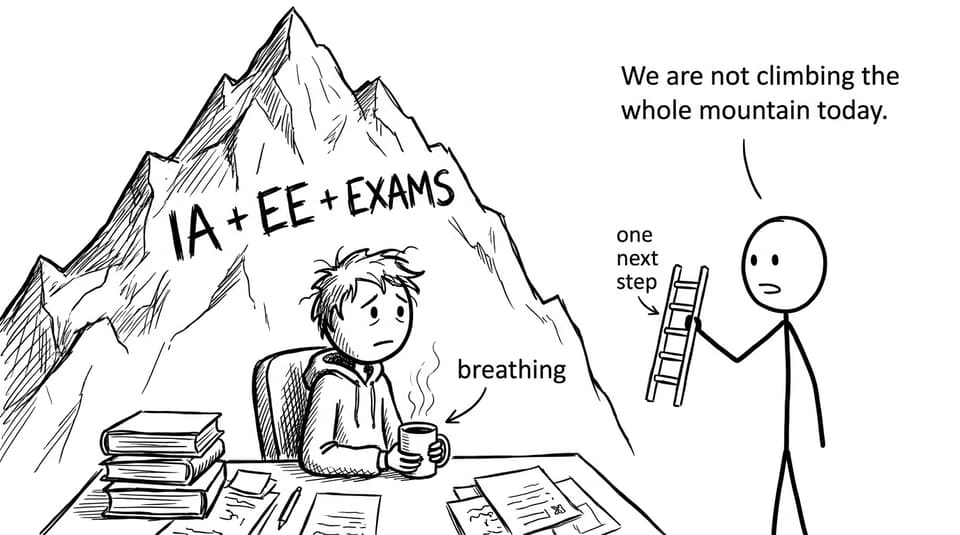
Make the next step tiny and specific.
-
Build a predictable routine (sleep, food, movement).
-
Reduce decision fatigue with one study “home base.”
-
Practice under gentle time pressure to make exams feel familiar.
-
Get help early if anxiety starts taking over daily life.
Why IB anxiety feels so intense
IB anxiety often comes from a simple pattern: the workload is big, the stakes feel high, and the timeline is not forgiving. Add perfectionism and comparison, and even motivated students can start feeling unsafe in their own thoughts.
Common triggers during IB exam prep include:
-
Too many simultaneous deadlines (IAs, EE, tests, revision)
-
Fear of disappointing teachers, parents, or yourself
-
Uncertainty: “Am I revising the right thing?”
-
Studying that feels like effort but produces no proof (endless rereading)
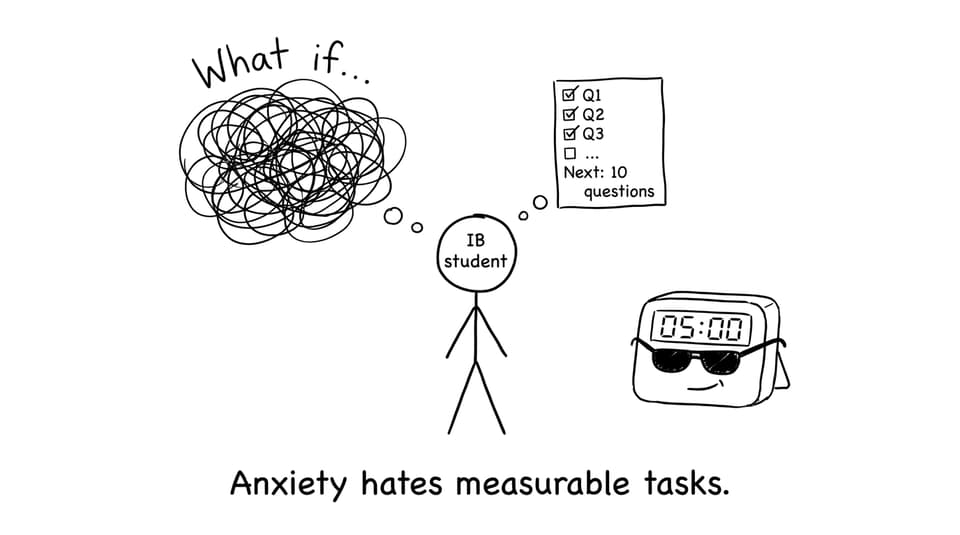
That last one matters. Anxiety loves vague work. It hates measurable tasks.
How parents can support a child with anxiety during IB
Listen first, solve second
When anxiety spikes, many IB students don’t need a plan immediately. They need to feel believed.
Try reflecting what you hear: “That sounds exhausting” or “I can see why that feels scary.” Then ask one gentle question: “Do you want comfort, or do you want strategy?” This single choice restores a sense of control, which anxiety often steals.
Make studying more predictable (and therefore less scary)
A calm routine is not a luxury in IB. It’s part of performance.
Parents can help by protecting the basics: a consistent sleep window, regular meals, and a little movement. You don’t need a perfect wellness plan. You need fewer chaotic days.
If exam season is ramping up, it can help to follow a specific anxiety-focused routine like the one in How to Calm Anxiety the Night Before an IB Exam.
Replace “study more” with “study with proof”
The fastest way to reduce IB anxiety is to turn revision into evidence. That usually means active recall and exam-style practice.
RevisionDojo is designed for that loop:
-
Study Notes for fast clarity (Study Notes)
-
Flashcards for daily recall
-
Questionbank for practice with feedback (Questionbank)
-
AI Chat when you’re stuck and embarrassed to ask again
-
Grading tools to turn “I think it’s wrong” into specific fixes
-
Predicted Papers and Mock Exams to rehearse pressure (IB Predicted Papers)
-
Coursework Library to reduce background stress about what “good” looks like
-
Tutors when you need a human to steady the plan
If you’re building a study routine, pairing short content review with practice is powerful. A good starting point is: notes (10 minutes) then questions (25 minutes) then review (10 minutes). For more structure, see The IB Anxiety Loop (And How to Break It Before Exams).
Help them shrink the next step
Anxiety turns the IB into one giant object: “All of Biology. All of Paper 2. All at once.”
Your job as a parent is to help zoom in:
-
one subject
-
one topic
-
one question set
-
one timed section
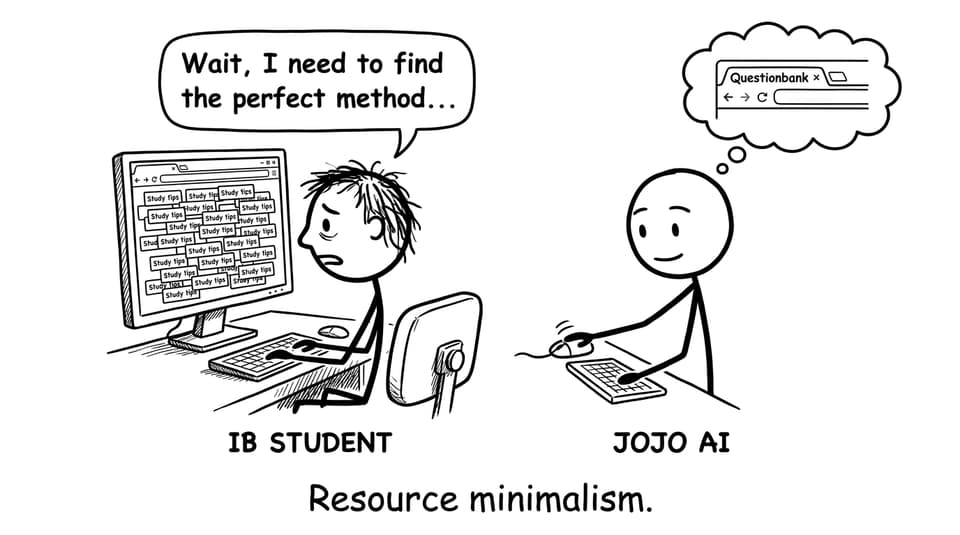
That’s also why a focused practice tool like an IB Question Bank guide can feel calming: it answers “what do I do next?”
Notice warning signs and treat them seriously
Some stress is normal in IB. But persistent anxiety can start changing daily functioning.
Watch for patterns like: insomnia, panic symptoms, frequent headaches or stomach aches, avoiding schoolwork entirely, or shutting down socially for weeks. If that’s happening, it’s wise to involve a school counselor, therapist, or doctor.
For additional guidance, share this with your child: What Mental Health Resources Are Available for IB Students.
What to avoid when your child has IB anxiety
-
“Just relax” (it increases shame)
-
Turning every conversation into a performance review
-
Adding more resources when they’re already overwhelmed
-
Comparing them to siblings, friends, or your own school experience
Anxiety often improves when the home feels like a safe base, not an extra exam room.
Closing: make IB feel smaller, then repeat
IB anxiety grows in the dark: unclear expectations, scattered resources, and plans that are too big to start. The antidote is steady light -- one next step, one proof-based session, one calmer day.
If you’re an IB student preparing for exams, consider building your routine around a single loop: understand with notes, remember with flashcards, apply with questions, then simulate pressure with predicted papers and mock exams. RevisionDojo makes that loop simple by keeping Study Notes, Flashcards, Questionbank, AI Chat, Grading tools, Predicted Papers, Mock Exams, Coursework Library, Tutors in one place.
When anxiety shows up again (because it will), return to the same rule: in IB, you don’t need to win the whole semester today. You only need the next mark.
