


September often begins with clean notebooks and optimistic timetables. A few months later, deadlines overlap, test results arrive, and the friend who seemed fine may start withdrawing.
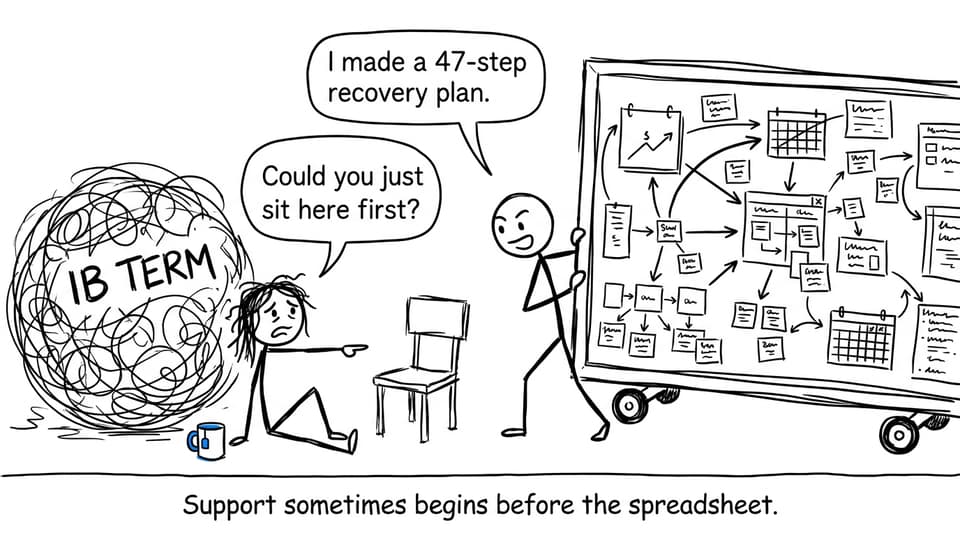
If you want to support a friend who's struggling this term, begin simply: notice the change, ask how they are, listen without trying to solve everything, and help them reach an appropriate adult when necessary. You do not need perfect words. You need patience, attention, and enough honesty to recognise what friendship can and cannot carry.
For IB students, academic pressure and emotional wellbeing often become tangled together. A disappointing grade can look like an academic problem while hiding exhaustion, anxiety, loneliness, or circumstances you know nothing about.
A quick support checklist
Keep these principles in mind:
- Choose a private, unhurried moment to speak.
- Mention what you have noticed without diagnosing them.
- Ask open questions and allow time for an answer.
- Find out whether they want listening, practical help, or both.
- Offer one manageable next step instead of ten suggestions.
- Encourage support from a trusted adult or professional.
- Act immediately if you believe anyone is in danger.
- Protect your wellbeing with reasonable boundaries.
These steps apply whether your friend is falling behind academically, feeling emotionally overwhelmed, or simply not seeming like themselves.
Notice patterns, not isolated bad days
Everyone has difficult afternoons. Concern becomes more important when a change continues or starts affecting ordinary life.
Your friend might repeatedly miss lessons, stop replying, abandon activities they enjoy, become unusually irritable, struggle to concentrate, or describe every task as hopeless. Their sleep, appetite, appearance, or attendance may change. These signs do not reveal exactly what is happening, and you should not diagnose them. They are reasons to check in.
An IB student can still look productive while quietly losing control of coursework, sleep, and motivation. RevisionDojo's guide to mental health resources for IB students explains how school counsellors, wellbeing teams, teachers, and coordinators can help.