
Academic integrity is one of those phrases you only notice when something goes wrong.
You’re up late, your draft is messy, your citations are half-finished, and a tiny voice says, “Just borrow a few sentences. No one will know.” In the IB, that voice doesn’t just risk a mark, it risks trust. And trust is the quiet currency of every assessment: your teacher trusts your process, examiners trust your evidence, and you trust that the score you earn actually belongs to you.
This guide is a complete student-focused map to academic integrity in IB assessments. It’s practical, calm, and designed for real exam season pressure. You’ll learn what misconduct actually looks like, how to avoid it (even accidentally), and how to use RevisionDojo to improve ethically: with the Questionbank, Study Notes, Flashcards, AI Chat, Grading tools, Predicted Papers, Mock Exams, a Coursework Library, and Tutors.
The quick IB academic integrity checklist
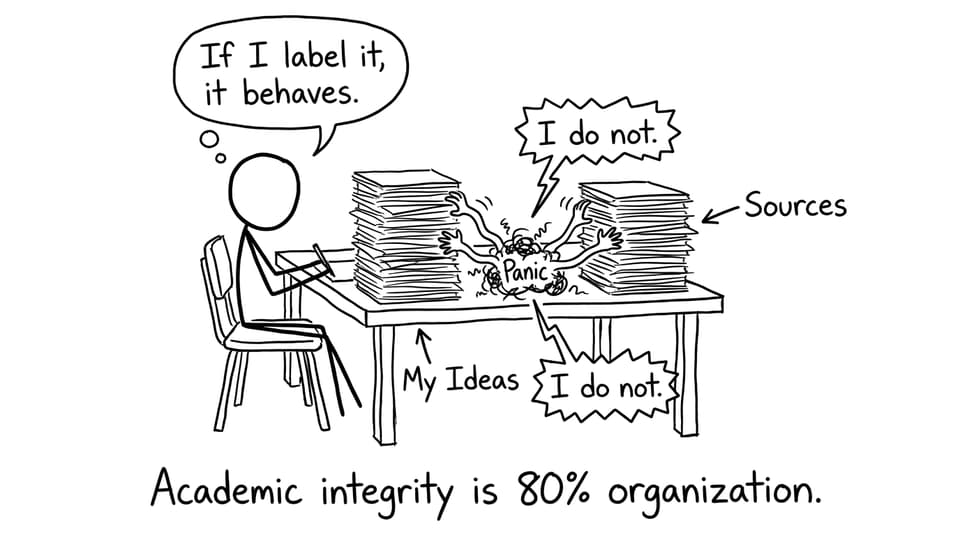
If you only remember one thing, remember this: most integrity problems start as organization problems.
Use this quick checklist before every IB submission or timed practice:
-
Know what counts as plagiarism, collusion, duplication, fabrication, and exam misconduct.
-
Keep a running “sources log” from day one (links, page numbers, dates accessed).
-
Separate three things in your notes: quotes, paraphrases, and your own ideas.
-
Cite as you go, not at the end.
-
Use AI tools for understanding, planning, and feedback, not for producing final assessed prose.
-
If a task is “individual,” never swap paragraphs, data tables, or finished calculations.
-
If you’re unsure, ask your teacher early and keep the answer in writing.
If you want an integrity-first approach to revision resources, start with How RevisionDojo Helps You Maintain Academic Integrity While Studying.
What academic integrity means in the IB (beyond “don’t cheat”)
In the IB, academic integrity is a habit, not a loophole hunt.
Yes, it includes the obvious: you should not copy, steal, fabricate, or bring unauthorized support into assessments. But the deeper point is about representing your learning truthfully. The IB wants your work to show your thinking, your choices, your reasoning, your interpretation of sources, and the limits of your evidence.
That’s why integrity connects naturally to the learner profile. Being principled isn’t just “following rules.” It’s choosing clarity when you could choose convenience. And being reflective is noticing the moment you’re tempted to trade learning for speed.
A useful framing is this: integrity protects you from two futures.
-
The obvious future: penalties.
-
The subtler future: getting a score that doesn’t match your ability, then walking into finals unsure whether you can repeat it.
If you want extra clarity on how integrity is taught as a skill, see Teaching Academic Integrity as a Habit of Mind.
The most common forms of IB academic misconduct (and the quiet ways they happen)
Most IB students don’t wake up planning to break rules. The danger is that exam stress makes bad shortcuts feel “normal.” Here are the big categories, plus how they sneak in.
Plagiarism: the obvious kind and the accidental kind
Plagiarism isn’t only copying whole paragraphs. It’s also:
-
patchwriting (swapping a few words but keeping the original structure)
-
using an idea without credit even if you wrote it in your own words
-
copying from your own old work in a way that misrepresents originality
Avoid it by building a simple habit: every time you write a note from a source, add either “QUOTE” or “PARAPHRASE” in all caps beside it. Then add the citation right there. Not later.
For a deeper breakdown, read IB Academic Misconduct Explained: How to Avoid Plagiarism and Collusion.
Collusion: when “we studied together” becomes “we submitted together”
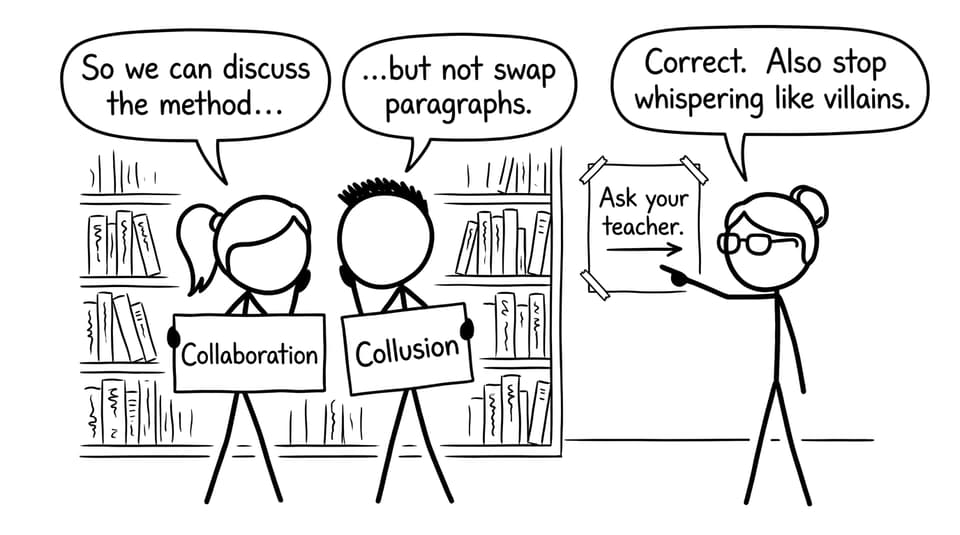
Collaboration can be healthy in the IB. Collusion is when collaboration turns into shared assessed output.
Safe collaboration often looks like:
-
discussing concepts
-
comparing approaches
-
quizzing each other
-
reviewing rubrics together
Risky collaboration often looks like:
-
sharing a Google Doc with final paragraphs
-
swapping solved problem sets and “rewording” them
-
using another student’s lab data when data must be your own
When the boundary feels fuzzy, it usually is. Ask the teacher and treat the answer like a rule of the road.
Duplication: reusing your own work across components
Duplication is one of the most misunderstood IB integrity issues. Students assume, “It’s my writing, so I can reuse it.” But assessed work is expected to be produced for that specific task.
You can usually reuse themes and sources. You generally can’t reuse the same analysis, paragraphs, or conclusions.
If you’re juggling IA and EE planning, this is essential reading: Can Your EE and IA Use the Same Material? and IA Sources for Your EE: What’s Allowed in IB?.
Fabrication and falsification: “fixing” data that doesn’t look nice
In an IB IA or investigation, messy results are not a failure; they’re reality.
Fabrication is inventing data. Falsification is changing data to fit the story. Both are misconduct. The safer, higher-scoring move is usually to write a better evaluation: discuss limitations, error sources, and how you would improve the method.
Misuse of AI tools: help vs ghostwriting
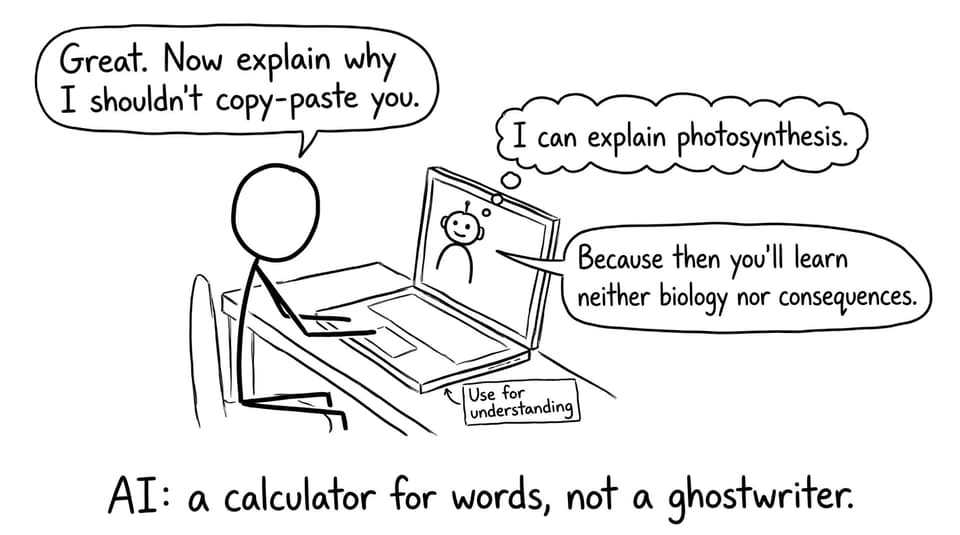
AI is not automatically “banned.” But submitting AI-generated work as if it’s your own thinking is the problem.
A good rule: AI can help you understand and plan; it should not be the author of your final assessed voice.
Use AI ethically in the IB like this:
-
Ask for explanations of concepts you don’t understand.
-
Ask for practice questions to test recall.
-
Ask for feedback on clarity, structure, or missing counterarguments.
-
Ask for a study plan.
Avoid using it like this:
-
“Write my IA background section.”
-
“Rewrite my EE paragraph in a more academic style” (if it replaces your thinking)
-
“Generate a full response that I submit”
How to uphold IB academic integrity while revising for exams
Integrity isn’t only about coursework. It matters during revision, too, because revision habits become exam habits.
Here’s a student-proof workflow for IB exam prep that stays ethical and still improves fast.
Use Study Notes to learn, then test, then explain
Start with Study Notes to get the clean, syllabus-aligned explanation. Then close the notes and explain the idea out loud in your own words.
If you want a broader view of how notes should be used (not just reread), see IB Subject Note Collections: Comprehensive Study Materials.
Turn understanding into memory with Flashcards
In the IB, students often confuse “I recognize this” with “I can produce this under time.” Flashcards fix that.
Use RevisionDojo’s Flashcards feature or browse IB Flashcards with Spaced Repetition (SRS) to build daily recall. Five minutes a day is honest, boring, and unbelievably effective.
Practice with Questionbank the ethical way
Real improvement comes from producing answers and learning how marks are awarded. That’s why RevisionDojo’s Questionbank matters: it lets you practice at volume, with feedback.
The integrity rule is simple: treat solutions as feedback, not as content to memorize and paste. Write your attempt first. Then compare. Then redo the question later.
If you want to understand why a structured bank accelerates IB performance, read IB Question Bank: Thousands of Practice Questions.
Use Predicted Papers and Mock Exams like a rehearsal, not a hack
Predicted exams are useful because they force timing, decision-making, and stamina. They’re not a promise of what will appear.
Run your timed practice through IB Predicted Papers and treat review as part of the sitting: annotate mistakes, name the pattern, then drill the pattern in the Questionbank.
For clarity on how to use them without magical thinking, see IB Predicted vs Specimen Papers: What They Mean.
How RevisionDojo supports IB students without compromising integrity
The best academic integrity systems don’t rely on willpower. They rely on reducing temptation.
RevisionDojo is built around that principle. When you have clear explanations, targeted practice, and fast feedback, you don’t need shortcuts.
-
AI Chat helps you get unstuck with explanations and planning, so you don’t borrow someone else’s work out of panic.
-
Grading tools help you see exactly what’s missing in a response, so you can rewrite intelligently instead of copying.
-
The Coursework Library (exemplars) helps you calibrate quality while keeping your own voice.
-
Tutors give you a human checkpoint when you’re unsure what’s allowed or how to scope a task.
Start from the main IB hub here: International Baccalaureate (IB) resources or explore RevisionDojo for IB.
Closing: In the IB, integrity is the part you keep
There’s a reason academic integrity feels heavier in the IB than in many other programs. The diploma is meant to be portable trust: universities and scholarship panels should be able to look at your work and believe it represents you.
The good news is that integrity isn’t a fragile thing. It’s a system you build with small choices: cite early, draft honestly, collaborate carefully, use AI responsibly, and practice like the exam is real.
If you want a revision setup that makes the honest path the easiest path, use RevisionDojo as your routine: learn with Study Notes, retain with Flashcards, improve with the Questionbank, rehearse with Predicted Papers and Mock Exams, get clarity via AI Chat, strengthen writing with Grading tools, compare standards through the Coursework Library, and pull in Tutors when you need a human anchor.
Your IB results should feel like a receipt for effort you actually paid. RevisionDojo helps you earn them that way.