
For IB students sitting exams in May 2028 (started DP1 in August 2026).
The best May 2028 IB history study advice is to organise your knowledge around the new syllabus and practise the exact thinking each paper rewards every week. Do not wait until you have memorised an entire topic before writing answers; build knowledge, source analysis and argument together from the beginning.
That matters because your cohort is the first to complete the revised course. According to the IB's current subject brief and curriculum update, the new History course is first assessed in May 2028. Its structure is more explicitly driven by inquiry, concepts, sources and evaluative argument than the course ending in 2027.
There is also an unavoidable uncertainty. As of October 2026, the official subject brief and curriculum update are available, but no completed May 2028 examination papers, session-specific grade boundaries or examiner reports exist. The detailed May 2028 examination timetable has not yet been published either. Good preparation therefore means following the confirmed assessment model without pretending that anyone already knows every future question pattern.
RevisionDojo's dedicated IB History resources for the new course provide the clearest starting point for syllabus-aligned notes, questions, videos and flashcards in one place.
Your May 2028 study checklist
- Map every lesson and resource to your school's selected focused study, thematic study and, for HL, regional study.
- Make notes that connect evidence to an inquiry question, not notes that merely retell events.
- Practise one focused exam skill every week during DP1.
- Introduce timed sections gradually, then complete full papers during DP2.
- Keep a mistake log based on feedback from teachers and grading tools.
- Use materials explicitly labelled for first assessment 2028.
- Confirm your school's selected content and IA requirements with your teacher.
The new IB History curriculum structure is worth reviewing before building a revision plan. A beautiful timetable cannot rescue revision aimed at the wrong course.
Know what the new papers actually assess
The public IB subject brief confirms that SL and HL students take Paper 1 and Paper 2. HL students also take Paper 3. Both levels complete a historical investigation for internal assessment.
| Component | SL | HL | Main demand |
|---|---|---|---|
| Paper 1 | 1 hour 15 minutes, 30% | 1 hour 15 minutes, 20% | Use source content, context and perspectives to address an inquiry question |
| Paper 2 | 1 hour 45 minutes, 40% | 1 hour 45 minutes, 25% | Analyse a concept, answer a short-response task and build an argument using thematic examples |
| Paper 3 | Not taken | 2 hours, 35% | Evaluate a supplied argument using a regional study; answer two essays from different topics |
| Internal assessment | 30% | 20% | Complete a historical investigation |
Paper 1 remains source-based, but it is framed around an inquiry question. The confirmed tasks assess relevant information from sources, how context shapes a source's use and how diverse perspectives can be examined together. Treating it as an old formula or a checklist of origin, purpose, value and limitation would miss the broader historical inquiry.
Paper 2 now contains a Section A concept question. Section B includes a short response and an essay based on the thematic study. The four specified concepts are cause and consequence, continuity and change, perspectives, and significance. RevisionDojo's guide to the four key IB History concepts explains how these ideas should shape claims rather than become definitions learned in isolation.
Paper 3 is HL only. Students answer two essay questions from different regional topics, and the IB says each question supplies an argument that must be evaluated. That makes judgement central: agreement, disagreement and qualification must be supported by precise regional knowledge and historical perspectives.
Make notes that can become arguments
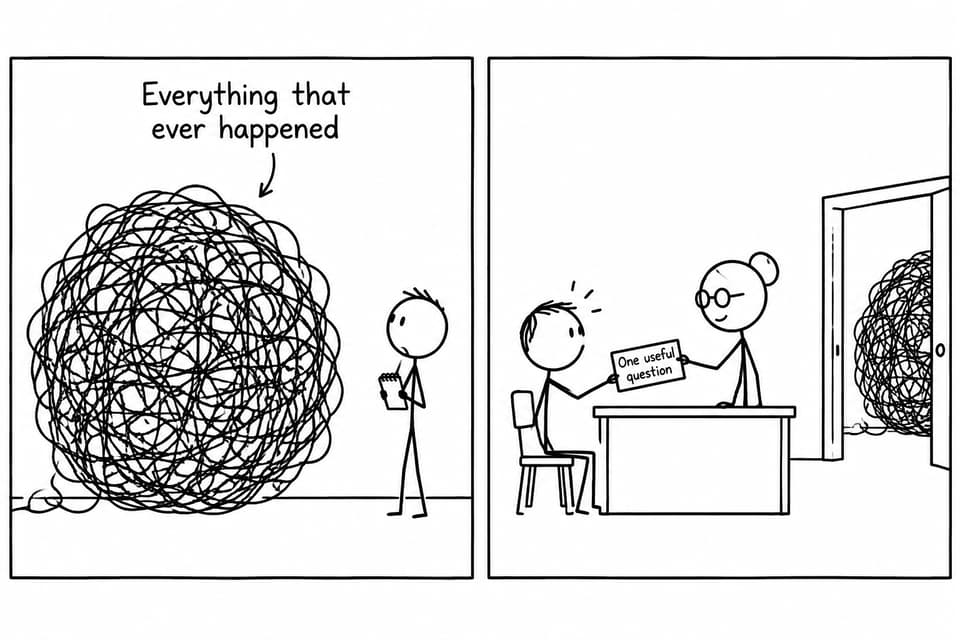
History notes often grow because copying feels safe. But volume and usefulness are different things. A twenty-page chronology may contain everything and still fail to help you answer why an event mattered.
For each subtopic, create a compact inquiry sheet with six parts:
- Inquiry question: the problem the evidence helps answer.
- Provisional judgement: your current answer in one or two sentences.
- Evidence: dates, policies, events, individuals and relevant quantitative information.
- Mechanism: how each piece of evidence caused, changed or revealed something.
- Alternative view: evidence supporting a different interpretation.
- Concept link: cause and consequence, continuity and change, perspectives, or significance.
A note reading “economic instability increased opposition” is incomplete. Add the specific evidence, identify which groups were affected, explain the mechanism linking instability to opposition and note a competing political or social explanation. You are then storing reasoning, not merely information.
Use timelines for sequence, comparison grids for similarities and differences, and Flashcards for names, dates and precise factual retrieval. RevisionDojo Study Notes and Flashcards can support this process, while AI Chat can help you test whether an explanation contains a genuine causal link. The broader guide to understanding the first-assessment-2028 course offers useful context for keeping inquiry at the centre.
Practise the right skill at the right frequency
Frequent, narrow practice is more useful in DP1 than repeatedly attempting full papers before you understand the content. A weekly rhythm also makes weaknesses visible while there is still time to correct them.
| Frequency | Recommended History practice |
|---|---|
| After each lesson | Reduce the lesson to five retrieval questions and one concept link |
| Twice each week | Complete 10-15 minutes of closed-book factual retrieval using Flashcards or a blank page |
| Once each week | Write one source response, analytical paragraph or detailed essay plan |
| Every two weeks | Complete one longer response and obtain criterion-based feedback |
| Every month | Review your mistake log and rewrite one weak response |
| During DP2 | Add timed sections, then full Mock Exams under your school's conditions |
Rotate the weekly task. One week might focus on using source context; the next might compare perspectives; the next might plan a Paper 2 conceptual response. HL students should regularly add Paper 3 argument evaluation.
When reviewing work, do not simply record a score. Classify the problem as knowledge, relevance, evidence selection, explanation, evaluation, structure or timing. RevisionDojo's AI grading tools and teacher feedback are most valuable when they produce a specific change in your next response. Predicted Papers and Mock Exams should come later, once short tasks show that the underlying skills are stable.
Choose practice materials that match IB History 2028
Not every document carrying the words “IB History” matches your assessment model. Materials written for the course ending in 2027 may still contain useful historical content, but their question structures and strategic advice cannot automatically be transferred to the new papers.
Prioritise these sources:
- the current IB History guide and material supplied through your school
- the official first-assessment-2028 subject brief and curriculum update
- teacher-created tasks mapped explicitly to the revised assessment objectives
- the RevisionDojo new-course History collection
- Questionbank prompts, Predicted Papers and Mock Exams labelled for the new syllabus
- your class's selected studies rather than attractive but irrelevant topics
Older source collections, textbooks and academic articles can still supply evidence and perspectives. Use them as historical material, not as proof of the 2028 paper format. RevisionDojo's overview of what its IB History resources cover can help you distinguish content learning from assessment practice.
Avoid the habits that quietly lose marks
Retelling instead of answering
Chronological knowledge is useful, but narrative does not automatically become analysis. Begin each paragraph with a claim answering the wording of the question, then select only the evidence needed to establish it.
Naming a source's origin without analysing context
A source's author, date or purpose matters only when you explain how that context affects what historians can learn from it. Avoid memorised labels. Connect context, content and the inquiry question.
Treating concepts as headings
Writing “Significance” above a paragraph does not analyse significance. Explain the scale, depth, duration or consequences of the development, while considering significance for whom.
Listing perspectives without comparison
Two interpretations placed beside each other are still two summaries. Identify the point of disagreement, explain what may account for it and judge which interpretation better addresses the question.
Writing a judgement only in the conclusion
Evaluation should run through the response. Use each paragraph to test the strength, limits or relative importance of a claim, then let the conclusion synthesise those judgements.
Memorising complete essays
A rehearsed answer can become irrelevant when the command term, concept or scope changes. Memorise flexible evidence clusters and practise adapting them to unfamiliar wording. The guide on how to work towards a 7 in IB History develops this distinction between knowing material and controlling it.
Adjust your plan for HL or SL
SL is not simply HL with less effort. SL students have fewer assessed components, but Paper 1, Paper 2 and the historical investigation each carry substantial weight. Your preparation should therefore remain balanced. Neglecting source work because essays feel more substantial would expose 30% of the final SL result.
HL students need additional regional depth for Paper 3. Build perspective files alongside content notes, recording each historian's central interpretation, supporting evidence, scope and limitations. Since Paper 3 questions provide an argument to evaluate, practise turning that argument into a spectrum: fully convincing, partly convincing or unconvincing under defined conditions.
HL students also need to protect time for the shared papers. Paper 3 carries 35%, but Paper 1 and Paper 2 together account for 45%. The comparison of HL and SL changes for 2028 can help you allocate revision by actual assessment demand rather than intuition.
Build readiness without pretending certainty
Being the first cohort can feel uncomfortable because there is less inherited advice. Yet the absence of completed May 2028 examination material also removes an illusion: successful History revision was never about predicting one perfect question. It was about retrieving relevant knowledge, reading sources historically and making a defensible judgement under time pressure.
RevisionDojo brings those activities together through its Questionbank, Study Notes, Flashcards, AI Chat, grading tools, Predicted Papers, Mock Exams, Coursework Library and Tutors. Used carefully, these are not shortcuts around thought. They create more opportunities to practise it.
Your next step is specific: open the RevisionDojo IB History Questionbank, choose one question aligned with your current class topic, complete a closed-book plan in 15 minutes and record the single biggest weakness it reveals.