

Active Recall for IB: The Only Method You Need
You know the moment.
You close your notes, ask yourself something you were sure you understood, and your brain responds with a long, inconvenient silence. Not the peaceful kind. The kind that makes you wonder if you’ve been studying the wrong way for months.
That silence is data.
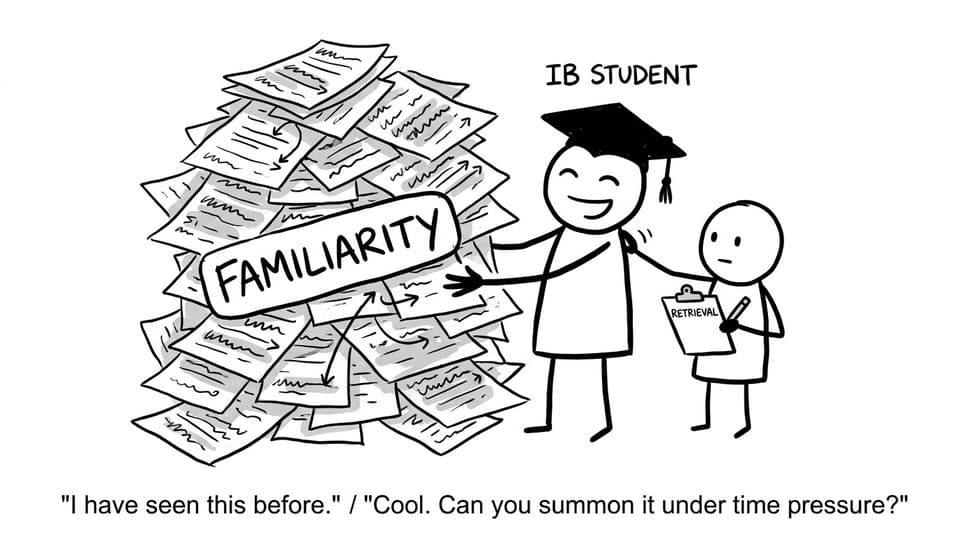
And it’s why Active Recall for IB: The Only Method You Need is not a catchy idea, but a practical truth. IB exams do not reward “I’ve seen this before.” They reward “I can retrieve it now, in the right shape, under the right command term, at the right speed.”
Most students build revision around comfort: reading, highlighting, rewriting. It feels like progress because it looks like work. But comfort rarely translates into marks.
Active recall does something different. It makes your revision honest. Then it makes it repeatable.
The simple active recall checklist (save this)
If you want an IB routine that actually scales across subjects, keep coming back to this loop:
-
Learn a micro-topic fast (notes are a map, not a mattress)
-
Ask a question that forces retrieval (no peeking)
-
Check the marking logic (what earns marks vs what sounds good)
-
Turn the miss into a rule (“Next time, I will…”)
-
Schedule the next recall with spacing
-
Add timed practice as the exams get closer
This is the same shape RevisionDojo is built for: Study Notes for quick clarity, Flashcards for daily recall, Questionbank for exam-style retrieval, AI Chat for fast explanations and quizzing, Grading tools for feedback on written work, plus Mock Exams and Predicted Papers for realistic pressure. Add the Coursework Library to stop coursework from stealing exam time, and Tutors when you want a human to sharpen the plan.
Why Active Recall for IB: The Only Method You Need actually works
The usual IB study storyline looks responsible:
-
Understand it fully.
-
Memorize it later.
-
Practice when you feel ready.
The problem is that “ready” keeps moving. Understanding becomes endless. Memorization becomes passive. Practice gets postponed until panic.
Active Recall for IB: The Only Method You Need flips the order in a way your brain can’t ignore:
-
Retrieve first.
-
Notice the gap.
-
Fix the gap.
-
Retrieve again.
That’s why it works across the whole diploma.
In the sciences, active recall means retrieving definitions, mechanisms, required explanations, and diagram labels.
In math, active recall means retrieving methods, conditions, common traps, and the first step when you’re staring at a blank page.
In humanities, active recall means retrieving case studies, arguments, evaluation phrases, and the structure of a top-band response.
In languages, active recall means retrieving vocabulary, grammar moves, and analysis patterns.
And because IB exams are cumulative, the ability to retrieve older units is often the difference between “I revised” and “I can perform.”
If you want the broader roadmap that ties these pieces together, keep this open as your anchor: How to Study for IB Exams: Step-by-Step Guide.
Active recall for IB, step by step (the loop that turns time into marks)
Here’s a clean loop you can run in 25 minutes or in 2 hours. The order matters.
Start with a tiny slice of notes (5-12 minutes)
Notes matter, but only as a launchpad.
The danger is treating notes like proof of learning. Notes are not learning. Notes are input. Exams require output.
Use concise, syllabus-aligned explanations so you don’t drown in detail. That’s the purpose of RevisionDojo Study Notes: quick clarity that’s designed to be turned into questions.
Rule: read one section, then close it.
Convert what you read into questions (2-4 minutes)
This is where active recall becomes real: you turn information into prompts.
Examples that match IB command terms:
-
“State the definition of X.”
-
“Outline the steps of Y in order.”
-
“Explain why Z happens under condition C.”
-
“Compare A and B, including one similarity and one difference.”
-
“Evaluate this claim using two reasons and a justified conclusion.”
If you want a practical structure for building a full study system around questions, RevisionDojo’s platform workflow is explained here: RevisionDojo App: The Smarter Way to Prep for IB Exams.
Retrieve on a blank page (6-15 minutes)
This is the uncomfortable part. That’s why it works.
Write or speak your answer without looking. Don’t aim for pretty. Aim for retrievable structure.
A strong retrieval attempt usually has two traits:
-
It starts quickly (no warm-up)
-
It has a shape (because structure survives stress)
A useful trick: if you get stuck, write the headings you wish you remembered. That becomes your error log seed.
Verify with exam-style questions (15-35 minutes)
After retrieval, you need application.
IB rewards markable behavior: the right steps, the right reasoning chain, the right evaluation. That is why your practice source matters.
Use RevisionDojo’s Questionbank to filter by topic and difficulty, then do a small set that targets the exact micro-topic you just studied. Keep the set tight. The goal is signal, not volume.
For a deeper dive on using question practice strategically, read: Comprehensive IB Question Bank: Thousands of Practice Questions.
Log mistakes as rules, not regrets (3-8 minutes)
Most students write “I forgot.” That’s not useful.
Write one rule that prevents the miss next time:
-
“If the question says evaluate, I must make a judgment with justification, not a balanced summary.”
-
“Every physics line ends with units.”
-
“My biology explanations must follow cause -> mechanism -> consequence.”
-
“In history, I need specific evidence, then analysis, then explicit link to the question.”
RevisionDojo’s Grading tools shorten this loop because the feedback is clearer and faster, which means you spend less time guessing what “a better answer” would look like.
Schedule the next recall (spaced repetition)
Active recall is the engine. Spacing is how it compounds.
When you recall again tomorrow, then again in three days, then again next week, you are telling your brain: “Keep this.”
If you want the science and a clean way to apply it, use: The Science of Spaced Repetition for AP/IB Success.
Flashcards are active recall (if you stop using them like tiny notes)
Flashcards get blamed for bad studying, but most of the time it’s not the tool. It’s the design.
The rule is simple:
-
Front: a question that forces retrieval
-
Back: a markscheme-friendly answer
Good flashcards for IB:
-
“State two assumptions behind…”
-
“Outline the steps for… (in order).”
-
“Give two limitations of… and one implication.”
-
“What does ‘discuss’ require that ‘outline’ does not?”
Bad flashcards:
- “Everything about Topic 4.”
RevisionDojo’s Flashcards are built around active recall and spaced repetition, and you can keep them aligned with how IB actually awards marks.
Use this guide to tighten your flashcard system: IB Flashcard System: Active Recall for Better Memory.
And if you’re in a math-heavy season, active recall applies cleanly to method selection and step order too: How to Combine Math Practice With Active Recall Techniques.
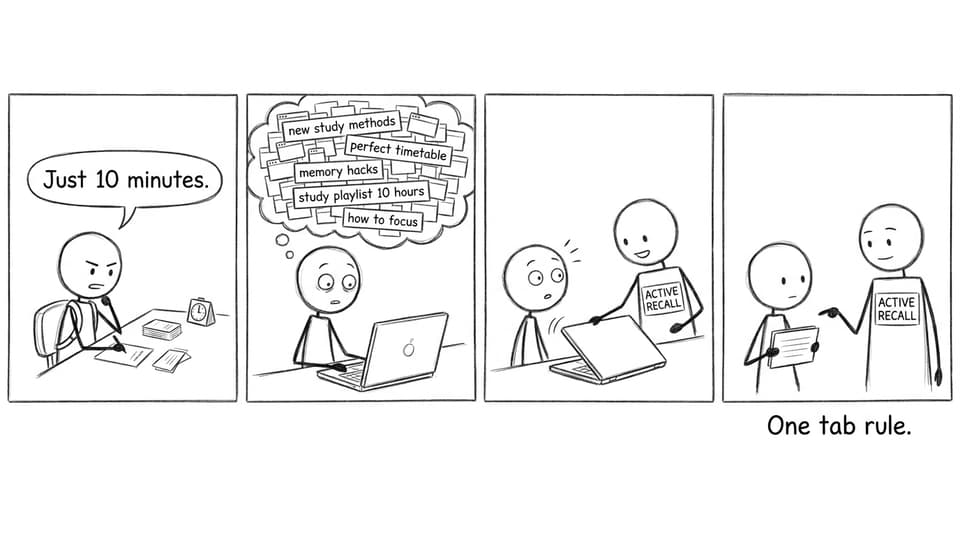
How to upgrade active recall when exams are close
As the exam window approaches, active recall has to start looking like the exam.
That means two upgrades: time pressure and feedback quality.
Retrieval under time pressure
You can “know” something and still fail to access it fast enough.
Once per week (minimum), add a timed session:
-
a 15-25 minute timed set
-
a 30-60 minute section
-
or a full sitting when you’re ready
This is where RevisionDojo’s Mock Exams and Predicted Papers fit naturally: they turn vague revision into timed rehearsal.
If you want a calm approach to crunch time, this is a strong companion read: IB: The Last 2 Weeks Before Exams (What Matters).
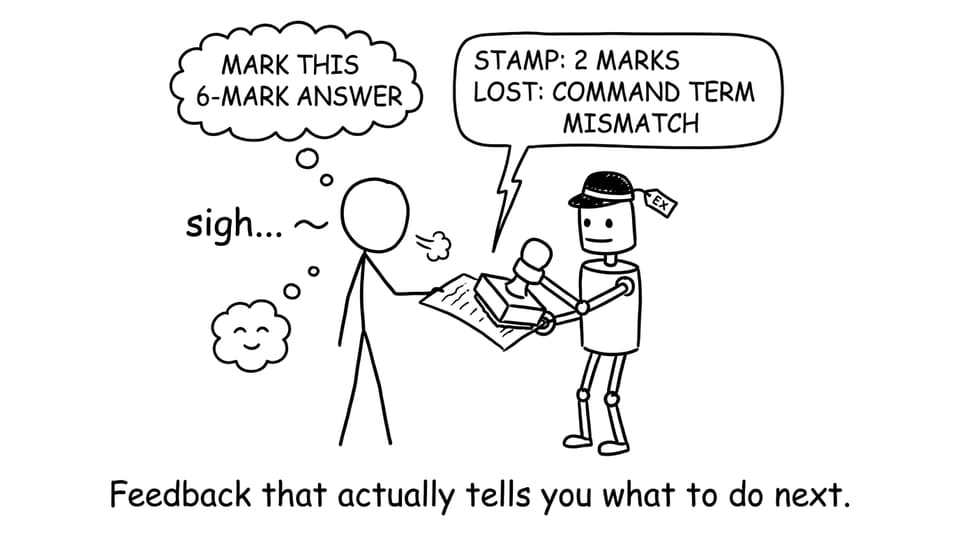
Feedback that changes tomorrow
In IB, marks often leak in predictable ways:
-
command term mismatch
-
missing justification
-
weak structure
-
shallow evaluation
-
timing panic
The fix is rarely “study more.” It’s “get tighter feedback.”
Use RevisionDojo AI Chat like a tutor that never gets tired:
-
“Here is my 6-mark answer. Mark it like an examiner and tell me how to earn the last 2 marks.”
-
“Quiz me on this subtopic with 6 questions, increasing difficulty.”
-
“Explain the difference between ‘discuss’ and ‘evaluate’, then test me.”
And when you want to understand how predicted sets should be used (without magical thinking), read: IB Predicted vs Specimen Papers: What They Mean.
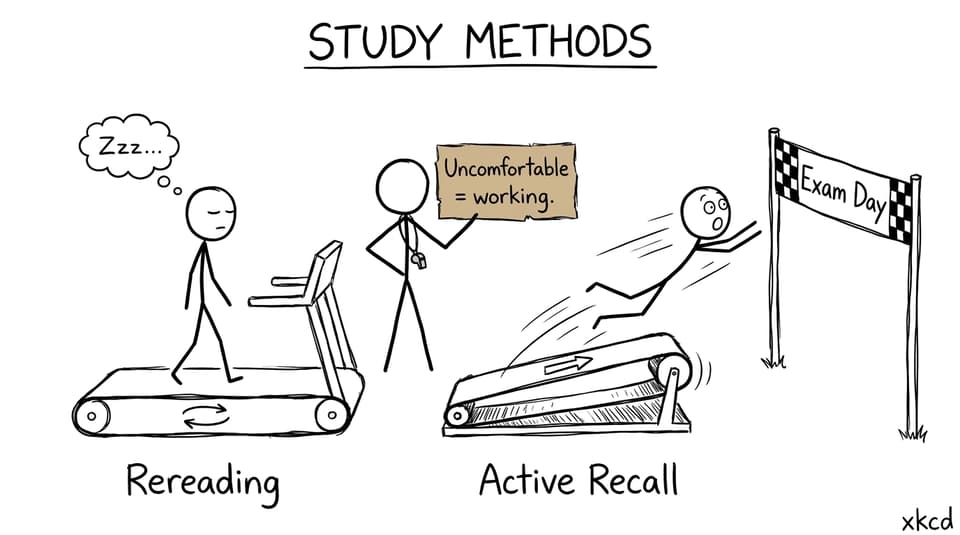
A realistic weekly plan built around active recall
You don’t need a perfect timetable. You need a small loop you can repeat on tired days.
Here’s a weekly structure that fits around school.
Daily (15-25 minutes)
-
10 minutes: Flashcards (pure retrieval)
-
5 minutes: one blurting prompt on a weak topic
-
3-10 minutes: review + add 1-3 new cards from mistakes
3-5 times per week (45-90 minutes)
-
10-20 minutes: Study Notes on one micro-topic
-
25-45 minutes: Questionbank set on that exact micro-topic
-
10-15 minutes: review + “error rules” + reattempt 1-2 misses
If motivation is the problem (not strategy), borrow a smaller entry point: How to Study When You Don’t Feel Like It (IB Edition).
Weekly (60-180 minutes)
-
One timed session using Mock Exams or Predicted Papers
-
Review longer than you attempt
-
Rewrite one response to top-band quality using Grading tools
If you want to see how top scorers structure the last stretch, read: How 45-Point IB Students Prepare for Exams.
The active recall mindset shift most IB students miss
Active recall is not just a technique. It’s a decision about what you want your study time to produce.
Passive study produces a feeling: familiarity.
Active recall produces a capability: retrieval.
One of those shows up on exam day.
The other disappears the moment the paper says “evaluate” and your brain tries to bargain.
If you protect anything in your schedule, protect the daily recall minimum. Because when your recall stays warm, everything else gets easier: question practice, essay planning, problem solving, even confidence.
Closing: make revision honest, then make it daily
There’s a quiet turning point in IB prep: the day you stop studying for comfort and start studying for retrieval.
That’s the heart of Active Recall for IB: The Only Method You Need. It is honest about what you can do today, under pressure, in the format the IB rewards. And once you have that honesty, you can stop guessing and start improving.
Build your routine around a loop that compounds:
retrieve -> check -> fix -> repeat
If you want one place where that loop is easy to run, keep it inside RevisionDojo: Questionbank, Study Notes, Flashcards, AI Chat, Grading tools, Predicted Papers, Mock Exams, a Coursework Library, and Tutors when you want a human to sharpen the plan. Your job is consistency. The system should reduce friction.