

IB burnout feels like “I’m lazy now” (but it isn’t)
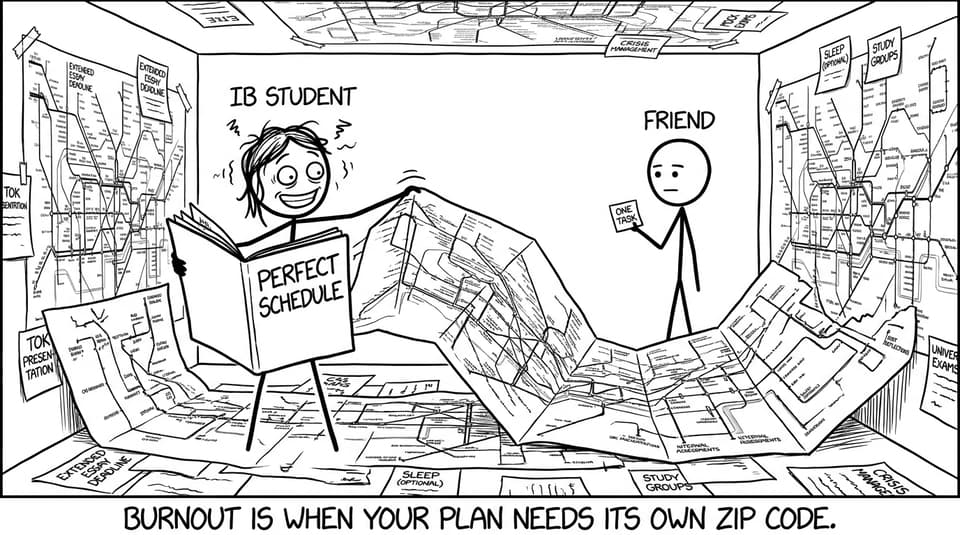
It usually starts as a quiet shift. You sit down to study for the IB, open your notes, and realize your brain is sliding off the page like water off glass. You aren’t doing nothing. You’re just doing everything with twice the effort and half the result.
That’s what burnout in the IB often looks like: the same workload, but a nervous system that can’t keep paying the bill.
Burnout isn’t proof you’re not cut out for the IB. It’s proof you’ve been running a high-output routine without enough recovery, feedback, or clarity. And the faster you name it, the faster you can reverse it.
Quick checklist: are you burning out in the IB?
If you want the simplest test, look for clusters. One bad day is normal. A pattern is information.
-
You feel tired even after sleep
-
You can’t concentrate, or you reread without retaining
-
You feel numb, detached, or strangely “over it”
-
Small tasks create big frustration
-
Your sleep drifts later, your routine collapses
-
Your motivation disappears right when pressure rises
If this is you, treat it like an IB signal, not a personality flaw.
What actually happens when you burn out in the IB
Burnout is rarely dramatic at first. It’s gradual, then it feels sudden.
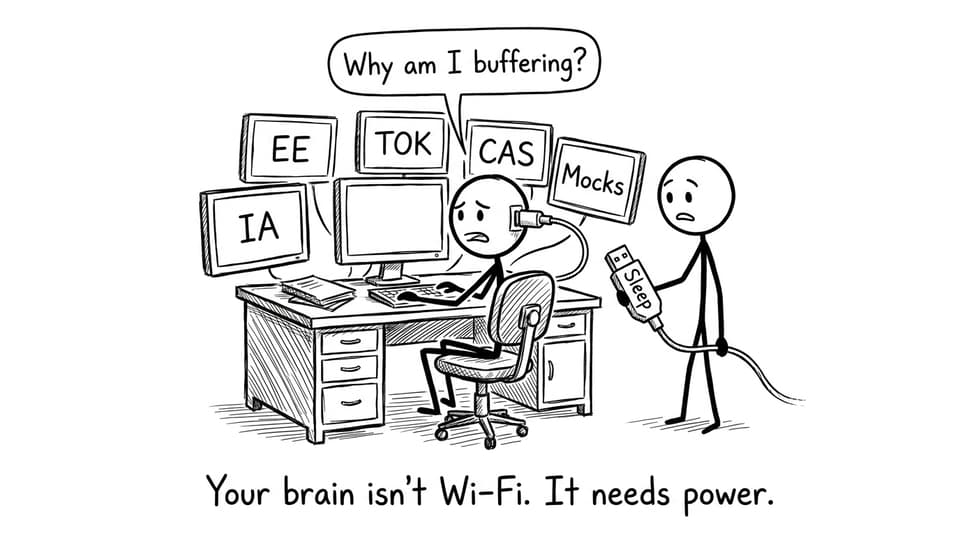
In the IB, your brain is constantly context-switching: IA drafts, EE edits, TOK reflections, CAS requirements, plus exam prep. Each task has a different definition of “done,” which means your mind never fully clocks out. Over time, you stop getting the emotional reward that used to come from finishing work. You still work, but it doesn’t refill you.
Two things make IB burnout especially nasty:
You lose trust in effort
You study for hours, but your results don’t move. So you either push harder (and fry faster) or avoid the work (and feel guilty). Either way, you get stuck.
This is why tools that create fast feedback matter. Doing a short, targeted set in the RevisionDojo Questionbank can rebuild trust because it turns effort into measurable signals: accuracy, patterns, and what to fix next.
You confuse exhaustion with a lack of discipline
When you’re burnt out, “try harder” becomes a trap. The IB rewards consistency and exam technique, not heroic all-nighters.
If you need a calmer system, the loop in How to Study for IB Exams: Step-by-Step Guide is a solid reset: learn a small concept, recall it, apply it, review mistakes.
Real advice: how to recover from IB burnout without falling behind
Think of recovery like steering a large ship. Tiny turns now prevent a crash later.
Shrink the work until it’s doable
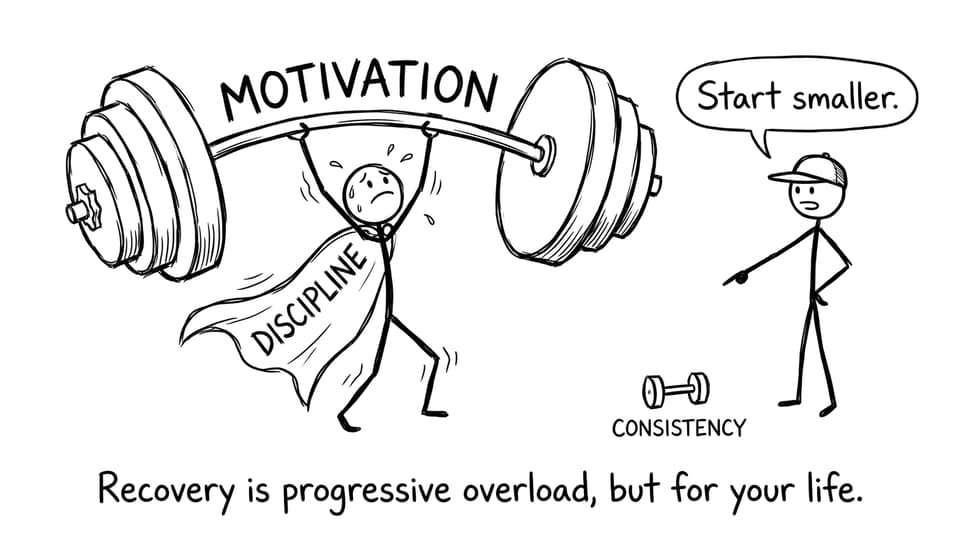
Your goal isn’t “catch up.” Your goal is “restart.”
Try a 45-minute minimum session for the IB:
-
10 min: one slice of Study Notes
-
20 min: a small topic set in the Questionbank
-
10 min: review mistakes (write one rule)
-
5 min: create 2-3 cards in Flashcards
That structure matches how RevisionDojo is built: Study Notes for clarity, Flashcards for retention, Questionbank for proof, and AI Chat when you’re stuck.
Reduce decisions, not ambition
Burnout gets worse when your brain has to decide what to do every hour. Remove the choices.
Use one page as your home base, like RevisionDojo for IB, and commit to one “next action” per session.
Add realism slowly
If you’re exhausted, full-length practice can be too much. Start with smaller timed sections, then build.
When you’re ready for simulation, use IB Predicted Papers or a guided routine like Collaborative IB Mock Exams: Study with Friends Online. The point is controlled pressure, not punishment.
Use support before you hit the floor
If burnout is turning into dread, panic, or emotional shutdown, pull in real humans. Talk to a teacher, your IB coordinator, or a counselor. If you need a map of options, What Mental Health Resources Are Available for IB Students is a helpful starting point.
And if coursework uncertainty is amplifying stress, RevisionDojo’s Grading tools and Coursework Library can reduce the “am I doing this right?” spiral by giving clearer targets and examples.
Closing: burnout doesn’t mean you’re failing the IB
Burnout in the IB is what happens when your effort loses feedback, your stress loses recovery, and your goals lose clarity. The fix is rarely dramatic. It’s quiet: smaller sessions, tighter loops, better sleep, and practice that tells you what to do next.
If you want the simplest way to rebuild momentum, open RevisionDojo and run the cycle: Study Notes for clarity, Flashcards for daily recall, Questionbank for measurable progress, AI Chat for quick unblocking, and then Mock Exams and Predicted Papers once your energy returns. The IB is hard, but it’s not supposed to cost you your health.