
The quiet moment when the EE becomes real
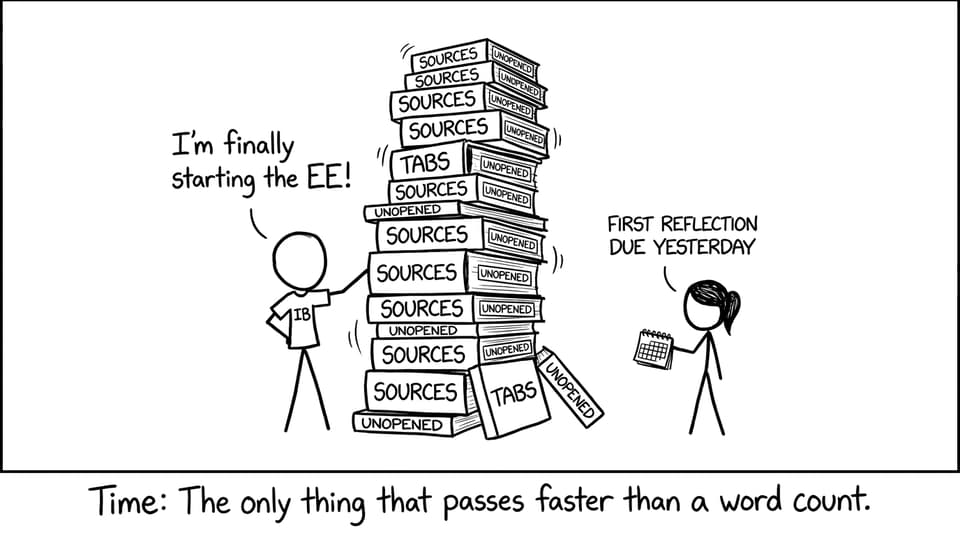
There’s a particular kind of silence that happens when you open a blank document titled “Extended Essay Final.” It’s not the calm, productive kind. It’s the silence where you suddenly remember that EE stands for more than a long essay. It stands for deadlines you can’t negotiate, criteria you can’t charm, and a research question that either saves you or slowly drains you.
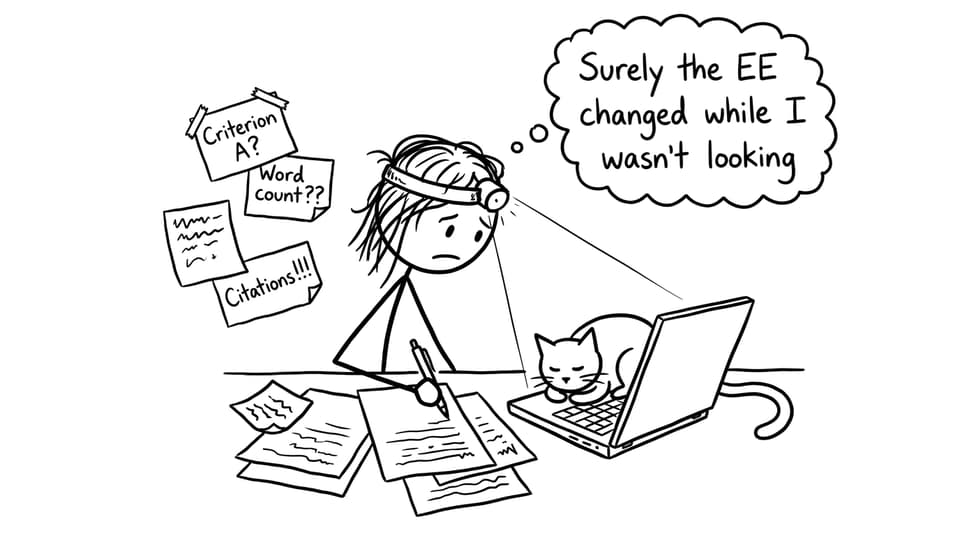
If you’re in the IB Extended Essay 2027 cohort, you’ve probably heard some version of: “The EE changed again.” Sometimes that’s true. Often it’s half-true. And the problem with half-truths is that they make students overreact in the wrong places; rewriting introductions at 2 a.m., while ignoring the one criterion that actually moves your grade.
This guide is a map for that exact feeling. We’ll cover what changed for EE 2027, what stayed the same, and what to do next so your EE becomes a controlled project instead of a recurring panic.
EE 2027 at a glance: a practical checklist
Before details, here’s the simplest way to stay safe.
Your EE 2027 quick-start checklist
- Choose a subject you can genuinely sustain for months (not days).
- Write a research question you can answer with evidence (not vibes).
- Build a source system from day one (citations, quotes, page numbers).
- Plan 3 reflection moments (because engagement is not “optional”).
- Draft early enough to revise structure, not just grammar.
- Use criterion language while writing, not after.
If you want a broader hub of guidance, start with All IB Extended Essay Posts and keep it open as your “reference shelf.”
What changed in EE 2027 (and what students misread)
The truth about most IB updates is that they rarely redesign the EE from scratch. Instead, the IB tightens expectations: clarity around academic honesty, more consistent marking emphasis, and stronger alignment between “good writing” and “good research.”
So what’s “changed” for EE 2027 in a way that matters to you?
More pressure on clarity, not cleverness
Markers have always rewarded clear argumentation. But the 2027-era vibe across IB assessment is even less tolerant of essays that sound impressive while saying very little. For your EE, that means:
- Clear definitions early (what do your key terms mean in your context?).
- A method that matches your subject.
- Evidence that is actually used (analysis, not dumping quotes).
Students often think the path to a top EE is sophistication. In reality, it’s control: controlled scope, controlled method, controlled writing.
Academic honesty is now a bigger practical issue
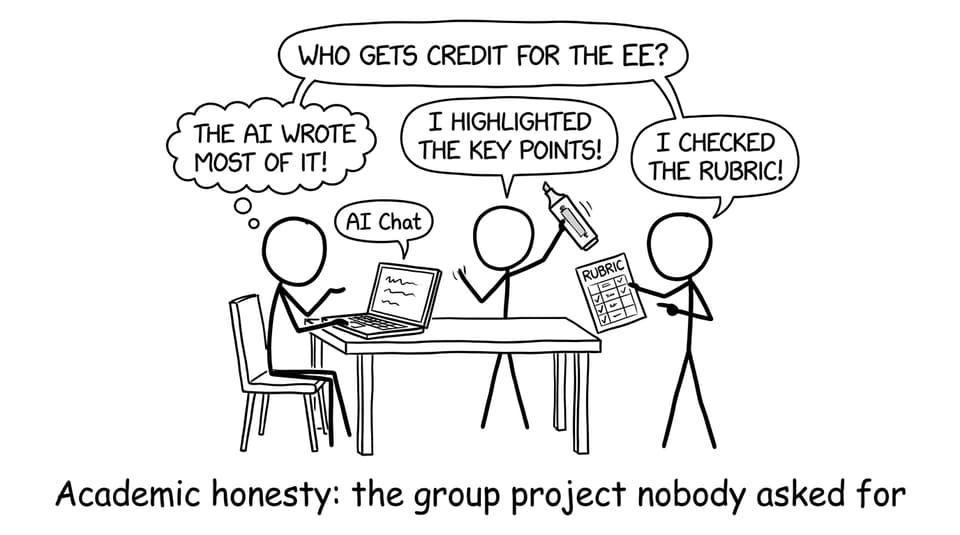
This is the change you feel most because of AI tools. The IB hasn’t turned the EE into an anti-technology project. But expectations around process transparency and ownership are tighter.
Using AI for support can be helpful. Using it as a replacement for your thinking is the risk. If you want an IB-aligned feedback loop for drafts, the IB Coursework Grader is built to give rubric-aware guidance without turning your EE into someone else’s voice.
“Engagement” is still real, and easier to fail than you think
Engagement hasn’t suddenly become new, but it’s increasingly where students bleed marks. The EE rewards reflective decision-making: changes you made, problems you hit, and why your final approach is defensible.
If your reflections read like a diary (“I felt stressed”), they won’t help. If they read like a researcher (“I changed X because Y evidence suggested Z limitation”), they will.
What stayed the same in EE 2027 (the foundations you can trust)
Some things about the EE are surprisingly stable. That stability is good news: you can build a plan once and reuse it.
The EE is still a research project, not a content summary
The EE still rewards argument and analysis over explanation. A high-scoring EE does not sound like a textbook. It sounds like a student making a focused claim and defending it responsibly.
The research question is still the single highest-leverage decision
A good research question makes the whole EE easier. A bad one makes everything feel heavy.
A useful test is this: can you imagine what the evidence would look like? If you can’t, your question is probably too vague.
If you need help choosing and refining your topic, read Mastering IB Extended Essays: How to Research, Write, and Revise. It’s the kind of guide you return to at three different stages.
The assessment logic is still criterion-driven
Even when details shift, the EE is still marked through criteria. Students lose points by treating the rubric like a checklist they visit after finishing. The rubric should be the outline.
If you want a quick reality-check on what “good” looks like in marks, see IB Extended Essay 2025 Grade Boundaries Guide. Boundaries change by session, but the performance bands help you calibrate effort.
The EE 2027 strategy that works: build a feedback loop
The students who do well in the EE rarely have perfect first drafts. What they have is a loop: draft, feedback, revise, repeat.
Here’s a loop you can actually sustain during exam season.
Step one: write a “working EE” fast
Aim for a rough structure early: introduction, method, initial analysis, limitations, conclusion. Your first goal is not beauty. It’s something you can improve.
When you’re stuck on structure, it helps to look at the process from the marker’s perspective. This is where RevisionDojo’s ecosystem becomes practical:
- Use Study Notes to clarify subject content quickly.
- Use Jojo AI Chat (inside RevisionDojo) to ask targeted questions like “What would count as valid evidence in this subject?”
- Use the IB Coursework Grader to see how your writing aligns to rubric language.
Step two: train your research question like a skill
Your EE question should be narrow enough to answer and open enough to argue. Most students oscillate between the two extremes.
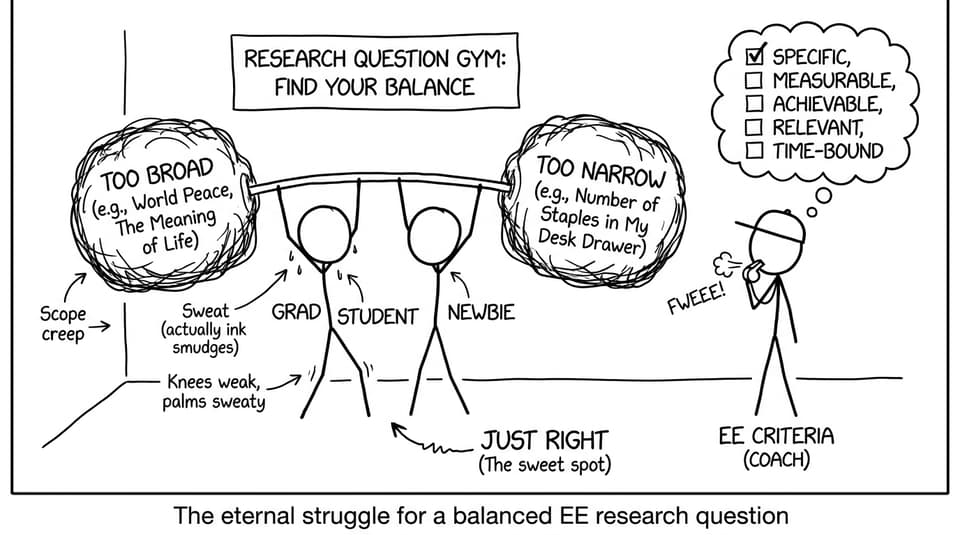
A good “question workout”:
- Replace vague verbs (“impact,” “role,” “importance”) with measurable ones (“correlate,” “predict,” “explain,” “compare”).
- Add a boundary: time period, location, text corpus, data set, or theory lens.
- Write the counter-argument you expect. If you can’t, your question might be descriptive.
If you want common traps, keep this open: Mistakes to Avoid in IB Extended Essays.
Step three: make academic honesty easy
Most academic honesty disasters don’t come from “cheating.” They come from messy systems: missing page numbers, copied notes without quotation marks, citations added at the end.
To keep your EE clean:
- Build citations as you go.
- Keep a running “source diary” with what each source contributes.
- Separate your ideas from your notes.
If you’re unclear on boundaries, especially around collaboration and tool use, use the dedicated hub: IB Extended Essay Guide: Structure, Research Question, and More.
How to balance the EE with exam prep (without losing both)
Here’s the uncomfortable truth: the EE often collapses not because it’s hard, but because it competes with everything else. Your calendar becomes a negotiation, and the EE usually loses until it becomes urgent.
A better approach is to make the EE small and frequent.
A weekly EE plan for exam season
- 2 x 45-minute blocks: writing or analysis (not reading).
- 1 x 30-minute block: admin (citations, formatting, fixing figure captions).
- 10 minutes/day: keep your brain in the subject through recall.
That last part is where RevisionDojo helps you keep momentum in your IB subjects while the EE runs in the background:
- Use the Questionbank to keep exam technique warm.
- Use IB Flashcards with Spaced Repetition (SRS) for daily recall.
- Use RevisionDojo for IB to keep all subjects in one workflow.
The point is not to “do everything.” It’s to avoid the cliff where the EE and exams peak at the same time.
EE 2027 mini-rubric: what top essays usually do
This is not a full rubric. It’s the behaviors that tend to show up in strong EE submissions.
They define the game early
A strong EE introduction quietly does four things:
- It sets context.
- It defines key terms.
- It states a research question that feels answerable.
- It previews method and why that method fits.
They treat evidence like a tool, not decoration
Evidence is not there to prove you read. It’s there to prove your claim survives contact with reality.
That means:
- Integrate quotes with analysis.
- Explain why a data point matters.
- Acknowledge limitations without apologizing for them.
They revise structure, not just sentences
The biggest upgrades to an EE usually come from reorganizing paragraphs, tightening scope, and removing sections that don’t serve the question.
If you want a practical marking-and-revision workflow, the IB EE Feedback Tool: Improve Your Extended Essay Score is built around turning rubric language into actionable edits.
Closing: the EE is still a mirror
The EE hasn’t become a different project in 2027. It’s still what it always was: a mirror. It reflects how you plan, how you think, how you handle uncertainty, and whether you can build an argument that holds.
If you treat the EE like something you’ll “finish later,” it expands to fill every quiet moment. If you treat the EE like a system: small weekly drafts, clean citations, criterion-based edits, it becomes manageable, even during exams.
When you’re ready to make that system real, RevisionDojo is built for it: Study Notes to clarify content, Flashcards to keep recall alive, the Questionbank to protect your exam prep, Jojo AI Chat to unblock you fast, Grading tools like the Coursework Grader to refine drafts, Predicted Papers and Mock Exams for exam realism, a Coursework Library for models of strong work, and Tutors when you want human feedback.
Your goal isn’t to write a perfect EE. Your goal is to write a defensible EE you can stand behind, and to walk into exams with your brain still intact. That’s what staying power looks like.
Near the end of your process, come back to this: the EE rewards control. Build control, and your score follows.