
For IB students sitting exams in May 2028 (started DP1 in August 2026).
To earn a 7 in IB History, build precise knowledge, then repeatedly practise turning that knowledge into source-based analysis and defensible historical arguments. For the May 2028 cohort, preparation must follow the new course structure rather than relying on materials designed for the previous specification.
That distinction matters. May 2028 is the first assessment session for the revised course, so no completed May 2028 examination papers or final grade boundaries exist yet. Students therefore need to work from the current subject guide provided through their school, the publicly available IB subject brief, official specimen material when available, and syllabus-aligned practice.
RevisionDojo's new IB History resource hub brings that preparation together through Study Notes, Flashcards, Questionbank practice, AI Chat and grading tools.
The 7-level checklist
A student working towards an IB History top grade should be able to:
- answer the exact question rather than reproduce a memorized essay
- recall accurate, relevant evidence without filling paragraphs with unused detail
- explain cause and consequence, continuity and change, perspectives, and significance
- evaluate arguments instead of merely placing historians' names into sentences
- use sources as evidence while considering their context and perspectives
- build a clear line of reasoning from introduction to conclusion
- make comparative or qualified judgements where the question requires them
- complete the historical investigation through sustained inquiry, source evaluation and synthesis
- perform these skills under timed conditions
This is not a checklist of isolated tricks. It describes a way of thinking. History rewards knowledge, but high-level performance comes from controlling that knowledge.
Know the May 2028 assessment model
The official IB subject brief identifies May 2028 as the first assessment of the revised History course. The published structure is:
| Component | SL | HL | Duration |
|---|---|---|---|
| Paper 1 | 30% | 20% | 1 hour 15 minutes |
| Paper 2 | 40% | 25% | 1 hour 45 minutes |
| Paper 3 | Not taken | 35% | 2 hours |
| Historical investigation | 30% | 20% | 20 recommended teaching hours |
Paper 1 remains source-based and is organized around paired case studies. Its framing inquiry question is intended to make source use less mechanical. According to the IB's published course update, students identify relevant information from two sources, analyse the context of a source and examine perspectives across three sources.
Paper 2 introduces greater variety. Section A asks students to choose one of two questions on specified historical concepts. In Section B, students choose a question for their thematic study and complete both its short response and essay response.
HL Paper 3 remains an essay-based examination covering regional in-depth study. Students answer two questions from different regional studies, and the questions provide an argument to evaluate.
The internal assessment remains a historical investigation on a topic chosen by the student. It requires an inquiry question, appropriate source selection, synthesis of information and source evaluation.
As of October 2026, final May 2028 grade boundaries and the exact May 2028 examination timetable have not been published publicly. No one can responsibly promise the mark needed for a 7. Treat any unofficial numerical boundary as speculation, and check later announcements through your coordinator.
For a fuller map of the changes, read the new IB History curriculum structure.
What a 7 looks like in Paper 1
A strong Paper 1 response treats a source as situated evidence, not a container from which facts can be copied.
Consider this invented practice source description: a government newspaper published during a wartime recruitment campaign praises national unity and reports growing public enthusiasm.
A limited response might say:
The source is valuable because it was published at the time and shows that people supported the campaign.
The first point is relevant, but the conclusion accepts the publication's message too easily.
A stronger, annotated response would be:
Because the newspaper was published during the campaign, it offers evidence of the language through which the government sought to construct public enthusiasm. [Context applied] Its value is therefore stronger for investigating official persuasion than for measuring the population's private views. [Purpose connected to usefulness] The claim of national unity should be tested against sources produced outside government control. [Limitation converted into historical method]
The better answer does not simply announce origin, purpose, value and limitation. It connects context to the inquiry.
When perspectives are examined across multiple sources, organize the answer around agreement, tension and explanation. Ask why a minister, foreign observer and participant might construct the same development differently. That is more useful than summarizing each source in turn.
What a 7 looks like in Paper 2
Paper 2 tests whether you can move between conceptual thinking, concise explanation and extended argument. The revised structure makes versatility especially important.
For a concept question, begin by defining the concept historically rather than giving a dictionary definition. If the focus is significance, establish the criteria you will use. These might include the scale, duration and depth of a development's consequences. Then test the case against those criteria.
For the thematic essay, imagine an illustrative prompt:
Evaluate the argument that economic conditions were the principal cause of political instability in two cases you have studied.
A descriptive paragraph would list unemployment, inflation and falling production. A 7-level paragraph turns evidence into a comparative claim:
Economic disruption weakened confidence in existing institutions in both cases, but it became politically decisive only when organized groups converted hardship into opposition. [Comparative claim] In Case A, the severity of inflation accelerated this process by damaging savings and administrative legitimacy. [Specific mechanism] In Case B, economic pressure was less acute, yet institutional fragmentation gave opposition movements greater leverage. [Difference explained] Economic conditions were therefore an important enabling cause, but not a sufficient explanation across both cases. [Qualified judgement]
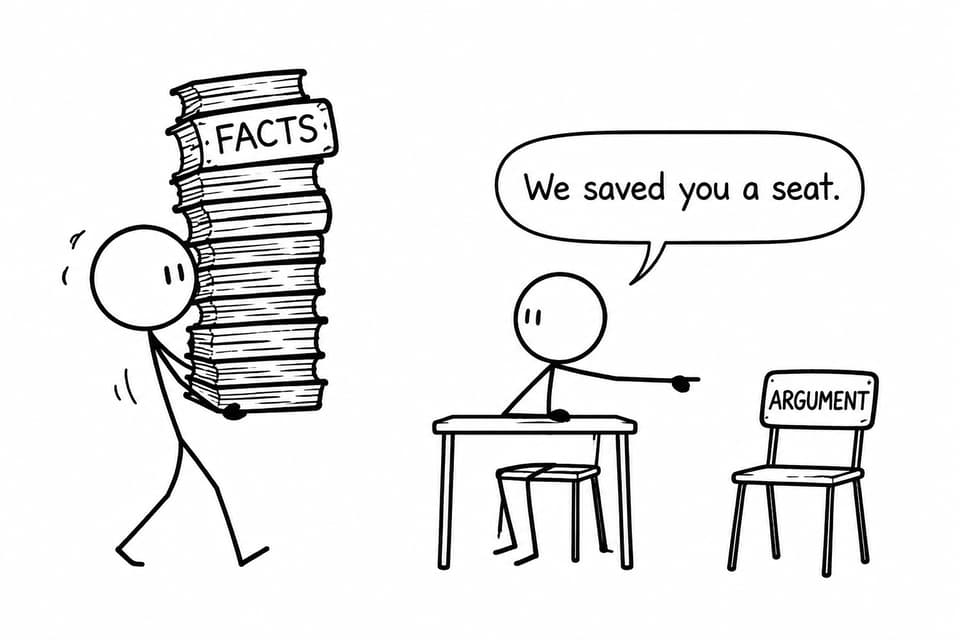
Notice what the paragraph does not contain: a decorative quotation, a long chronology or an unexplained historian's surname. Every detail helps answer the question.
Use guidance on how IB History essays change for first assessment 2028 alongside the four key historical concepts to build adaptable plans.
What a 7 looks like in HL Paper 3
Paper 3 rewards depth, control and evaluation. Two hours for two essays means roughly one hour per response, including planning and review. That does not require equal minute-by-minute allocation, but it does require discipline.
Because the question supplies an argument to evaluate, your introduction should establish an initial position. Each paragraph should then test one dimension of that position using precise regional knowledge.
Suppose an illustrative claim argues that external intervention was the main reason a regional conflict continued. A useful plan might test:
- military resources supplied from outside the region
- domestic political divisions
- ideological commitment and popular mobilization
- the changing importance of each factor over time
A high-level conclusion does more than repeat that several factors mattered. It establishes hierarchy: external assistance may have prolonged the conflict, while domestic fragmentation made that assistance effective. This distinction between a sustaining factor and an underlying condition produces a sharper judgement.
Build evidence banks by argument, not only by date. A chronological timeline helps you remember what happened. A thematic evidence bank helps you decide what it proves.
What a 7-level historical investigation requires
The investigation is not a miniature encyclopedia entry. It is an answer to a narrow, researchable historical question.
Compare these hypothetical questions:
- Too broad: Why did a revolution happen?
- More workable: To what extent did a specified policy contribute to political opposition in a defined place and period?
The second question creates boundaries and invites evaluation. It also helps you choose sources for a reason.
Source selection should produce analytical range. A source is not automatically useful because it is primary, and it is not automatically reliable because it is scholarly. Ask what each source can establish, what perspective shaped it and how it interacts with other evidence.
Your investigation should maintain a visible chain:
inquiry question → selected evidence → source evaluation → competing interpretations → reasoned conclusion
Use RevisionDojo's Coursework Library to understand how historical inquiry is structured, not to imitate another student's wording or topic. AI Chat can help you test whether a question is sufficiently focused, while grading tools can identify places where a paragraph describes evidence without analysing it. Your teacher remains the authority on permitted feedback, academic integrity and the current guide's formal requirements.
A two-year plan for how to get a 7 in IB History 2028
August-December 2026: build systems early
After each lesson, reduce your notes to three layers: a short chronology, an evidence bank and a concept map. Put dates, people and definitions into Flashcards, but reserve Study Notes for mechanisms and debates.
Once a week, answer one source or paragraph-sized question without notes. This reveals the difference between recognizing information and producing an answer. The guide to common IB History struggles can help diagnose weak recall, poor selection and unfocused writing before they become habits.
January-June 2027: learn to construct arguments
Move from individual paragraphs to full plans and timed responses. For every major unit, create three or four reusable debates, such as structural versus individual causes or short-term change versus long-term continuity.
Practise rewriting thesis statements after receiving feedback. A thesis should answer the command term, establish criteria and indicate the argument's limits. Use IB History thematic study guidance to connect individual examples to larger historical questions.
Begin exploring IA questions during this period if that matches your school's schedule. Test source availability before committing to a question.
July-December 2027: integrate knowledge and timing
Use the break to repair gaps, not to rewrite every note. Complete timed sections, compare your response with the current assessment criteria supplied by your teacher, then record one recurring weakness.
A useful correction log has four headings:
| Weakness | Evidence from response | Correction | Next practice |
|---|---|---|---|
| Narrative paragraphs | Events presented without a claim | Open with an analytical proposition | Write one causal paragraph |
| Thin evidence | General references to policy | Learn two precise examples | Complete a closed-book plan |
| Unqualified conclusion | Factors treated as equal | Rank them by stated criteria | Rewrite conclusion only |
If independent study feels fragmented, the best IB History self-study resources can help organize Study Notes, Flashcards and writing practice. Tutors can provide human guidance when a persistent argument or timing problem needs deeper attention.
January-May 2028: simulate, diagnose, repeat
Shift towards complete timed work. Use Mock Exams and syllabus-aligned Predicted Papers as simulations, not forecasts of exact questions. Since this is the first assessment session, no resource can know the final examination content.
After each simulation, classify lost marks by cause: missing knowledge, weak selection, unclear reasoning, shallow source use or poor timing. Then use the Questionbank to isolate that weakness before attempting another full paper. This is more efficient than repeatedly sitting complete exams without changing the process.
RevisionDojo works best as a connected loop: Study Notes clarify content, Flashcards strengthen retrieval, AI Chat resolves confusion, grading tools sharpen writing, and the Questionbank turns feedback into targeted practice.
Getting a 7 is rarely about discovering one perfect essay template. It is about making good historical decisions often enough that they remain available under pressure.
Your next step: open the RevisionDojo IB History Questionbank, choose one Paper 1 source task, complete it under a strict timer and record the single analytical skill you will improve in your next attempt.