The night before your first mock, you open your notebook and it feels like it opens back.
There’s the neat chapter title you wrote weeks ago. There’s a diagram you half remember drawing. And there’s that quiet, sinking question that turns every IB student into an amateur time economist:
How many hours should you study for IB Sciences?
Not because you want to suffer. Because you want certainty. A number you can trust when your brain is tired and your calendar is already crowded.
Here’s the honest answer: the right number of hours for IB Sciences depends on your level (HL vs SL), the subject’s demands, and how you study. But the good news is that you can turn all that uncertainty into a simple weekly target, a repeatable routine, and a plan that gets sharper as exams get closer.
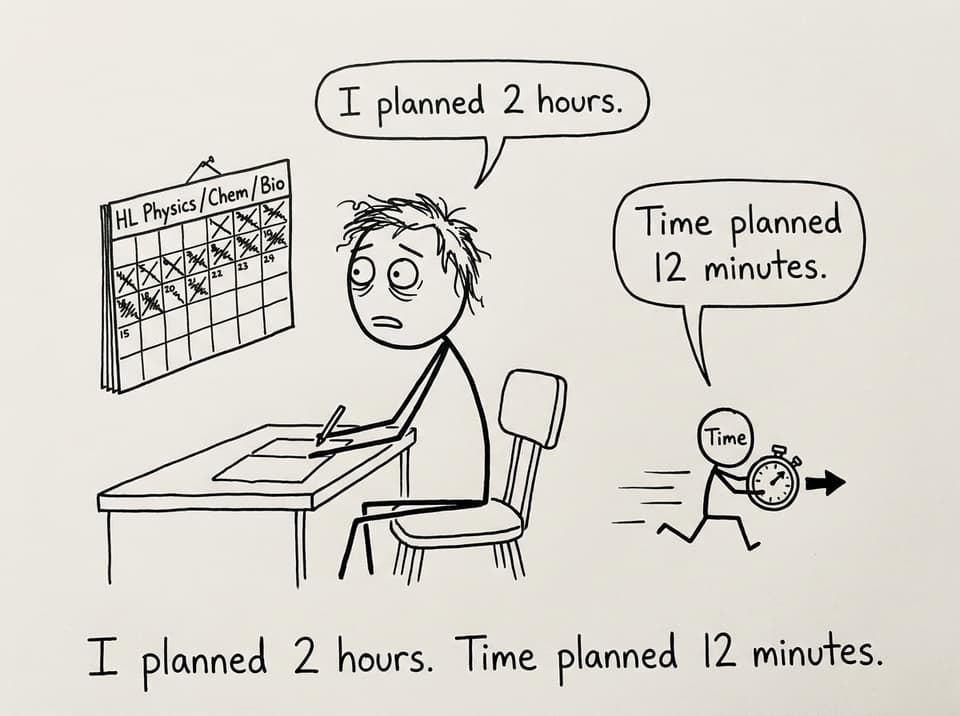
A quick checklist for planning IB Sciences study hours
Before you chase a big daily number, do this quick setup. It’s the fastest way to make your IB Sciences revision feel controlled instead of chaotic.
-
Pick a weekly hour target (weekly beats daily for realism).
-
Split time into concepts + practice + review.
-
Increase hours gradually in the final stretch (no overnight hero mode).
-
Make practice questions non-negotiable.
-
Track weak topics so hours follow evidence, not anxiety.
If you want the bigger picture of workload across the diploma, pair this with How Many Hours Should I Study Per Week in the IB? and How Long Should I Revise for Each IB Subject?.
The baseline: recommended weekly hours for IB Sciences (HL vs SL)
A dependable starting point for IB Sciences is:
-
HL IB Sciences: 6-8 hours per week per subject
-
SL IB Sciences: 4-6 hours per week per subject
These numbers work because they’re sustainable across months, not just one intense weekend. They also leave room for the parts of science that steal time quietly: lab write-ups, IA planning, data processing, and the slow work of learning markscheme language.
For a dedicated breakdown by science, see How long should you spend studying each IB science subject and What is the best study schedule for IB Group 4 sciences.
A realistic daily translation (so the numbers actually happen)
Weekly targets only work if you can picture them on a school day.
-
HL: 60-75 minutes per day, 6 days a week (or two longer blocks on weekends)
-
SL: 40-60 minutes per day, 5-6 days a week
In other words: most students don’t need five-hour weekday marathons for IB Sciences. They need consistent, high-quality loops.
Why “more hours” can fail in IB Sciences
A lot of students increase hours and still feel stuck. The reason is uncomfortable, but useful:
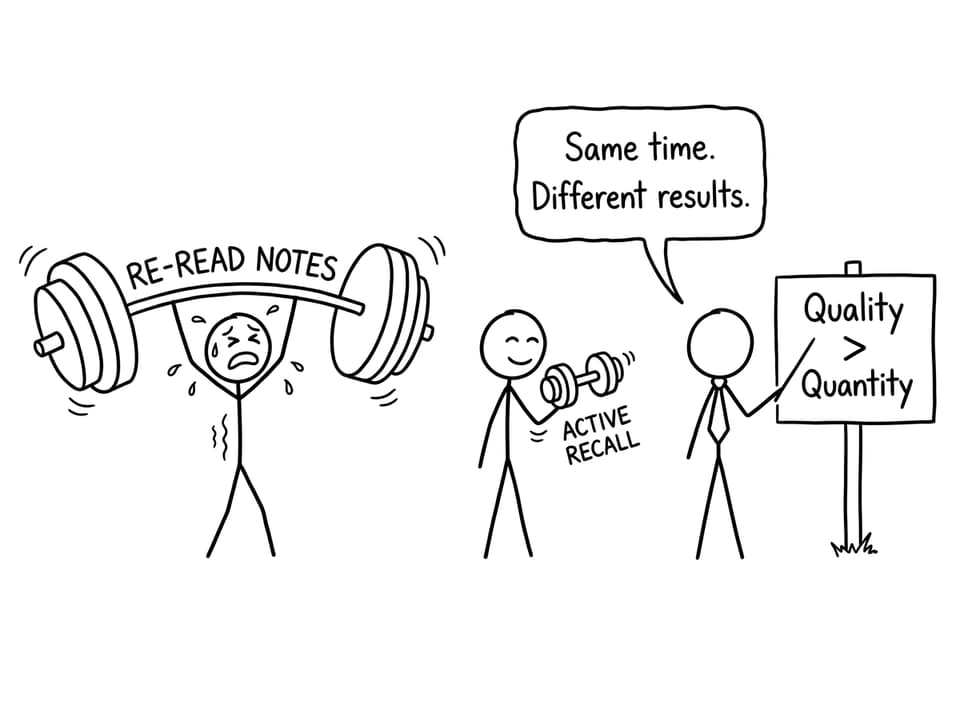
In IB Sciences, time only helps if it creates feedback.
Reading notes can feel productive because it’s calm. But exams are not calm. Exams ask you to recall under pressure, apply methods, interpret data, and use precise phrasing.
So the goal isn’t “more hours.” It’s “better hours.”
The best way to spend your IB Sciences hours (a simple split)
If you’re aiming to improve quickly in IB Sciences, try this time split:
-
40% exam-style practice (topic-focused at first, timed later)
-
30% concept rebuilding (short, targeted review)
-
20% mistake review + reattempts (where marks are actually won)
-
10% planning (decide what to do next so you don’t waste the first 15 minutes)
This is where RevisionDojo quietly becomes a force multiplier for IB Sciences:
-
Use the free Questionbank to practise exactly what the IB asks, with fast repetitions.
-
Use RevisionDojo for IB to keep your tools in one place: Study Notes, Flashcards, AI Chat, Grading tools, Predicted Papers, Mock Exams, Coursework Library, and Tutors.
-
Use IB Flashcards with Spaced Repetition (SRS) to make recall automatic, especially for definitions, processes, and required phrasing.
If flashcards don’t feel like “real studying,” read How to use flashcards for IB Biology revision for a practical routine you can copy.
The “60-90 minute loop” for IB Sciences (repeatable on any day)
When you don’t know what to do next, follow this loop. It’s designed for IB Sciences, where understanding and application must travel together.
Quick loop (60-90 minutes)
-
10 min: skim targeted Study Notes for one subtopic
-
25-35 min: do a small set in the Questionbank
-
10-15 min: review mistakes, write a one-sentence “rule” (what you’ll do next time)
-
10 min: Flashcards on that same subtopic
-
Optional 5 min: use AI Chat to fix one confusion immediately
Do two loops on weekdays and three on one weekend day, and your IB Sciences hours will add up without burning you out.
For pacing and exam conditions, learn how to use question practice well with IB Question Bank: How to Use It Effectively.
When to increase IB Sciences hours (and how not to crash)
Most students only need a big ramp in the final 6-8 weeks.
A calm approach:
-
8 weeks out: add ~20% more time (one extra loop on 3 days)
-
6 weeks out: add ~35% and start weekly timed sections
-
4 weeks out: add ~50%, reduce passive review, increase timed practice
-
2 weeks out: hold steady, protect sleep, prioritise weak topics
If you also need to account for lab expectations, this matters: How many hours of practical work are required in IB sciences.

Conclusion: your IB Sciences hours should feel “repeatable”
The best study plan for IB Sciences isn’t the one that looks impressive. It’s the one you can do again tomorrow.
Start with the baseline: 6-8 hours/week for HL, 4-6 hours/week for SL. Build your time around practice, mistake review, and short recall. Then ramp gently as exams approach.
If you want the easiest way to turn hours into marks, make RevisionDojo your home base for IB Sciences: the Questionbank for fast, targeted practice, Study Notes for clean concept rebuilds, Flashcards for daily recall, AI Chat for instant clarity, Grading tools for feedback, Predicted Papers and Mock Exams for exam-shape confidence, and the Coursework Library and Tutors when you need a human-level push.
Your next hour is the one that counts. Make it a better one with IB Sciences practice you can measure.