


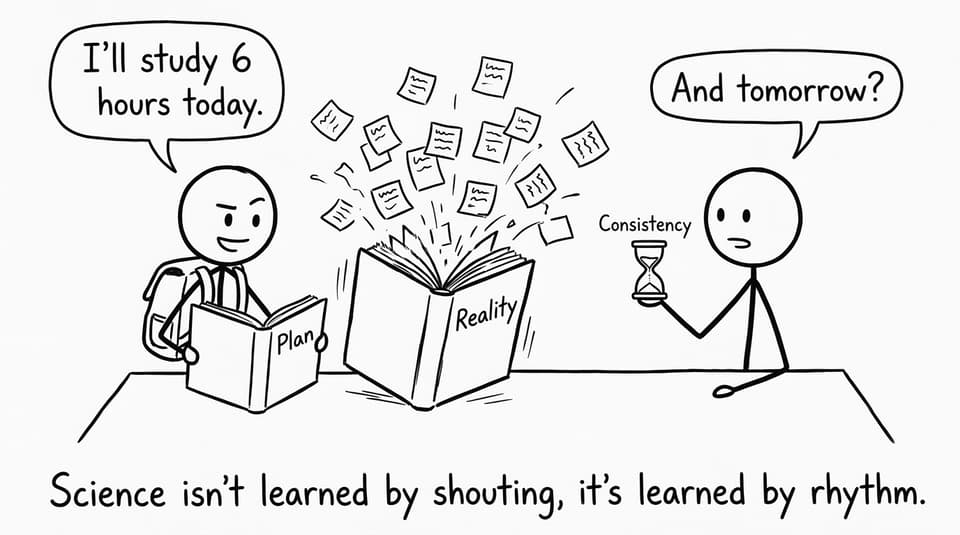
If you have ever stared at your planner and thought, “I should be doing more,” you are not alone. IB Sciences create a special kind of pressure because they feel endless: content, calculations, practical work, and the quiet anxiety of not knowing what the exam will actually demand.
The truth is calmer than the panic. You do not need heroic hours. You need repeatable hours that turn into exam skill.
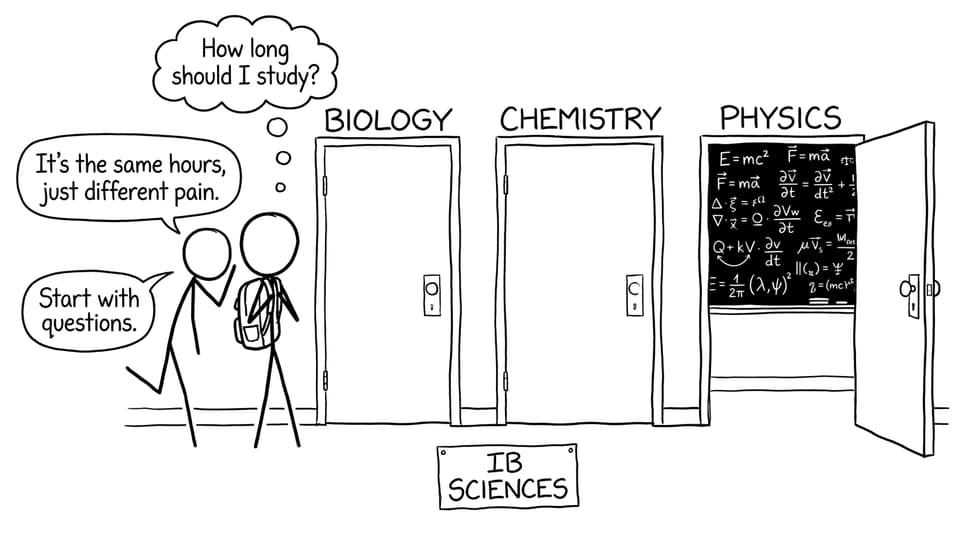
A quick weekly checklist for IB Sciences
Use this as your default, then adjust based on deadlines and weaknesses:
-
Pick your science level (SL or HL) and set a weekly target.
-
Split time into review + practice + IA work.
-
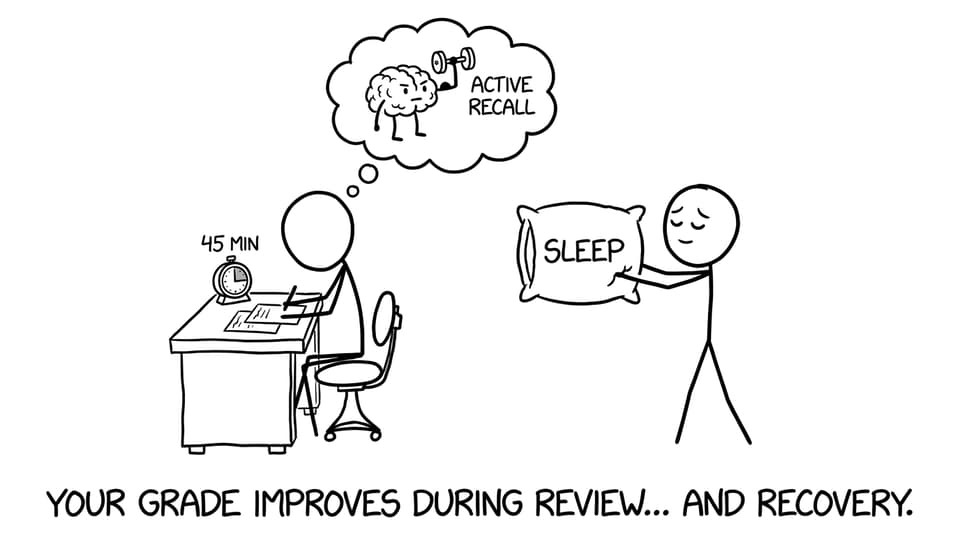
Keep sessions short enough to repeat (45-90 minutes).
-
Do at least one timed set weekly as exams approach.
-
Track mistakes so your next hour is obvious.
If you want a bigger framework for all subjects, combine this article with How Many Hours Should IB Students Study?.
Recommended weekly study hours per IB Sciences subject
A good schedule is less about motivation and more about physics: small forces, applied consistently, move heavy objects.
Standard Level: 4-6 hours per week per subject
For IB Sciences at SL, aim for 4-6 hours per week per science. That is enough time to:
-
refresh concepts efficiently,
-
build recall with Flashcards,
-
and practice exam-style questions without burning out.
A practical rhythm is 4 sessions of 60-75 minutes. If you are unsure how to structure the week, borrow ideas from What Is the Best Study Schedule for IB Group 4 Sciences.
Higher Level: 6-8 hours per week per subject
For IB Sciences at HL, aim for 6-8 hours per week per subject. HL needs more repetitions because you are asked to explain, apply, and connect concepts under time pressure.
Those extra hours should not become more rereading. Make them more “exam-shaped” practice. This is where tools like the RevisionDojo Questionbank and timed Mock Exams matter.
What if you take multiple IB Sciences?
Students often underestimate the hidden cost: switching contexts. Biology vocabulary, Chemistry mechanisms, Physics problem solving. Your brain pays a transition tax.
Here is a realistic weekly range in a heavy science combination (final revision phase):
-
Two HL sciences: 12-16 hours total (6-8 each)
-
One SL science: 4-6 hours
-
IA / practical write-up time: 3-5 hours
That lands around 19-27 hours per week for IB Sciences work when things get serious.
For overall balance with TOK/EE/CAS, use How Much Time Should You Spend Studying Each Week in IB?.
How to spend those hours (the part most students miss)
Time is not the constraint. Feedback is.
A strong split for IB Sciences looks like this:
-
60-70% practice: Questionbank sets, exam-style questions, short timed sections
-
20-30% targeted review: Study Notes for exactly what you missed
-
10% planning and repair: error log, reattempt schedule, IA admin
RevisionDojo is built for this loop: Study Notes to rebuild understanding, Flashcards for spaced repetition, and AI Chat to fix misconceptions quickly before they fossilize into habits. When you are ready for pressure, add Mock Exams and Predicted Papers for stamina and pacing.
If you need a step-by-step system, keep How to Study for IB Exams: Step-by-Step Guide open while you plan.
How to ramp up near exams (without burning out)
The biggest mistake is jumping from “normal weeks” to “crisis weeks” overnight.
Instead, increase your IB Sciences hours gradually across the final 6-8 weeks:
-
Add 1 extra session per subject per week.
-
Replace one review block with a timed set.
-
Keep one lighter day to protect sleep and consistency.
If your revision is turning busy instead of productive, read Busy vs Productive for IB: Study That Actually Scores.
Conclusion: make IB Sciences predictable
IB Sciences feel overwhelming when your plan is vague. They become manageable when your week has a shape: SL at 4-6 hours, HL at 6-8 hours, plus steady IA time and a gradual ramp into timed practice.
If you want the simplest next step, build one repeatable science session inside RevisionDojo: start with Study Notes, drill the Questionbank, lock in recall with Flashcards, and use AI Chat when you get stuck. Consistency turns into confidence, and confidence turns into marks.