
If you have two IB exams in one day, it can feel like the timetable has decided to test your stamina as much as your syllabus knowledge. The first paper drains your focus, and the second one sits there like a quiet threat in the afternoon. But the situation is normal, planned for, and survivable with the right Revision Tips and a calm, practical routine.
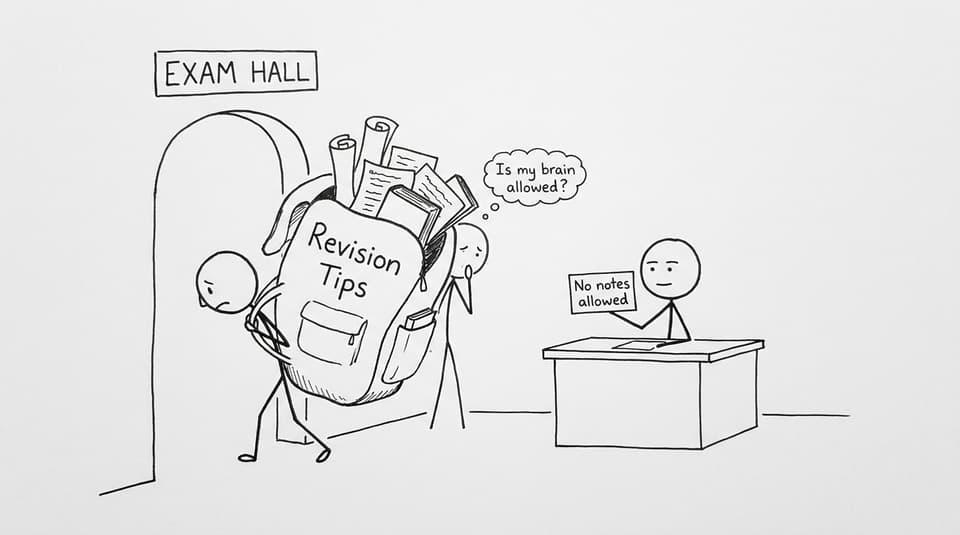
Is it normal to have two IB exams in one day?
Yes. The IB schedule commonly places one exam in the morning session and one in the afternoon session. Schools are expected to run this safely and fairly, so you will not be asked to sit two exams at the same time.
What matters is accepting it early. Once you stop treating it like an injustice, your brain can do something more useful: plan.
For planning support, it helps to work backward from the official timetable and build a realistic routine. Start with How to Plan Final IB Revision Using the Official Timetable.
What happens between the two exams?
Between sessions, you are usually supervised and given a break. The point is exam security and student welfare. In most cases, you cannot access phones, notes, or study materials during the supervised gap.
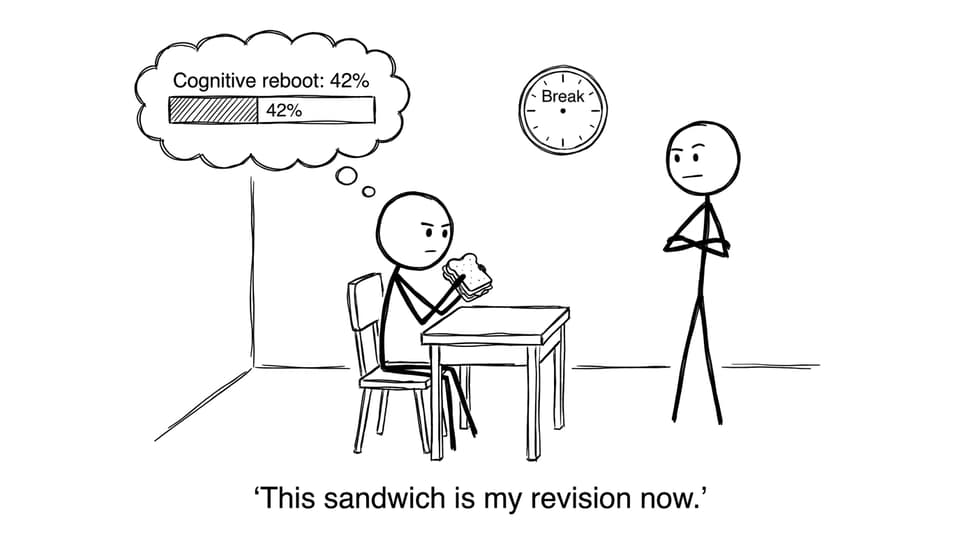
That break is for recovery: water, food, a short walk, and letting your mind come down from the first performance.
A quick checklist for double-exam days (Revision Tips)
Use these Revision Tips as your default plan:
-
Finish real revision before exam day for both subjects (no last-minute heroics).
-
Pack twice: calculators, pens, chargers (if allowed), water, and lunch.
-
Decide your “between-exams routine” now: eat, hydrate, breathe, reset.
-
Do not try to learn new content during the break.
-
Use exam technique to protect energy: clear structure, time checks, simple sentences.
If you want a broader system you can reuse for every subject, keep The Ultimate Guide to Revision for IB Students bookmarked.
The biggest mistake: trying to revise heavily between sessions
The temptation is understandable. The second exam feels close enough to “fix,” so students try to cram. But your brain is not a bottomless container. After a full paper, the limiting factor is often fatigue, not knowledge.
Better Revision Tips for the break:
-
Eat something predictable (nothing experimental).
-
Drink water.
-
Avoid post-mortems of the morning exam.
-
If you must do something academic, do a 60-second “memory scan” in your head, then stop.
This is also why your real preparation must happen weeks earlier, using a repeatable loop: notes to understand, questions to apply, feedback to improve.
How to prepare in the weeks before (Revision Tips that compound)
A double-exam day is won in small decisions made earlier.
Train switching subjects on purpose
Do short alternating blocks in the weeks before. For example: 40 minutes of one subject, then 40 minutes of the other, then a break. It feels awkward at first, then it becomes normal.
Build stamina with timed practice
Use timed sets so your brain learns the rhythm of writing, checking, and moving on. RevisionDojo makes this simple with Mock Exams and targeted exam builders. See Custom IB Mock Exams: Build Practice Tests by Topic.
Use one platform to reduce decision fatigue
When everything is scattered, you waste energy just choosing what to do. On RevisionDojo, you can run a clean loop: Study Notes for clarity, Flashcards for recall, Questionbank for application, AI Chat when you are stuck, and Grading tools to learn what the markscheme rewards.
A solid starting point is How to Study for IB Exams: Step-by-Step Guide.
How to approach the morning exam vs the afternoon exam
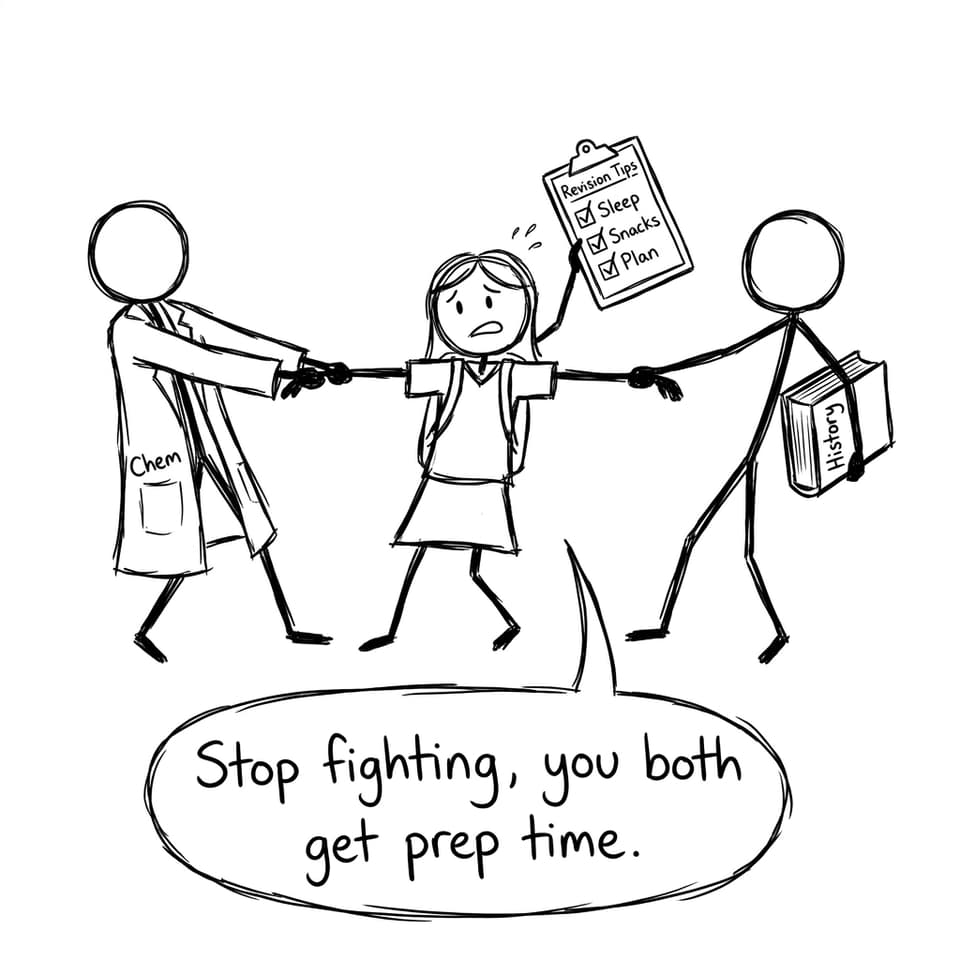
Treat the morning exam as its own event. Do not hold back to “save energy.” That mindset usually leads to sloppy marks you cannot recover later.
For the afternoon exam, assume you will be slightly tired and plan for it:
-
Use a simple structure you can repeat under pressure.
-
Start with the questions that settle you into rhythm.
-
Keep time checks frequent so fatigue does not quietly steal minutes.
If your schedule is packed, the mindset and pacing guidance in IB Exam Week-by-Week Survival Guide is worth reading.
Using RevisionDojo to plan double-exam days
A double-exam day feels less scary when you can see it coming. Use the RevisionDojo Study Planner to spot high-pressure days early, spread revision across weeks, and avoid last-minute overload.
Then plug in the tools that actually move marks:
-
Questionbank for daily exam-style reps
-
Flashcards for short recall sessions
-
AI Chat for quick clarification (especially between topics)
-
Grading tools to tighten written responses
-
Predicted Papers and Mock Exams for realistic rehearsal
If you want more Revision Tips in one place, browse All Revision Tips Posts.
Closing: make the day hard in advance, so it feels easier later
Two IB exams in one day are demanding, but they are not a trap. They are a predictable challenge, and predictable challenges respond to good systems.
Use these Revision Tips to do the hard work early, protect your energy on the day, and keep your mind focused on what you can control. If you want the simplest way to plan, practise, and get feedback in one place, start with the RevisionDojo Study Planner and build your routine around RevisionDojo’s Study Notes, Flashcards, Questionbank, AI Chat, Grading tools, Predicted Papers, Mock Exams, Coursework Library, and Tutors.