
Introduction: the timetable didn’t change your ability, only your plan
The first time you open a new IB timetable, it can feel like someone shuffled your calendar while you slept.
Maybe a language paper lands earlier than you expected. Maybe your sciences cluster in the middle weeks again. Maybe the dates are different, but the stress feels strangely familiar.
That’s the real point of comparing IB May 2026 exam schedule changes to previous years: not to panic, but to adjust your Revision Tips so you peak at the right moment.
In this guide, you’ll learn what usually stays consistent, what tends to shift year to year, and which changes actually matter for your marks and energy.
Quick checklist: what to check in the May 2026 schedule (and ignore)
Use this short list before you overthink the differences.
-
Circle your toughest subjects (the ones that cost the most energy)
-
Mark consecutive exam days (fatigue risk)
-
Highlight any two-exam days (logistics and recovery planning)
-
Note early-session languages and listening/reading-heavy papers (warm-up needed)
-
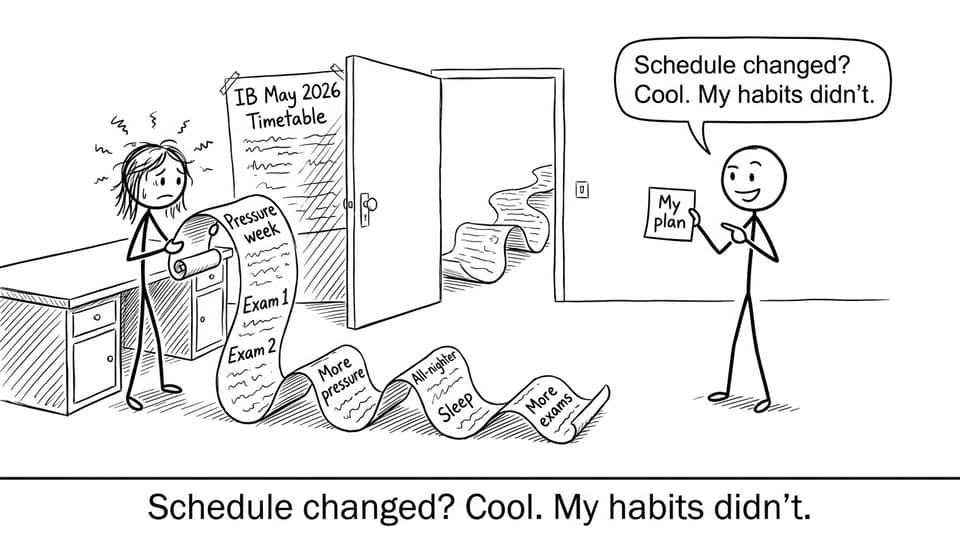
Ignore minor weekday shifts unless they create back-to-back pressure
These are Revision Tips that stay useful even when exact dates move.
What usually stays the same compared to previous years
Across recent sessions, the IB tends to protect stability because it’s a global system.
Here’s what typically stays consistent:
-
A four-week exam window
-
Morning and afternoon sessions
-
Exam zones (A, B, and C) that determine start times globally
-
Papers within the same subject often scheduled close together
-
No special adjustments for your local holidays or school events
So when students say “the schedule feels similar,” they’re usually right. The structure stays steady even when placement shifts.
If you want a clean overview of the official structure for this session, start with IB May 2026 Exam Schedule: Full Timetable, Dates, and Planning Guide.
The types of changes the IB actually makes
Most IB May 2026 exam schedule changes (relative to previous years) fall into logistical tweaks, not academic ones:
-
A subject moves slightly earlier or later in the four-week window
-
Paper order changes (for example, Paper 1 and Paper 2 swapping within a subject)
-
High-candidature subjects redistributed to reduce global clashes
-
Small shifts designed to reduce the number of students sitting multiple exams in a day
The syllabus and mark schemes don’t change because the calendar moved. Your Revision Tips should respond to energy and timing, not fear.
IB May 2026 schedule changes vs previous years: what patterns students will notice
Without obsessing over exact dates, students usually notice the same “pressure architecture” appearing again:
-
Languages often appear early in the session, which rewards steady reading/listening habits rather than last-minute cramming.
-
Math and sciences often feel clustered around the middle and later weeks, which creates a common fatigue trap: you’re asked to perform when you’re already tired.
-
HL-only papers often appear later than SL components, which means HL students need longer stamina.
In other words, even when IB May 2026 exam schedule changes exist, the pressure points stay recognizable.
To translate those pressure points into a plan, use Plan Final IB Revision With the Official Timetable.
Why the IB changes the schedule at all
The IB builds the timetable using global registration patterns. If subject combinations shift worldwide, the schedule has to adapt.
Common reasons include:
-
Reducing the number of students with multiple exams in one day
-
Balancing workload across weeks to prevent bottlenecks
-
Responding to changes in subject popularity
-
Protecting exam security across time zones
This is why the best Revision Tips are flexible. A perfect plan for a different year can become a slightly wrong plan for your year.
What changes matter to your revision (and what doesn’t)
A lot of students fixate on changes that are emotionally loud but practically small.
Changes that usually don’t matter much
-
An exam moving from Tuesday to Wednesday
-
A start time shifting slightly within your zone
-
Another school’s calendar looking different online
Changes that really do matter
-
Your hardest papers landing in the same week (stacked cognitive load)
-
Back-to-back exam days that reduce recovery time
-
Writing-heavy sequences (hand fatigue, focus, pacing)
-
Your final exam placement (how long you must sustain discipline)
If you only remember one sentence, make it this: strong Revision Tips follow patterns of fatigue, not the aesthetics of dates.
For a schedule-based strategy that’s very usable, read Revision Tips: Best Revision Order for IB Exam Schedule.
How to adapt your Revision Tips for May 2026 (practical plan)
The calmest students aren’t calmer people. They just decided earlier.
Here’s a simple adaptation method:
Build your “pressure week map”
-
Print or screenshot the May 2026 timetable.
-
Mark each exam day with a rating: light / medium / heavy.
-
Identify your top two “pressure weeks.”
Front-load what is slow to improve
Your slowest-to-improve skills need earlier attention:
-
timed writing structure (Humanities, English)
-
multi-step problem solving (Math, Physics, Chem)
-
command term accuracy across papers
A useful framework is in How to Use the IB Exam Schedule to Maximize Your Final Grade.
Use the RevisionDojo loop (so the schedule can’t bully you)
This is where RevisionDojo becomes more than motivation.
-
Study Notes help you clarify topics fast (no wandering through five resources).
-
Flashcards build daily recall so early language papers don’t feel like a surprise.
-
The Questionbank trains you to score, not just understand.
-
AI Chat (Jojo) helps you get unstuck in minutes when a concept stalls you.
-
Grading tools show you what earns marks in written responses.
-
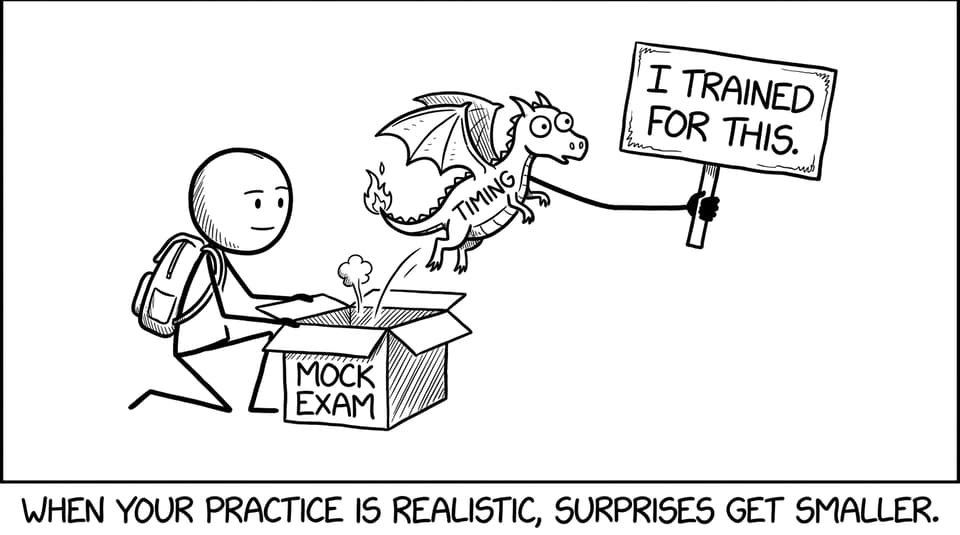
Predicted Papers and Mock Exams build timing and stamina for those mid-to-late clusters.
-
The Coursework Library keeps IA/EE/TOK tasks from quietly stealing revision time.
-
Tutors help when your plan needs a human eye, not more self-pressure.
To start planning around the May 2026 dates directly, use the RevisionDojo Study Planner.
Two high-yield Revision Tips for the weeks exams move around
Use questions to find reality
When the schedule shifts, it’s tempting to reread notes because it feels safe.
Better: prove what you can do.
Use IB Question Bank | How to Use It Effectively to run short, topic-focused sets and identify weak patterns quickly.
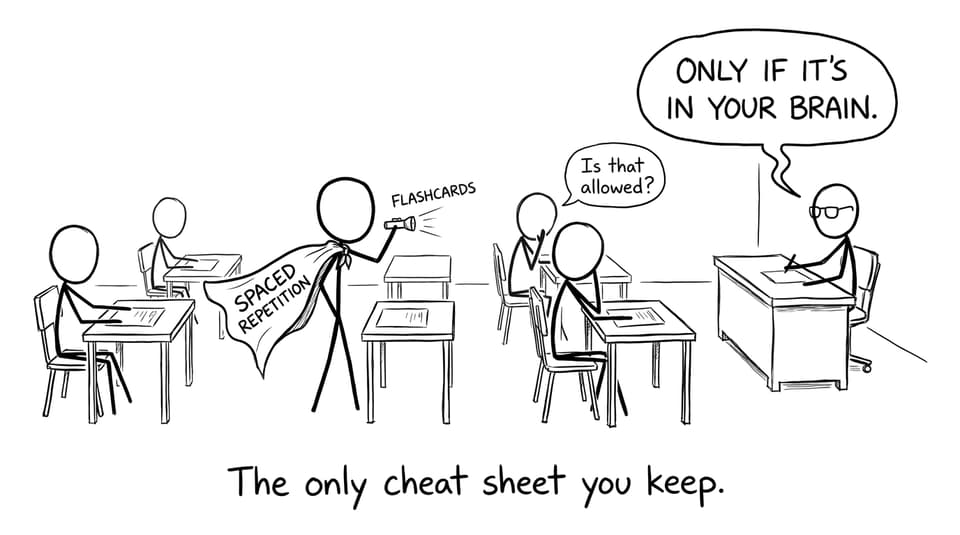
Keep recall daily, especially when languages are early
If language exams land earlier, you don’t “revise language” in one heroic block. You build a habit.
Use IB Flashcards with Spaced Repetition (SRS) and borrow tactics from IB Flashcards vs Practice Questions: Score Higher Fast.
FAQ
Is the IB May 2026 exam schedule very different from previous years?
Usually, no. The overall structure remains stable: a multi-week window, morning and afternoon sessions, and the same global exam-zone logic. What changes most often is placement: which week a subject appears, or the exact order of papers within a subject. These differences can affect your pacing, especially if your toughest subjects become more clustered. But they don’t change what the IB expects you to know or how you’re assessed. The best response is to update your Revision Tips around your pressure weeks, not to treat the timetable as a threat.
Do schedule changes affect grading, difficulty, or boundaries?
Schedule changes are logistical, not academic. The marking criteria for each paper remains the same, and the exam’s intended difficulty doesn’t change because it moved from one day to another. What does change is the human side: your energy, sleep, and focus depending on how your papers stack together. That’s why schedule-aware Revision Tips emphasize stamina and timing practice. Using tools like timed Mock Exams and mark-aware Grading tools helps you perform consistently even when the calendar feels tight. In other words, the schedule doesn’t rewrite the rules, but it can reveal whether your preparation is robust.
Should I change how I revise because of the May 2026 schedule changes?
Change your pacing, not your principles. The core method still wins: learn with Study Notes, retain with Flashcards, and score with the Questionbank. What you adjust is the order and intensity so you don’t burn out before your hardest week arrives. If your languages are early, you start steady recall earlier and keep it light but daily. If your math and sciences are clustered later, you front-load heavy learning and use the final weeks for timed rehearsal. The smartest Revision Tips are the ones that respect your future fatigue.
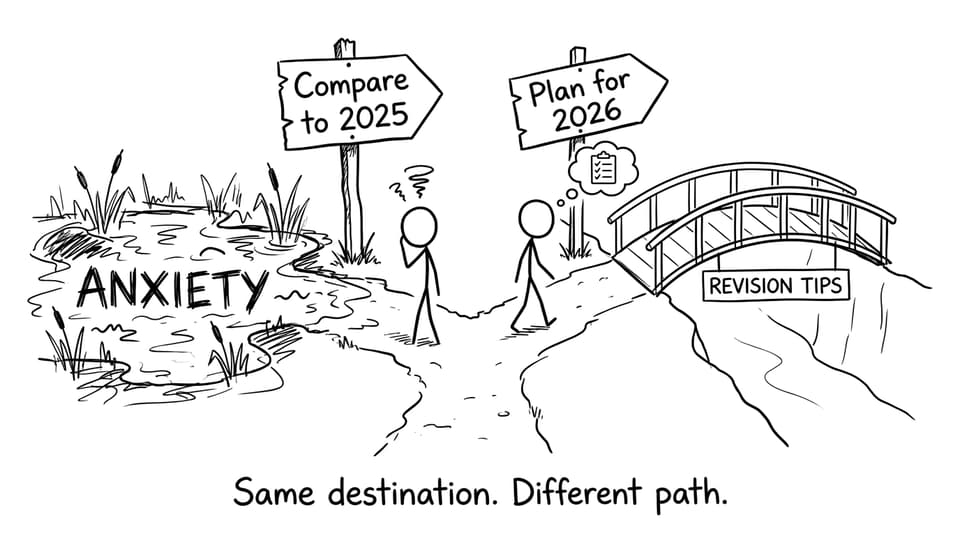
Why is comparing to last year’s timetable sometimes harmful?
Because it makes you plan for a situation you won’t live through. Students often borrow an older sibling’s strategy and assume the same rhythm will work, but small shifts can change recovery days and pressure sequences. The comparison also creates fake certainty: you feel prepared because you’ve “seen it before,” then panic when your own week looks different. Better to build a plan anchored to May 2026 specifically. When you use a planner and real performance data from question practice, you stop guessing. That’s the quiet power behind good Revision Tips.
Conclusion: the schedule is a map, not a verdict
IB May 2026 exam schedule changes compared to previous years are real, but they’re rarely dramatic. What matters is how the new placement interacts with your energy: which week is heavy, which days are consecutive, and where you’re likely to fade.
If you want the simplest next step, take your timetable and build a schedule-aware system: Study Notes for clarity, Flashcards for daily recall, Questionbank for scoring practice, AI Chat for fast fixes, then Predicted Papers and Mock Exams for timing.
Start by mapping your dates in the RevisionDojo Study Planner, then let your Revision Tips follow the reality of May 2026, not the memory of another year.