

If your Group 4 science revision feels like it only “works” when panic is involved, you are not alone. Most IB students don’t fail because they are lazy; they fail because they run a schedule that only makes sense on perfect days. And perfect days almost never show up in the weeks that matter.
The best Group 4 study schedule is boring in the right way: small, repeatable blocks, clear weekly targets, and a feedback loop that tells you what to do next. The goal is not to study more. It is to make your study time behave like science: test, observe, adjust.
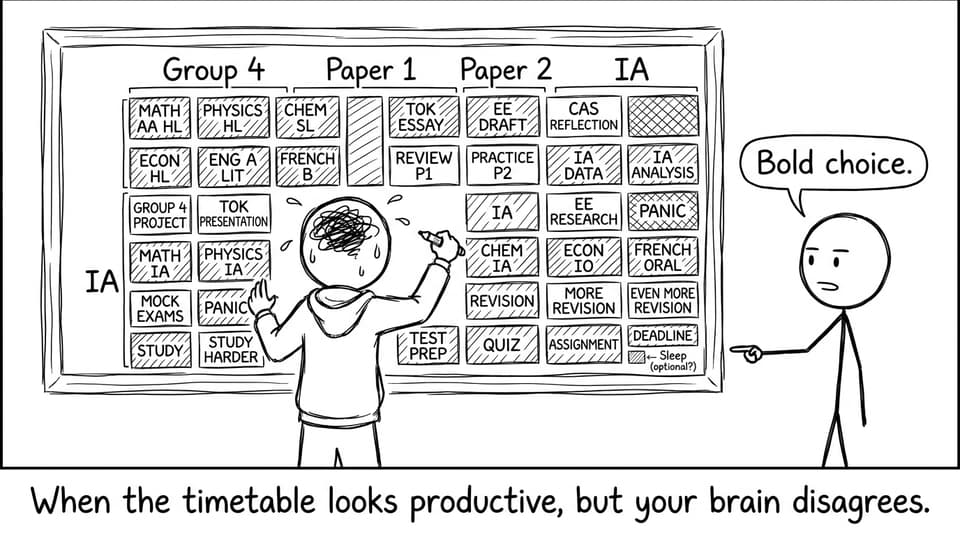
The best Group 4 study schedule (quick checklist)
Use this as your weekly reset for Group 4 (Biology, Chemistry, Physics, ESS, etc.):
-
Set a weekly hour target based on SL vs HL
-
Split every week into review + practice + IA
-
Study two subtopics per week per science (not ten)
-
Do short daily sessions (45-60 minutes) instead of weekend marathons
-
Add one timed set weekly (then scale up near exams)
-
Keep one rest day protected
If you want tools that make this loop easier, build it inside RevisionDojo using Study Notes, Flashcards, and the Questionbank.
Weekly hours: what “enough” looks like for Group 4
A realistic schedule starts with a baseline you can actually sustain.
-
SL Group 4: 2-3 hours per week per subject
-
HL Group 4: 3-5 hours per week per subject (then increase as exams approach)
If you take one HL science and one SL science, expect roughly 5-8 hours per week focused on science content, plus extra time for your Internal Assessments.
This is why consistency beats intensity: a steady 6 hours every week for months will outperform 16 hours in one frantic weekend.
For a broader timetable that keeps all six subjects alive, borrow the logic from How to Create a Balanced IB Study Schedule and then “zoom in” on Group 4 with the routine below.
A simple weekly structure for Group 4: review, practice, IA
The fastest progress in Group 4 comes from a predictable rhythm:
Two subtopics per week (per science)
Pick two subtopics and run the same loop:
-
Clarify (10-20 min): use concise notes to re-learn what you forgot
-
Apply (25-40 min): answer exam-style questions immediately
-
Lock in (10 min): turn mistakes into flashcards, not into guilt
RevisionDojo makes this workflow smooth because you can move from concept to proof quickly: start with IB Biology Resources (or your subject hub), then drill targeted questions, then keep recall alive with Flashcards.
One weekend IA block
Reserve one weekend session per week for IA tasks:
-
data collection
-
processing and analysis
-
writing one section
-
improving based on teacher feedback
The secret is that your IA does not need “a day.” It needs a timebox and a deliverable.
If you need structure, use IB IA Guides and browse strong models inside the Coursework feature. For experiment planning specifically, How to Design Effective Experiments for a Science IA is a solid anchor.
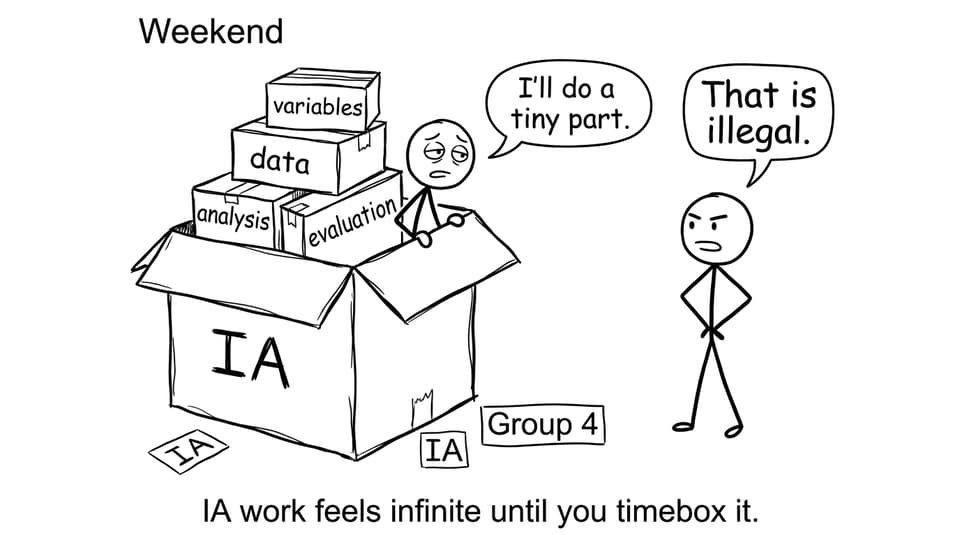
Daily schedule: the Group 4 routine that survives real life
Most IB students do better with 2-3 hours of focused study per day across all subjects. For Group 4, your best move is to break your weekly hours into short daily sessions:
-
Aim for 45-60 minutes per science, spread across 5-6 days
-
Rotate sciences (and rotate “hard” vs “light” days)
-
Use Pomodoro (25 minutes on, 5 minutes off) when your focus is fragile
A practical example (for one science that day):
-
10 minutes: quick Review (Flashcards)
-
35 minutes: Questionbank set on one subtopic
-
10 minutes: mistake log + two flashcards
That last step is where your schedule compounds. You stop “studying” and start building a system.
How to shift your schedule closer to exams (without burning out)
As exams approach, students often increase to 6-8 hours per week per Group 4 subject, mostly by adding timed practice.
A calm way to scale:
-
Week 1-2: one timed set (15-25 min) each week
-
Week 3-4: one timed section (30-60 min) each week
-
Final stretch: timed sections more often, plus occasional full-paper practice if your school supports it
For pacing, timing, and how science papers “steal” marks, pair your schedule with How to Manage Your Time During IB Group 4 Science Exams. And if you want a broader exam-prep ladder, How to Study for IB Exams: Step-by-Step Guide helps you keep the whole plan coherent.
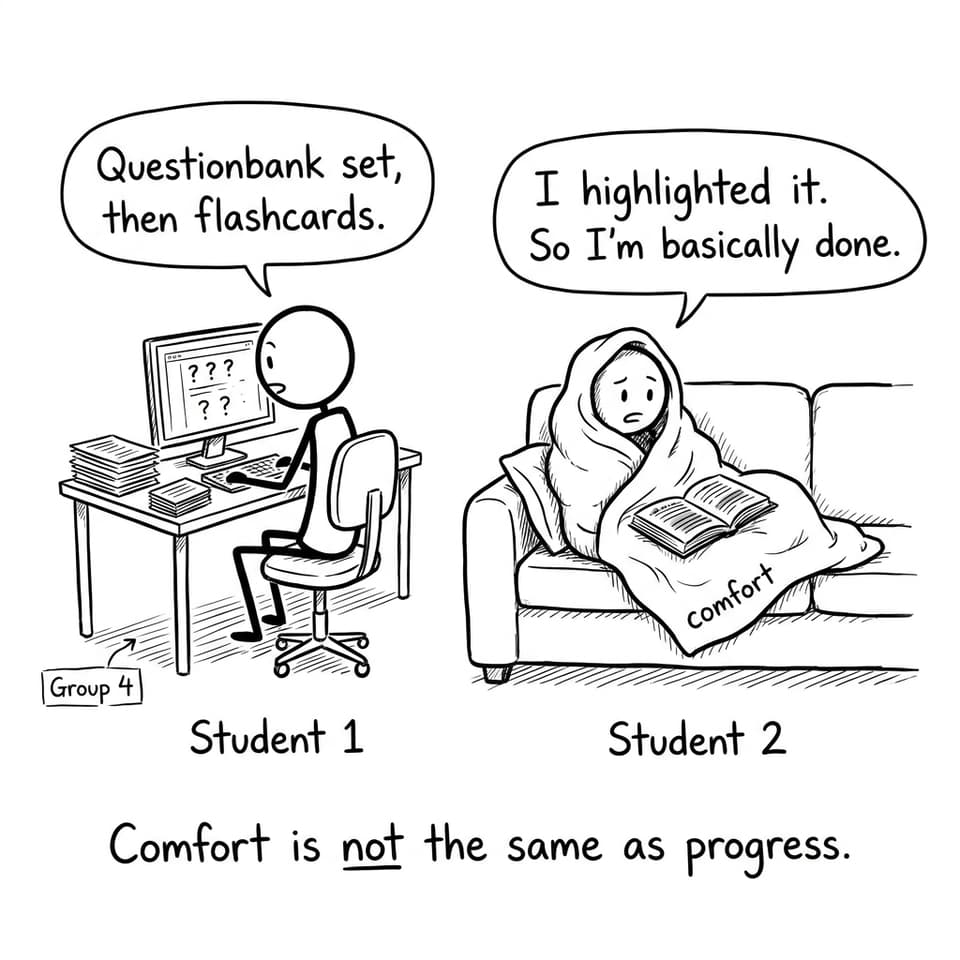
The RevisionDojo loop for Group 4 (the “never wonder what to do next” plan)
When students say they “studied a lot” but nothing moved, it is usually because they stayed in one mode: rereading, rewriting notes, or watching videos.
Run this repeatable Group 4 loop instead:
-
Study Notes to get clear fast
-
Questionbank to practice like the exam actually asks
-
Flashcards to keep definitions, processes, and equations alive
-
AI Chat to unblock confusion quickly (then retest)
-
Mock Exams and Predicted Papers for timed realism
-
Grading tools to tighten written responses and data questions
-
Coursework Library to keep IA stress from leaking into exam revision
-
Tutors when you are stuck at strategy level, not just content level
For timed realism, you can add Subject-Specific IB Mock Exams and, when you need fresh practice sets, IB Predicted Papers by IB Examiners (Free).
Closing: build a Group 4 schedule you can repeat
The best Group 4 study schedule is not the one that looks impressive on Sunday night. It is the one you can repeat when you are tired, busy, and slightly stressed. Keep it simple: two subtopics per week, short daily sessions, one IA block on the weekend, and regular timed practice as exams approach.
If you want your Group 4 revision to feel structured instead of improvised, use RevisionDojo as your control panel: Study Notes for clarity, Flashcards for daily recall, Questionbank for targeted practice, AI Chat for quick unblocking, plus Mock Exams, Predicted Papers, Grading tools, the Coursework Library, and Tutors when you need an expert nudge. Set your hours, run the loop, and let consistency do what last-minute intensity never can.