
If you’ve ever walked out of an IB listening exam thinking, “I know these words… so why did it feel like a sprint?” you’re not alone. The hardest part is rarely vocabulary. It’s uncertainty. When you don’t know how the listening is built, every new audio clip feels like a surprise attack.
These Revision Tips break the structure down so your brain can stop guessing and start executing.
What the IB listening exam is actually testing
IB Language B and ab initio listening tasks are designed to measure real-time comprehension, not “perfect language.” Examiners want evidence that you can:
-
Understand the gist and key details in spoken texts
-
Track tone, purpose, and context (friendly? persuasive? critical?)
-
Extract information efficiently under time pressure
What it’s not testing: flawless grammar, fancy writing, or memorised scripts. Keep that in mind as you apply Revision Tips that focus on meaning first.
If you want a bigger picture of the whole course assessment, this guide helps: IB Language B Exams: Format, Timing, Strategy.
How IB Language listening exams are structured (Paper 2)
In most IB Language courses, listening appears in Paper 2, usually paired with reading (depending on your subject and level). The core pattern is consistent across languages:
-
Multiple audio extracts (different speakers and contexts)
-
A mix of question types
-
Audio played a limited number of times (often twice)
Common task styles include multiple choice, short answer, matching, gap fill, and true/false. The variety is intentional: it prevents you from relying on one technique.
For a concrete example of what “format and timing” looks like, see: IB English B Paper 2 (Listening) format and timing notes.
A quick checklist: what to do before, during, after the audio
Use this as a compact set of Revision Tips for any listening paper:
-
Before the audio: read the questions and predict likely vocabulary
-
First play: capture topic, speaker attitude, and big ideas
-
Second play: hunt for numbers, names, places, contrasts, and confirmations
-
After: answer with what you heard, not what you assume makes sense
When you want exam-style practice that mirrors the structure, build sets in the Paper 2 (Listening) Questionbank and track which question types cost you marks.
Why listening feels harder than reading
Reading lets you control pace. Listening doesn’t. Once a sentence passes, it’s gone, and that creates three common problems:
-
You try to “replay” missed words in your head and fall behind
-
Accents and speed force you to accept uncertainty
-
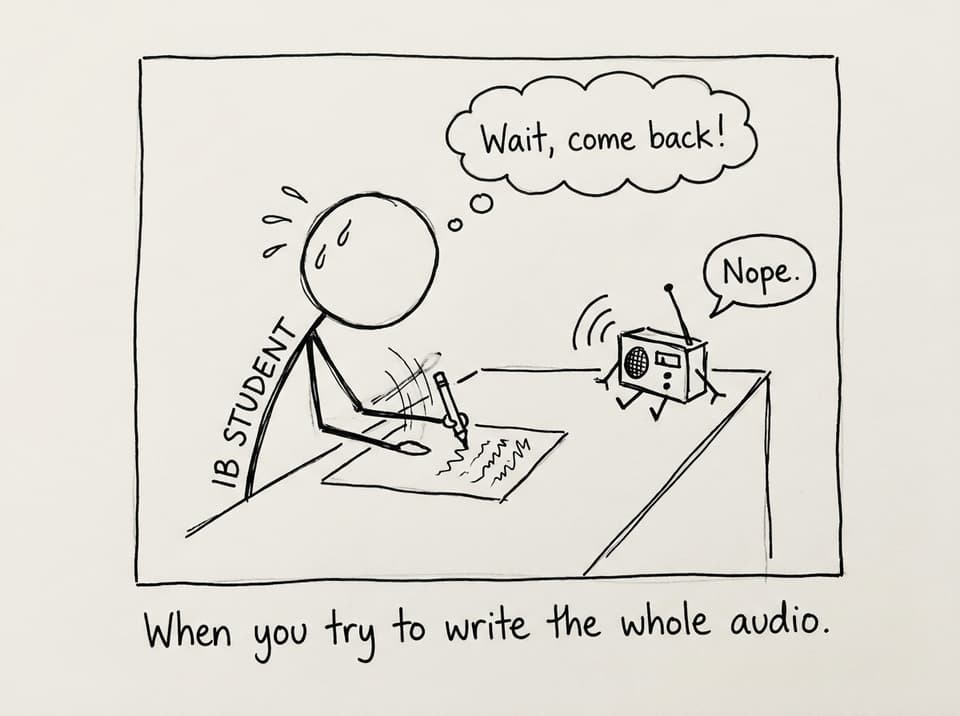
Writing too much steals attention from the next key point
One of the best Revision Tips here is emotional, not linguistic: missing a detail is normal. Your job is to recover quickly.
The mistakes that quietly ruin scores
Most students don’t lose marks because the audio is “too fast.” They lose marks because they make predictable choices:
-
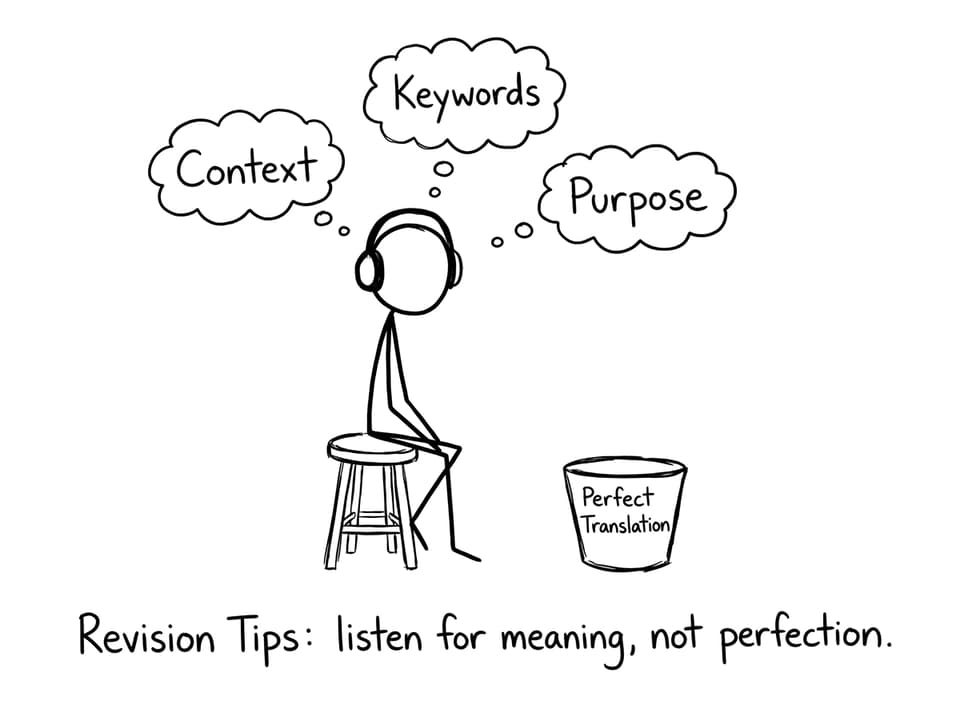
Trying to understand every word instead of every idea
-
Translating into English rather than processing meaning directly
-
Writing full sentences while the recording continues
-
Panicking after one slip and mentally checking out
A practical way to fix this is to do short, frequent listening blocks and log recurring errors. RevisionDojo makes that loop easier by combining Study Notes, Flashcards, AI Chat, and Grading tools in one place, so your mistakes become your next micro-target.
For more targeted strategies, especially for Language B listening, see: Best Ways to Practice Listening for IB Language B.
Revision Tips that high scorers use (and repeat)
High scorers don’t have superhuman ears. They have repeatable systems:
-
They listen for signposts (however, therefore, in conclusion, on the other hand)
-
They write keywords and symbols, not perfect notes
-
They separate “gist” and “detail” across the two plays
-
They train under timed conditions using Mock Exams and targeted drills
If you want structure for your week, combine small daily listening with a plan you can actually follow. RevisionDojo’s tools (including Predicted Papers, Questionbank, and Tutors when you need a human explanation) work best when your practice is consistent.
To keep consistency realistic, use: Using AI to Create a Personalized Study Schedule and How to Create a Balanced IB Study Schedule.
Conclusion: make the structure your advantage
Listening only feels like chaos when you treat it like chaos. Once you know the Paper 2 structure, the question types, and how to use each playback, the exam becomes a set of familiar moves.
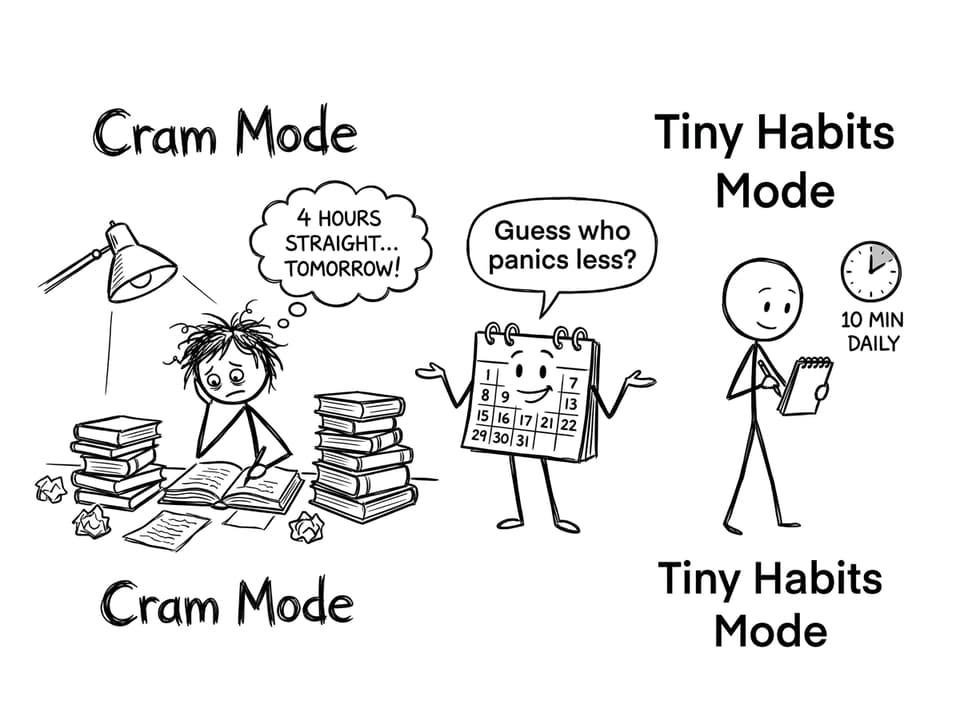
Build your plan around Revision Tips that are repeatable: brief daily practice, targeted drills, and timed simulations. Then bring it all together on RevisionDojo with Study Notes, Questionbank, Flashcards, AI Chat, Mock Exams, and Tutors when you want fast clarity. Start by mastering the structure, and the speed stops feeling personal.