


Practical work in IB Sciences rarely feels urgent at the beginning.
It’s just another lab. Another set of measurements. Another graph that looks nothing like the “expected” curve.
Then, somewhere around the time your Internal Assessment (IA) becomes real, you realize those ordinary lessons were doing something quietly important: training you to think like a scientist under pressure. And yes, they also add up to a specific amount of required practical time.
Below is what you actually need to complete, what “counts,” and how to use those hours so IB Sciences exam questions (especially data-based ones) stop feeling like a foreign language.
IB Sciences practical hour requirements (SL, HL, and ESS)
The IB expects sustained practical engagement across Group 4. The recommended totals are:
-
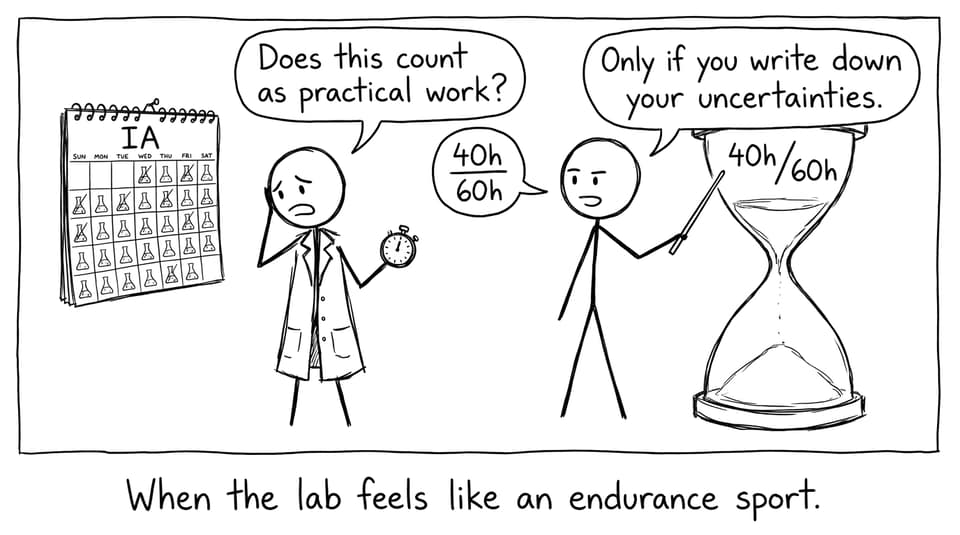
Standard Level (SL): approximately 40 hours of practical work
-
Higher Level (HL): approximately 60 hours of practical work
-
ESS (SL and HL): approximately 30 hours of practical work
These are not meant to be crammed into a single term. In well-run courses, they’re spread across the two years so skills build naturally: planning methods, controlling variables, processing uncertainties, and evaluating limitations.
If you want to anchor your wider revision around what you’re doing in class, the IB Notes hub is a helpful map for connecting each lab back to the exact syllabus content tested in exams.
A quick checklist: what usually counts as practical work in IB Sciences
Different schools log hours differently, but most practical time comes from a mix of:
-
Topic-linked lab investigations (the “classic” experiments)
-
Skills practice (uncertainty, graphing, error bars, evaluation)
-
Simulations and modelling activities (when used properly)
-
Fieldwork (especially common in ESS)
-
Collaborative science time (including the Group 4 Project)
-
IA planning, data collection, and analysis sessions
If you’re unsure what your teacher is counting, ask early. You’re not being difficult. You’re being strategic, which is exactly the mindset IB Sciences rewards.
Internal Assessment hours vs regular practical hours
A common misunderstanding is that all practical hours are “for the IA.” They’re not.
Typically, around 10 hours of practical time is allocated to IA-related work (planning, collecting data, processing, analysis). The rest is the steady drip of normal practical lessons that make the IA doable.
If you’re heading into IA season, it helps to have a clear system and examples. Start with RevisionDojo’s IA Guides, then narrow down to the skills you’re missing.
Two strong companions to keep bookmarked:
Those resources align well with what practical hours are really for: method, evidence, and reasoning.
Where the hours go: how practical work is usually distributed
In most IB Sciences classes, the hours accumulate in a pattern that looks like this:
Routine experiments tied to the syllabus
These labs often feel “small,” but they’re the foundation for exam performance: identifying variables, describing methods, and explaining data trends.
To connect practicals to content fast, use subject hubs:
Each hub pairs Study Notes with Questionbank practice and Flashcards, so your practical experience turns into exam-ready recall.
Skills-based sessions (the hidden score boosters)
These lessons are where you learn to write like an examiner wants you to think: uncertainties, reliability, limitations, and improvements.
A lot of students only take this seriously when writing the IA. That’s late. In IB Sciences, early fluency with uncertainty and evaluation reduces stress later.
IA-focused sessions
This is where practical time becomes personal: your research question, your method, your results.
If you want a clean process for designing your investigation, 10 Expert Steps to Design a Science IA Experiment That Scores a 7 is a practical blueprint.
The Group 4 Project: does it count, and how long is it?
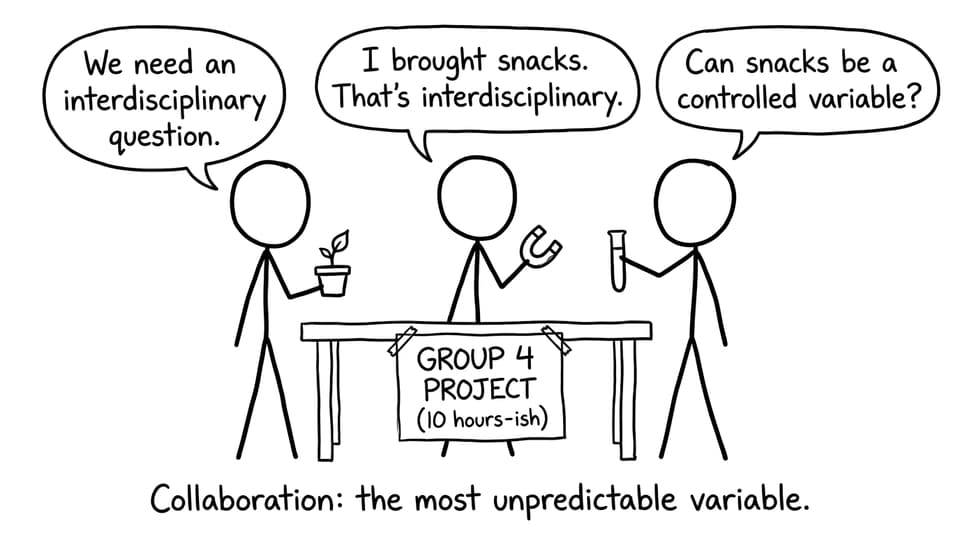
The Group 4 Project is an interdisciplinary collaboration that typically lasts around 10 hours, and many schools count it toward practical requirements.
It doesn’t directly add marks to your final grade, but it trains the same behaviours that do: planning, communication, and scientific reasoning with imperfect information.
Tracking your practical work (so nothing becomes a last-minute panic)
Schools are responsible for meeting requirements. But the student who tracks their own practical story usually writes the stronger IA.
A simple system:
-
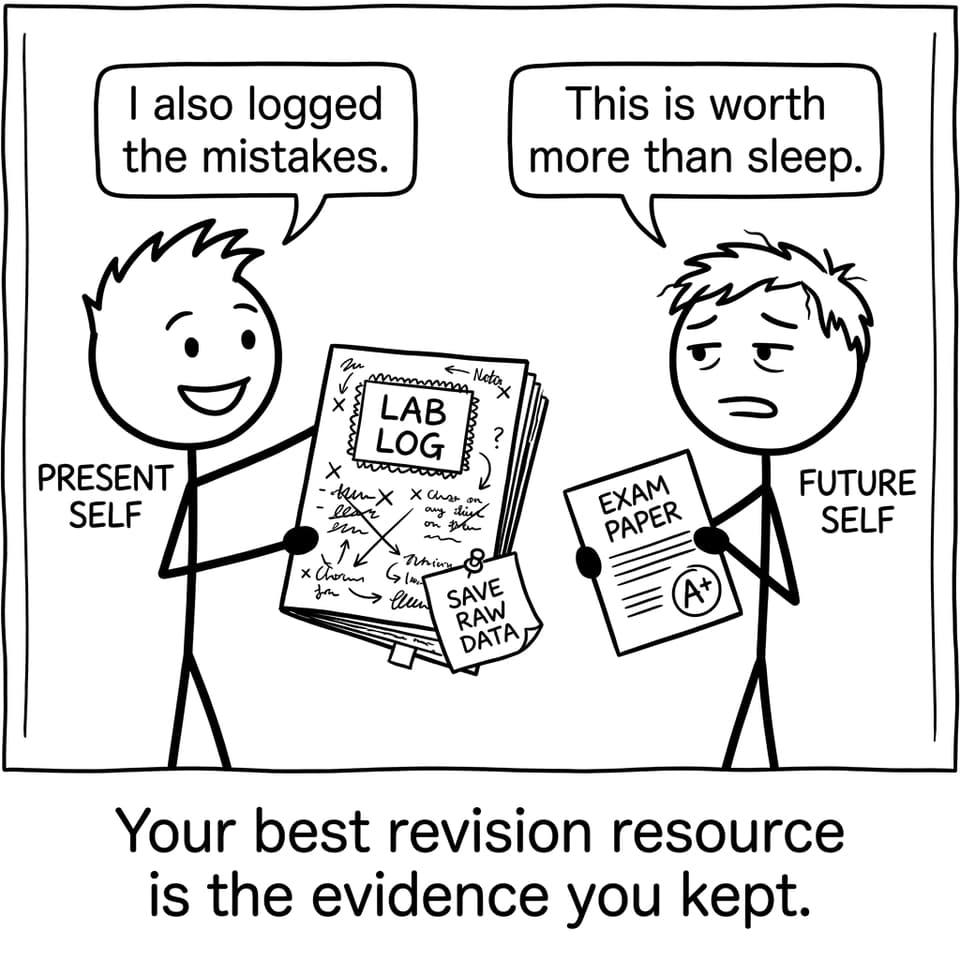
Keep a lab log (paper or digital)
-
Save raw data and brief method notes
-
Record the skill you practiced (uncertainty, control variables, evaluation)
-
Write one honest line about what went wrong and how you’d fix it
If you want a clear structure, follow How to Create a Lab Notebook for IB Science Practical Work.
Final take: treat practical hours like training, not a checkbox
The numbers matter: 40 hours (SL), 60 hours (HL), 30 hours (ESS). But what matters more in IB Sciences is what those hours do to you.
They turn “I followed instructions” into “I can justify a method.” They turn random graphs into arguments. They turn the IA from a panic project into a controlled piece of writing.
If you want to make your practical experience pay off in exams, build a loop: revise with Study Notes, test yourself with the Questionbank, lock in terms with Flashcards, and use AI Chat plus grading tools to sharpen explanations. That’s the difference between doing labs and using labs.