



If you have ever opened an IB question bank with good intentions and closed it 20 minutes later feeling oddly defeated, you are not alone. The problem is rarely effort. It is that a question bank is not a motivation tool; it is a decision tool. Used well, it tells you what to study next, how examiners award marks, and which habits are quietly costing you points.
This guide shows how to use an IB Question Bank effectively, so every practice set becomes a feedback loop (not a random workout). Along the way, you will see how RevisionDojo turns IB practice into a calmer system with its Questionbank, Study Notes, Flashcards, AI Chat, Grading tools, Predicted Papers, Mock Exams, Coursework Library, and Tutors.

Quick setup checklist for an IB Question Bank session
Before you start clicking questions, run this short checklist. It keeps your IB question bank work focused and measurable.
-
Pick one subject and one topic (narrow beats heroic).
-
Choose a goal: learn, drill, or simulate.
-
Do a short set first (10-20 questions or 20-30 minutes).
-
Review the markscheme immediately after each question.
-
Log mistakes by pattern, not by question number.
-
Reattempt 24-48 hours later to confirm the fix.
To keep everything in one place, start with RevisionDojo’s Questionbank feature.
Why an IB question bank works (when you let it)
An IB question bank is valuable because it compresses reality. Instead of guessing what matters, you meet the exam style directly: command terms, mark allocation, common traps, and the phrasing examiners reward.
Three benefits show up fast:
-
Exam fluency: You learn what an IB question is really asking (and what it is not asking).
-
Command-term accuracy: “Discuss” is not “describe,” and marks disappear when you treat them as synonyms.
-
Targeted revision: Your results tell you which topics are weak, which skills are weak, and which mistakes repeat.
RevisionDojo’s broader workflow helps here too: pair questions with IB Notes so you can rebuild weak content quickly, then return to the IB question bank to apply it.
How to use an IB Question Bank effectively
Filter by syllabus topic, not by mood
Most students use an IB question bank the way people use social media: whatever appears next, they do next. A better approach is to decide the topic first, then practice until the topic stops feeling unpredictable.
Try this rule: one session, one topic, one skill.
If you want a concrete example of what “targeted” looks like, RevisionDojo breaks it down in How to Use the Questionbank for Targeted Math Revision.
Use two modes: learning sets and performance sets
Your IB question bank practice should change depending on where you are in the timeline.
-
Learning sets (early or mid revision): untimed, with immediate markscheme checks. The goal is to understand how marks are built.
-
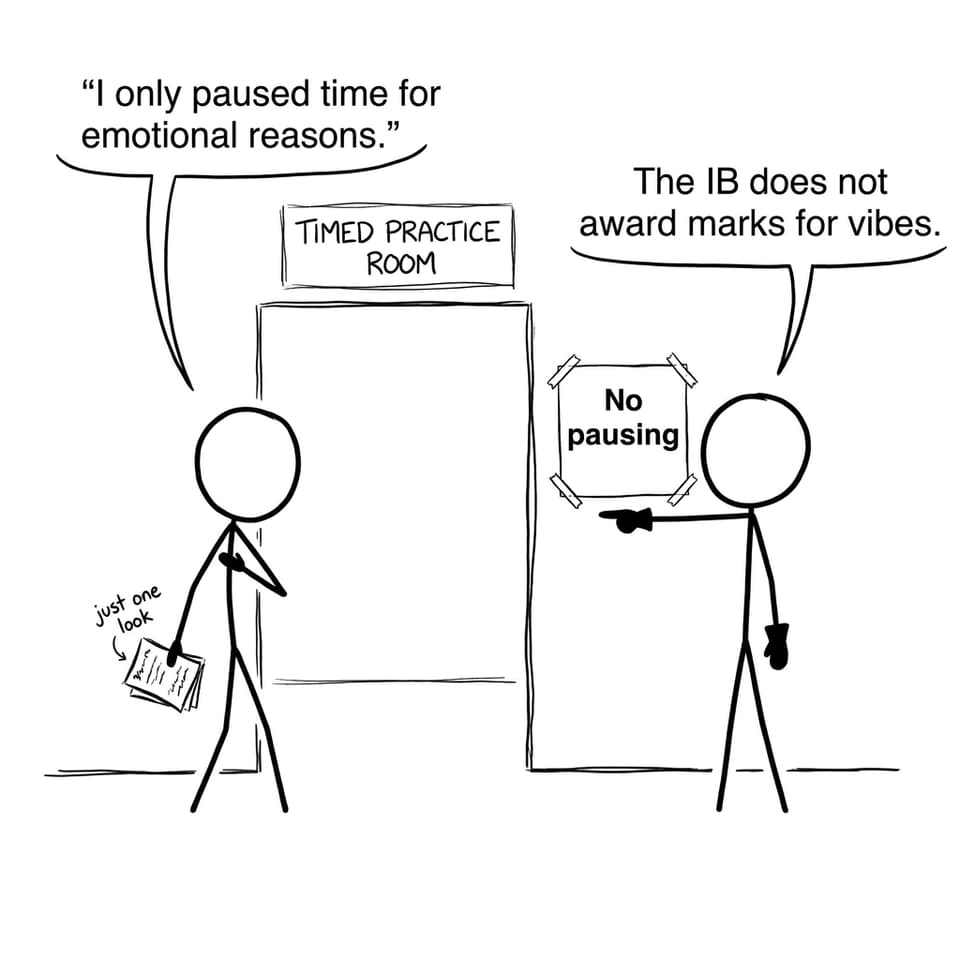
Performance sets (later): timed, grouped like exam sections. The goal is pacing and decision-making.
When you are ready to simulate full pressure, add structured practice like Custom IB Mock Exams: Build Practice Tests by Topic and then return to the IB question bank to repair what broke.
Treat the markscheme like a writing style guide
A markscheme is not just an answer key. It is a short lesson in how examiners recognize understanding quickly.
When you review:
-
Circle the exact phrases that earn marks.
-
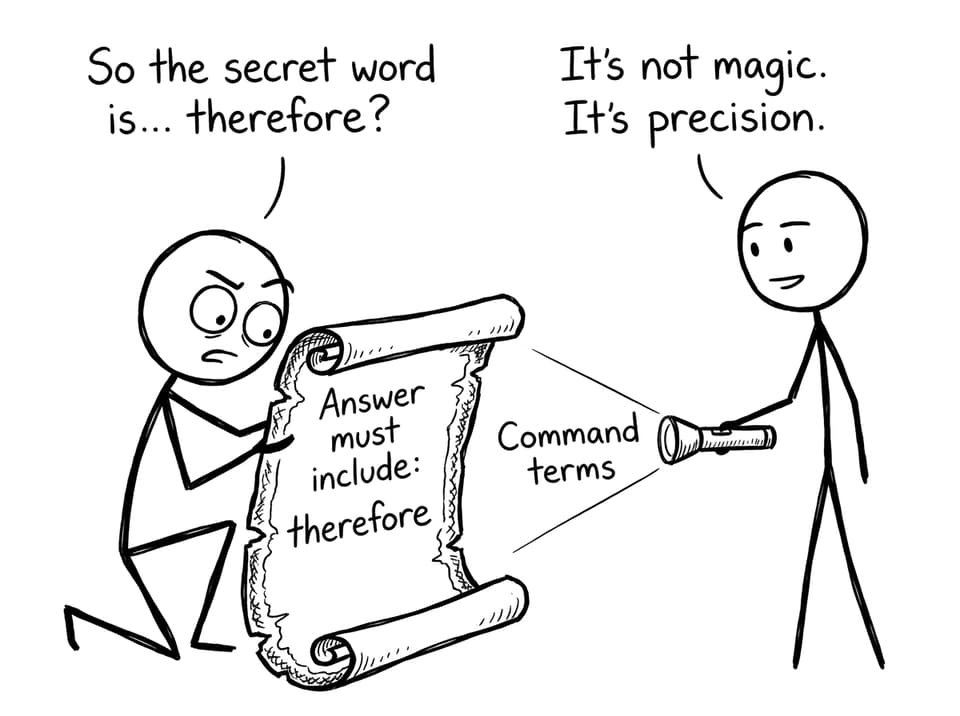
Notice what is missing from your answer (often a link word like “therefore,” “because,” or a condition).
-
Rewrite your answer in the markscheme style, then compare.
This is also where RevisionDojo’s AI tools shine. Use Jojo AI Chat to ask, “Which sentence is costing me marks and why?” Then convert that weakness into a mini drill using the Questionbank.
Track mistake patterns, then turn them into flashcards
An IB question bank reveals patterns if you keep a simple error log. Avoid “I got Q7 wrong.” Write “I ignored the command term” or “I did not justify my conclusion.”
Then create one flashcard per pattern:
-
Front: “When the command term is evaluate, what must I include?”
-
Back: “A balanced judgment, supported by evidence, with a clear conclusion.”
RevisionDojo makes this easy with IB Flashcards with Spaced Repetition (SRS) and the Flashcards feature. If you want a practical routine, borrow the approach from IB Flashcard System: Active Recall for Better Memory.
Build a simple weekly loop (the calm kind)
A sustainable IB question bank routine looks boring on purpose:
-
2 sessions: Learn + drill one topic (notes -> questions -> review).
-
2 sessions: Timed sets (short, strict, no pausing).
-
1 session: Retake mistakes from earlier in the week.
To connect the pieces into one system, see RevisionDojo App: The Smarter Way to Prep for IB Exams.
Common IB question bank mistakes (and quick fixes)
-
Doing more questions instead of better review: Fix by writing one “error rule” after each set.
-
Skipping command terms: Fix by highlighting the command term before you write.
-
Never reattempting mistakes: Fix by scheduling a 48-hour retake.
-
Practicing only what feels easy: Fix by filtering for the topic you avoid.
FAQ
How many IB question bank questions should I do per day?
There is no magic number because IB performance is about feedback quality, not raw volume. Ten questions with markscheme analysis and a reattempt plan will usually outperform fifty rushed questions. Start by choosing a time target you can sustain, like 30-45 minutes, and let the number of questions vary with difficulty. If you are early in revision, fewer questions with deeper review is the right trade. If you are close to exams, increase volume but keep the same review discipline. The best indicator is whether you can explain why you lost marks, not just that you lost them.
Should I write full answers or outlines in an IB question bank?
Use both, but at different moments. Outlines are great for training structure quickly, especially when a question is worth many marks and you need to plan before writing. Full answers are essential for learning pacing, handwriting or typing stamina, and the level of precision the IB expects. A strong method is to outline first, check the markscheme for what you missed, and then write one full “model version” in markscheme style. Over time, your outlines start sounding like full-credit answers. That is when timed practice becomes much more productive.
How do I stop repeating the same mistakes in IB question bank practice?
First, name the mistake as a pattern: command term, missing justification, incorrect definition, weak conclusion, careless algebra, and so on. Second, convert it into a tiny rule you can apply next time (example: “No conclusion without evidence + limitation”). Third, build a short targeted set in the IB question bank that forces that exact skill repeatedly. Fourth, turn the rule into a flashcard so you see it again when forgetting begins. Finally, reattempt the original question after 24-48 hours and confirm you fixed the cause, not just the answer.
Conclusion: make the IB question bank your compass
The smartest way to use an IB question bank is to stop treating it like a pile of practice and start treating it like a map. Filter by topic. Practice with purpose. Review like an examiner. Track patterns. Reattempt until the weakness disappears.
If you want that whole loop in one place, RevisionDojo is built for it: Questionbank for targeted drills, Study Notes for fast rebuilding, Flashcards for retention, AI Chat and Grading tools for feedback, plus Predicted Papers and Mock Exams when you are ready to rehearse the real thing. Start with the RevisionDojo Questionbank and make your next IB session smaller, sharper, and more repeatable.