
Time is weird in the IB.
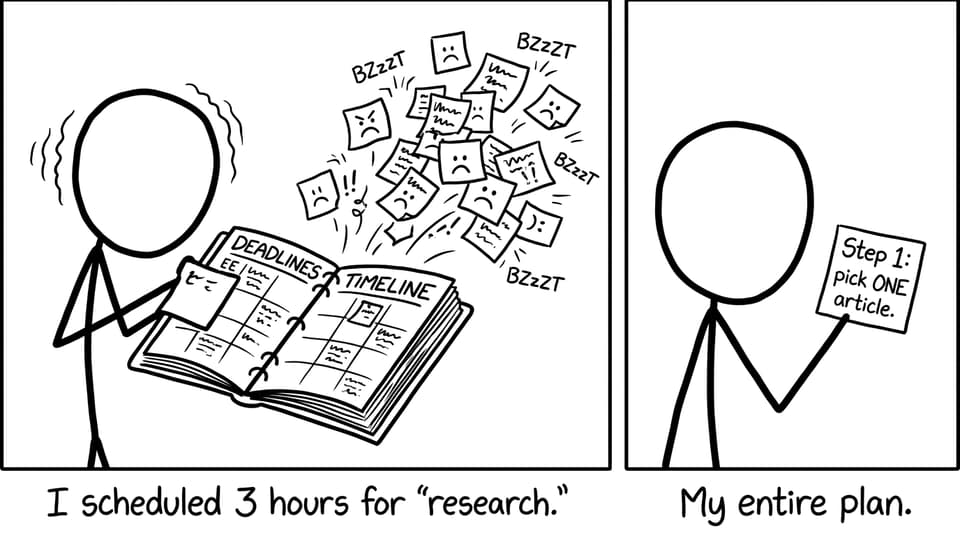
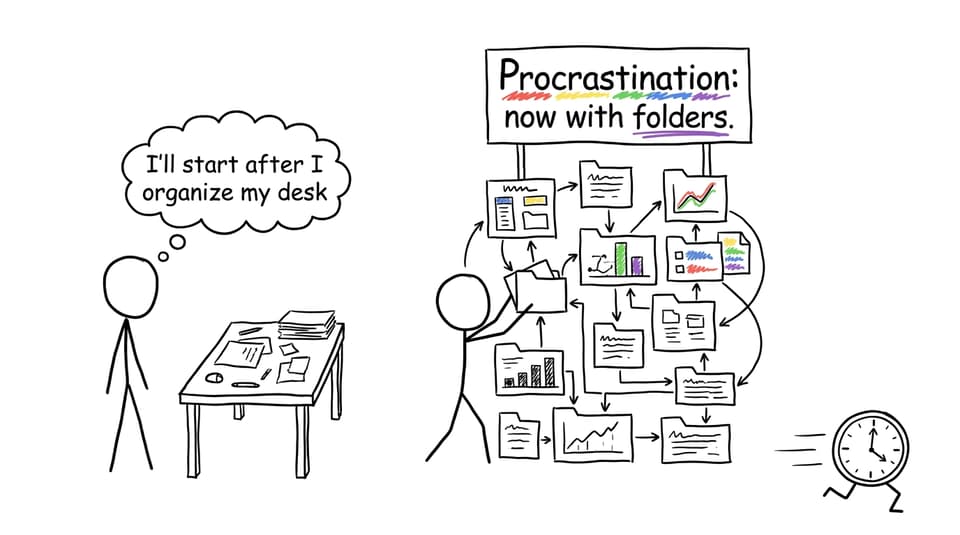
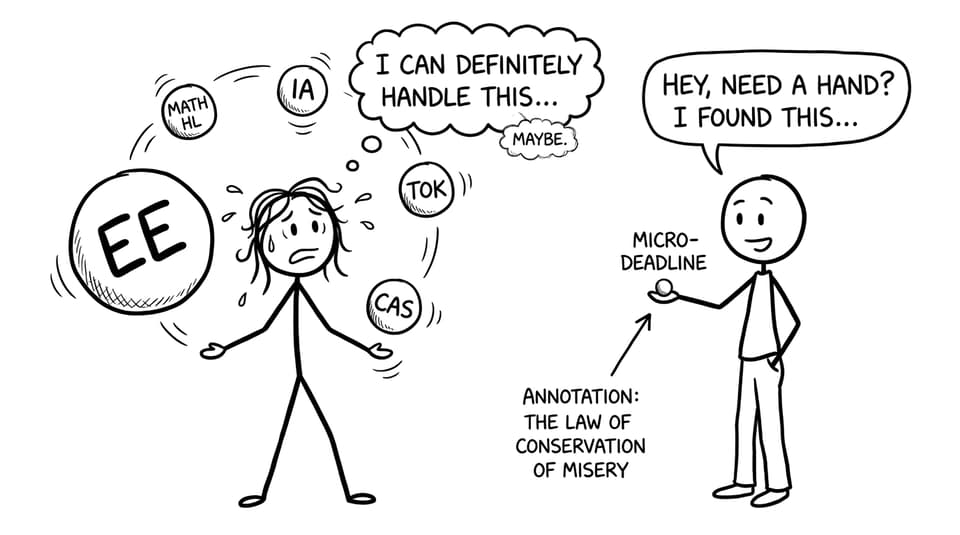
A week can feel endless when you are staring at a blank EE document. Then the same week disappears when you are juggling an IA draft, a TOK exhibition comment, and a stack of daily homework you swear you will start “right after I tidy my desk.”
Most IB students do not fail extended tasks because they are not smart. They struggle because long projects demand a kind of time awareness you rarely need in short assignments: planning ahead, adjusting when reality changes, and keeping momentum when nobody is grading you today.
This guide gives you a practical system for IB time management in extended tasks (EE, IAs, TOK). It is built for exam season too, because the point is not just to finish your projects; it is to finish them without burning your revision time to the ground.
IB time management checklist for extended tasks
Use this as your 3-minute reset when you feel behind in the IB:
-
Pick one extended task as your “primary project” for the next 7 days.
-
Break it into milestones that are small enough to finish in 30-90 minutes.
-
Put milestones on a calendar (not just in your head).
-
Add weekly reflection checkpoints to adjust the plan.
-
Protect exam revision blocks by setting boundaries on project work.
-
Use fast feedback loops (rubrics, graders, peer review) before you write too much.
If you want a bigger time framework for daily study, pair this article with Time Management Strategies for IB Students.
Why IB extended tasks break normal study habits
Extended tasks in the IB are designed to test independence. But independence has a hidden cost: fewer external deadlines. That creates three predictable traps:
You plan with optimism, not evidence
You estimate based on how long you hope it will take, not how long it took last time. In the IB, that gap is expensive because delays compound across subjects.
You treat “research” as one task
Research is not one task. It is dozens of micro-tasks: finding sources, rejecting sources, note-taking, organizing, clarifying terms, and only then writing.
You wait for confidence before starting
Confidence usually arrives after you have started. In the IB, waiting for the perfect plan often becomes a sophisticated form of procrastination.
For a focused EE-specific plan, see How to Manage Time Efficiently While Writing Your EE.
The milestone method: how IB students should split big tasks
The most effective IB time management move is also the least glamorous: replace vague goals with visible outputs.
A vague goal: “Work on my IA.”
A visible output: “Write the method section draft (300-500 words) and list 3 limitations.”
A simple milestone template you can reuse
For any EE, IA, or TOK writing task, build milestones like this:
-
Input milestone (30-45 min): read, collect, or clarify one thing.
-
Output milestone (45-90 min): produce something you can submit or review.
-
Feedback milestone (15-30 min): check against criteria, get comments, or run a grader.
This is where RevisionDojo becomes genuinely useful for IB students: you can move faster through the loop using Study Notes for quick clarity, AI Chat when you are stuck mid-task, and Grading tools to get rubric-aware feedback before you overcommit to a weak draft.
If you are trying to keep EE workload balanced with exams, this pairs well with How to Balance IB EE With Other Coursework and Exams.
Build a timeline that survives real life (not a fantasy week)
Most IB timelines fail because they assume every week is a “good week.” Instead, build your plan around what happens when life is messy.
Use two calendars, not one
-
Master calendar: hard deadlines across the IB (school, CAS, tests, IA/EE checkpoints).
-
Weekly calendar: the actual blocks you will work with this week.
When you do this, you stop making time management a moral issue (“I should be able to do more”) and make it a math issue (“I have 4 realistic blocks, so what matters most?”).
A strong companion read is How Do I Stay on Top of Deadlines in the IB?.
Try the “minimum viable week” rule
Plan your week as if you will lose 20% of your time to surprise events: extra homework, sports, family stuff, or just being tired.
If the plan still works after that loss, your IB timeline is realistic.
Reflection checkpoints: the underrated IB skill that prevents panic
Reflection sounds soft until you realize it is the only tool that turns planning into a living system.
A reflection checkpoint is a 10-minute meeting with yourself, once per week, with three questions:
-
What actually got done?
-
What got in the way?
-
What is the next smallest output I can finish?
In the IB, reflection is not extra. It is how you notice early that your EE research question is drifting, or that your IA data collection is slower than expected, while there is still time to adapt.
If you are working on the EE, you may also find IB EE Feedback Tool: Improve Your Extended Essay Score helpful for building feedback into your schedule.
A practical weekly system for IB extended tasks (during exam prep)
Here is a calm rhythm that works when the IB gets crowded.
The weekly structure
-
2 deep blocks (60-120 min): real progress on one extended task.
-
2 maintenance blocks (30-45 min): small edits, citations, formatting, tiny sections.
-
1 feedback block (30-60 min): mark against criteria, use graders, ask targeted questions.
This structure protects your exam preparation while still moving your EE/IA/TOK forward.
For exam-season structure, borrow ideas from The Ultimate Daily IB Study Schedule and How to Study for IB Mocks (Without Burning Out).
The “one-tab rule” for deep blocks
During a deep block, keep only one primary tab open: your draft.
Everything else (sources, notes, rubrics) goes into a single prepared document. This reduces the invisible time leak of switching contexts, a common killer of IB time management.
This is also where RevisionDojo tools can reduce friction: use the Coursework Library to see strong examples quickly, then return to your draft; use Tutors when you need a human to diagnose what to fix next; and use Flashcards to keep exam content alive while you work on projects.
How RevisionDojo fits into IB time management (without adding more work)
Good IB time management is a loop: understand, produce, get feedback, repeat. RevisionDojo is designed to keep that loop short.
-
Study Notes help you clarify just enough to move forward.
-
AI Chat helps you unblock confusion fast instead of spiraling for an hour.
-
Grading tools help you check alignment with criteria early.
-
Questionbank supports exam practice so projects do not steal your revision.
-
Flashcards keep retention steady in small daily doses.
-
Mock Exams and Predicted Papers help you rehearse timed performance while you manage long tasks.
If you want to see how the ecosystem connects, read RevisionDojo App: The Smarter Way to Prep for IB Exams and What 45/45 IB Students Do Differently.
Closing: the calm version of IB time management
The best IB time management does not feel heroic. It feels repeatable.
You pick the next smallest output. You schedule it. You get feedback early. You adjust without drama. And you protect your exam preparation so long projects do not quietly steal your final months.
If you want one place to run that whole system, build your workflow inside RevisionDojo: plan your week, practice with the Questionbank, retain with Flashcards, get unstuck with AI Chat, improve drafts with Grading tools, rehearse timing with Mock Exams and Predicted Papers, and lean on the Coursework Library and Tutors when you need examples or expert guidance. That is how IB work becomes manageable, one realistic week at a time.