



Collaboration in IB Visual Arts can feel like a contradiction.
Art is personal. Your sketchbook is private. Your best ideas often arrive when nobody is watching.
And yet, if you listen closely to the stories behind strong IB Visual Arts work, a pattern shows up: not “I did it alone,” but “someone challenged me,” “someone noticed what I couldn’t,” “someone helped me see my theme from the outside.” Collaboration doesn’t replace your voice. It tunes it.
Below are practical, exam-focused ways to collaborate in IB Visual Arts so your Process Portfolio reflections get sharper, your Exhibition feels more coherent, and your choices sound intentional rather than accidental.
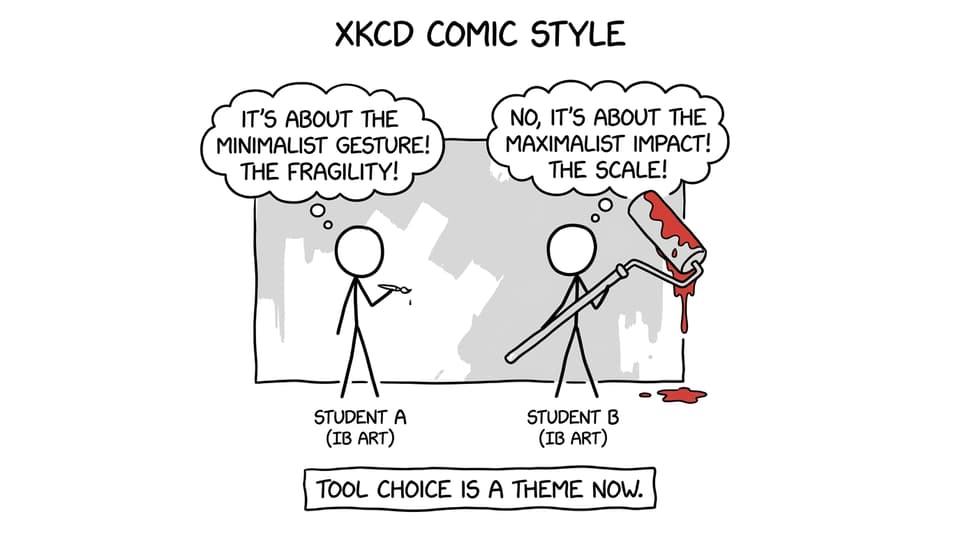
Collaboration in IB Visual Arts: a quick checklist
Use this as a simple “are we doing this right?” guide for IB Visual Arts collaboration:
-
Choose a collaboration format (critique, co-making, curation, research swap).
-
Set a shared goal and a personal goal (so nobody disappears into the group).
-
Define roles (timekeeper, documenter, curator, materials lead).
-
Document outcomes immediately (photos + bullet reflections for your Process Portfolio).
-
Translate feedback into a decision (what you changed, what you kept, why).
If you want to anchor these choices in assessment language, keep the criteria nearby via IB Visual Arts assessment criteria explained simply and Understanding the marking criteria for IB Visual Arts.
Where collaboration fits naturally in IB Visual Arts
IB Visual Arts doesn’t require ensemble performance the way Music might. But collaboration still fits neatly into the work you already have to do.
Peer critique that actually improves your Process Portfolio
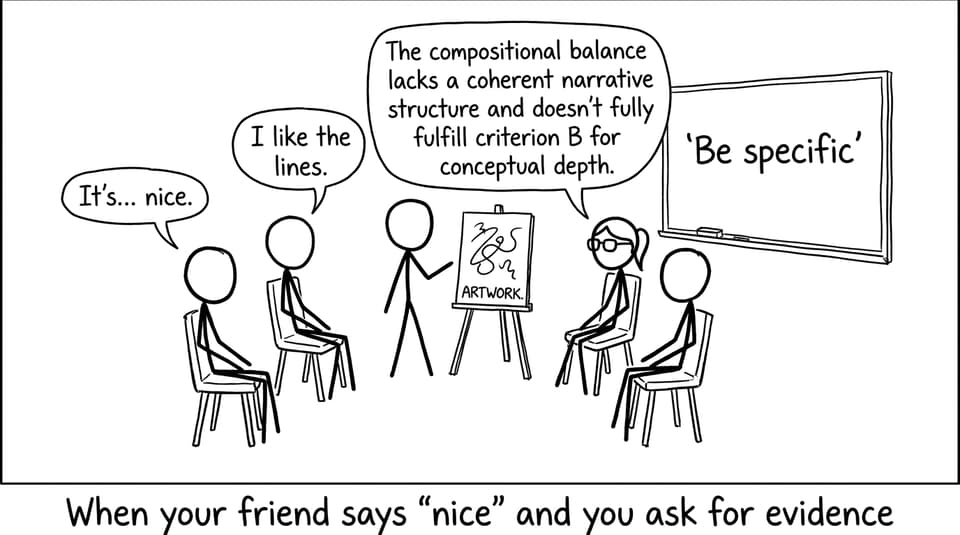
The most useful collaboration is often the least dramatic: a 20-minute critique that turns vague instincts into clear next steps.
A strong IB Visual Arts critique is specific and criterion-aware. Instead of “cool composition,” ask:
-
What’s the clearest intention you see in this piece?
-
Where does the technique support the idea, and where does it distract?
-
What’s one risk the artist could take next?
-
If this belongs in the Exhibition, what would it sit next to, and why?
Build your critique habits using How to get effective feedback on your IB Group 6 work. It pairs well with the way examiners read your decisions: not as taste, but as evidence.
Group installations, murals, and shared making (without losing authorship)
Yes, you can co-make in IB Visual Arts. Just be disciplined about what’s shared and what’s yours.
Practical formats:
-
Mural sections: one theme, multiple visual languages, agreed palette or motif.
-
Modular installation: each student builds one component that interacts in space.
-
Material exchange: you each produce individual works, but swap constraints (same object, same found text, same rule).
The key is documentation. Photograph stages. Record decisions. Keep notes on what changed because of another person’s input. That reflection is often what separates “we worked together” from “I learned something.”
To keep your course components clear, refer to Requirements for IB Visual Arts and Creating an outstanding IB Visual Arts portfolio.
Collaborative curation for the Exhibition
The Exhibition is where collaboration quietly pays off.
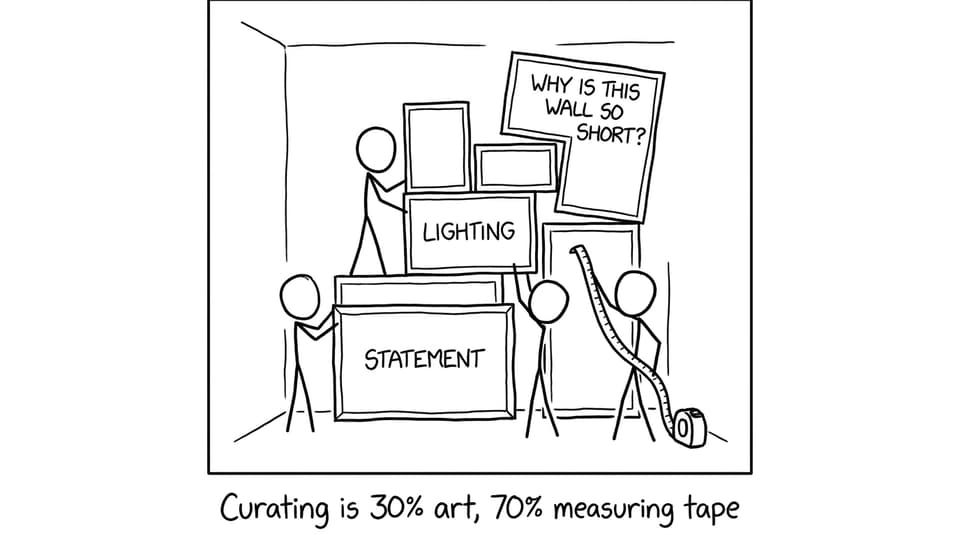
When you curate alone, you can accidentally tell a story that only makes sense in your head. When you curate with peers, they become your first real audience. They notice repetition. They spot gaps. They ask why two pieces that “feel connected” actually fight each other on the wall.
Try these collaboration exercises for IB Visual Arts Exhibition prep:
-
Tetris wall: print thumbnails of each artwork and physically rearrange them with a group.
-
One-sentence theme test: each person writes your theme in one sentence; compare.
-
Silent walk: peers view the layout without you talking, then write what they think the narrative is.
For deeper planning help, use The Exhibition in IB Visual Arts: what you need to know, How examiners grade the IB Visual Arts Exhibition, and Typical challenges in IB Visual Arts exhibitions.
Research swaps that strengthen comparative thinking
Even if your final Comparative Study is yours, your research process doesn’t have to be lonely.
A useful IB Visual Arts collaboration format is the “research swap”:
-
You each pick one artist connected to a shared theme.
-
You exchange a one-page brief: context, formal qualities, key meanings, and one method you could test.
-
You each make a small experiment inspired by the other person’s artist.
This creates what examiners love: visible influence that becomes personal decision-making, not imitation. For inspiration, see Best artists to research for IB Visual Arts.
Why collaboration boosts results in IB Visual Arts
Collaboration helps because it forces clarity.
Not the loud kind. The quiet kind: when someone asks “what’s the intention here?” and you realize you’ve been working on vibes instead of decisions.
Collaboration expands your ideas without diluting them
In IB Visual Arts, originality is rarely a lightning strike. It’s usually a series of small refinements.
Peers offer:
-
alternative cultural references,
-
unexpected material solutions,
-
different readings of symbolism,
-
honest reactions to coherence.
You still choose. But you choose with more information.
Collaboration improves problem-solving under time pressure
The course moves fast. Materials fail. Concepts stall. You hit the classic wall: “I hate it, but I don’t know how to fix it.”
A good collaborator shortens the distance between stuck and solved. They might suggest a compositional crop, a switch in scale, or a shift in medium that you wouldn’t have tried alone.
That matters in IB Visual Arts, because the Process Portfolio rewards experimentation, not perfection. If you want a clearer sense of what “good experimentation” looks like, read What examiners look for in the IB Visual Arts Process Portfolio.
Collaboration strengthens the soft skills examiners indirectly reward
You’re not graded on teamwork directly in IB Visual Arts, but strong collaboration improves what you are graded on:
-
clearer artistic intention,
-
stronger reflection,
-
better presentation choices,
-
more coherent curatorial logic.
It also mirrors real creative practice: artists share studios, trade feedback, and build exhibitions with other people in the room.
How to collaborate without creating chaos
Here are four rules that keep IB Visual Arts collaboration productive:
Agree on boundaries early
Decide what’s shared (theme, space, materials, critique schedule) and what’s individual (final artworks submitted, written reflections, rationale voice). This prevents awkward “who owns what?” confusion later.
Use roles so nobody drifts
Assign simple roles for each session: facilitator, note-taker, timekeeper, “devil’s advocate” who asks hard questions. Rotate roles so the collaboration stays fair.
Turn every session into documentation
After collaborating, write:
-
what feedback you received,
-
what you changed,
-
why the change helps your intention.
That’s IB Visual Arts gold for reflections.
Keep collaboration aligned to criteria
If feedback becomes taste-based, bring it back to assessment language. Use IB Visual Arts portfolio screen requirements explained to stay grounded in what you actually need to submit.
Bringing it back to RevisionDojo
Collaboration in IB Visual Arts isn’t about making your art less personal. It’s about making your choices more visible, your reflection more honest, and your final presentation more intentional.
When you want that same kind of structured support outside the classroom, RevisionDojo gives you a full ecosystem: Study Notes for clarity, Flashcards for quick recall of key terms, an AI Chat that helps you sharpen intentions into language, and Grading tools that keep your work aligned to criteria. Add Mock Exams, Predicted Papers, and the Coursework Library for models and benchmarks, plus Tutors when you need human feedback with real momentum. And if you’re practicing under pressure, the Questionbank helps you build exam-ready confidence across your IB subjects.
If your goal is a more coherent, higher-scoring IB Visual Arts journey, start by collaborating once this week: one critique, one curation session, one research swap. Then document what changed. RevisionDojo will help you turn that change into marks.