


English A is the one class almost everyone thinks they already understand.
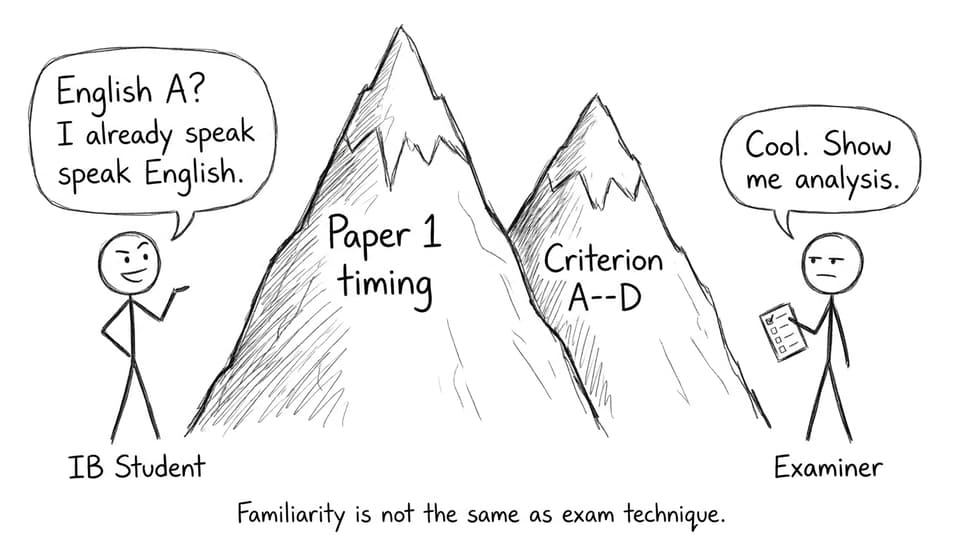
It’s the subject that sits quietly in your timetable, familiar as breathing, until exam season arrives and it starts asking for something oddly specific: not just fluent writing, but controlled, criteria-driven analysis under pressure.
That tension is exactly why English A remains the most popular IB subject worldwide and why Subject Selection conversations often circle back to it. For many students, English A isn’t a bold choice. It’s the default. But “default” doesn’t mean “easy,” and the sooner you treat English A like a skills-based course (not a vibes-based one), the more it can become a high-scoring anchor in your diploma.
Quick checklist before you commit (or panic)
Use this short Subject Selection checklist to frame English A realistically:
-
Do you understand why English A is so common (and why that matters)?
-
Are you relying on fluency instead of exam technique?
-
Do you know what examiners reward (and what they ignore)?
-
Have you practised timed analysis, not just reading and highlighting?
-
Do you have a feedback loop (rubric + targeted practice) to improve quickly?
If you need a single home base for course structure and practice, start with IB English A Lang & Lit Resources.
Why English A dominates Subject Selection in the IB
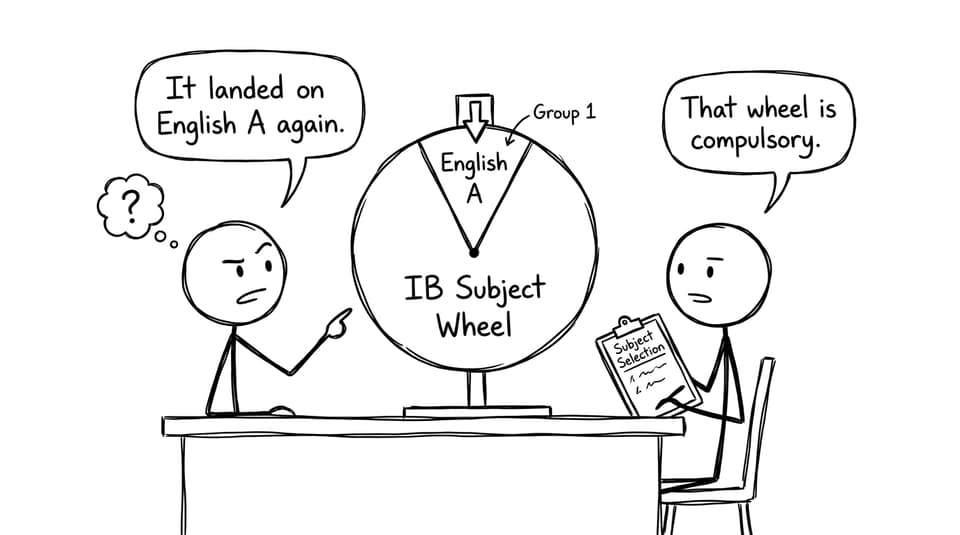
The simplest answer is also the most honest: for most diploma students, English A is not just popular, it’s functionally inevitable.
IB students must take a Group 1 language (Studies in Language and Literature). In many international schools, English is the main language of instruction, which makes English A the most widely offered Group 1 option. This shapes Subject Selection before you even weigh difficulty, interest, or university plans.
But there’s a second reason English A wins the popularity contest: it feels safe.
Compared to subjects that announce their complexity up front (HL Physics does this on day one), English A can look deceptively familiar. You’ve written essays before. You can talk about themes. You’ve read books. So the subject slides into your schedule almost like a continuation of what you already do.
If you want broader context on what students choose and why, see Most Popular IB Subjects in 2025: What Students Are Choosing and Why.
Why popularity makes English A feel easier (until it doesn’t)
Popularity creates a psychological trap: students confuse familiarity with readiness.
Here’s what that looks like in real life:
-
You read the extract and instantly have opinions.
-
You write quickly because you’re comfortable with the language.
-
You fill paragraphs with big ideas: identity, power, freedom, injustice.
Then the result comes back… and it’s not the mark you expected.
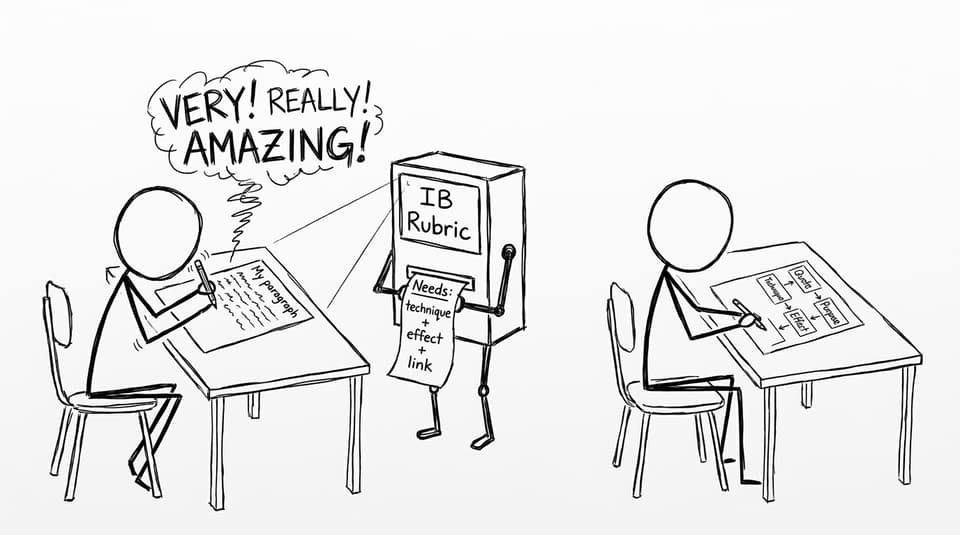
English A doesn’t reward how strongly you feel about a text. It rewards how precisely you can prove an interpretation using authorial choices (language, structure, tone, form) and how consistently you link that back to the guiding question.
This is where Subject Selection becomes strategic. If you choose English A assuming it will “take care of itself,” it can become a quiet grade-drain. If you choose it knowing it’s a trainable skill, it can become one of your most reliable 6/7 opportunities.
For a practical, week-by-week approach to training the right skills, use Effective Study Techniques for IB English A: Language and Literature.
What changes when everyone takes English A
In a high-enrolment subject, examiners read a huge volume of scripts that look similar. That changes the marking experience in a subtle but important way: generic writing becomes easier to spot, and therefore easier to penalise.
When English A is this popular:
-
Thesis statements that sound impressive but say nothing specific stand out (in a bad way).
-
Technique lists without effect (“There is imagery… there is repetition…”) blend into the pile.
-
Paragraphs that summarise instead of analyse get capped quickly.
-
Students who don’t manage time well don’t finish strong.
So yes, English A is popular. But popularity raises the bar for clarity.
If you’re specifically working on Paper 1 style responses, targeted practice helps more than rereading notes. RevisionDojo’s IB English A Lang & Lit Paper 1 Questionbank is built for exactly that kind of repetition.
What top English A students do differently
The students who score 6s and 7s in English A are rarely “effortlessly talented.” They’re systematic.
They do a few unglamorous things consistently:
They plan around the question, not the text
Top students treat the guiding question like a contract. Every paragraph earns its place by answering it.
They analyse techniques in motion
Instead of naming devices, they explain how choices create meaning: why this shift in tone matters, how this structure positions the reader, what this diction reveals about purpose.
They practise under exam conditions
They don’t just write essays. They write timed sections, build quick outlines, and train the muscle of finishing.
They close the feedback loop
They use rubrics and external feedback to spot patterns. RevisionDojo’s IB English A: Language and Literature Grader turns “I think it’s good?” into strand-by-strand clarity.
How RevisionDojo supports smarter Subject Selection for English A
A calm truth about Subject Selection is that you can’t always choose what’s popular or compulsory. But you can choose the system you use to get good at it.
RevisionDojo is designed around the skills English A actually tests:
-
Questionbank practice to build analysis habits, not just knowledge
-
Study Notes that translate criteria into actionable moves (see Study Notes)
-
Flashcards for technique vocabulary and quick recall under time pressure
-
AI Chat to clarify concepts, compare approaches, and troubleshoot drafts
-
Grading tools to map feedback directly to Criteria A to D
-
Predicted Papers and Mock Exams to simulate full exam conditions (try IB English Lang & Lit Predicted Papers)
-
Coursework Library support for planning and exemplars
-
Tutors for students who want live coaching and fast improvement
And if you want a broader planning framework for building a balanced diploma, pair this with How Many Subjects Do You Take in the IB? and How Do I Choose My HL Subjects Wisely?.
Closing thoughts: treat Subject Selection like a strategy, not a mood
English A is the most popular IB subject because it sits at the intersection of requirement and familiarity. But the students who win in English A don’t win by loving books the most, or writing the longest paragraphs. They win by respecting the criteria and training the same small skills until they hold up under time pressure.
If English A is part of your Subject Selection, make it a deliberate one. Build your routine with RevisionDojo’s Questionbank, Study Notes, Flashcards, AI Chat, Grading tools, and exam simulations through Predicted Papers and Mock Exams. Popular doesn’t have to mean competitive. With the right system, it can mean reliable.