


Your sketchbook is open, your camera roll is full of half-finished experiments, and you still have that quiet fear: What exactly counts as “enough” for IB Visual Arts?
That fear is normal. IB Visual Arts rewards creativity, but it grades evidence. Not just the final artwork, but the trail of thinking that got you there. Once you understand the requirements, the course stops feeling like a mystery and starts feeling like a plan.
IB Visual Arts requirements at a glance
Here’s the simplest checklist for IB Visual Arts (save it and revisit monthly):
-
Choose your level: SL (150 hours) or HL (240 hours)
-
Complete three assessed components:
-
Comparative Study (digital screens)
-
Process Portfolio (digital screens)
-
Exhibition (resolved artworks + curatorial rationale)
-
-
Build work that shows: experimentation, research, reflection, and coherence
If you want a bigger overview first, read What is IB Visual Arts?.
SL vs HL: the time requirement that shapes everything
The official difference is time: IB Visual Arts SL requires 150 hours; IB Visual Arts HL requires 240 hours. In practice, HL usually means you need a longer runway for experimentation and more consistent documentation.
If you are choosing levels (or just trying to survive the workload), this guide helps: What Are the Differences Between HL and SL in Group 6 Subjects.
Comparative Study: what you must include
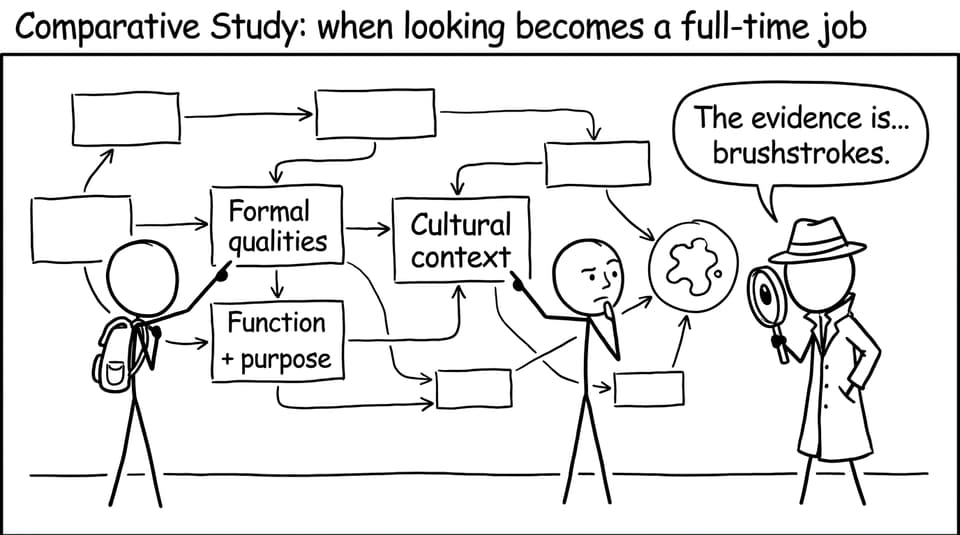
The IB Visual Arts Comparative Study asks you to analyze and compare three or more artworks, using two or more artists, ideally pulling from different cultures and/or time periods. The point is not to sound like a museum label. The point is to show you can see (formal analysis), understand (context), and think across works (comparison).
Format requirement: a digital presentation.
Screen count requirement:
-
SL: 10-15 screens
-
HL: 10-15 screens plus 3-5 additional screens explaining how the study influenced your own work
To make this easier, keep an examples guide open while you plan: IB Visual Arts Comparative Study Examples That Score.
Process Portfolio: the “proof of process” requirement
The IB Visual Arts Process Portfolio is where many students lose marks quietly. Not because their experiments are bad, but because they don’t show the development clearly.
Your requirement: demonstrate your artistic process over time, including experimentation, skill growth, research, and reflection.
Screen count requirement:
-
SL: 9-18 screens
-
HL: 13-25 screens
A strong portfolio includes multiple media tests, mistakes you learned from, and short reflections that explain what changed and why. If you struggle to prove experimentation, use this breakdown: How to Show Experimentation in Your IB Visual Arts Process Portfolio.
If you’re building from scratch, this is also useful: What to Include in an IB Visual Arts Portfolio.
Exhibition: what “resolved works” really means
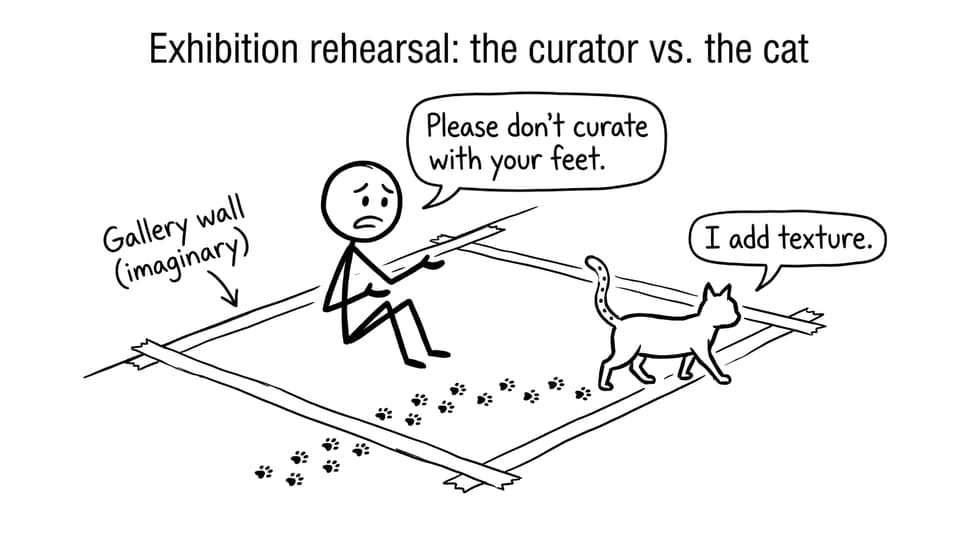
The IB Visual Arts Exhibition is your curated body of finished work. “Resolved” does not mean perfect. It means intentional: the work shows control, decisions, and a clear conceptual direction.
Artwork count requirement:
-
SL: 4-7 artworks + 400-word curatorial rationale
-
HL: 8-11 artworks + 700-word curatorial rationale
Your curatorial rationale matters because it explains your choices: theme, development, connections, and why these works belong together.
What examiners are looking for (in plain language)
The best way to think about IB Visual Arts marking is: Can you justify your decisions with evidence?
For a detailed criteria walkthrough, use: IB Visual Arts Assessment Criteria Explained Simply.
At a high level:
-
Comparative Study: accurate visual analysis, strong contextual understanding, meaningful comparison, and (especially for HL) clear links to your own art-making.
-
Process Portfolio: experimentation you can verify, purposeful development, and reflections that show learning.
-
Exhibition: a coherent body of work, technical competence, conceptual depth, and a rationale that makes your curatorial thinking easy to follow.
A practical workflow (so the requirements don’t pile up)
The secret to IB Visual Arts is boring: consistent weekly cycles beat last-minute hero sessions.
Try this weekly rhythm:
-
2 studio sessions (even 30-45 minutes)
-
1 documentation session (photos + short annotations)
-
1 artist research session (notes you actually use)
-
1 reflection pass (what changed, what you learned)
This is expanded here: How to "Study" IB Visual Arts Effectively.
On RevisionDojo, students make this cycle easier with Study Notes for structure, Flashcards for art vocabulary and movements, and AI Chat to refine reflections without losing their voice. When deadlines hit, the Coursework Library and Grading tools help you self-check against criteria, while Tutors can give targeted feedback.
Conclusion: meet IB Visual Arts requirements with a calm plan
IB Visual Arts is not a single moment of talent. It’s a long chain of choices you can explain. When you understand the requirements for the Comparative Study, Process Portfolio, and Exhibition, you stop guessing and start building evidence on purpose.
If you want a structured way to stay on track, RevisionDojo brings the whole course together: Questionbank practice for art analysis skills, Study Notes for clear component checklists, Flashcards for vocabulary, AI Chat for reflection drafting, Mock Exams and Predicted Papers for exam-style confidence, plus a Coursework Library, Grading tools, and Tutors for real feedback.
Keep your process visible, keep your theme honest, and let IB Visual Arts become the subject where your work finally tells a coherent story.