



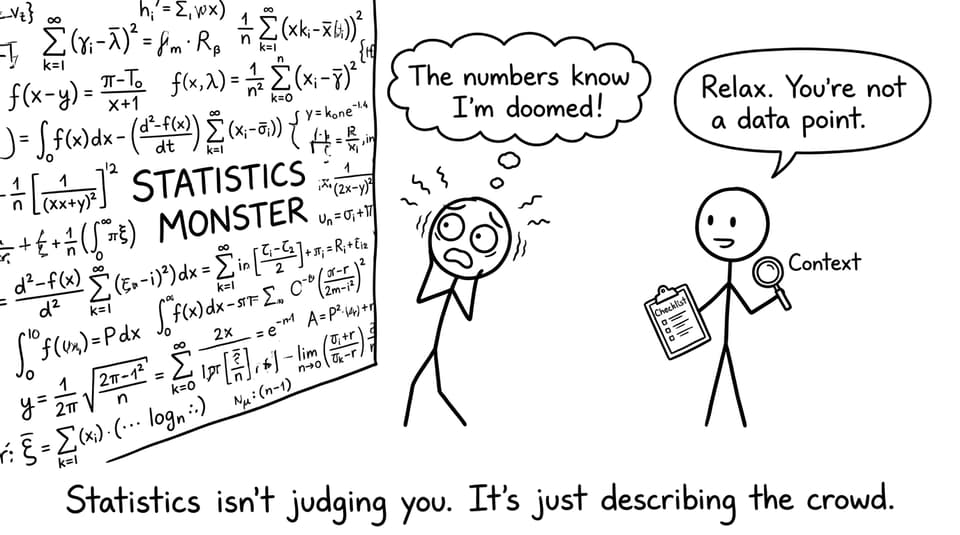
When someone says “Topic 4: Statistics,” you can almost hear the collective inhale across the IB corridor. Not because the math is impossible, but because numbers feel like judgment. A low average, a scary distribution, a rumor about grade boundaries, a friend who “always gets the mean right,” and suddenly revision becomes less about learning and more about surviving.
Here’s the quieter truth: Topic 4 Statistics is built to reduce panic. It teaches you how to separate signal from noise, and that skill can steady your whole exam season.
And yes, this even links back to Subject Selection. Because the students who thrive are often the ones who treat data as guidance, not prophecy, whether they’re choosing courses, choosing questions, or choosing what to revise next.
A quick checklist to turn Topic 4 into a revision compass
Use this short checklist whenever Topic 4 starts to feel loud:
-
Use statistics to find patterns in your mistakes, not in other people’s results
-
Prioritize skills that appear repeatedly: interpreting distributions, correlation, regression, probability models
-
Practice in exam format early, then review with feedback
-
Convert recurring errors into Flashcards and a simple mistake log
-
Keep your revision “inputs” controllable: time, method, and focus
If you want the Topic 4 map in one place, keep these open while you work: Math AI Statistics and Probability hub and Math AA Statistics and Probability hub.
Why Topic 4 Statistics triggers panic (and why that’s ironic)
Statistics feels personal even when it isn’t. A pass rate looks like a verdict. An average feels like a ceiling. A distribution can look like a ranking system with your name already assigned.
But Topic 4 is literally the chapter that warns you about this thinking.
-
Samples can be biased.
-
Graphs can mislead.
-
Correlation can be mistaken for causation.
-
A single number can hide important context.
So when you feel anxious staring at a statistic, remember: Topic 4 is trying to train you not to overreact to exactly that.
A practical way to convert that into revision: stop tracking “what everyone else gets,” and start tracking what you miss. RevisionDojo makes this easy because you can move from explanation to practice to feedback quickly: How to Master Probability and Statistics in IB Math.
Subject Selection thinking: treat statistics like a flashlight
In Subject Selection, good decisions rarely come from one headline number. You look for fit, workload, strengths, and trade-offs. You ask better questions.
Do the same with Topic 4.
Instead of:
- “The average is low, so I’m doomed.”
Try:
-
“What skill is being tested when people lose marks?”
-
“Is it interpretation, calculator method, or explanation?”
-
“Which subtopic leaks marks for me: sampling, distributions, regression, probability?”
When you treat statistics like a flashlight, you stop using it to scare yourself and start using it to see.
For targeted Topic 4 practice, go straight to question filtering: Math AA Statistics & Probability Questionbank or Math AI Statistics & Probability Questionbank.
How to turn Topic 4 into an actual revision advantage
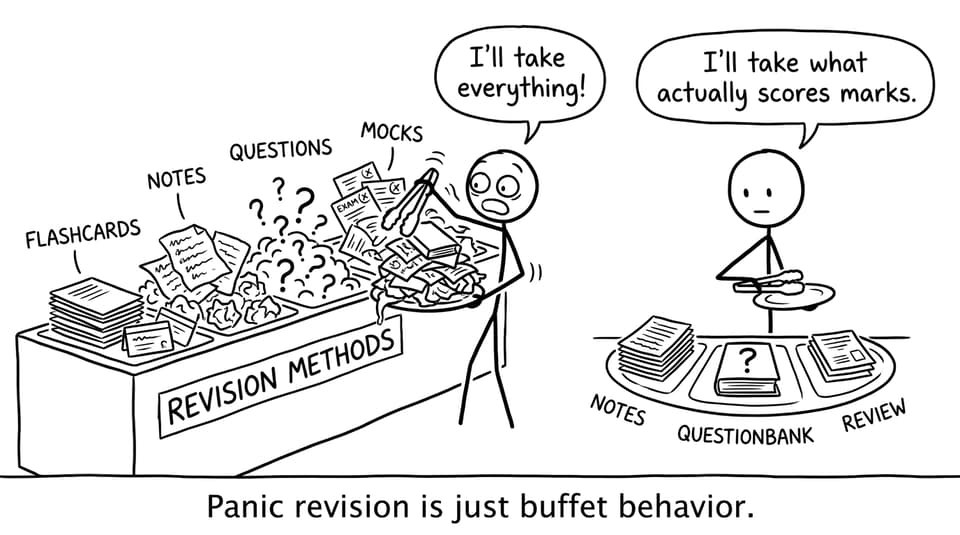
The best use of Topic 4 is not “learning more formulas.” It’s building a feedback loop.
Learn fast, then test immediately
Start with short Study Notes sessions so you don’t drown in details. For example, sampling and reliability are classic places for sloppy understanding to cost marks: SL 4.1 Introduction to Statistics Notes.
Then do questions right away in RevisionDojo’s Questionbank. This is where confidence comes from: repeated exposure, clear solutions, and pattern recognition.
Convert mistakes into memory
Topic 4 has definitions and procedures that need to be automatic (interpretation language, conditions, calculator steps). That’s where Flashcards are quietly powerful: IB Flashcards with Spaced Repetition and this guide on building them well: How to Use RevisionDojo Flashcards for Formula Mastery.
Practice under pressure (on purpose)
Panic comes from novelty. So remove novelty.
Use RevisionDojo’s Mock Exams and Predicted Papers as rehearsal, not fortune-telling. The goal is stamina, pacing, and learning what “a complete answer” looks like.
If you need a structured workflow for that, use: RevisionDojo App: The Smarter Way to Prep for IB Exams and Is 1 Month Enough to Study for IB Exams?.
The most common Topic 4 trap: confusing global data with your personal plan
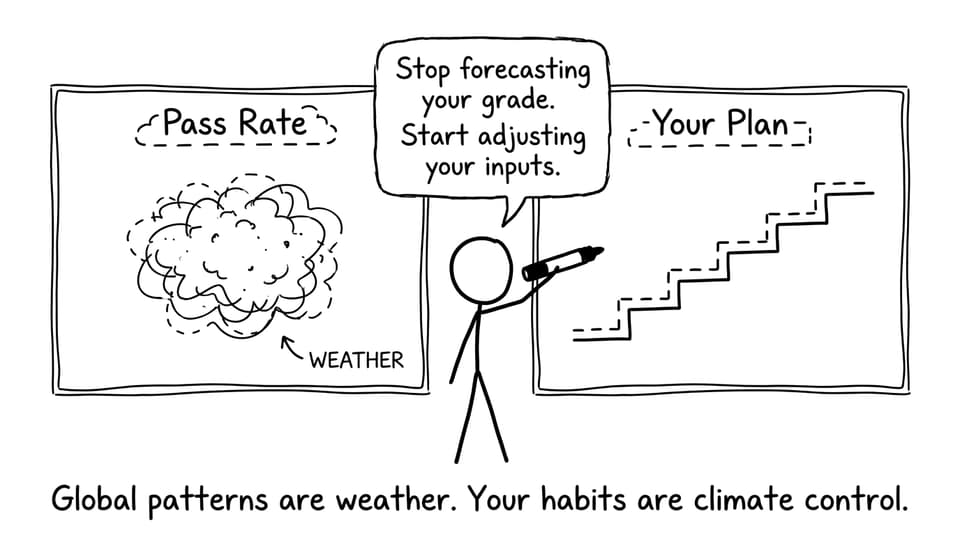
Global statistics describe cohorts. They do not measure your next two weeks of revision.
Your score moves when:
-
You practice exam-style questions consistently
-
You review errors in markscheme language
-
You improve how you write explanations, not just calculations
-
You get feedback (fast) and apply it (repeatedly)
RevisionDojo is designed around that loop: Study Notes for clarity, Questionbank for application, Flashcards for recall, AI Chat for stuck moments, Grading tools for rubric-aware feedback, plus Predicted Papers and Mock Exams for realism. And if you want human direction, Tutors can step in when a topic stays stubborn.
Closing: let Topic 4 lead you, not label you
Topic 4 Statistics is not a warning sign. It’s a toolkit for thinking clearly when numbers get loud. Used well, it becomes your revision compass: it tells you where the marks are, where your mistakes cluster, and which habits actually move your score.
If Subject Selection is about choosing the right path early, Topic 4 is about choosing the right signal now. Open the right notes, drill the right questions, review the right errors, and let RevisionDojo carry the structure: Questionbank, Study Notes, Flashcards, AI Chat, Grading tools, Predicted Papers, Mock Exams, Coursework Library, and Tutors.
Your revision doesn’t need more panic. It needs better data, used wisely.