


Every May, a familiar scene plays out: a student refreshes a results page, then refreshes the news. Somewhere between the countdown and the headline, a single number starts to feel personal: the IB pass rate.
But the IB pass rate in 2025 isn’t a prophecy about you. It’s a wide-angle statistic, taken from millions of very different stories. The danger is that students read it like a mirror. The useful move is to read it like weather: context, not identity.
And this is where Subject Selection quietly matters more than most people admit. Because your Subject Selection determines what “hard” feels like day-to-day, what your workload looks like in March, and how steady you can stay when the data starts shouting.
Quick checklist: how to interpret the IB pass rate
Use this short checklist before you let any headline affect your confidence:
-
Know what the IB pass rate actually measures (and what it doesn’t)
-
Treat 2025 as “stable trend,” not “personal forecast”
-
Remember that your Subject Selection changes your workload and risk points
-
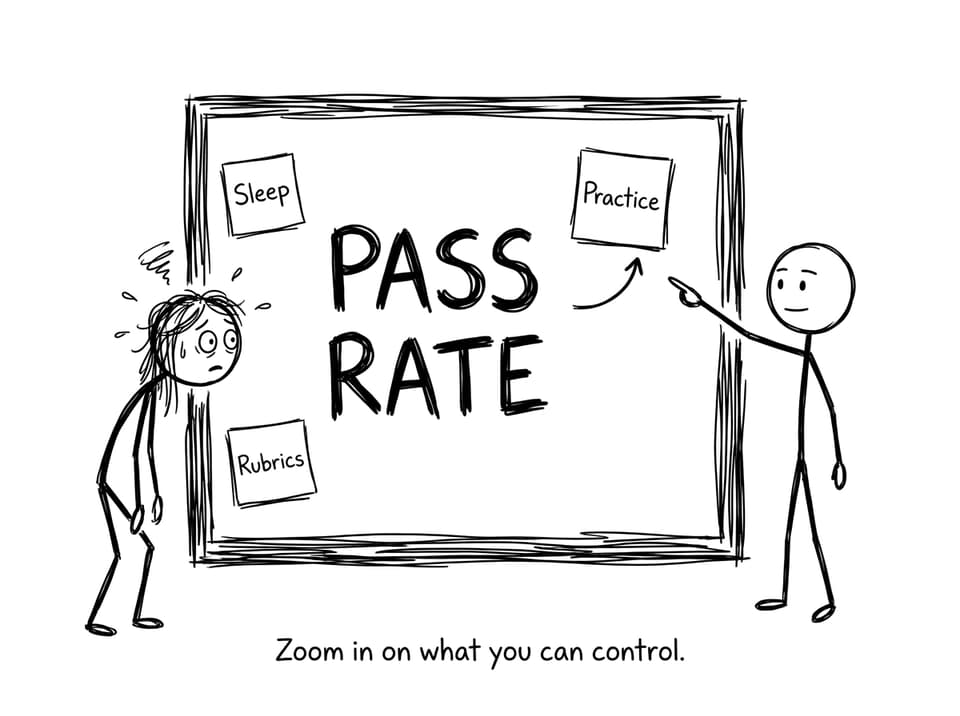
Focus on your controllables: criteria, practice, feedback loops
-
Build an exam plan using RevisionDojo tools, not vibes
What the IB pass rate actually means (and doesn’t)
The IB pass rate is the percentage of Diploma Programme candidates who met the minimum requirements to earn the IB Diploma. In practical terms, that means meeting core thresholds like:
-
Reaching at least 24 total points
-
Meeting subject-specific minimums
-
Satisfying core requirements (EE, TOK, CAS)
What it doesn’t tell you is the part most students assume it tells you.
It doesn’t measure whether the IB “got harder” emotionally. It doesn’t reveal how your school taught the syllabus. It doesn’t explain whether your own Subject Selection was balanced, overloaded, or built around your strengths.
It’s a broad outcome metric, not a verdict on your ability.
If you want better context around outcomes and trends, pair this article with Insights on IB Grade Boundaries and Result Trends and Why Most IB Students Score Between 24-34 Points (and Why That’s Normal).
What the IB pass rate in 2025 really tells students
In the May 2025 session, the global IB Diploma pass rate stayed stable and consistent with recent years. That stability is the headline that matters.
A stable pass rate tells you two calm truths:
-
The IB is maintaining overall standards at a steady level
-
The Diploma remains demanding, but achievable for students who prepare consistently
So if you were hoping the pass rate would “guarantee” that this year is easier, it won’t. And if you feared it would “prove” that you’re doomed, it can’t.
The more useful lens is: stability means the rules of the game haven’t suddenly changed. Your strategy still works. Your preparation still compounds.
Why pass rates shift slightly year to year
Even when the overall trend is stable, small fluctuations happen. That doesn’t automatically mean grade inflation, a tougher exam, or some hidden crackdown.
Pass rate changes can reflect:
-
Differences in cohort size
-
Shifts in subject combinations and overall Subject Selection patterns
-
Variations in school support and teaching conditions
-
Normal statistical noise across a global program
This is why reacting emotionally to a tiny dip is like panicking because the forecast changed from 21°C to 20°C. It’s real, but it’s not the story.
The most common student misconception: “pass rate = my chances”
A headline number feels personal because it’s simple. But your results are not produced by global averages. They’re produced by specific marks, in specific papers, awarded for specific skills.
That’s why Subject Selection is a smarter place to focus than pass-rate watching. The question isn’t “What did the world do?” It’s “What will I be asked to do in my subjects, and how reliably can I do it under time pressure?”
If you want a reality check on high scores, read How Many Students Actually Score 40+ Points in the IB? and What Was the Average IB Score in 2025 (and Is It Good)?.
How Subject Selection changes what “passing” feels like
Two students can be equally capable and still have totally different experiences of the IB. Often, the difference isn’t motivation. It’s Subject Selection.
Subject Selection affects:
-
Cognitive load (how many concepts you must truly understand, not just memorize)
-
Skill mix (writing-heavy vs calculation-heavy vs analysis-heavy)
-
Time cost (how long it takes to get from “I understand” to “I can score”)
-
Risk points (subjects where small misunderstandings repeatedly lose marks)
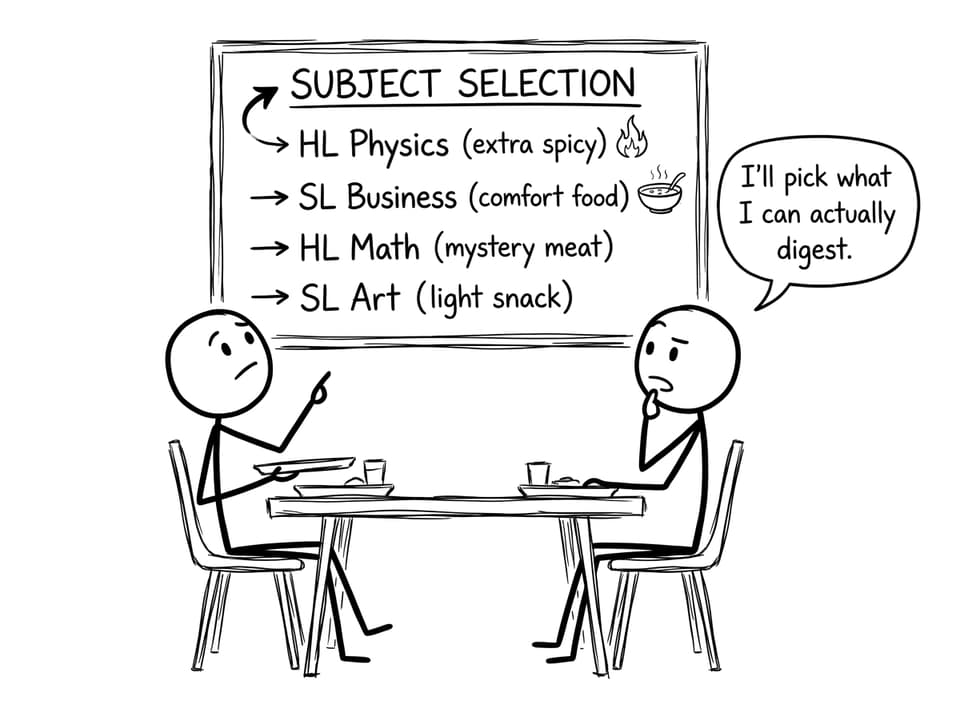
A strong Subject Selection isn’t about choosing “easy” subjects. It’s about choosing a combination that you can sustain when life gets real: deadlines, mock season, illness, burnout, and the quiet pressure of comparison.
If you’re already locked into your subjects, you still have leverage: you can build a plan that matches the demands of your Subject Selection instead of fighting it.
A practical response to pass-rate news: build a feedback loop
The calm response to pass-rate headlines is not to ignore them. It’s to downgrade them. Put them in the “context” folder, then return to the work that actually moves your score.
Here’s a simple loop that works across almost every Subject Selection:
Learn the examinable version of the topic
Use Study Notes on RevisionDojo to get a syllabus-aligned explanation quickly, without rewriting your own textbook.
Train the skill the IB awards marks for
Use targeted practice via RevisionDojo’s Questionbank approach (see IB Question Bank: How to Use It Effectively and Making the Most of IB Question Banks and Practice Papers). Practice should feel specific: one topic, one paper style, one recurring weakness.
Lock in recall so you don’t leak marks under pressure
Use IB Flashcards with Spaced Repetition so key definitions, processes, and formulas are available on demand.
Get feedback fast (and make it actionable)
RevisionDojo’s AI Chat helps you untangle misconceptions mid-session, and the Grading tools make criteria feel concrete. If coursework is part of your stress load, the IB Coursework Grader is designed for rubric-based improvement, not generic comments.
Rehearse the real experience
Use IB Predicted Papers to practice timing and stamina. Then build consistency with Mock Exams and revision routines like IB: How to Study in the Last 24 Hours (No Panic).
FAQ
Does the IB pass rate in 2025 mean the IB is easier now?
Not in any way that helps you plan your week. A stable IB pass rate in 2025 suggests the program is being held to consistent standards across sessions, not that the work magically got easier. Difficulty in the IB is usually experienced through workload, time pressure, and unfamiliar question styles, which vary by subject and by school. That’s why Subject Selection matters so much: it shapes what “difficulty” looks like in your daily schedule. Instead of searching for reassurance in statistics, look at what your subjects actually demand: concepts, writing, data analysis, or problem solving. Then design practice that matches those demands.
Should I change my Subject Selection because of pass-rate headlines?
In most cases, no. Pass-rate headlines are too broad to be a reliable signal for your personal Subject Selection, especially because they don’t break down the fit between a student and a course. A better reason to adjust Subject Selection (when your school still allows it) is mismatch: you dread the core skills, you can’t recover from setbacks, or the workload crowds out your other subjects. Subject Selection should be built around your interests, strengths, and realistic time budget, not fear of global outcomes. If you’re unsure, ask a teacher to map the assessment components and then compare that map to how you actually study. The goal is a combination you can sustain consistently, because consistency beats intensity in the IB.
What should I focus on if pass rates don’t predict my result?
Focus on the mark-generating behaviors that scale across any Subject Selection. First, learn the markscheme logic: what earns credit, what loses it, and what examiners are really asking you to do. Second, practice under realistic conditions often enough that timing stops being a surprise. Third, turn mistakes into a system: an error log, targeted drills, and spaced review. This is exactly where RevisionDojo helps by keeping Study Notes, Flashcards, Questionbank, AI Chat, Grading tools, Predicted Papers, Mock Exams, Coursework Library, and Tutors in one place. When your workflow is tight, the global pass rate becomes background noise.
Closing: let the statistic be small
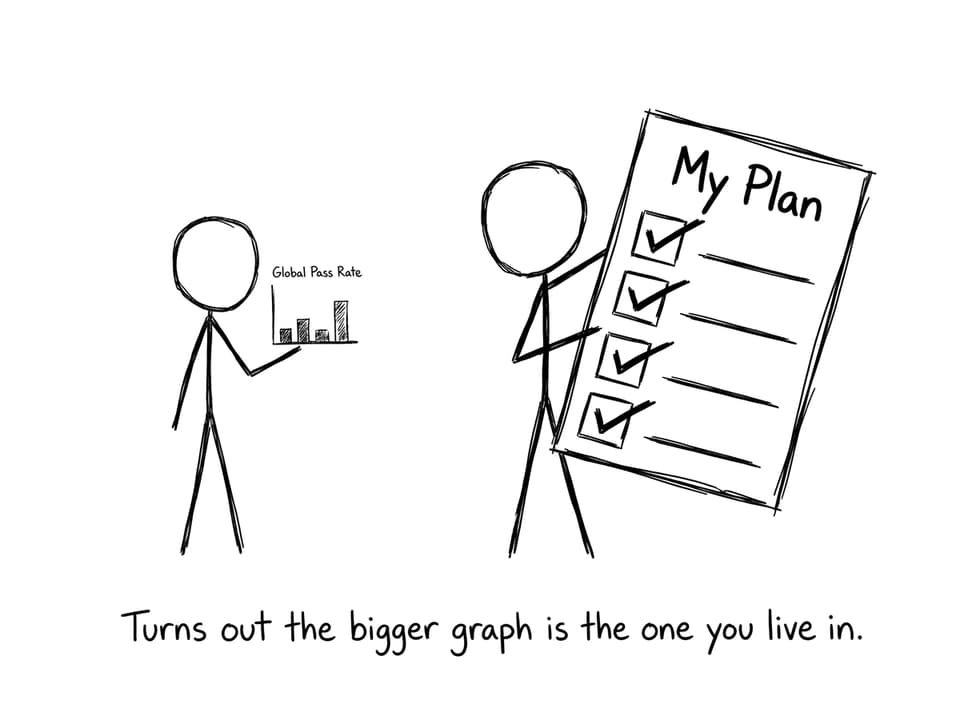
The IB pass rate in 2025 stayed stable. That’s reassuring, but it’s not the point. The point is that your outcome won’t be determined by a headline; it’ll be determined by how well your preparation matches your Subject Selection, and how often you practice the exact skills the IB rewards.
If you want a study setup that makes the pass rate feel irrelevant, build your loop on RevisionDojo: learn fast with Study Notes, drill with the Questionbank, retain with Flashcards, clarify with AI Chat, improve with Grading tools, and rehearse with Predicted Papers and Mock Exams. Then, let the statistic be what it always was: a wide-angle number, far away from your desk.