
When results season hits, a strange ritual begins: someone posts IB pass rates by region, and suddenly your timeline looks like a weather forecast for your future.
A higher pass rate here. A lower one there. A few hot takes about which region is “easier.” And then the quiet panic: Does where I study change my chances?
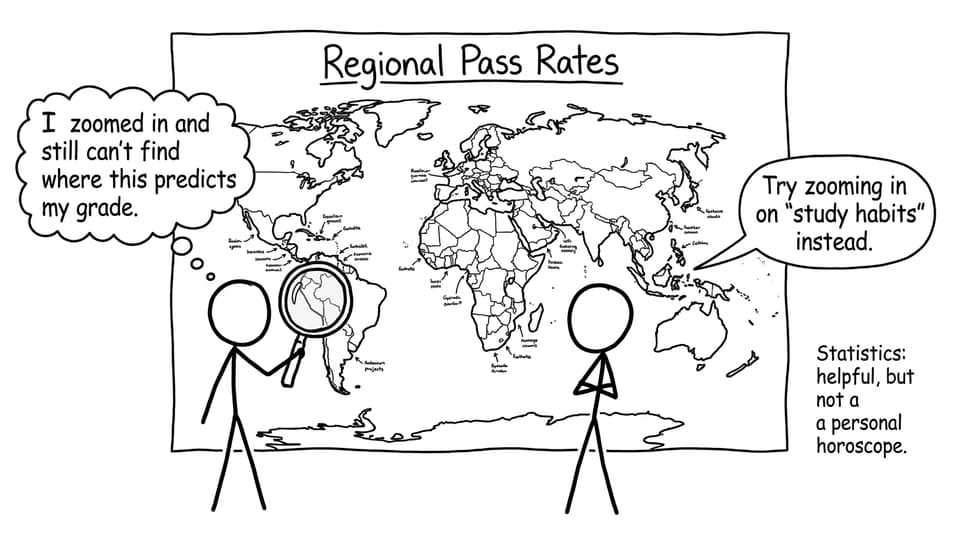
Here’s the calmer truth: regional pass rates are real data, but they’re not a personal verdict. The decisions that actually move your outcome live closer to home, especially Subject Selection, your daily practice habits, and whether you understand how marks are awarded.
Quick checklist: how to use regional pass rates without spiraling
-
Know what “pass rate by region” measures (and what it ignores)
-
Spot the biggest myth: “high pass rate = easier marking”
-
Use Subject Selection to manage workload and requirements
-
Replace comparisons with controllables: criteria, practice, feedback loops
-
Build a revision system using RevisionDojo tools (not guesswork)
What IB pass rates by region actually show in 2025
IB regional pass rates usually group schools into three broad categories:
-
IB Americas
-
IB Africa, Europe, and Middle East
-
IB Asia-Pacific
The statistic is simply the percentage of candidates who met the minimum requirements for earning the IB Diploma. That’s it. It’s descriptive, not diagnostic.
If you want to keep your head clear, pair this article with RevisionDojo’s broader context on scores, like what the average IB score in 2025 means and why most students cluster in a normal band like 24-34 points.
Why IB pass rates differ by region (without anyone being “smarter”)
Regional differences happen for reasons that have nothing to do with a region being gifted or a region being doomed.
Cohort selection and entry policies
Some schools treat the Diploma Programme like an honours track with strict entry requirements. Others run a more inclusive model. If a region has more selective programme entry overall, its pass rate can rise even when the exams stay identical.
Subject Selection patterns across schools
This one is underrated. Regional culture and school offerings shape Subject Selection: which HLs are common, which languages are available, and whether students tend to stack heavy combinations.
A cohort with lots of demanding HL combinations will look different, statistically, from one that spreads difficulty more evenly. That doesn’t mean one is “better”; it means the mix is different.
For more help with choosing wisely, browse all Subject Selection posts or start with the bigger picture in the complete IB revision guide from Subject Selection to final exams.
Language context and instructional environment
Many students sit IB assessments in a language that isn’t their first. That can subtly affect speed, clarity, and interpretation of command terms, even when understanding is strong.
Teaching experience and support structures
Access to experienced IB teachers, school-level feedback cycles, and consistent exam practice varies. Again: not “easy vs hard,” but “supported vs less supported.”
The biggest myth: “some regions are graded more leniently”
It’s tempting to believe a high regional pass rate must mean softer marking. But the IB’s structure is built to prevent that.
Students worldwide face the same assessment criteria, standardized grade boundaries, and moderation processes. If you want a concrete anchor for that idea, use RevisionDojo’s IB grade boundaries hub to understand how performance maps to grades.
In other words: regional differences don’t signal different standards. They signal different conditions.

What regional pass rates do NOT tell you about your exams
Regional pass rates won’t tell you:
-
Whether your exam paper felt “hard” because it was hard or because you under-practiced
-
Whether your school’s internal deadlines were well designed
-
Whether your Subject Selection fits your strengths and timeline
-
Whether you’re improving week to week
The danger is emotional miscalibration: using a blunt global average to explain a very specific personal situation.
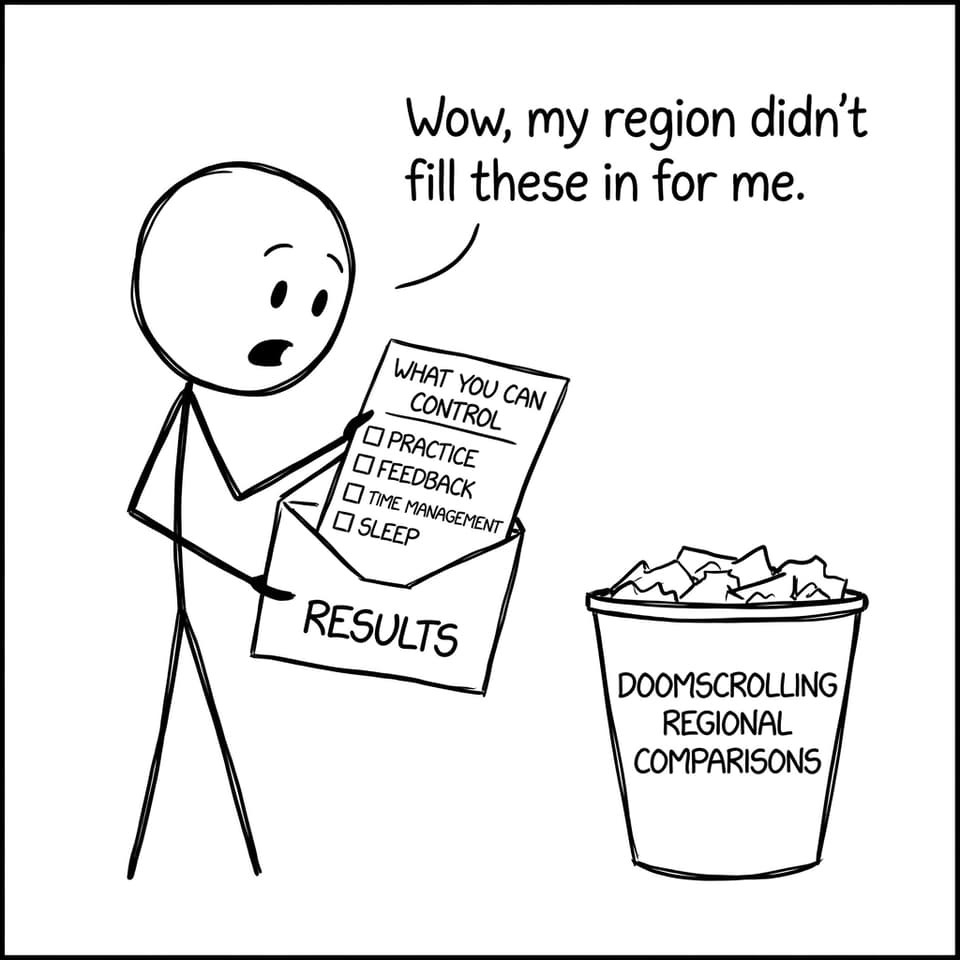
A smarter way to respond: trade comparisons for a controllable plan
Instead of asking, “Is my region harder?” ask questions that produce action:
-
Do I know what earns marks in each paper section?
-
Am I practicing under timed conditions?
-
Can I explain mistakes in terms of criteria (not vibes)?
-
Is my Subject Selection giving me a sustainable workload?
This is where RevisionDojo becomes less of a resource and more of a system.
Use Study Notes to get clear fast, Flashcards to keep recall alive, and the Questionbank to do high-volume exam-style practice with feedback.
Then rehearse the pressure properly using IB Predicted Papers by examiners and learn how to use them sanely with IB predicted vs specimen papers explained. Add Mock Exams for stamina, AI Chat when you’re stuck mid-session, and Grading tools to see how marks are actually awarded. If coursework is a stress point, the Coursework Grader can tighten your feedback loop. And if you need human guidance, RevisionDojo Tutors can help you reset strategy early rather than late.
FAQ
Are some IB regions graded more leniently?
No, and it’s important to be precise about why. The IB uses common assessment criteria and moderation processes designed to keep standards consistent worldwide. That means your work is evaluated against the same expectations regardless of where you sit exams. When students say “lenient,” they often mean “higher pass rate,” but that confuses outcomes with standards. A higher pass rate can come from cohort selection, school support, and Subject Selection patterns rather than softer marking. If you want a grounded reference point, compare your performance to the logic of grade boundaries and the mark allocation in your practice.
Should I compare my performance to regional pass rates in 2025?
It’s usually not a helpful comparison, because the statistic is too broad to guide your next study session. Regional pass rates blend together different school models, entry rules, subject mixes, and language contexts. Your score will be driven more by your consistency with criteria and your ability to perform under time pressure than by the region label on a report. A better approach is to benchmark yourself against your own timed data using structured practice. Use RevisionDojo’s Questionbank for targeted drilling, then step up to Predicted Papers and Mock Exams to test stamina and pacing. The best “average” to beat is last week’s you.
Does Subject Selection matter more than region for passing?
For most students, yes, because Subject Selection shapes your workload, your stress, and the kinds of marks you’re realistically positioned to earn. A subject combo that aligns with your strengths gives you more repeatable study days, not just theoretical potential. It also reduces the chance that one overloaded HL drags down everything else through burnout. Region-level statistics can’t see that. But your weekly schedule can. If you’re unsure, use RevisionDojo’s Study Notes to preview difficulty, run small diagnostic sets in the Questionbank, and make decisions based on evidence rather than rumor.
Conclusion: regional data is background noise, your system is the signal
IB pass rates by region in 2025 can be interesting, but they’re not instructions. They describe broad cohorts, not your personal trajectory.
If you want an advantage that travels with you anywhere in the world, build it through Subject Selection that fits your goals and a revision loop that’s mark-aware: Study Notes, Flashcards, Questionbank practice, AI Chat support, Grading tools, Predicted Papers, Mock Exams, and coursework feedback.
Start building that loop today on RevisionDojo for IB, and let the regional charts stay where they belong: in the background.