

Can Schools Set Their Own IA Deadlines?
You finally open your IA document with the kind of bravery people reserve for haunted houses.
The plan is there: tidy headings, a nice timeline, maybe even a calm little checklist. Then you check your school portal and see the message that changes the temperature of the room: “Final IA deadline moved forward.”
In that moment, you are not asking a theoretical question. You are asking a survival question:
Can Schools Set Their Own IA Deadlines?
Most of the time, yes. Schools can set their own IA deadlines, often earlier than the IB’s behind-the-scenes submission processes. The more useful question is what that power actually means day-to-day: what schools can control, what they cannot, and what you should do if a school deadline threatens both your IA quality and your exam preparation.
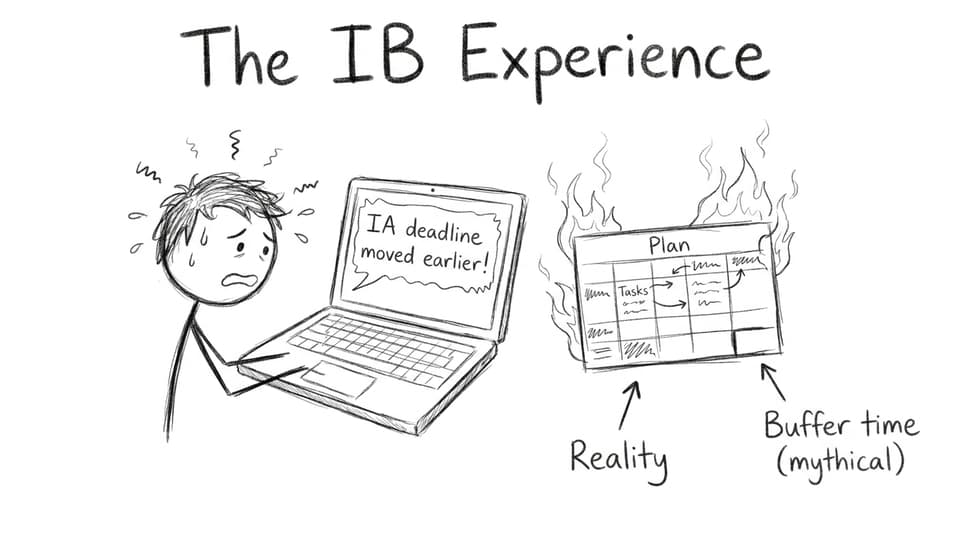
This guide is written for the weeks when everything is due “soon,” your teacher’s feedback window is shrinking, and your brain keeps trying to bargain with time.
A quick checklist (copy this into your notes)
When you hear “IA deadline,” don’t just write down a date. Ask what type of deadline it is. Use this checklist to get clarity fast:
-
Is this a school IA deadline or the IB-facing submission process date?
-
Is it a draft deadline, a final deadline, or an authenticity deadline?
-
Does the deadline cut off teacher feedback? If yes, from when?
-
What happens if you miss it? Late accepted? Still marked? Still uploaded? No further review?
-
How many feedback rounds are allowed before the IA is locked?
-
Who can approve an extension? Teacher, head of department, IB coordinator?
-
What evidence is needed for an extension? Medical note, documented circumstances, counselor note?
-
What is your “minimum viable IA” if time collapses? (Complete, criterion-focused, readable)
If you need a realistic baseline for pacing, keep this open while you plan: What is the timeline for completing an IA?
The simple answer: yes, schools usually can set IA deadlines
Can Schools Set Their Own IA Deadlines? In practice, yes. The IB does not give students one universal, student-facing due date that every school must use. Instead, the IB runs school-facing processes, and your school builds its own workflow to meet those processes.
That’s why one IB student’s “final IA due date” can be in February, while another school’s can be in April. The IB framework is the same, but the local calendar is not.
The calm way to think about it is this:
-
The IB sets requirements and administrative windows for schools.
-
Your school sets deadlines that make those requirements possible.
If you want the clearest explanation of the “two timelines” reality, read: When Are IAs Due? The IB IA Deadline Reality
Why schools move IA deadlines earlier (and it’s not just to be cruel)
It can feel personal when a deadline moves. But the reasons are usually boring and logistical, which is strangely comforting once you see them.
Marking and internal standardization take time
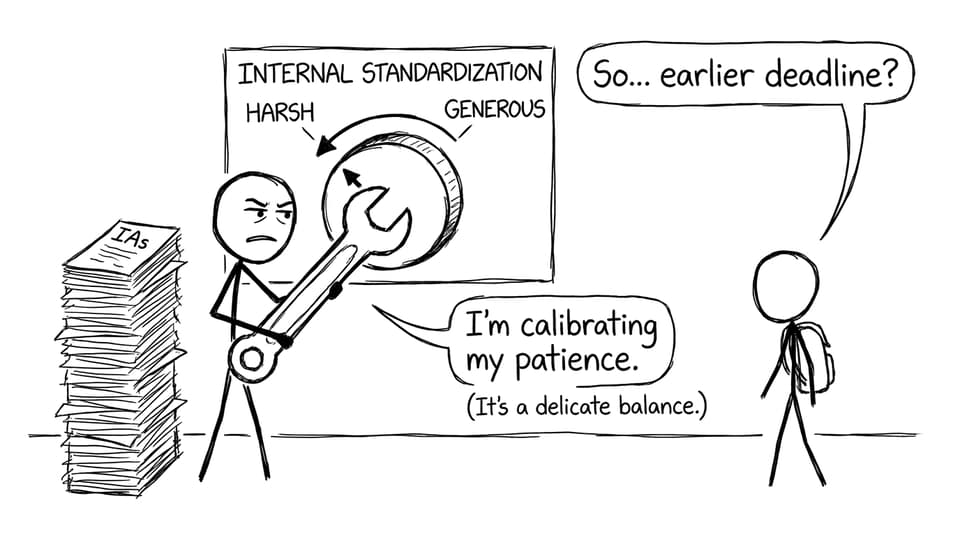
Before anything gets finalized, teachers have to mark IAs, compare standards across classes, and make sure the rubric is applied consistently. In some departments, teachers cross-check a sample of IAs together to align what “top band analysis” actually looks like.
That alignment protects students from inconsistency, but it costs time. Earlier school deadlines buy that time.
Authenticity and academic honesty checks are real work
Schools are responsible for confirming your work is your work. That can include draft checkpoints, process evidence, short viva-style conversations, and version history checks. Whether you find that comforting or annoying, it’s part of the system.
Earlier IA deadlines create space for those checks without rushing.
Earlier deadlines protect you from the “2:13 a.m.” version of you
Most students underestimate two things:
-
how long “final polish” actually takes, and
-
how quickly stress turns good thinking into rushed writing.
A school IA deadline is often a guardrail. The school is basically saying, “We know what happens when we leave this to the last second, and we don’t want that for you.”
For a teacher-side lens on balancing coursework and exams, this is worth reading: How IB Teachers Can Balance IA, EE, and Exam Preparation Efficiently
What schools can control vs what they can’t
This is where the question Can Schools Set Their Own IA Deadlines? becomes more precise.
What schools typically can control
Most schools can set:
-
draft deadlines (proposal, partial draft, full draft)
-
a final internal submission date (often earlier than the IB-facing admin timeline)
-
required checkpoints (planning forms, reflections, progress evidence)
-
how feedback cycles work (how many drafts, what type of comments)
-
late policies inside the school system
What schools typically cannot change
Schools cannot rewrite what the IA is. They cannot:
-
change the rubric
-
ignore required components
-
invent new rules that contradict the subject guide
-
let you exceed official limits and pretend it’s fine
They can say, “We need your final IA by this date,” but they cannot say, “The rubric doesn’t matter this year.”
If you want an example of what “fixed requirements” look like in a subject-specific guide, see: ESS: Essentials of the Internal Assessment
The two-finish-lines problem: school deadline vs IB timeline
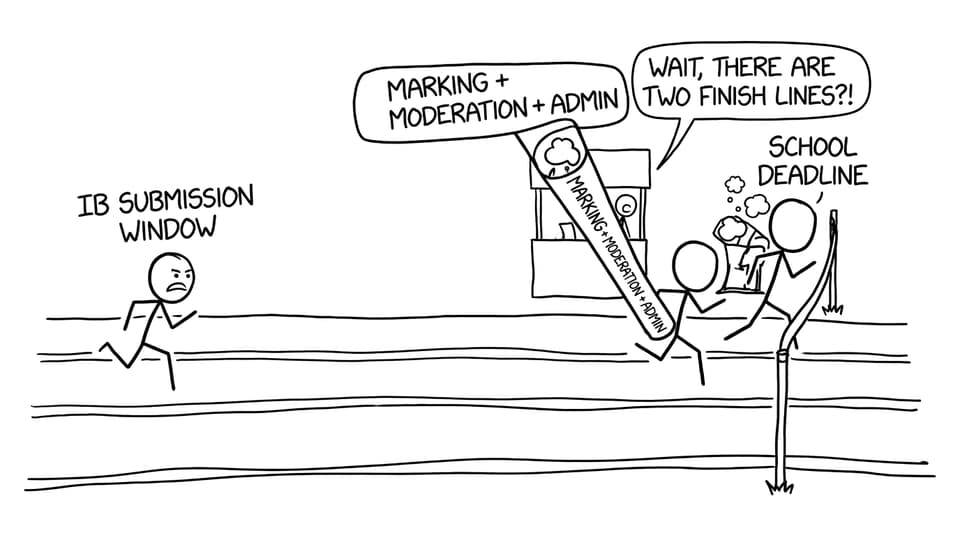
A lot of panic comes from a misunderstanding: students assume there is only one finish line.
In reality, there are usually two:
-
Your school deadline (the one that controls feedback, marking, and whether your work is processed)
-
The IB-facing submission process (handled by your teacher/coordinator, not you)
If you want the clearest “who submits what, when” explanation, read: When Does the IB Collect IAs? The Real IA Timeline
The hidden trap: deadlines that quietly “lock” your IA
Some deadlines are just dates. Others are locks.
A lock might mean:
-
no more teacher feedback after that point
-
no more draft reading
-
your submitted file becomes the official final version
-
nothing will be uploaded if you miss it
This is why the best question is not “When is it due?”
Ask this instead:
“After this IA deadline, will my work still be accepted for submission and marking? And does it cut off feedback?”
If the answer is vague, ask again politely and in writing. Clarity is a form of stress management.
What to do when a school deadline feels too early
When a deadline shifts forward, the instinct is to sprint. But sprinting without a plan usually means you polish the wrong parts.
Here’s a calmer approach that protects marks.
Diagnose what’s left (in criterion terms)
Write down what remains as specific tasks, not feelings:
-
which section is incomplete (method? analysis? evaluation?)
-
which visuals are missing (graphs, tables, labels)
-
which criterion-level upgrades are needed (limitations, justification, reflection)
-
which “packaging” tasks are pending (citations, formatting, bibliography)
This turns “I’m behind” into something you can schedule.
If you’re already deep in the catch-up phase, start here: Behind on Your IB IAs? How to Catch Up Fast
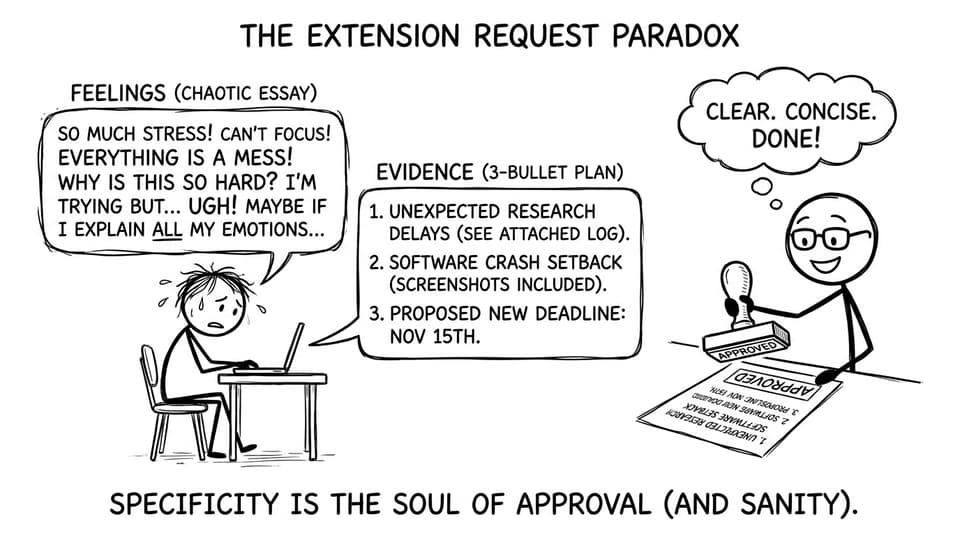
Ask for a micro-extension (specific and realistic)
Teachers can’t work with: “Can I have more time?”
They can work with:
-
“Can I submit by Thursday 4pm instead of Tuesday 8am?”
-
“I will submit the updated analysis tonight so you can confirm I’m on the right track.”
Specificity signals responsibility.
Protect your teacher’s workload (so they can say yes)
The fastest way to get a “no” is to ask for a full re-mark at the last minute.
Instead, ask for one high-impact check:
-
research question focus
-
whether your analysis is deep enough
-
whether your evaluation is actually evaluative
For a useful breakdown of what good feedback looks like (and how to use it), read: IB Internal Assessment Feedback: Detailed Comments and Suggestions
If you miss the school IA deadline anyway
It happens. More often than students admit. The difference between “recoverable” and “disaster” is usually what you do in the next 24 hours.
Do this in order
-
Confirm which deadline you missed (teacher deadline vs internal school processing deadline).
-
Submit the most complete version you have immediately (even if it’s imperfect).
-
Email your teacher and IB coordinator: short, respectful, solution-focused.
-
Propose a realistic new submission time.
-
Triage your edits toward what earns marks: analysis, evaluation, conclusion clarity.
These guides walk you through the recovery steps:
How to build an IA timeline your school will actually accept
If you’re early enough to design your own pacing, this is where you quietly win.
Use the “two-deadlines” system
Make two dates:
-
Personal deadline (finish the thinking): analysis, evaluation, structure
-
School deadline (finish the packaging): citations, formatting, final checks
The point is not to be dramatic. The point is to make the school deadline feel like submission day, not like the day you start writing.
For more realistic pacing ideas, this is excellent: The Ideal IB IA and EE Timeline for Busy Students
Add a buffer for “criterion upgrades”
Most students plan for writing.
High-scoring students plan for improving.
A buffer week is where you:
-
tighten the focus of the investigation
-
turn description into interpretation
-
add real limitations and improvements
-
clean up data handling and visuals
If you want a practical guide to finishing well without panic: How to Finish an IA Strong (Not Just Fast)
Build around your subject’s bottleneck
A Math IA has different friction than a science IA or a humanities IA. The smart move is to plan around the bottleneck, not around motivation.
For Math, a focused roadmap helps: How to Manage Time Effectively When Writing the IB Math IA
The exam problem hiding inside your IA deadline
Here’s what sneaks up on students: when a school moves an IA deadline, it doesn’t only steal time from coursework. It steals time from revision, sleep, and timed practice.
That’s why Can Schools Set Their Own IA Deadlines? is also an exam strategy question.
A sustainable “heavy IA season” week often looks like this:
-
Daily recall: 10-20 minutes of RevisionDojo Flashcards
-
Targeted practice: 3 short sessions in the Questionbank (weak topics only)
-
Timing maintenance: 1 weekly timed session using Mock Exams or Predicted Papers
This is where RevisionDojo becomes less like “extra resources” and more like a stabilizer.
-
Study Notes keep you from rereading entire chapters when you only need one subtopic.
-
Flashcards protect memory when your schedule is chaotic.
-
Questionbank practice keeps exam technique alive in small, realistic blocks.
-
AI Chat helps you get unstuck without waiting days for a meeting.
-
Grading tools (including the IB Coursework Grader) help you check rubric alignment before your teacher’s feedback window closes.
-
Coursework Library helps you calibrate what “complete” looks like.
-
Tutors give you a human plan when you’re too close to the work to see it clearly.
If you want an end-to-end revision structure that works even during IA pressure, use: How to Study for IB Exams: Step-by-Step Guide
The funny truth: one deadline is never one deadline
Sometimes the stress isn’t the work. It’s the hydra of mini-deadlines disguised as one simple word.
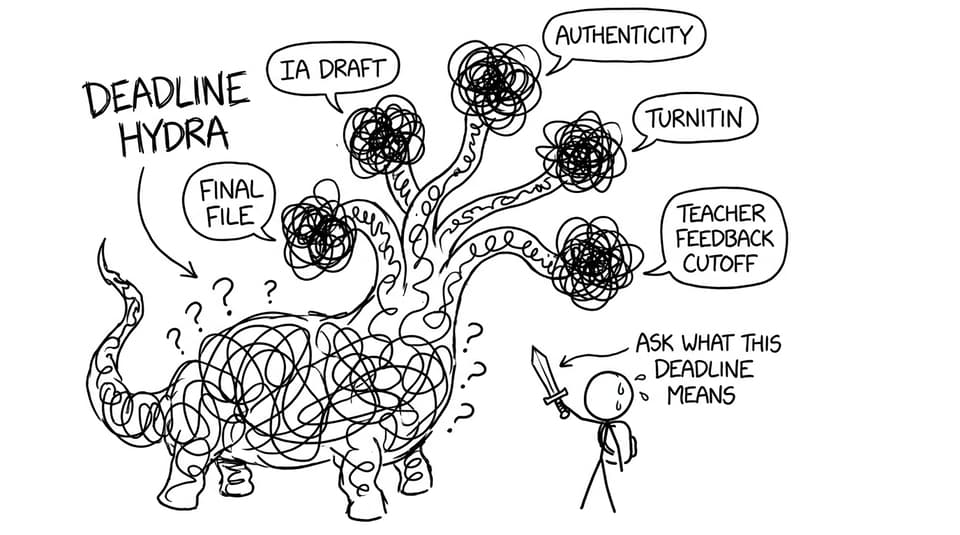
If you feel like deadlines multiply when you look away, you’re not imagining it. The practical solution is not more motivation. It’s clearer definitions.
Closing: treat the deadline like a design constraint, not a personal attack
So, Can Schools Set Their Own IA Deadlines?
Yes. In most cases, schools can set their own IA deadlines, and they can enforce them in ways that feel like the true finish line. That’s frustrating when the date moves earlier, but it’s also a reality you can design around.
A school deadline is a constraint, like a word limit or exam timing. You don’t get to vote on it. But you do get to choose your response: define what the deadline means, plan backwards in stages, and protect exam readiness with a small daily maintenance routine.
If you want your coursework to improve without your revision collapsing, build your loop inside RevisionDojo: use IA Guides and the Coursework Library to avoid structural mistakes, use AI Chat to get unstuck quickly, use the IB Coursework Grader to pressure-test rubric alignment, and keep your memory sharp with Flashcards, Questionbank sets, and weekly Mock Exams plus Predicted Papers.
Deadlines may move. Your system can stay steady.