
The day you realize your IA has two deadlines
It usually happens in a small, ordinary moment.
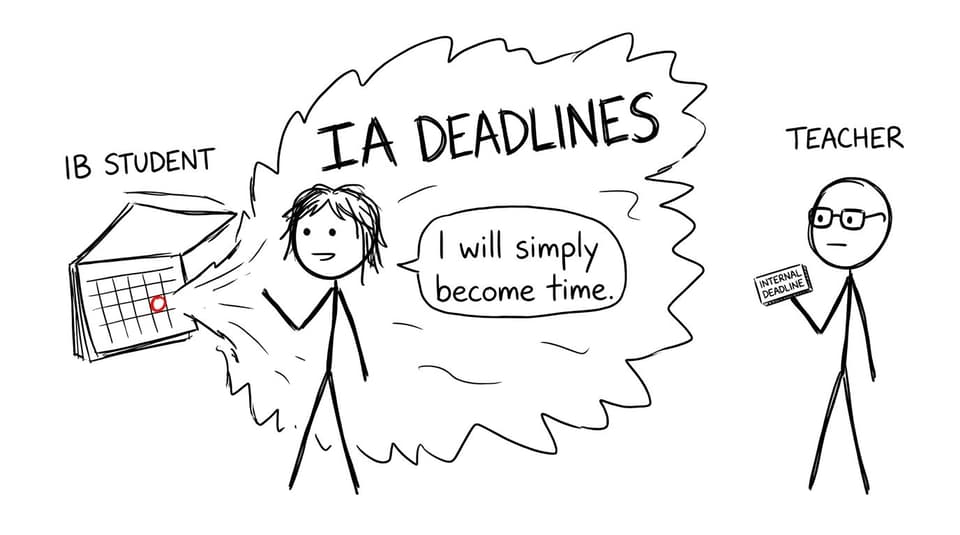
Someone says, "My IA is due next week," and you say, "Wait, ours is due next month." Then another student mentions a different date entirely. And suddenly you're staring at the same three letters, IA, like they're a riddle the Diploma Programme forgot to solve.
Here's the quiet truth: an IA is due twice.
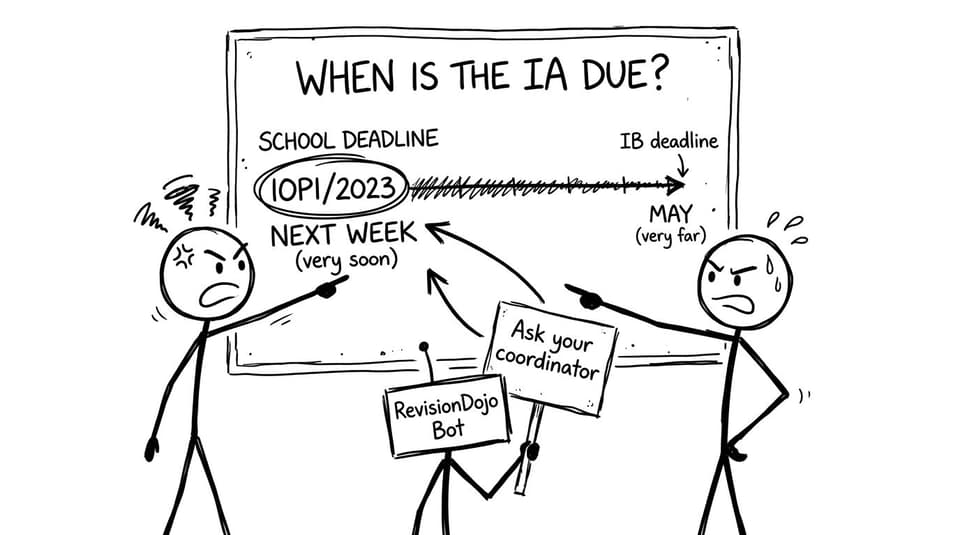
There's the deadline your school sets (the one you feel in your bones), and there's the deadline the IB sets for schools (the one you rarely see, but it shapes everything). If you've been trying to find a single universal date for when your IA is due, you're not failing at research. The system is just built differently.
This guide explains how IA due dates actually work, what timelines are common, what to ask your teacher or coordinator, and how to plan so your IA doesn't collide with exam prep.
Quick checklist: find your real IA due date in 10 minutes
Use this checklist before you do anything else. It prevents 90% of deadline stress.
- Find your course outline, classroom announcements, or Google Classroom post for the IA internal deadline.
- Ask your teacher: "Is this draft due date or final submission for the IA?"
- Ask your IB coordinator: "When is the school's final upload deadline for IAs?"
- Confirm whether your subject has multiple checkpoints (proposal, draft, final) for the IA.
- Put all dates into one calendar, including mock exams and major tests.
- Block two buffer windows: one week for fixes, one week for formatting and references.
When you're planning, it helps to read one clear overview of what an IA is and how it's assessed: IB Internal Assessment: A Complete Guide to Success.
When are IAs due, officially?
The IB does not give students a single public, universal "your IA is due on X date" instruction.
Instead, the IB sets submission windows and requirements for schools, and then schools create internal deadlines that work with:
- teacher feedback time
- internal standardization and moderation
- authenticity checks
- other coursework like EE and TOK
- the exam timetable for your session
That's why two students in different schools (or even two subjects in the same school) can have completely different IA due dates.
The simplest way to phrase it is:
- Your IA is due when your school says it's due.
- Your school's date exists because the IB's backend deadlines require time for review and admin.
If you want a calmer way to relate to this: treat the school deadline as the real one, and treat everything before it as a series of small, friendly deadlines you choose.
The two IA deadlines you need to understand
The school deadline (the one that matters to you)
This is when your teacher expects the final version of your IA. It's the date that determines whether you get feedback cycles, whether your teacher can mark it properly, and whether the school can process it.
Most panic comes from misunderstanding this deadline as flexible. Sometimes it is. Often it isn't.
If you miss it, you're not the first person in IB history to do that. But you need to act quickly and professionally: What to Do if You Miss an Internal Assessment Deadline.
The IB submission deadline (the one you rarely see)
This is the school-facing deadline. Your teacher and coordinator work backwards from it.
It explains why schools set earlier final dates: they need time for marking, internal checks, and uploading. Your IA does not teleport from your laptop into the IB system. People have to move it.
Common IA timelines (what most students experience)
Every school differs, but IB life tends to rhyme.
Here are timelines that are common across many schools, especially for a major IA in sciences, math, humanities, or psychology:
Typical timeline: 6-8 weeks total
- Week 1: topic choice + research question or aim
- Week 2: method/planning + materials + early background
- Week 3: data collection or first draft section build
- Week 4: analysis begins + visuals created
- Week 5: full draft submitted (or partial draft)
- Week 6: feedback window + rewrite
- Week 7: final polish + citations + formatting
- Week 8: final IA submission to school
If you're writing a Math exploration, planning matters even more than you think because it's easy to "do lots of math" and still miss the criteria. These planning guides help you map time realistically:
- How to Manage Time Effectively When Writing the IB Math IA
- How to Manage Time Between Math IA and Final Exam Prep
Why your friend's IA is due earlier (and it's not personal)
It's tempting to interpret different deadlines as unfair. Sometimes it is inconvenient. But it's usually structural.
Different subjects have different realities:
- A science IA might require lab scheduling, which forces earlier internal deadlines.
- A language IA may be an oral component with limited recording slots.
- A group-based data collection plan might demand earlier planning even if the written report is later.
Schools also stagger deadlines on purpose so students don't submit every IA in the same week. It's a small act of kindness disguised as bureaucracy.
How to ask the one question that clears everything up
When students ask, "When is the IA due?" they often get vague answers because the question is missing a detail.
Ask this instead:
"What is the final internal school deadline for my IA submission, and what drafts are due before that?"
Then follow with:
- "Is the draft required for feedback, or optional?"
- "How many feedback rounds are realistic?"
- "What counts as 'final': PDF, word count rules, appendices, references?"
If you want an even sharper edge, add:
- "What would you fix first if you were me, based on the rubric?"
RevisionDojo's subject-specific IA resources help you see what "rubric first" actually looks like. Start with the hub: IB Internal Assessment Guides.
Planning your IA without sacrificing exam revision
The worst pattern is not procrastination. It's collision.
Collision is when your IA consumes the exact weeks you meant to use for exam technique, Questionbank practice, and spaced repetition. You can avoid it with one simple principle:
Separate "IA building" from "exam maintenance."
Here's a schedule that works even when life doesn't.
The 3-track weekly plan
Track 1: IA progress (3 focused sessions)
- Session A: create new content (analysis, evaluation, argument)
- Session B: revise one criterion deeply (not "edit everything") for the IA
- Session C: polish and package (figures, citations, clarity)
If your IA is due soon and you're panicking, read this before you do anything dramatic: What to Do if Your IA Is Due Soon and You're Panicking.
Track 2: exam maintenance (daily 20-30 minutes)
This is where RevisionDojo becomes the difference between "I studied" and "I improved."
- Use Study Notes to fix understanding fast.
- Use Flashcards for daily recall.
- Use the Questionbank to keep exam technique alive.
Even during heavy IA weeks, that small loop prevents you from forgetting months of content.
Track 3: feedback acceleration (1 session)
A lot of IA stress is uncertainty. You can reduce it by shortening the feedback loop.
- Upload a draft to the IB IA/EE/TOK Grader for criterion-based feedback.
- Compare your structure to high-performing models in the Coursework Library.
- If you need inspiration for structure (especially for subjects like CS), browse a subject collection like IB Computer Science IA Exemplars.
The goal isn't to copy. It's to learn what "clear evidence per criterion" looks like in real student work, then build your own.
The hidden reason IAs feel like they're "always due"
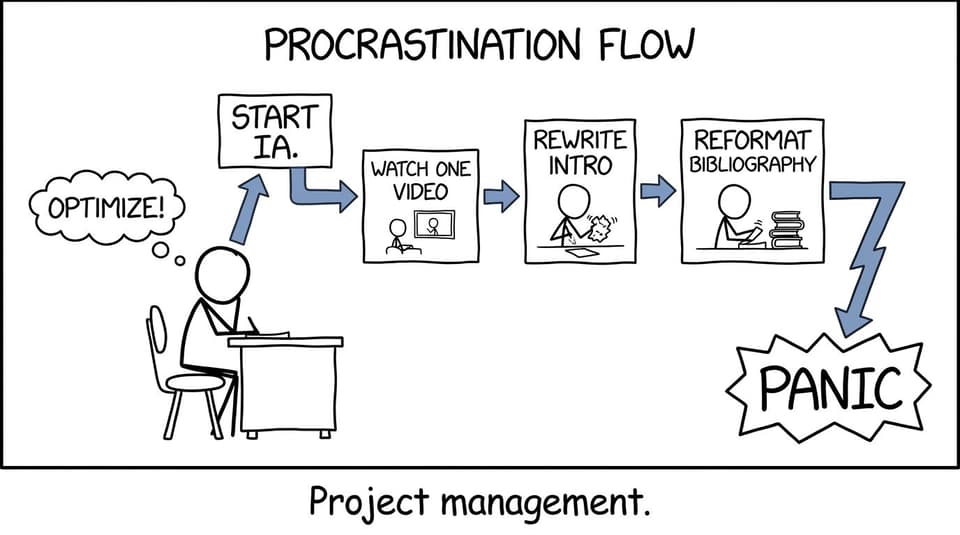
An IA is not one task. It's a chain of tasks.
Topic choice becomes research. Research becomes method. Method becomes data. Data becomes analysis. Analysis becomes evaluation. Evaluation becomes rewriting. Rewriting becomes formatting.
That chain creates the sensation of constant due dates even when you only have one official IA submission.
So don't ask, "How do I finish the IA?"
Ask, "What link in the chain am I building today?"
That's also how RevisionDojo is designed: one loop at a time. AI Chat (Jojo AI) for quick clarity, Grading tools for targeted fixes, Study Notes for concept gaps, and then the Questionbank to keep your exam brain sharp.
If you want a broad look at how the whole platform fits together in exam season, this is useful context: RevisionDojo App: The Smarter Way to Prep for IB Exams.
Bringing it home: treat the IA due date like a design constraint
When are IAs due?
They're due when your school says they're due, shaped by the IB's behind-the-scenes requirements, and made survivable by planning backwards with honest checkpoints.
If you take one thing from this: don't chase the mythical universal IA deadline. Chase clarity. Get the exact internal date, define what "final" means, then build a schedule where your IA progresses without crushing your exam preparation.
And when you want that schedule to feel less like willpower and more like a system, use RevisionDojo the way it was meant to be used: Coursework Library for models, Grading tools for feedback, AI Chat for clarity, Study Notes for understanding, Flashcards for retention, Questionbank for exam technique, and Mock Exams plus Predicted Papers when it's time to simulate pressure.
Your IA is a project. Your exams are a season. You can finish both, if you stop guessing and start running a plan.