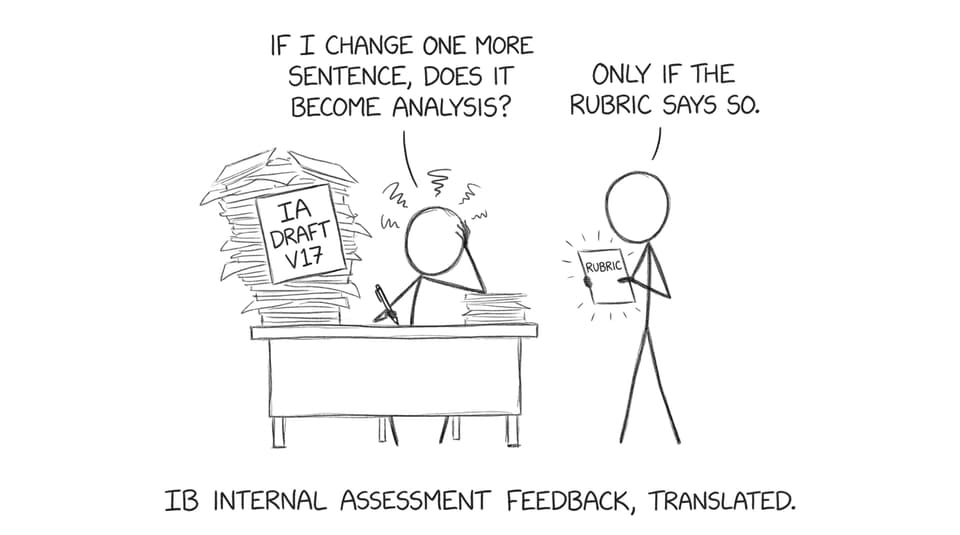
If you have ever stared at an IB Internal Assessment comment like “develop your evaluation” and felt absolutely nothing (except panic), you are not alone. The frustrating part is that you probably did work hard. The helpful part is this: in the IB, hard work becomes marks only when feedback turns into specific, criterion-linked edits.
Internal Assessments are not “side quests.” In many subjects, your IA sits around 20-30% of your final IB grade, which means good IB IA feedback can quietly raise your overall result, even if your exam performance is not perfect.
The quick IB IA feedback checklist (10 minutes)
Before you rewrite a single sentence, run this fast IB checklist:
-
Copy every teacher/supervisor comment into one document.
-
Translate each note into the IB criterion it affects (method, analysis, evaluation, communication).
-
Label each comment: High impact, Medium impact, Low impact.
-
Decide the next draft’s “Top 3 fixes” only.
-
After edits, re-check: does each fix produce visible evidence on the page?
This is the mindset shift most IB students need: feedback is not a mood. It is a list of moves.
What high-quality IB IA feedback actually looks like
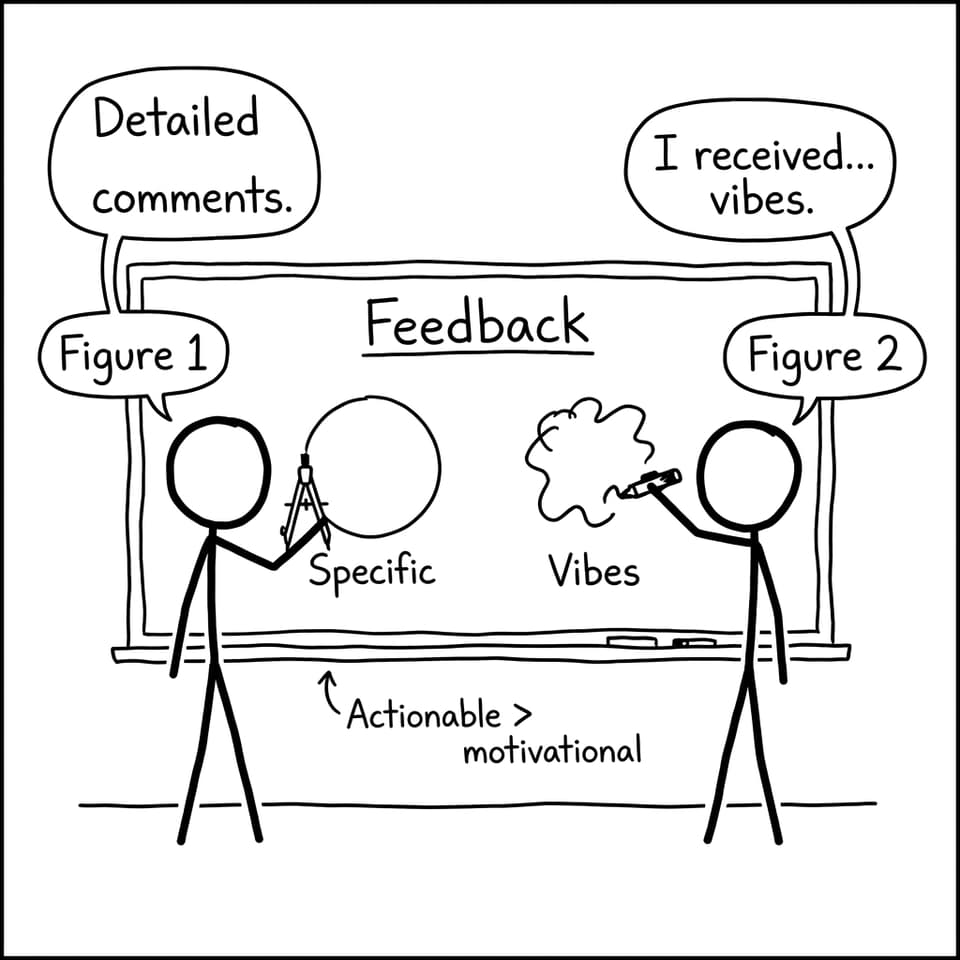
In the IB, “good feedback” is not praise. It is clarity. The best comments usually do at least one of these things:
It points to a specific place in your draft
“Your evaluation is weak” is vague. “In paragraph 3 of your evaluation, you list limitations but do not explain how each limitation changes the conclusion” is actionable.
It names the criterion language (even indirectly)
Teachers often talk in shorthand: “Too descriptive” usually means your IB analysis is not interpreting results, linking to theory, or explaining significance.
It suggests a test you can apply
For example: “Can another student reproduce your method from this?” or “Does every claim have evidence and reasoning?” These tests create self-feedback, which is how top scorers iterate faster.
A simple way to turn IB feedback into actual marks
Most IB students lose marks not because they ignore feedback, but because they respond at the wrong level. They polish wording when the rubric wants thinking.
Try this three-layer response:
Layer 1: Fix the “structure” problems first
If your research question is unclear, your sections are missing, or your method is not reproducible, no amount of elegant phrasing saves the IB criteria underneath.
Layer 2: Upgrade analysis and evaluation (where the marks are)
When your teacher says “add depth,” your safest move is usually:
-
Add explicit reasoning (“This suggests… because…”)
-
Compare to theory/expected pattern
-
Discuss validity and limitations with consequences
-
Link back to the research question, not just the process
Layer 3: Polish communication last
Yes, clarity matters in the IB. But do it after the thinking is visible.
For more step-by-step guidance, see How to Integrate Feedback from Teachers into Your IA.
How RevisionDojo makes IB IA feedback easier to use
Great IB feedback is often limited by time. You might only get one or two rounds before deadlines, and teachers cannot rewrite your work for you. This is where RevisionDojo helps you build more revision cycles without breaking the rules.
Use rubric-aligned grading tools for detailed comments
The IB Coursework Grader is built to give IB-style, criterion-aware feedback on IA drafts (strengths, gaps, and concrete next steps). It is especially helpful when you suspect your draft “sounds fine” but does not hit the markbands.
Use IA guides and exemplars to stop guessing
If you are unsure what “good evaluation” looks like in practice, use IB Internal Assessment Guides to anchor structure and expectations. Then calibrate your intuition with high-quality examples so your edits become more accurate.
Use AI Chat to clarify feedback without wasting a supervisor meeting
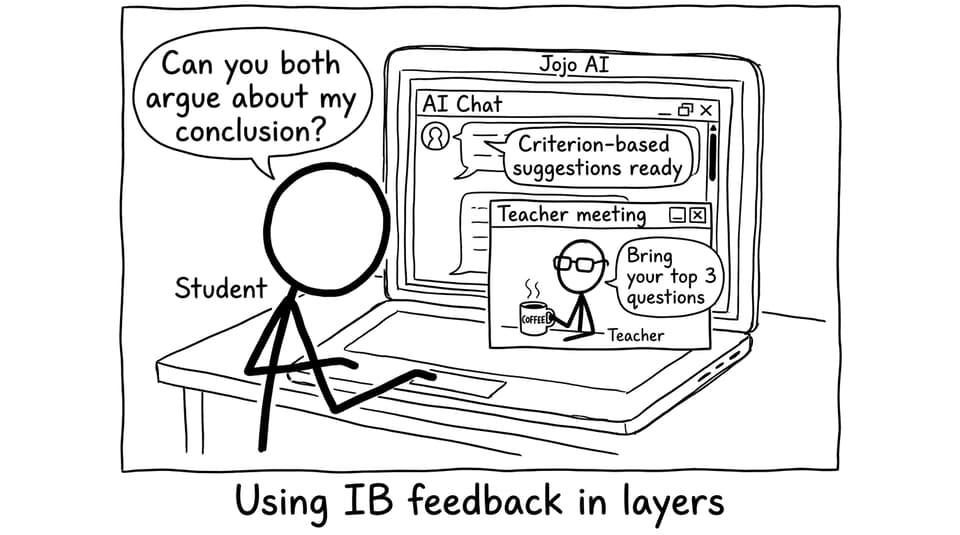
When you get a vague note, ask a precise follow-up in AI Chat, then take the cleaned-up question to your teacher.
A helpful companion read is How to Use Feedback to Improve Your IB IA and EE.
Protect your IB exam prep while you revise your IA
A sneaky danger: your IB IA can expand to fill all available time. The fix is a two-lane schedule:
-
Lane A (IA): 3-4 focused sessions/week, each with one criterion target.
-
Lane B (Exams): daily minimum loop using Study Notes, Flashcards, and exam practice.
RevisionDojo is designed for that loop: Study Notes and IB Flashcards feed daily recall, while a Questionbank and timed practice (Mock Exams and Predicted Papers) protect exam performance. If you need a calm reset, IB: I Study All Day but Remember Nothing is worth reading.
FAQ
How many rounds of IB IA feedback should I aim for?
In an ideal IB world, you would get feedback early enough to revise more than once, because quality tends to appear in iteration, not in a single draft. Aim for at least two meaningful cycles: one structural cycle (research question, method, section logic) and one criteria cycle (analysis, evaluation, conclusion quality). If you only have time for one cycle, choose the edits that change marks, not the edits that make it sound prettier. Detailed comments are most powerful when you respond with visible changes in the relevant section, not general “improvements.” Keep a small revision log so you can prove to yourself that each round moved the draft closer to the IB criteria. RevisionDojo’s workflow supports fast iteration so you are not waiting days just to learn what to fix.
Can IB moderation change my IA mark even if my teacher liked it?
Yes, moderation exists in the IB to keep marking consistent across schools. That means a teacher-awarded mark can shift after moderation, even if your work did not change. This is why it is smart to focus on criterion alignment rather than chasing a single number. If your draft clearly meets the descriptors, it is more robust against marking variation. If you want a fuller explanation of what is and is not visible before results, read Can You See Your IA Marks Before Results Day?. Treat every feedback round as an opportunity to make your reasoning more explicit and your evidence easier to reward.
What should I do when IB IA feedback is too vague?
Start by translating vague comments into a question the rubric can answer. For example, “needs depth” becomes “Where is my analysis descriptive rather than interpretive?” Then ask for one concrete example: “Which paragraph is the clearest place to upgrade?” This keeps the conversation efficient and IB-aligned. You can also use RevisionDojo tools to generate a tighter follow-up before meeting your teacher, so your supervisor time goes to high-impact decisions. The goal is not more feedback, but better feedback: fewer comments that lead to real edits. When you build this habit, your IA improves and you become faster at exam-style writing too.
Final takeaway: turn IB feedback into a revision system
In the IB, the students who score highest are not always the ones who write the most. They are the ones who revise with a plan: translate comments into criteria, make high-impact changes, and repeat.
If you want your next draft to be calmer and stronger, use RevisionDojo as your home base: IA Guides for structure, the Coursework Grader for detailed comments, AI Chat for clarification, and then keep exam prep steady with Study Notes, Flashcards, Questionbank practice, Mock Exams, Predicted Papers, the Coursework Library, and Tutors. Feedback becomes less intimidating when it becomes a system you can run.