

When the IB calendar piles up, students feel it first
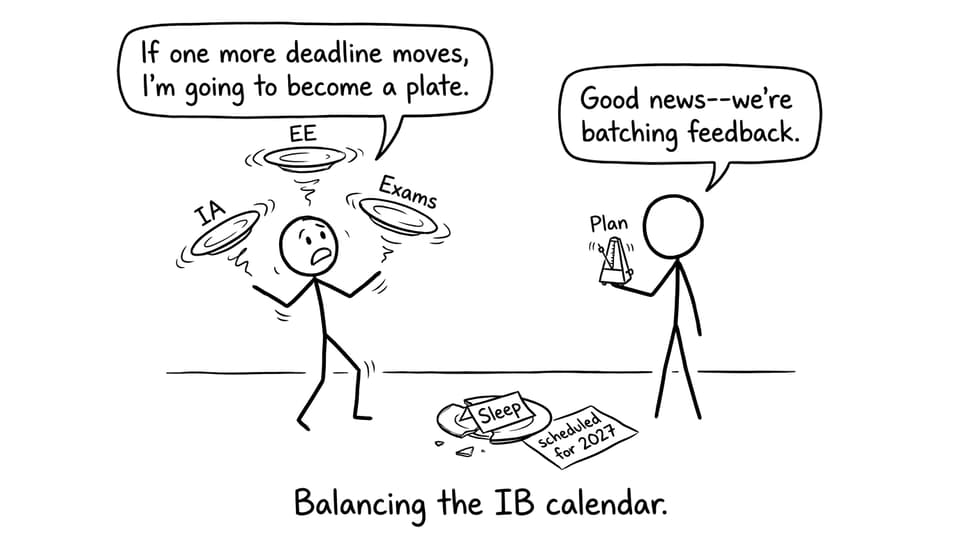
By the time Year 2 accelerates, the IB experience starts to feel less like learning and more like trying to keep three spinning plates from crashing: IAs, the EE, and exam preparation. Students notice the overlap in a very specific way: every task feels urgent, and none of them feels fully finishable.
That is exactly why the best IB teachers don’t try to “work harder” in peak season. They build a system that decides what matters this week, what gets delayed safely, and what must keep moving even when coursework pressure is loud.
RevisionDojo is built for that system thinking: one place to coordinate coursework confidence (IA/EE support) and exam performance (practice, feedback, timing) without scattering attention across tabs.
A quick checklist for efficient IB balance
If you want the fast framework, here’s what efficient IB balance looks like in practice:
-
Protect one recurring “exam prep window” weekly, even during IA and EE crunch
-
Turn feedback into batches (same criterion, same day, same rubric language)
-
Use smaller, earlier coursework checkpoints to reduce late-stage panic
-
Keep revision active: short retrieval and exam-style questions, not rereading
-
Use one shared hub for resources, progress, and targeted practice
For students, the best version of this feels calm: you always know the next action, and you can see why you’re doing it.
Why IA, EE, and exam prep collide in the IB
The hard part about the IB timeline isn’t just volume. It’s that each component demands a different kind of effort:
-
IAs require sustained drafting, data/analysis, and criterion-driven polishing.
-
The EE requires long-horizon project thinking (research question, sources, argument shape).
-
Exam prep is short-cycle performance training: timing, command terms, mark scheme logic.
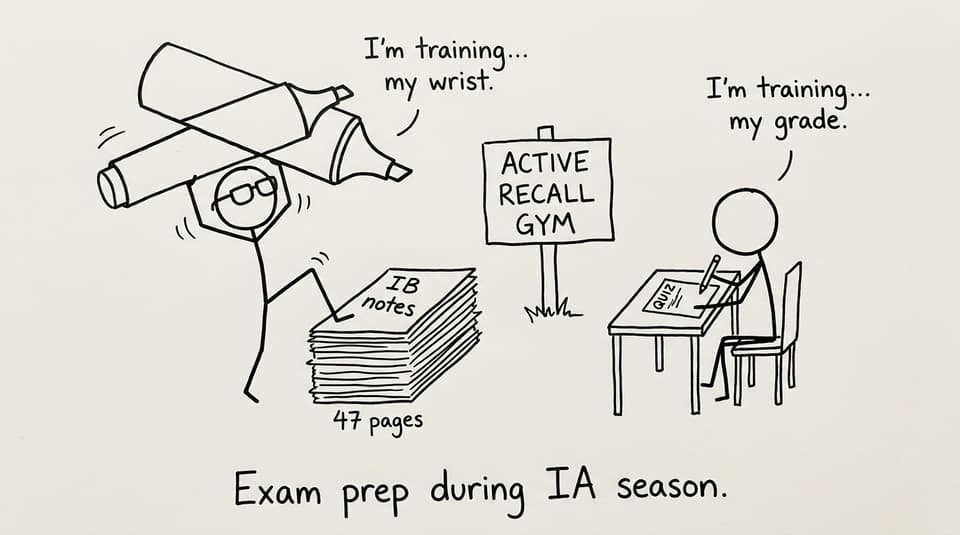
When these collide, students often default to what feels productive (highlighting, rewriting notes, “just finishing the draft”) and neglect what actually lifts marks (retrieval, exam-style practice, targeted feedback).
That’s why tools and structure matter. Point students toward a hub like the IB IA Guides and IB Extended Essay Guides early, so coursework stops being mysterious. Then keep exams moving with short, repeatable practice loops.
The teacher move that changes everything: separate “progress” from “polish”
A quiet trick efficient IB teachers use is to separate two types of work:
Progress work (non-negotiable)
Progress is anything that prevents last-minute catastrophe:
-
IA outline completed
-
EE research question narrowed
-
One timed exam-style set attempted
Progress work is about keeping the project alive.
Polish work (scheduled, not constant)
Polish is what turns a decent draft into a top-band submission, but it has to be time-boxed:
-
rewriting the evaluation
-
tightening argument signposting
-
reorganizing data presentation
If students try to polish constantly, they stall. Efficient IB pacing means you first build an imperfect version, then upgrade it using criteria.
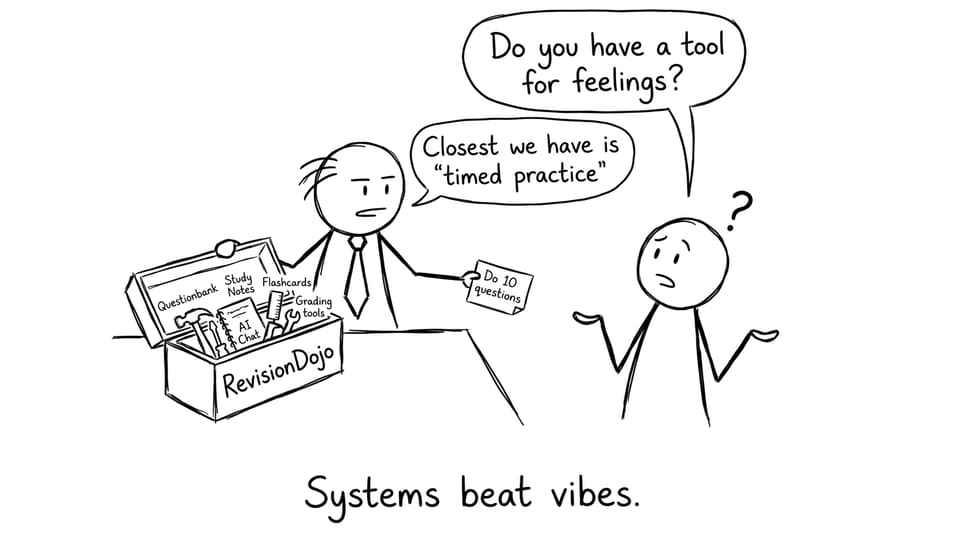
RevisionDojo supports that rhythm: coursework clarity through the Coursework Library and Grading tools, and exam progress through the Questionbank, Study Notes, and Flashcards.
How RevisionDojo keeps IB exam prep alive during coursework season
When IAs and the EE peak, the temptation is to “pause revision until drafts are done.” That pause is expensive in the IB, because memory fades quietly.
A better approach is to shrink exam prep, not remove it.
Here’s a simple loop many teachers recommend to students:
-
10-15 minutes daily recall (Flashcards)
-
25-40 minutes exam-style practice (Questionbank)
-
10 minutes mistake review (turn errors into rules)
RevisionDojo is designed for that loop.
-
Use the Questionbank feature to keep practice targeted and syllabus-aligned.
-
Use the RevisionDojo app exam prep workflow to connect notes, questions, and feedback.
-
If a student is stuck, AI Chat can unblock one concept quickly so they can return to questions instead of spiraling.
A realistic example students recognize: “IA week” doesn’t have to erase revision
Imagine a student with an IA draft due Friday and a Bio test next week. The old pattern is predictable: they push exam prep out, binge late, and feel punished for being human.
The efficient IB pattern is smaller and steadier:
-
Monday: 30 minutes IA method edits + 25 minutes Biology Questionbank on one subtopic
-
Tuesday: 30 minutes IA analysis paragraph + 10 minutes Flashcards
-
Wednesday: 45 minutes timed exam-style set + 20 minutes IA conclusion
-
Thursday: IA final check against rubric language
-
Weekend: one longer mixed-topic practice block
If you want students to stop guessing how to do that, point them to practical routines like You’re Not Lazy: Your IB Study Method Is Broken and IB: I Study All Day but Remember Nothing.
The calm ending: make the IB feel predictable again
The goal isn’t to make the IB “easy.” It’s to make it predictable. When students can see the next step for their IA, keep the EE moving in small pieces, and still rehearse exam performance every week, the whole programme becomes less dramatic and more manageable.
If your class needs one system that supports that balance end-to-end, RevisionDojo is built for it: Questionbank, Study Notes, Flashcards, AI Chat, Grading tools, Predicted Papers, Mock Exams, Coursework Library, and Tutors.
For schools and teachers who want to coordinate this at cohort level, start here: RevisionDojo for Schools.