


When your IA breaks, it feels personal
The worst part of an IA problem is rarely the problem itself.
It’s the moment your confidence drops. Your results look wrong. Your survey gets three responses. Your graphs refuse to cooperate. You start doing the math every IB student does: If I restart now, how many nights do I lose?
Here’s the quiet truth: an IA is designed to include friction. Not because the IB wants you stressed, but because real research always fights back. The difference between a shaky IA and a strong IA is how you respond when the plan stops working.
This guide gives you a practical playbook for handling IA research challenges without panic, without shortcuts, and without losing exam momentum.
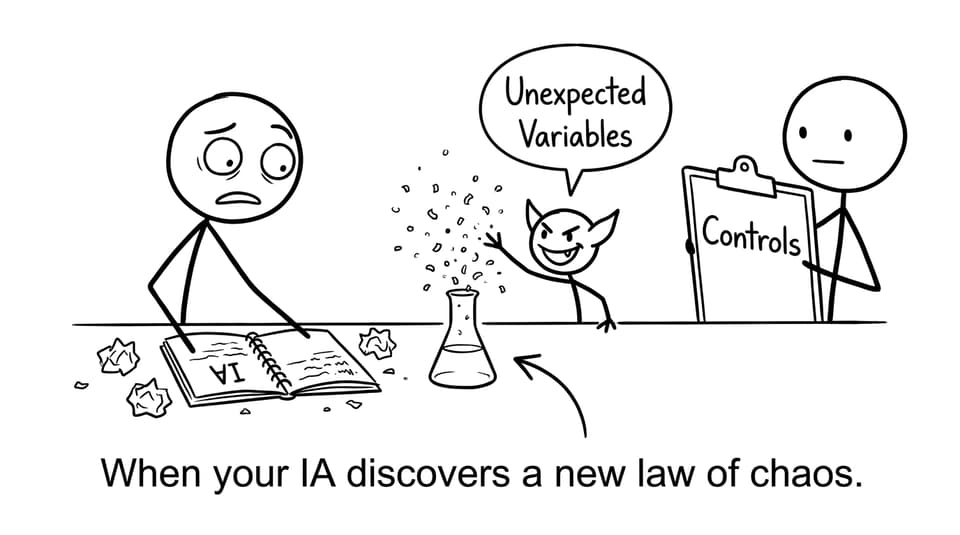
IA rescue checklist (do this before you change anything)
When something goes wrong in your IA, run this quick checklist first:
-
Write a one-sentence diagnosis: what exactly failed, and where?
-
Check controllables: units, calibration, timing, variable control, sampling method.
-
Run one clean trial/test to confirm the issue is real, not noise.
-
Decide: fix, adapt, or pivot (small adjustment vs method change vs new angle).
-
Document the decision in your log so your evaluation section has evidence.
If you want a bigger picture view of what the IB expects from an IA across subjects, keep Comparing IA Expectations Across Different IB Subjects open in another tab.
Data collection issues: when results won’t behave
In many science-style IA investigations (and even surveys in humanities), data collection is where stress spikes.
A classic example is a chemistry setup like sodium thiosulfate + hydrochloric acid where reaction times wobble. The fix usually isn’t “work harder.” It’s “make the system more consistent.”
What to do in your IA
-
Standardize your method like a recipe: same volumes, same mixing pattern, same timing start point.
-
Control variables aggressively: temperature drift, concentration accuracy, light exposure, contamination.
-
Increase trials and average responsibly (and explain why).
-
Audit your raw data: are there unit errors, swapped columns, or missing conditions?
If your issue is less about collecting and more about presenting and interpreting, read How to Use Data Effectively in Your IA Analysis. It’s a good reminder that examiners reward defensible decisions, not perfect numbers.
Equipment malfunction: when the tool becomes the variable
Sometimes your IA is fine, but the equipment becomes unpredictable.
Think of a biology IA where a pH meter gives erratic readings. That can feel like the universe canceling your plan. But in IB terms, this is actually a gift: it creates genuine evaluation material.
What to do in your IA
-
Troubleshoot visibly: recalibrate, clean electrodes, check batteries, confirm with known buffer solutions.
-
Use an alternative method: indicator strips or a second sensor if available.
-
Explain the impact on uncertainty: how would drift affect your conclusion?
-
Keep a short “instrument log”: time, reading, recalibration attempt, outcome.
Then later, your evaluation section becomes stronger because you can discuss limitations with proof. When you’re ready to write that section, follow How to Write a Compelling IA Evaluation Section.
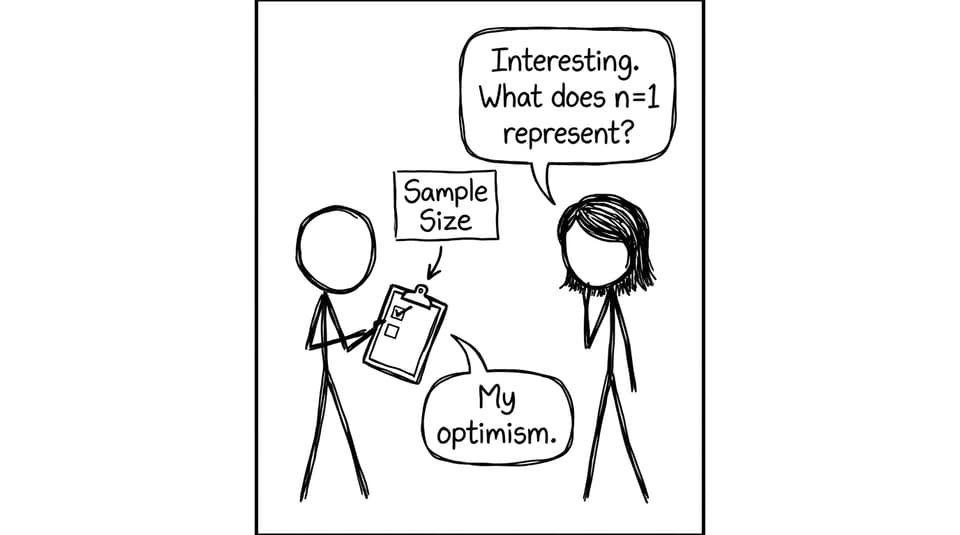
Insufficient data: when your sample size is basically hope
This hits hardest in survey-based IA work.
Maybe you launched a questionnaire on social media and got a handful of responses. The problem isn’t only quantity. It’s that low response counts can trap you in weak analysis, because patterns become guesswork.
What to do in your IA
-
Expand distribution channels: school announcements, class groups, clubs, teacher networks.
-
Make participation easier: shorter survey, clearer purpose, mobile-friendly.
-
Add a small incentive if permitted (even simple recognition helps).
-
Supplement with credible secondary datasets (and cite them clearly).
If you’re working with lots of data instead, use Managing Large Datasets in Your Internal Assessment (IA) to keep your dataset auditable rather than overwhelming.
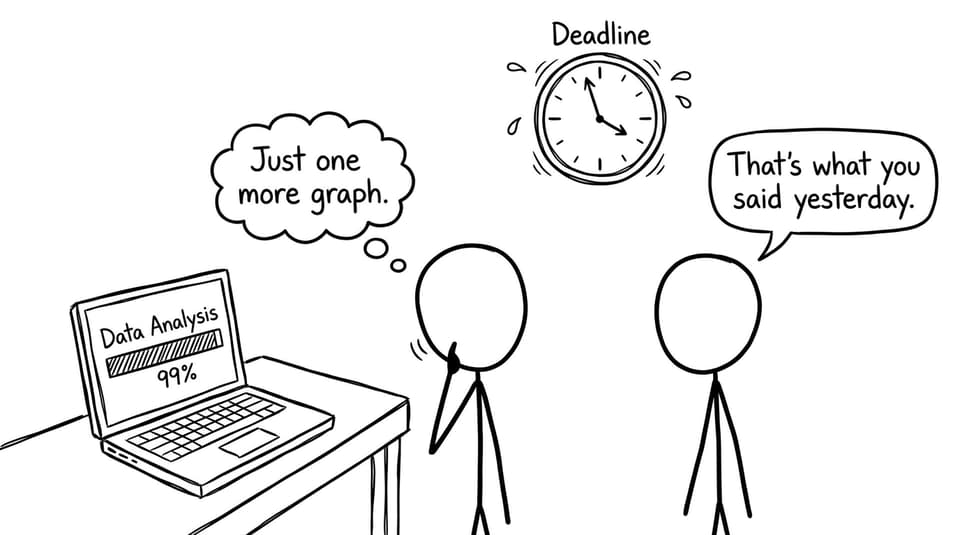
Time constraints: when the calendar becomes your harshest examiner
Time pressure makes students do risky things: skipping reflection, rushing graphs, or writing paragraphs that describe instead of analyze.
But an IA doesn’t need endless hours. It needs a clean chain of reasoning. When you’re behind, your goal is to protect the highest-mark sections first.
What to do in your IA
-
Prioritize the mark-heavy moves: analysis quality, evaluation realism, clear communication.
-
Simplify without shrinking thinking: fewer graphs is fine if interpretation is stronger.
-
Ask for targeted feedback: one criterion at a time.
RevisionDojo helps here because you can cycle quickly: use Study Notes to confirm content accuracy, Flashcards to keep exam revision alive, and AI Chat to sanity-check whether your argument actually answers your research question.
For planning and structure support, start from the hub: IB Internal Assessment Guides.
Unexpected results: when your conclusion surprises you
Unexpected outcomes can feel like failure, but in many IAs they’re the most interesting part.
Say your geography IA on urbanization and water quality shows urban sites are cleaner than predicted. That’s not “wrong.” It’s a prompt to think: treatment plants, sampling locations, seasonal effects, measurement limits, confounding variables.
What to do in your IA
-
Re-check for errors (units, calculation, sampling bias).
-
Research alternative explanations and cite them.
-
Discuss anomalies directly: what could cause them, and how would you test that?
-
Tie everything back to your research question so it stays focused.
If you’re ever tempted to “fix” weird data by inventing cleaner numbers, read What If My IA Data Is Just AI-Generated Nonsense?. It’s blunt for a reason: authenticity problems can sink an IA.
How RevisionDojo helps you keep your IA strong (without losing exam prep)
A calm IA process isn’t about being fearless. It’s about having tools that reduce uncertainty.
RevisionDojo is built for that. Students use the Questionbank and Mock Exams to keep exam performance climbing while the IA evolves. They use Predicted Papers for focused practice when deadlines compress. They use the Coursework Library to see what “good” looks like, and the Grading tools to improve drafts with criterion-level precision. When things get messy, Tutors can help you choose the smallest pivot that saves the most marks.
If your school is managing many IAs at once, this is also where systems matter: How RevisionDojo Enhances IB Internal Assessment (IA) Feedback and Moderation explains the bigger structure behind consistent improvement.
The point of an IA isn’t perfection, it’s judgment
An IA will challenge you because research is what happens when reality refuses to follow your outline.
When problems arise, your job is to respond with calm thinking: diagnose, adapt, document, and explain. That is exactly what the IB is rewarding. And when you want the process to feel less like guesswork, RevisionDojo gives you the structure to keep moving: IA guides, coursework exemplars, grading support, and exam-ready practice tools.
If your IA is currently mid-crisis, open IB Internal Assessment: A Complete Guide to Success in the Diploma Programme, pick one problem to solve today, and keep your IA story honest. That honesty is often what earns the marks.