



If you have ever opened the IB exam timetable and felt personally targeted, you are not alone.
One day, your IB paper starts before your brain has fully loaded. The next, you spend an entire morning waiting for an afternoon session, replaying every definition you have ever forgotten.
It can feel unfair. It can feel random. And it can definitely feel like the IB is making a statement about which subjects matter.
But morning vs afternoon scheduling is not a secret ranking of difficulty. It is a world-scale logistics problem, solved with a few predictable rules.
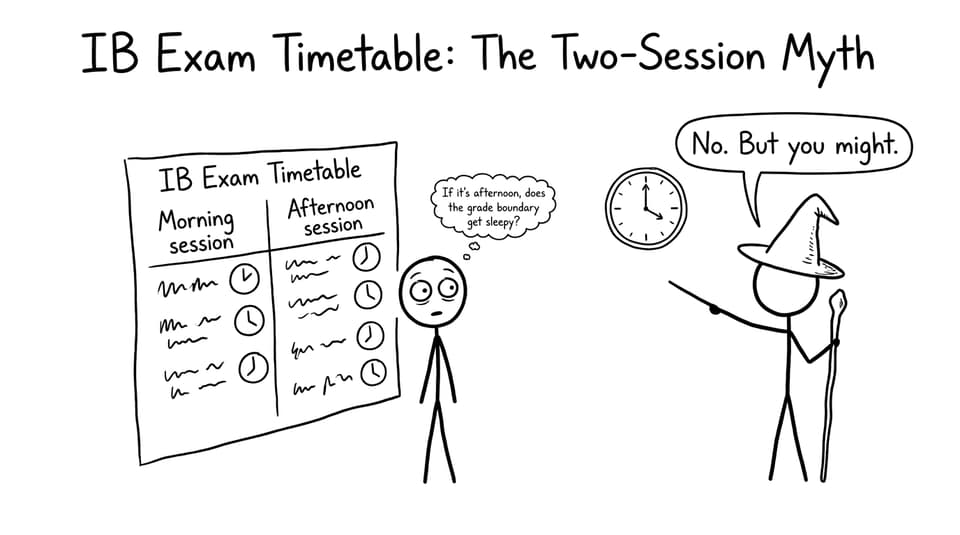
Quick answer: why some IB exams are in the morning vs afternoon
Here is the practical checklist the IB is balancing when it assigns a paper to morning or afternoon:
-
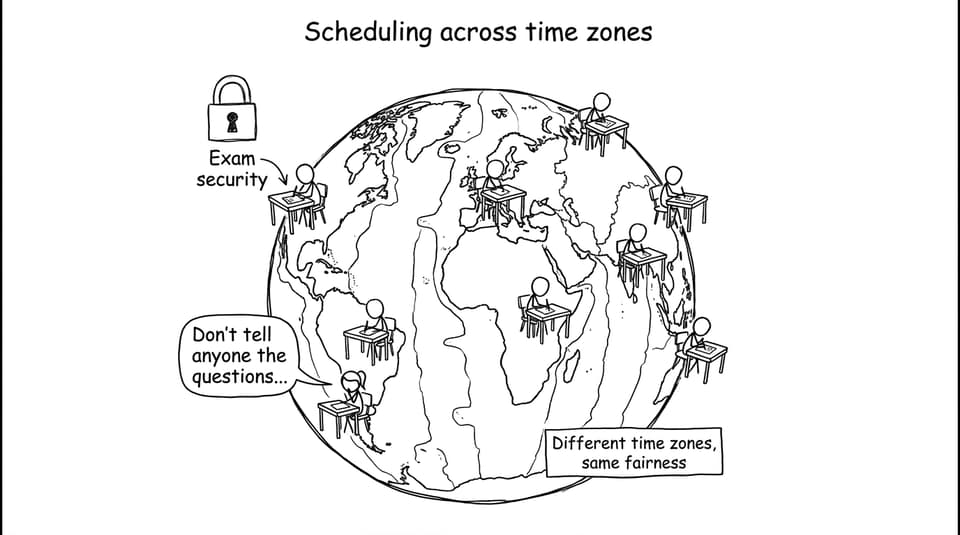
Global coordination across different time zones
-
Exam security and limiting opportunities for sharing information
-
Reducing clashes between popular subject combinations
-
Matching paper length and logistics to session windows
-
Spreading high-candidature subjects across the day
If you want the bigger picture of building a stable plan around the timetable (instead of fighting it), keep How to Plan Final IB Revision Using the Official Timetable open as a companion.
The real reason: the IB schedules globally, not locally
The IB is not scheduling for your school. It is scheduling for a planet.
That changes everything.
A morning session in your city might overlap with someone else’s afternoon, evening, or even the next calendar day. So the IB uses fixed global sessions and exam zones to keep administration consistent. The goal is not comfort. The goal is order.
When students compare timetables with friends in different regions and see a different session, the explanation is usually not personal. It is global coordination.
Why IB morning vs afternoon helps protect exam security
One of the quiet constraints behind every IB timetable is security. The fewer opportunities there are for a paper to leak across time zones, the better.
That is why sessions exist in the first place: to create controlled windows where schools can run exams, collect materials, and follow consistent rules. From the IB perspective, it is less about whether you are tired at 8:00 a.m. and more about whether the assessment remains fair worldwide.
Clash avoidance: the hidden driver of IB exam session timing
If you could see the IB timetable the way a scheduler sees it, you would notice something: it is built around avoiding the most common collisions.
Certain subject pairs are taken together by huge numbers of students (think popular HL/SL combinations). If too many high-candidature subjects land in the same session, a large percentage of students would face direct overlaps.
So the IB spreads subjects across morning and afternoon to reduce the number of impossible combinations.
This matters for you because it reframes the story:
-
Your morning exam is not “harder.”
-
Your afternoon exam is not “easier.”
-
Your session is often the byproduct of how many other students worldwide chose the same combination.
Paper structure and logistics also shape IB morning vs afternoon
Not all IB papers behave the same way.
Some papers are longer, require specific materials, include listening components, or create heavier administrative load for schools. Session placement can help schools manage invigilation, room changes, and material handling.
It is not glamorous, but it is real.
And it is one reason you should train with the same constraints you will face on exam day. RevisionDojo makes that easier with timed practice loops that connect content to performance: Questionbank for targeted sets, then escalation into realistic simulations via mock workflows.
Does morning vs afternoon change IB difficulty or grading?
No.
A core misconception in the IB world is that session timing signals difficulty, importance, or grade boundaries. It does not.
The same principles hold regardless of the clock:
-
The marking criteria are the same
-
Examiners mark against the same standards
-
Performance is evaluated the same way
If outcomes differ, it is usually because humans differ across the day. Sleep, stress hormones, breakfast, adrenaline, and fatigue are the real variables.
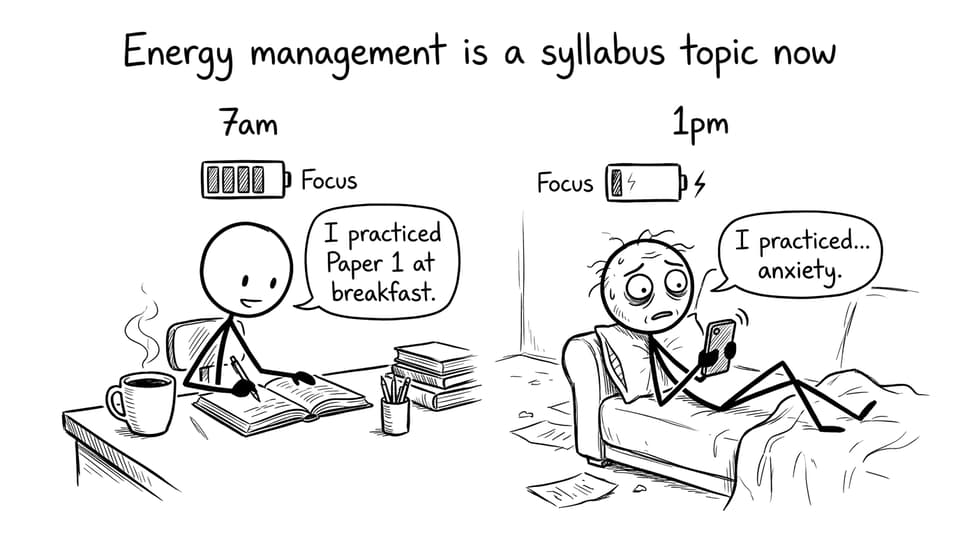
Why morning IB exams feel harder (even when they are not)
Morning sessions create a specific type of pressure: you have no runway.
You wake up and the exam is already coming at you. If your body is used to learning at night, your brain may feel like it is solving calculus underwater.
To adapt, the best strategy is boring:
-
Shift your sleep schedule earlier 1-2 weeks in advance
-
Do short morning practice sets so your brain learns “focus happens here”
-
Avoid late-night revision that steals the very resource you need: attention
A useful reference for building routines that do not collapse under exam pressure is Balanced IB Study Schedule That Actually Works.
Why afternoon IB exams can be just as challenging
Afternoon exams have a different trap: too much time.
When you have hours before the session, you can accidentally spend them:
-
Over-revising
-
Scrolling and feeling guilty
-
Re-reading notes without active recall
-
Letting anxiety rise all morning
The goal is not to “work harder” before a 1:00 p.m. exam. The goal is to arrive calm and charged.
That is why many top scorers use a tapering routine: a light recall block, a few exam-style questions, then rest. For a practical system that scales across subjects, see How to Study for IB Exams: Step-by-Step Guide.
How to prepare for IB morning vs afternoon sessions (without burning out)
A good IB exam plan matches your revision to the session you will actually sit.
If your IB exam is in the morning
-
Practice at least one timed set in the morning each week
-
Keep dinner and bedtime consistent
-
Prepare your bag the night before (remove decisions)
-
Use Flashcards for quick activation, not heavy new learning
RevisionDojo’s Flashcards are built for short recall sessions that you can repeat without draining yourself.
If your IB exam is in the afternoon
-
Keep the morning light: recall, not cramming
-
Eat predictably (avoid experimenting with “brain foods” on exam day)
-
Set a cut-off time where revision stops and calm starts
-
Do one short confidence set in the Questionbank, then step away
If you want a full exam-prep ecosystem, start at RevisionDojo for IB and build a loop: Study Notes for clarity, Flashcards for retention, Questionbank for accuracy, AI Chat for doubts, and Mock Exams for pacing.
A simple 3-tool loop that works for any IB session
-
Study Notes to clean up weak concepts
-
Questionbank to practice the exact skill the exam will demand
-
AI Chat to resolve the one confusion you keep avoiding
Add Mock Exams and Predicted Papers when you need stamina and realism. Use Grading tools when you need your writing to meet the markscheme, not your own instincts. If coursework is weighing on your schedule, the Coursework Library and Tutors help you keep deadlines from spilling into exam week.
For planning the whole stretch, keep IB Exam Week-by-Week Survival Guide in your bookmarks.
Closing: make the IB timetable work for you
The IB morning vs afternoon split is not a judgement. It is a compromise between time zones, security, and clash avoidance.
Once you stop reading meaning into the session, you get your attention back. And attention is what actually raises scores.
If you want to turn your timetable into a practical plan, use RevisionDojo to connect every step: Study Notes for understanding, Flashcards for retention, Questionbank for exam-style accuracy, AI Chat for fast clarity, and Mock Exams plus Predicted Papers for confidence under time. When the timetable feels fixed, your preparation does not have to be.