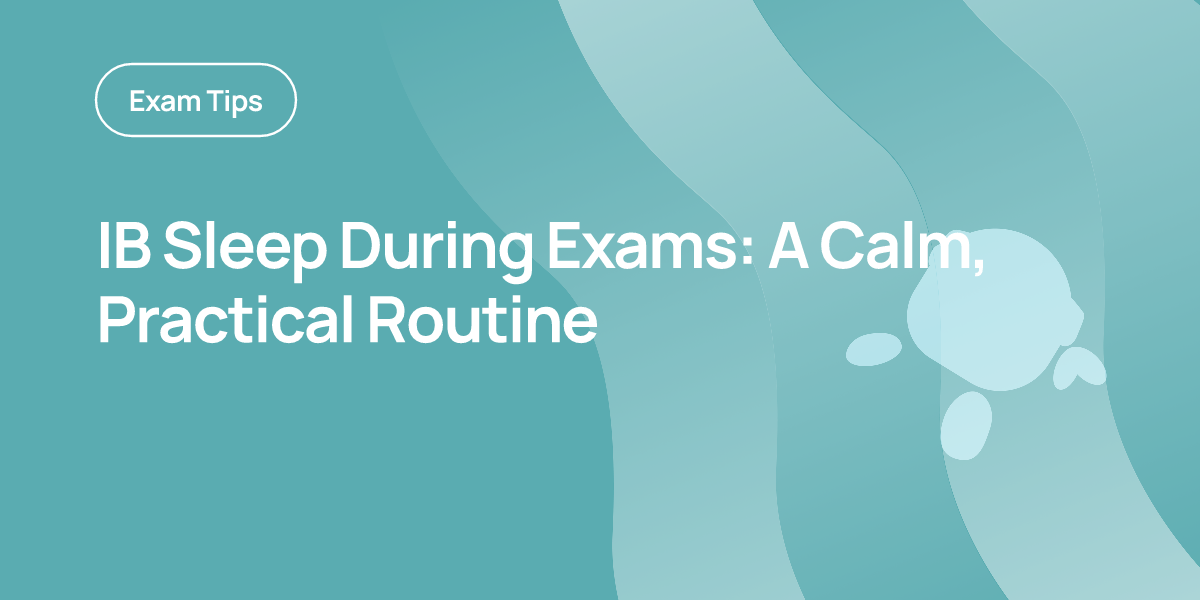

Sleep is the quiet advantage almost every IB student underestimates.
It’s not dramatic like a last-minute breakthrough in your notes. It doesn’t feel productive like one more timed section. But during the IB exam period, sleep is often the difference between “I knew this” and “why can’t I access my brain?”
When you protect sleep, you don’t just feel better. You recall faster, make fewer careless mistakes, and stay steady in long papers. In other words: sleep is part of your IB strategy.
The IB sleep checklist (save this)
If you want a simple baseline for IB exam weeks, aim to tick these off most nights:
-
7-9 hours (or as close as you can get)
-
Same wake-up time daily (weekends included)
-
Heavy IB revision ends 60-90 minutes before bed
-
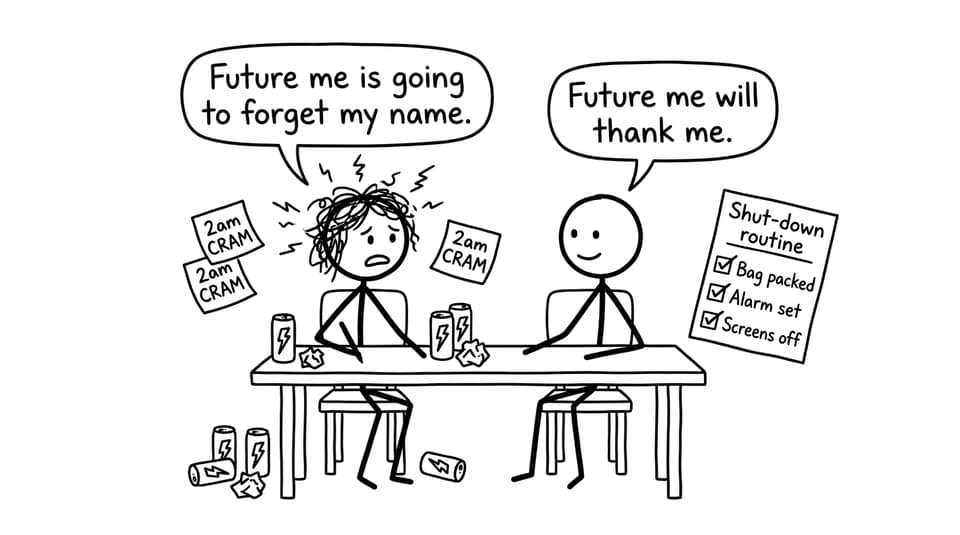
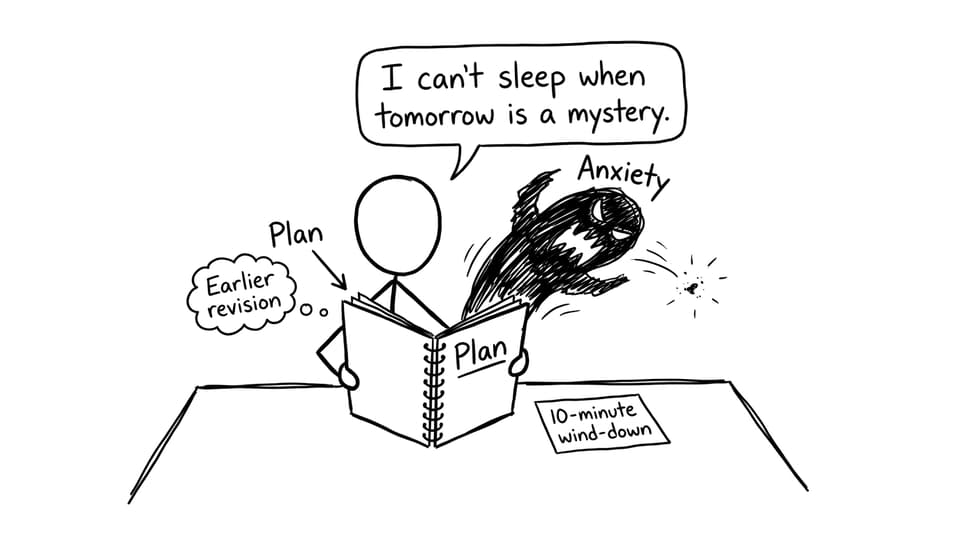
A 10-minute shutdown routine (bag packed, plan written)
-
Screens away or heavily dimmed before sleep
For a deeper routine you can copy, see Best Sleep Routine for IB Students.
Why IB sleep beats late-night revision
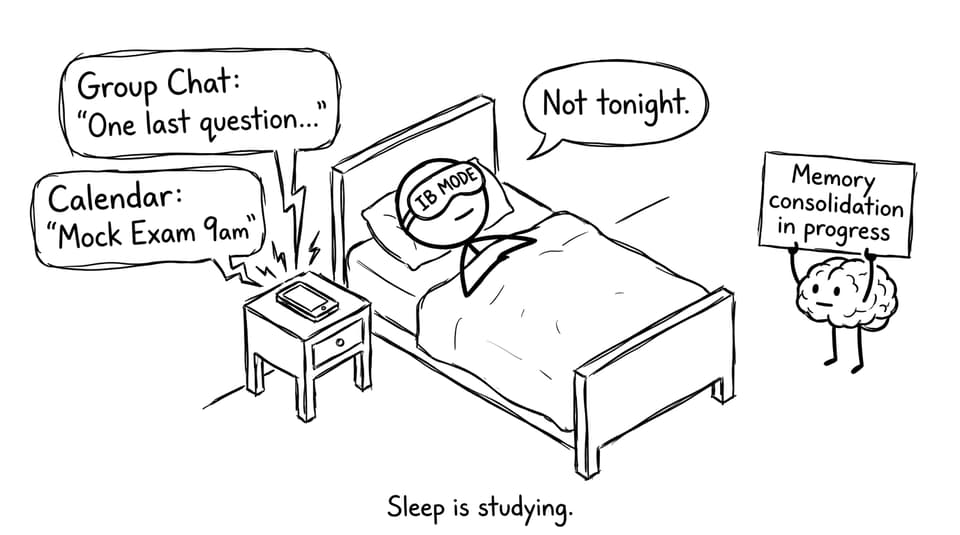
A pattern shows up every exam season: students trade sleep for “one more hour” of IB revision, then wonder why the next day feels slow and blurry.
Sleep is when the brain consolidates what you studied. Without it, you can read the same IB topic three times and still struggle to retrieve it under pressure. That’s why top students often look calm: they’re not smarter. They’re more consistent.
If you feel guilty stopping, remind yourself: you’re not quitting early. You’re choosing to perform.
The biggest IB sleep mistake: studying heavy too late
The common trap is doing the most demanding IB work at the worst possible time.
Late-night heavy revision tends to:
-
Increase anxiety (“I’m still behind”)
-
Keep your brain alert when it needs to power down
-
Push bedtime later, then wreck the next morning
A better rule is simple: move the hard work earlier, then keep evenings light and predictable.
How to build an IB-friendly evening routine
Think of your evening like a runway: the goal is a smooth landing.
Cut off heavy IB work on purpose
Pick a stop time and defend it. If you need help building a schedule that ends earlier, use How to Create a Balanced IB Study Schedule.
Do “small, targeted” revision, not big sessions
This is where RevisionDojo helps you stay efficient without spiraling:
-
Use Questionbank for 10-15 targeted questions (then stop)
-
Use quick clarifications from RevisionDojo App: IB Exam Prep (AI Chat for one misconception, not five new topics)
-
Use short Flashcards sessions to keep recall warm rather than trying to learn brand-new content
If your nights are chaotic, start with this: Why Rest Is Productive in IB Exam Season.
The night before an IB exam: what to do (and what to avoid)
The night before an IB exam is not the time to prove how much you can suffer. It’s time to arrive ready.
Do:
-
Light review only (definitions, key steps, command-term phrasing)
-
Pack your bag and set materials by the door
-
Write a simple morning plan (wake time, breakfast, leaving time)
Avoid:
-
Long timed papers late at night
-
Doom-scrolling “what might come up”
-
Starting new topics because panic suggested it
For a step-by-step flow, use IB Exam Night Checklist and IB Exam Night Routine.
How high-scoring IB students protect sleep
The best IB students treat sleep like a non-negotiable input to performance, the same way athletes treat recovery.
They usually:
-
Plan earlier so nights don’t become emergencies
-
Use timed practice (Mock Exams, Predicted Papers) in daytime blocks, not at midnight
-
Keep a predictable shutdown routine to reduce decision fatigue
If you want the bigger picture of how top scorers think, read What 45/45 IB Students Do Differently.
A final note: treat IB sleep like part of your grade
If you’re in the IB exam period right now, you don’t need a perfect routine. You need a repeatable one.
RevisionDojo is built for that kind of calm consistency: Study Notes to get clear fast, Flashcards to keep recall active, Questionbank to practise efficiently, AI Chat and Grading tools for feedback, plus Predicted Papers, Mock Exams, the Coursework Library, and Tutors when you need structure and support.
Build a plan that ends earlier, then protect your sleep window like it’s a revision block, because in the IB, it is.