
IB Exam Day Rules: the quiet gap between the timetable and real life
The first time you look at the IB exam timetable, it feels comforting. Clean lines. Neat start times. A sense that the next few weeks are simply a sequence of boxes you tick.
Then exam day arrives and suddenly the schedule is… not the schedule. You are told to show up earlier than the printed start time. You are supervised when you finish. You cannot just wander out for fresh air between papers. None of that is on the timetable, but all of it is real.
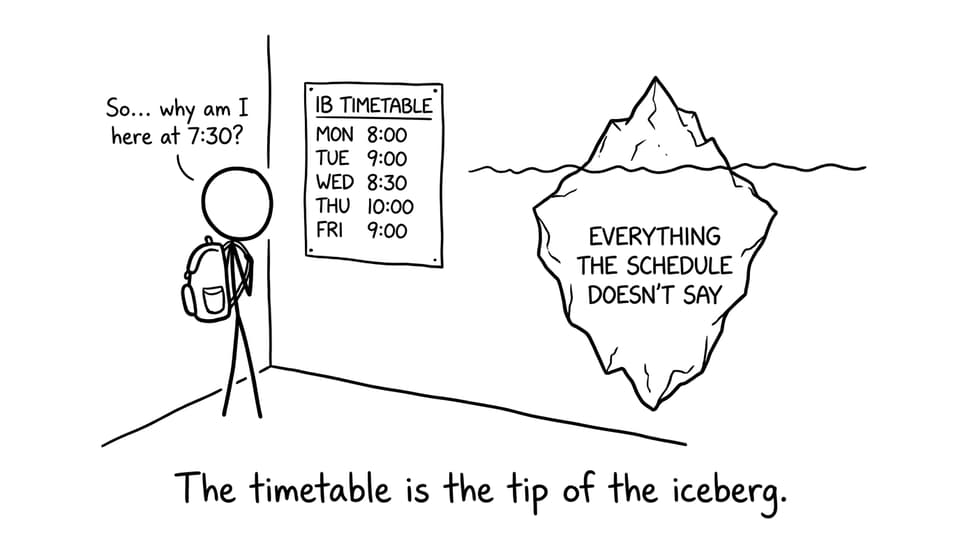
What the IB schedule actually tells you
Think of the official IB schedule as a timing framework. It reliably tells you:
-
Which IB papers you have (by subject and session)
-
The order you sit them in
-
Whether they are morning or afternoon
That’s why it pairs so well with planning tools. If you want to turn that framework into a real revision map, use How to Plan Final IB Revision Using the Official Timetable and build the rest of your strategy around it.
What the schedule doesn’t tell you (but exam day will)
The IB timetable is not a rulebook. It won’t explain:
-
Your school’s arrival time and check-in process
-
Supervised waiting periods before and after papers
-
Movement restrictions between sessions
-
Device rules and “waiting room” expectations
Schools have to run exams under strict procedures to protect exam security and fairness. If you want to see how that operational side works, read How Schools Use the IB Exam Timetable Internally.
Why you’re told to arrive early
The early arrival is not a motivational speech. It’s logistics.
Most schools need time to: confirm attendance, settle rooms, check permitted materials, and reduce last-minute disruptions that can affect everyone. In IB exams, one chaotic entry can become a fairness issue.
Practical move: treat arrival time as the real start time. Build your morning around it, not around what’s printed on the timetable.
Why you’re supervised before and after exams
Supervision exists to stop information from moving between students. That includes after you finish early, and even during long breaks when some candidates have already sat a paper and others have not.
It’s tempting to think, “But I’m done, so it shouldn’t matter.” In IB exams, it matters precisely because you’re done.
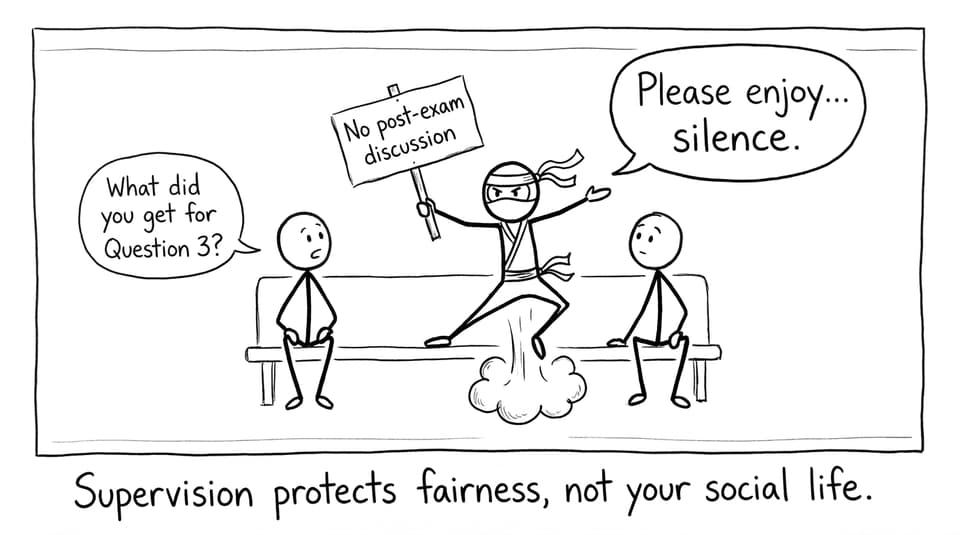
The biggest exam day mistake: fighting the system
The most expensive mistake isn’t forgetting a pen. It’s arguing about procedures on the day.
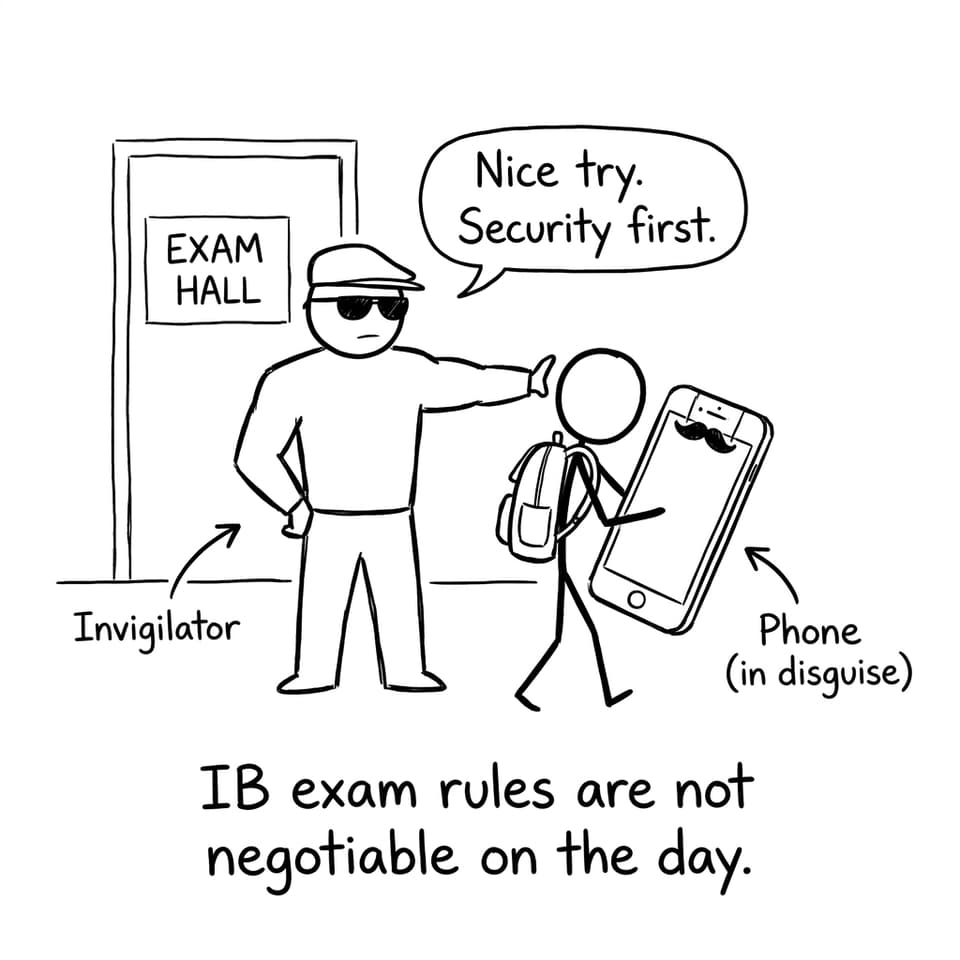
On exam day, IB rules are applied broadly, consistently, and fast. Invigilators usually cannot negotiate exceptions in the moment because the priority is validity for the whole cohort.
A short checklist you can control
Use this as your calm IB exam day checklist:
-
Sleep like it’s part of your grade
-
Pack allowed materials the night before
-
Expect supervision and movement limits
-
Avoid “hallway postmortems” after papers
-
Focus on execution: timing, command terms, and structure
For a fuller version, keep IB Exam Day Checklist: The Ultimate Guide open on your phone.
How RevisionDojo helps you rehearse exam day
The easiest way to reduce exam-day stress is to make exam conditions familiar before they matter.
RevisionDojo helps IB students do that with Study Notes (fast clarity), Flashcards (daily recall), the Questionbank (targeted exam-style practice), AI Chat (unblock confusion quickly), Grading tools (rubric-aligned feedback), Predicted Papers and Mock Exams (timed rehearsal), plus a Coursework Library and Tutors for support when you need a human layer.
Start with the RevisionDojo Study Planner, then add practice loops from IB Question Bank: How to Use It Effectively and stamina work via IB Predicted Papers.
FAQ
Why can’t I bring my phone into an IB exam room?
Even a switched-off phone creates a security risk in IB exams, because it is capable of storing or receiving information. Schools also need rules that are easy to enforce consistently, not rules that depend on individual trust. If one student is allowed to keep a device, it creates immediate fairness concerns for everyone else. It can also lead to delays and disruptions if policies become negotiable at the door. The best approach is simple: leave your phone somewhere safe and assume you will not see it again until you are officially dismissed. If you are unsure about storage procedures, ask your IB coordinator ahead of time.
Why am I supervised even after I finish early?
In IB exams, finishing early doesn’t mean the paper is “over” as a security object. If you leave and talk to someone who has not sat the same exam yet, even small comments can affect fairness. Supervision also reduces accidental rule-breaking, like checking notes, messaging friends, or searching content related to the exam. Schools apply the same structure to everyone so no one is advantaged by timing. It can feel strict, but it’s designed to keep conditions comparable across rooms, time zones, and sessions. The most useful mindset is to treat the supervised time as recovery: breathe, reset, and protect your energy for the next paper.
Does breaking IB exam-day rules affect my grade?
It can, even if your answers are excellent. IB exam integrity is tied to the validity of the session, so rule violations may trigger reports, investigations, and penalties. Some issues are minor and handled locally, while others are treated as serious malpractice. The problem is that you often don’t get to decide how serious something looks in the moment. That’s why it’s smarter to avoid gray areas entirely: don’t bring questionable items, don’t discuss content, and follow the instructions quickly. If something goes wrong (for example, you accidentally brought an unauthorised item), tell an invigilator immediately rather than hoping it won’t be noticed.
Conclusion: read the schedule, but prepare for the rules
The IB schedule tells you when to show up. It does not tell you what kind of day it will be.
When you expect early arrival, supervision, and strict procedures, you walk in calmer and waste less energy on surprises. Build that calm in advance with the RevisionDojo Study Planner and train like it’s real using Questionbank plus timed Mock Exams and Predicted Papers. Your future self, sitting down with steady hands, will notice the difference.
