
A parent can hear “IB English” and picture a familiar course: read several novels, discuss themes, write essays, sit an exam. Then terms such as guided textual analysis, global issue, and non-literary body of work begin appearing, and the subject suddenly feels harder to understand.
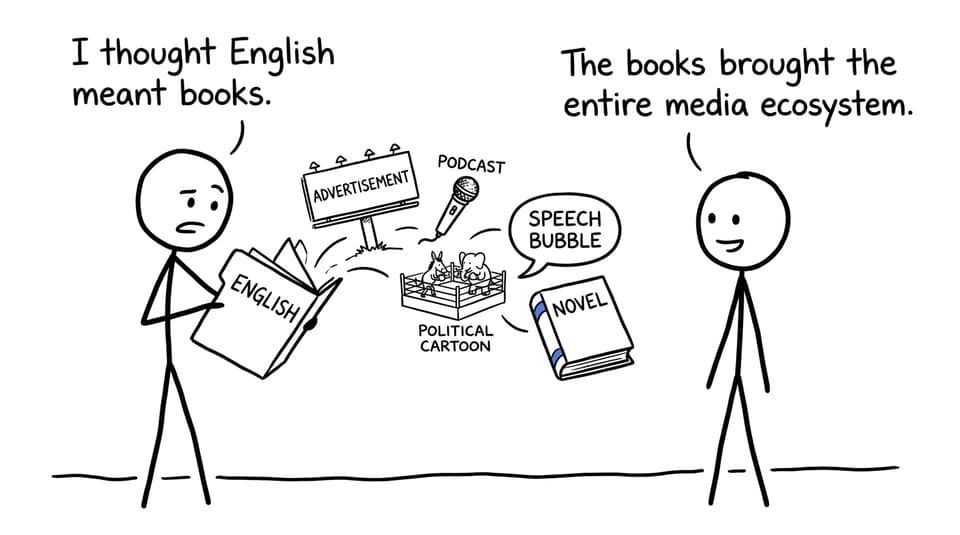
The reassuring answer is that IB English A: Language and Literature is not mysterious. It is a Group 1 course that teaches students to examine how language creates meaning across literature and everyday communication. Students study novels, poetry, drama, or other literary forms alongside advertisements, speeches, journalism, political cartoons, websites, photography, and similar non-literary texts.
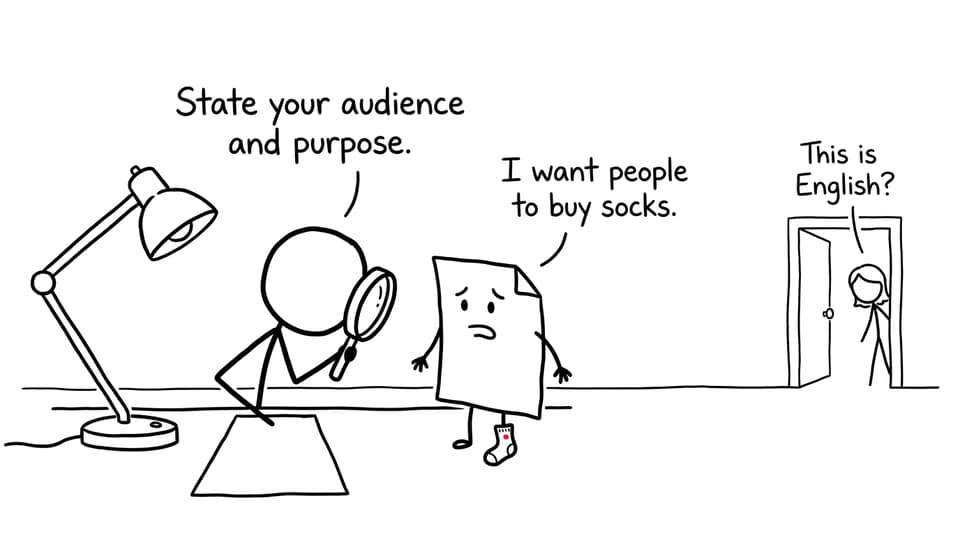
In practical terms, students repeatedly answer three questions: What is this text trying to do? How do its language, structure, and form achieve that purpose? Why might different audiences interpret it differently?
That is what IB English A: Language and Literature is actually like. It is less about remembering the “correct” meaning of a book and more about constructing a persuasive interpretation from evidence.
The course at a glance for parents
Here is the simplest overview:
- It is a Group 1 studies in language and literature subject.
- It is offered at Standard Level (SL) and Higher Level (HL).
- Students analyse both literary and non-literary texts.
- SL involves four literary works, while HL involves six, alongside substantial non-literary study.
- Assessment includes Paper 1, Paper 2, and an Individual Oral.
- HL students also complete a 1,200 to 1,500-word HL Essay.
- Strong performance depends on interpretation, evidence, organisation, analysis, and clear writing.
Parents and students can explore the complete IB English A: Language and Literature resource hub to see how these parts fit together.
What students actually study
The course is organised around three areas of exploration: readers, writers and texts; time and space; and intertextuality, or connections between texts. These are not simply three units to memorise. They are lenses through which students consider how meaning is created, shaped by context, and changed when one text is placed beside another.
A class might examine how a novelist presents authority, then consider how authority is constructed in a political speech or advertising campaign. Students are expected to move beyond identifying a metaphor or camera angle. They must explain what the choice does, how it guides an audience, and how it contributes to the text's wider purpose.
This is the central intellectual movement of the subject: observation becomes interpretation, and interpretation becomes an argument.
The literary content remains substantial. At SL, students study at least four literary works; at HL, they study at least six. Those works are selected to provide variety across literary forms, periods, and places. Students also encounter non-literary texts and bodies of work requiring an equivalent investment of teaching and learning time.
A “body of work” usually means a meaningful collection connected by authorship, creator, medium, or context rather than one isolated item. For example, a class may study several works from the same campaign, columnist, photographer, or cartoonist. The exact selections vary by school, which is why a student's teacher and course plan remain important.
What the classroom experience feels like
The course often feels more like an investigation than a traditional reading lesson. Students annotate details, test interpretations, discuss context, compare choices, and defend claims using evidence.
There is reading, but reading volume alone does not define the challenge. A student may spend considerable time examining a single headline, image, layout decision, narrative voice, or shift in tone. The point is not to find techniques for their own sake. The point is to explain how those choices influence meaning.
Discussion matters because several interpretations can be credible when they are carefully supported. This can initially unsettle students who are accustomed to searching for one approved answer. Over time, it becomes one of the course's strengths: students learn that confidence comes from reasoning, not certainty.
The best preparation is therefore regular and active. Short analytical paragraphs, timed plans, oral explanations, comparative charts, and precise annotations generally produce more value than repeatedly rereading a text. RevisionDojo's guide to IB study techniques that actually work explains how retrieval, application, feedback, and correction can form a sustainable routine.
How IB English A: Language and Literature is assessed
The assessment structure makes the course easier to understand. Each component measures a different version of the same core skill: creating a focused interpretation and supporting it through analysis.
| Component | Standard Level | Higher Level |
|---|---|---|
| Paper 1 | One unseen non-literary text, 1 hour 15 minutes, 35% | Two unseen non-literary texts, 2 hours 15 minutes, 35% |
| Paper 2 | Comparative essay on two studied literary works, 1 hour 45 minutes, 35% | Comparative essay on two studied literary works, 1 hour 45 minutes, 25% |
| Individual Oral | 15 minutes, 30% | 15 minutes, 20% |
| HL Essay | Not required | 1,200 to 1,500 words, 20% |
Paper 1: guided textual analysis
Paper 1 asks students to analyse unseen non-literary material. SL students write about one text, while HL students analyse two different texts. The task rewards accurate interpretation, close analysis of authorial choices, organisation, and effective language.
The unseen element is important. Students cannot revise by memorising one ideal essay. They need a repeatable method for identifying audience, purpose, tone, structure, visual choices, and patterns in language. Targeted Paper 1 practice questions help make that method more automatic.
Paper 2: the comparative essay
Paper 2 asks students to choose one general question and compare two literary works studied during the course. The strongest responses do not produce two separate book reports. They sustain a comparison while showing how each writer's choices create meaning.
Students therefore need flexible knowledge of their works: major tensions, character relationships, structural decisions, recurring images, significant moments, and contrasts in method. RevisionDojo's Paper 2 Language and Literature resources provide a useful preview of how comparative preparation can be organised.
The Individual Oral
The Individual Oral lasts 15 minutes: a prepared ten-minute response followed by five minutes of teacher questions. Students connect one literary work and one non-literary body of work through a common global issue, using selected extracts while also demonstrating knowledge of the wider works.
This component can worry families because oral assessment feels less predictable than a written test. Yet its structure is learnable. Students can review the IB English Individual Oral guide and examine Language A Individual Oral examples to understand what focused analysis sounds like.
The HL Essay
HL students complete an additional 1,200 to 1,500-word essay on one literary work or non-literary body of work studied. It rewards a focused line of inquiry, sustained analysis, appropriate evidence, and deliberate organisation.
Unlike an examination response, the HL Essay develops over time. That creates room for reflection, but also makes planning and revision essential. A broad topic usually produces description; a precise question gives the student something arguable to investigate.
HL versus SL: what changes in real life?
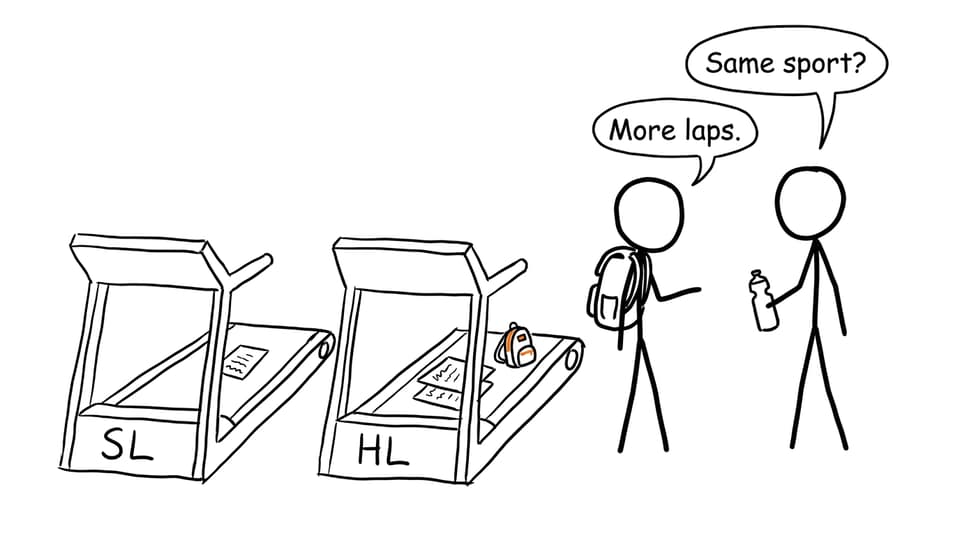
HL is not simply SL with harsher marking. It has greater breadth, more teaching time, more literary works, two Paper 1 analyses instead of one, and the additional HL Essay. The IB recommends 240 teaching hours for HL subjects and 150 for SL subjects.
The decision should reflect the student's overall diploma combination, interest in textual analysis, writing stamina, and likely university direction. A capable writer may still choose SL because three other HL subjects already create a demanding workload. Another student may prefer HL because English is a genuine strength and the assessment style suits them.
The useful question is not “Is my child good at English?” It is “Can my child regularly interpret unfamiliar material, build analytical arguments, and revise writing with care?” The comparison of IB English SL and HL can help families make that decision with clearer expectations.
What tends to challenge students
The first challenge is moving from description to analysis. “The writer uses repetition” identifies a feature. A stronger response explains what is repeated, how the pattern develops, what it emphasises, and how it shapes the audience's understanding.
The second is writing under time pressure. Insight is valuable only if the student can organise it into a clear response. Timed planning and partial essays should begin well before the final examination period.
The third is comparison. Students often know two works separately but struggle to make them speak to each other. Comparative revision should be organised around questions, methods, and tensions rather than two isolated folders of notes.
Finally, the course rewards consistency. Vocabulary cards, technique definitions, quotation recall, oral rehearsal, and short analytical drills are small tasks. Their effect compounds. Revision rarely fails because one heroic weekend was missing; it fails because the essential skills were left untouched for too long.
How parents can support without teaching the course
A parent does not need to identify symbolism or mark an essay. More useful support is structural:
- Ask the student to explain the purpose and audience of a text aloud.
- Encourage short, scheduled practice rather than last-minute rereading.
- Ask what feedback the teacher gave and what specific change comes next.
- Protect uninterrupted time for timed writing and oral rehearsal.
- Discuss whether HL fits the student's complete subject workload, not just their English grade.
One especially useful question is: “What choice did the creator make, and what effect does it have?” That question works for almost every literary and non-literary text in the course.
See what practical English support looks like
Before committing to a study platform, families should be able to see the support rather than rely on promises. RevisionDojo lets students preview syllabus-aligned English A study and revision notes, explore a targeted English A Language and Literature Questionbank, and review how English Language and Literature flashcards support active recall.
That creates a practical sequence: use Study Notes to clarify a concept, Flashcards to retrieve terminology and evidence, and practice questions to apply it. Students can then use AI Chat to resolve a specific uncertainty, Grading tools to review an essay, and Mock Exams or Predicted Papers to develop timing. The Coursework Library provides models of assessed work, while Tutors offer human guidance when a student needs sustained individual support.
RevisionDojo is built as the ultimate IB resource because these tools connect rather than compete. English improvement rarely comes from collecting more material. It comes from moving deliberately between understanding, recall, practice, feedback, and correction.
A reassuring final perspective
IB English A: Language and Literature is demanding, but its demands are visible. Students read widely, analyse carefully, compare ideas, speak about global issues, and learn to write arguments under pressure. They are not expected to produce mysterious flashes of brilliance. They are expected to notice choices, support interpretations, and communicate with control.
For parents, the most helpful next step is simple: look at the student's SL or HL assessment pathway, identify the component that feels least secure, and preview the matching RevisionDojo resources together. Once the course is divided into concrete skills, it becomes far less intimidating, and much easier to prepare for with purpose.