



If you’ve ever had a week where your IB subjects felt manageable, then someone mentioned “the core,” you know the feeling: your calendar suddenly looks like it’s holding its breath.
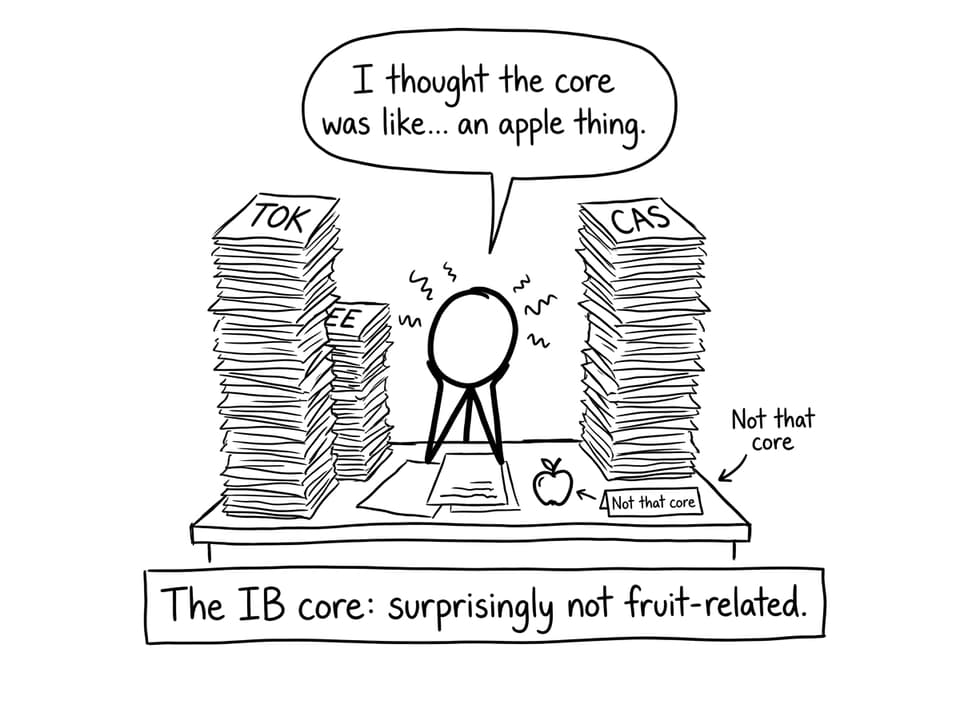
The IB core (TOK, EE, and CAS) isn’t extra work taped onto the side of the Diploma Programme. It’s the part that quietly trains you to think, research, and reflect like an adult learner. And it’s non-negotiable: if you don’t complete the core requirements, you don’t receive the IB Diploma, even with strong exam grades.
The IB core requirement (fast checklist)
Here’s the simplest way to understand the IB core requirements:
-
TOK (Theory of Knowledge): assessed, graded A to E
-
EE (Extended Essay): assessed, graded A to E, max 4,000 words
-
CAS (Creativity, Activity, Service): not graded, but assessed as complete/incomplete
Two high-stakes rules to remember in the IB:
-
TOK or EE = E can block the diploma.
-
CAS incomplete also blocks the diploma.
If you want core-specific guidance while you revise for exams, keep a few tabs open and rotate them as needed: the IB Theory of Knowledge hub, the IB Extended Essay Guides, and practical CAS support like Balancing CAS With Real Life (Without Burning Out).
TOK in IB: the class that teaches you how “knowing” works
TOK is where the IB asks you to step back from content and look at the machinery behind it. Not “what is the answer?” but “why do we trust this answer, and what would make us doubt it?”
That mindset matters when exams get hard: it turns vague opinions into structured evaluation, and it helps you write with control instead of panic.
TOK has two assessment components:
-
TOK Exhibition: three real-world objects linked to a TOK prompt, with a total commentary of up to 950 words
-
TOK Essay: 1,600 words on a prescribed title
When you’re stuck, use models and structure instead of willpower. RevisionDojo breaks this down clearly in Structuring for Success in IB TOK Essays and the Complete TOK Exhibition step-by-step guide. For title-specific help, the IB TOK May 2026 essay guide is a strong starting point.
EE in IB: a 4,000-word project that rewards calm consistency
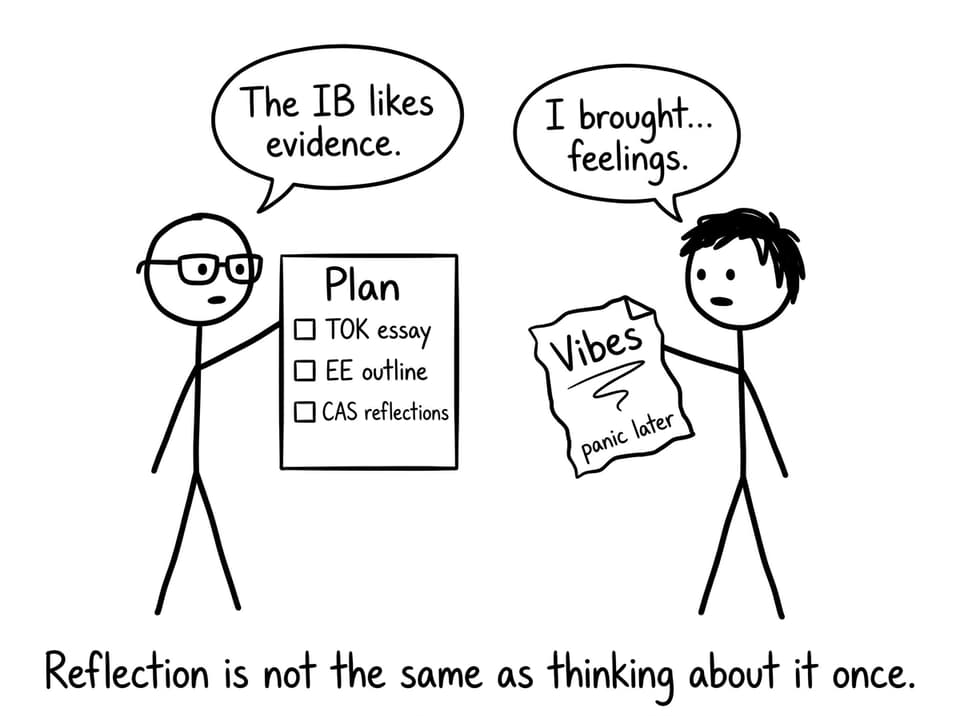
The Extended Essay is the IB version of learning how to build an argument over time. It’s independent research, guided by a supervisor, and it teaches you something exams rarely do: how to manage uncertainty without freezing.
A strong IB EE typically comes down to three practical habits:
-
A focused research question (small enough to answer well)
-
Evidence that’s organized early (so you’re not hunting later)
-
Drafting with revision cycles (because your first version is never your best)
If you need a clean overview, start with Mastering IB Extended Essays: How to Research, Write, and Revise. If your scope is exploding, IB Extended Essay Research Question: 8 Proven Tips will save you hours.
And if you’re staring at the clock, read IB Extended Essay in a Week? What You Need to Know and then build a realistic plan.
CAS in IB: not graded, but still decisive
CAS is the easiest part of the IB core to underestimate because it doesn’t add points. But CAS is still a diploma requirement, and “incomplete” is final.
CAS works best when it becomes boring in the right way: repeatable experiences, short reflections, and one sustained project you can actually finish.
Two helpful reads to stay on track:
If you’re trying to choose experiences that won’t wreck exam season, How to Balance CAS with Academics and Social Life is a practical playbook.
How the IB core affects your final score
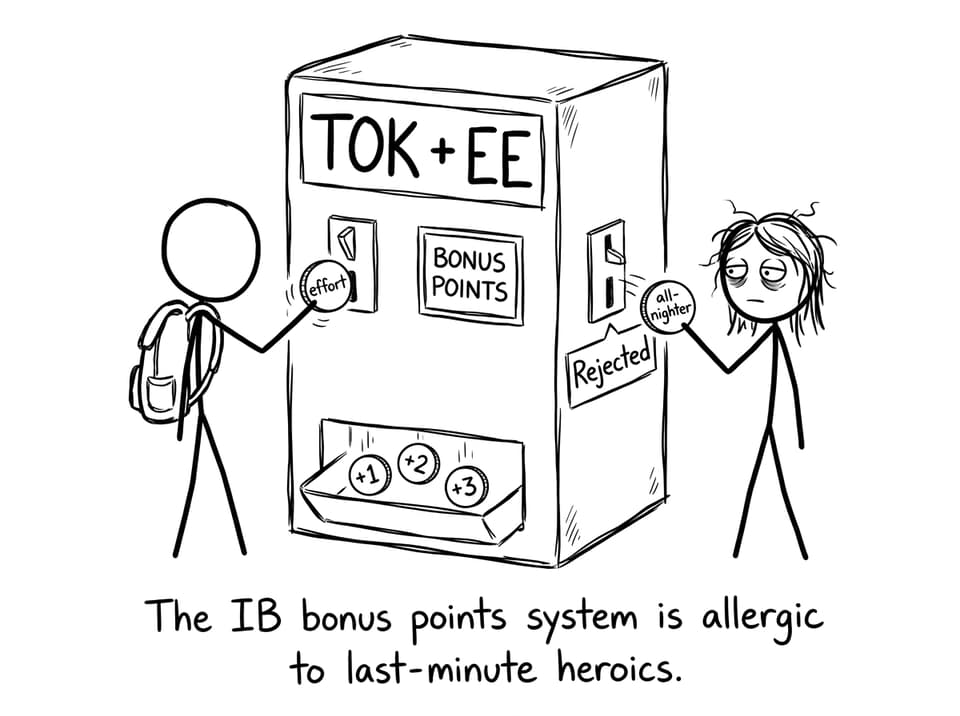
In the IB, your six subjects add up to 42 points. TOK and the EE combine for up to three bonus points, bringing the maximum total to 45.
CAS doesn’t add points, but it still decides eligibility.
A useful way to think about it: the IB core is both a safety system and a lever. It can protect your overall outcome (bonus points), but it can also invalidate it (missing requirements). That’s why planning matters.
A simple IB core plan you can start this week
If you’re preparing for IB exams, you don’t need a complicated system. You need fewer moving parts:
-
Two weekly core blocks: one for EE progress, one for CAS experiences + quick reflections
-
One TOK touchpoint: outline one claim/counterclaim or improve one real-life example
-
One exam loop that never stops: short daily practice using RevisionDojo’s Questionbank, Study Notes, and Flashcards
When you hit confusion, use AI Chat to unblock quickly, then go back to practice. When you need reality checks, use Grading tools for coursework-style feedback and timed pressure with Mock Exams and Predicted Papers. And if you need a human diagnosis, RevisionDojo Tutors are there for targeted strategy, not generic motivation.
For a calm, exam-focused workflow, bookmark RevisionDojo App: The Smarter Way to Prep for IB Exams and use it as your home base.
Closing: the IB core is a system, not a side quest
The IB core requirement can feel like three different worlds: philosophy (TOK), research (EE), and real life (CAS). But together they form one skill: proving your learning with evidence.
If you want the core to stop competing with exam prep, put everything in one place: RevisionDojo’s Study Notes, Flashcards, and Questionbank for daily exam progress, AI Chat for fast clarity, Grading tools for feedback, plus Mock Exams and Predicted Papers for timed practice. The Coursework Library and Tutors fill the gaps when you need examples or a strategy reset.
Make the IB core boring, consistent, and finished early. Your future self, the one sitting exams, will feel the difference.