


A disappointing essay can make a parent wonder whether something larger is wrong. Usually, one difficult assignment is simply one difficult assignment. The clearest signs a child needs help in MYP English Language and Literature are patterns: repeated confusion about feedback, persistent difficulty explaining ideas, avoidance lasting several weeks, or distress affecting everyday life.
The goal is not to diagnose your child from the kitchen table. It is to notice what keeps happening, ask calm questions, and work with the teacher before a manageable gap becomes a source of anxiety.
A quick parent checklist
Your child may benefit from extra help if several of these signs appear consistently:
- They retell what happened in a text but rarely explain how the writer creates meaning.
- Their ideas sound thoughtful aloud but become unclear or disorganized in writing.
- Teacher feedback repeats the same point across several assignments.
- They cannot explain the task instructions or assessment criteria in their own words.
- Starting English work regularly leads to avoidance, shutdown, or disproportionate frustration.
- Considerable effort produces little visible improvement over time.
- Reading, vocabulary, sentence control, or written fluency obstructs their ideas.
- Their confidence has fallen even when work is divided into smaller steps.
One sign alone is not proof that tutoring or intensive intervention is needed. Look for frequency, duration, and impact. A pattern across multiple tasks is more informative than one score.
Understand what MYP English assesses
MYP English Language and Literature is broader than spelling, grammar, or remembering a novel. Within the IB framework, students develop reading, writing, listening, speaking, viewing, and presenting skills. Schools assess work through four equally weighted criteria, each with a maximum achievement level of 8:
- Criterion A: Analysing
- Criterion B: Organizing
- Criterion C: Producing text
- Criterion D: Using language
Expectations develop between MYP years. Teachers use a best-fit judgment, so a criterion level should be read alongside its descriptor and written feedback. RevisionDojo's guide to MYP Language and Literature assessment criteria helps translate those labels into recognizable skills.
This distinction matters. A child with a low Criterion A result may understand the story but struggle to move from summary to analysis. Another student may offer perceptive interpretations but lose marks because Criterion B organization or Criterion D language control makes the ideas difficult to follow.
Signs the difficulty is more than a temporary dip
The same feedback keeps returning
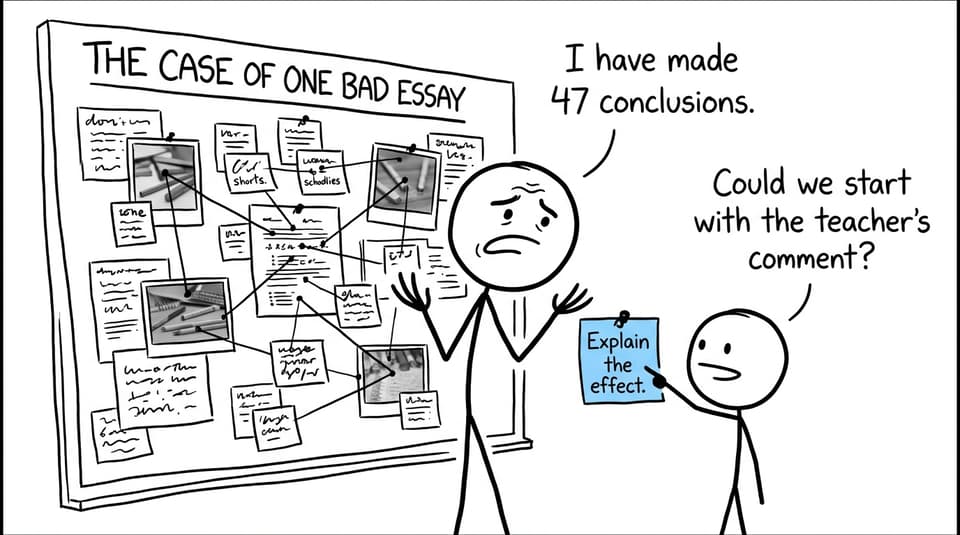
Comments such as “explain the effect,” “use more precise evidence,” or “organize the argument” are normal learning prompts. Concern becomes reasonable when the same comment appears repeatedly and your child does not know how to act on it.
Ask them to choose one comment and finish: “Next time, I will...” If they cannot identify a concrete action, the problem may be feedback literacy rather than effort. The guide to improving MYP English analysis shows how students can move from description to explaining choice, effect, and purpose.
Homework takes far longer than expected
Time alone is an imperfect measure. Ask where the time goes. Is your child rereading instructions, endlessly rewriting the introduction, searching for quotations, or staring at an empty page?
Each pattern suggests a different response. Confusing instructions require teacher clarification. A blank page may improve with a three-bullet plan. Weak evidence selection needs targeted practice rather than another hour at the desk. Locate the bottleneck instead of simply demanding more work.
Spoken understanding disappears on paper
Some students can discuss a character or advertisement insightfully but cannot shape those thoughts into a sustained response. That often points to planning, paragraph structure, or sentence-level control. It does not mean they have nothing to say.
Invite your child to explain one idea aloud. Then ask them to write only the main claim and one supporting detail. This bridge from speech to writing can reveal whether the difficulty lies in interpretation or expression.
Avoidance becomes emotional distress
Procrastination may reflect ordinary reluctance. Persistent headaches, tearfulness, sleep disruption, panic, or harsh self-criticism deserve greater attention. Academic support may help, but wellbeing comes first.
Speak with your child without beginning with the grade. Contact the teacher, adviser, school counsellor, or MYP coordinator as appropriate. Extra practice should never be the sole response to significant distress.
Supporting a child in MYP English Language and Literature
Begin with a ten-minute conversation, not a rescue operation. Ask which part feels hardest: understanding, planning, writing, or editing. Ask what the teacher recommended, which criterion is being assessed, and what small step could be completed in 15 minutes.
This keeps ownership with the student. The parent guide to supporting a child in the MYP and these tips for calmer MYP homework explain how to create structure without hovering.
For two weeks, note the task, time spent, recurring feedback, and emotional response. Do not turn this into surveillance. You are collecting enough evidence for a useful conversation with the teacher.
When and how to ask for extra help
Contact the teacher when a pattern lasts several weeks, feedback remains unclear, confidence declines, or home support produces conflict. Ask which criterion is weakest, whether the difficulty is unusual for the student's MYP year, what skill should be practised first, and what improvement should look like.
Extra help does not always mean weekly tutoring. It might involve a teacher conference, one practice paragraph twice a week, or targeted MYP English Language and Literature resources.
RevisionDojo provides a connected support loop. Study Notes clarify techniques, Flashcards reinforce terminology, and the Questionbank turns understanding into practice. AI Chat can explain concepts, while Grading tools support criteria-aligned feedback when used within school rules. Mock Exams and Predicted Papers, where available, provide structured rehearsal. The Coursework Library helps students recognize features of strong work without copying, while Tutors offer human guidance when difficulties persist.
The most useful routine is small: learn one skill, attempt one paragraph, review feedback, and revise one part. The best revision strategies for MYP Language and Literature make that cycle manageable.
Help should increase independence
Good support leaves a child more capable next time. If every assignment requires a parent beside them, the support may be carrying the work rather than strengthening the student.
Offer steadiness, not alarm. Watch for patterns, listen before solving, and involve the school early. With teacher guidance and RevisionDojo's complete MYP learning system, a vague worry can become a specific plan: one criterion, one skill, and one achievable next step.