
You can read a whole text, understand every event, and still walk away with a disappointing mark.
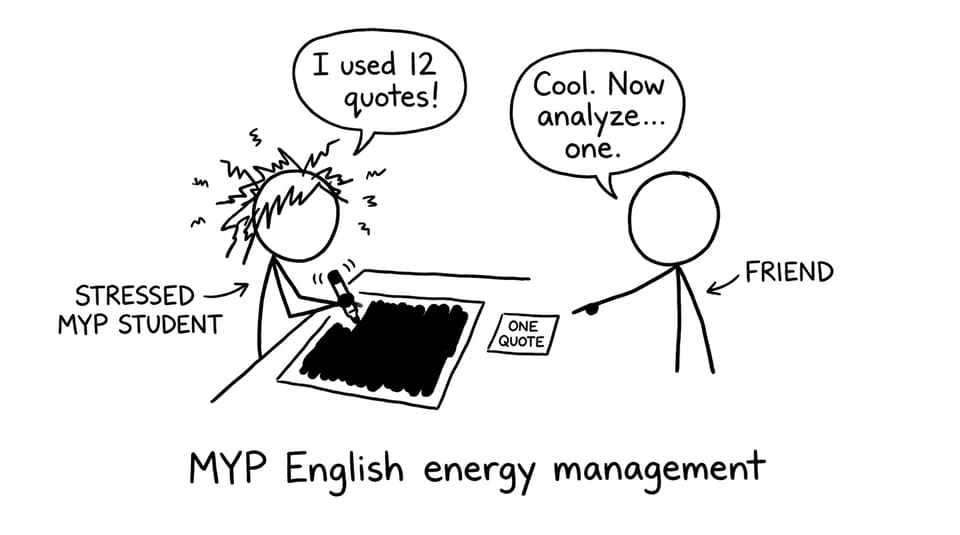
That’s the quiet frustration of MYP English: the gap between knowing what happened and showing why it matters. In exam conditions, many students default to plot retell because it feels safe. But MYP examiners reward something else: your ability to track an author’s choices and explain the effect.
This guide breaks analysis into small, repeatable moves you can practise in minutes a day. Think of it like training balance. You don’t “learn” it once. You build it through tiny corrections.
A quick MYP analysis checklist (use this before you submit)
When you write a paragraph in MYP, ask yourself:
-
Did I name a specific authorial choice (word, image, structure, tone, perspective)?
-
Did I include one precise quote or reference (not a whole chunk)?
-
Did I explain effect on the reader?
-
Did I explain purpose (why the writer would want that effect)?
-
Did I link back to the question or task?
If one of those is missing, the paragraph usually slides back into description.
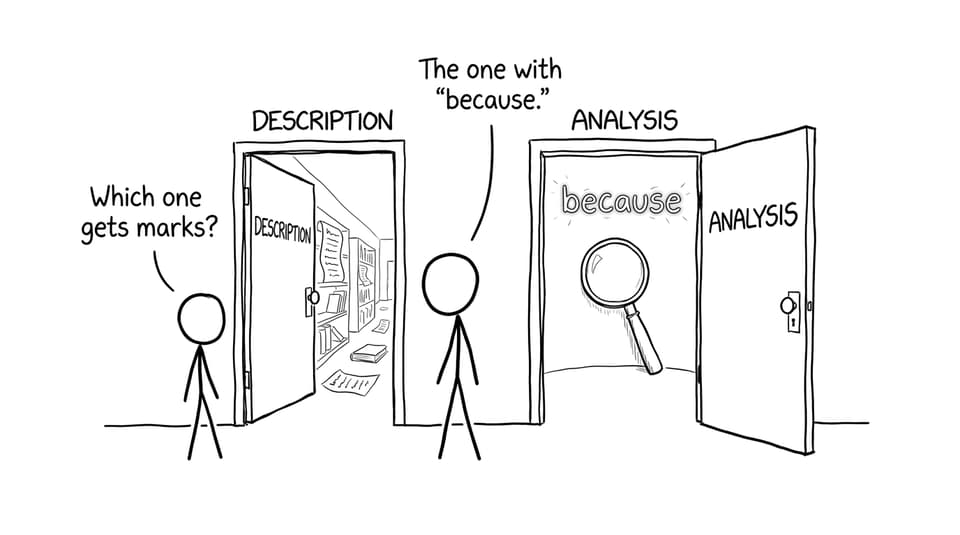
Description vs analysis in MYP English (the line that changes marks)
A simple way to remember the difference in MYP:
-
Description = what happens
-
Analysis = how and why it happens
Example:
-
Description: The writer uses short sentences.
-
Analysis: The writer uses short sentences to speed up pacing, trapping the reader in the character’s urgency and making the moment feel out of control.
That second version earns more because it explains method, effect, and intention.
Start with authorial choices (themes come later)
Many MYP students open with big theme claims: This text is about power. Or This shows identity. Those ideas can be true, but they’re often floating without evidence.
Instead, start smaller and build upward.
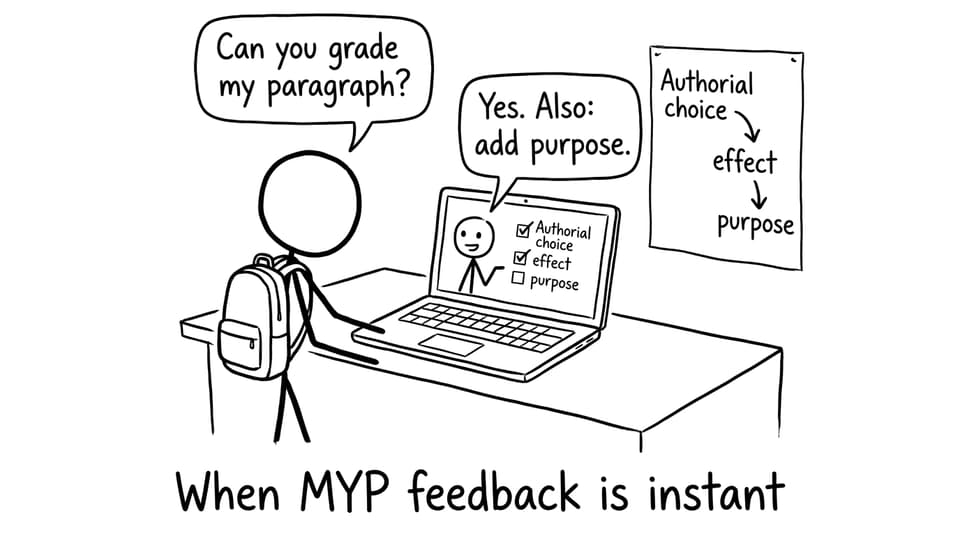
A reliable chain for MYP English analysis is:
choice -> effect -> purpose
If you want help spotting “choice areas” quickly, RevisionDojo’s MYP resources keep them organised by skill and technique, so you’re not guessing what to talk about in the exam: MYP English Lang & Lit Resources.
For targeted technique practice, these study notes are especially useful:
Each one gives you vocabulary and analytical frames that naturally push you beyond “the author uses…”
The “because” test: the fastest MYP analysis upgrade
If you only steal one habit for MYP English, make it this.
Any time you write a judgment, force yourself to complete the sentence with because.
-
Weak: This metaphor is effective.
-
Strong: This metaphor is effective because it links isolation to physical confinement, shaping the reader’s sympathy for the character’s fear.
“Because” works like a door lock. If you can’t finish the sentence, you probably haven’t analysed yet.
One idea per paragraph: depth beats breadth in MYP
In MYP exams, students often try to “cover everything.” The result is a long paragraph where nothing lands.
A better rule is:
-
One main idea
-
One or two short quotes
-
Lots of explanation
If you want a structure that keeps you disciplined, borrow the paragraph logic from higher-level writing and apply it to MYP responses: Writing Analytical Paragraphs: PEEL Method for IB English A. The method is simple enough for MYP, but strong enough to scale with you into DP.
Feedback loops: how to practise MYP analysis without writing full essays
Most students think improvement requires writing more. Often, it requires rewriting smarter.
Here’s a high-impact MYP routine:
-
Write one analytical paragraph.
-
Get feedback (teacher, peer, or AI).
-
Rewrite only the explanation sentences, not the quote.
-
Add one more sentence on purpose or audience.
RevisionDojo is built for that kind of loop. You can practise with Questionbank prompts, check your technique knowledge with Study Notes and Flashcards, and use AI Chat and Grading tools to see where your paragraph becomes descriptive. When you’re closer to assessment time, Mock Exams and Predicted Papers help you rehearse under time pressure, and the Tutors option is there when you want human guidance to sharpen your thinking.
A final shift that makes MYP analysis feel doable
When you’re stuck in MYP English, the problem is rarely intelligence. It’s usually the question you’re asking.
Stop asking: What does this show?
Start asking: What did the writer do here, how does it affect the reader, and why would they choose that?
If you want a structured place to practise that shift, use RevisionDojo’s MYP English area to combine technique notes, targeted questions, and fast feedback: MYP English Lang & Lit Resources. Your analysis won’t improve because you “know more.” It improves because you explain more, on purpose.