

Parents hear the word MYP and often picture a maze: criteria, projects, reflections, deadlines, and a grading language that doesn't feel like the one they grew up with.
Students feel it differently. The MYP can feel like being assessed on invisible things: thinking, process, transfer, organization, communication. You're not just asked to know content. You're asked to show how you got there.
Here's the quiet truth most families learn late: the best MYP support isn't more pressure, more reminders, or more control. It's structure, clarity, and a kind of steady companionship that helps a student practice the skills the programme rewards.
This guide is written for IB students preparing for exams, but it's also for the parents in the background who want to help without accidentally making things heavier.
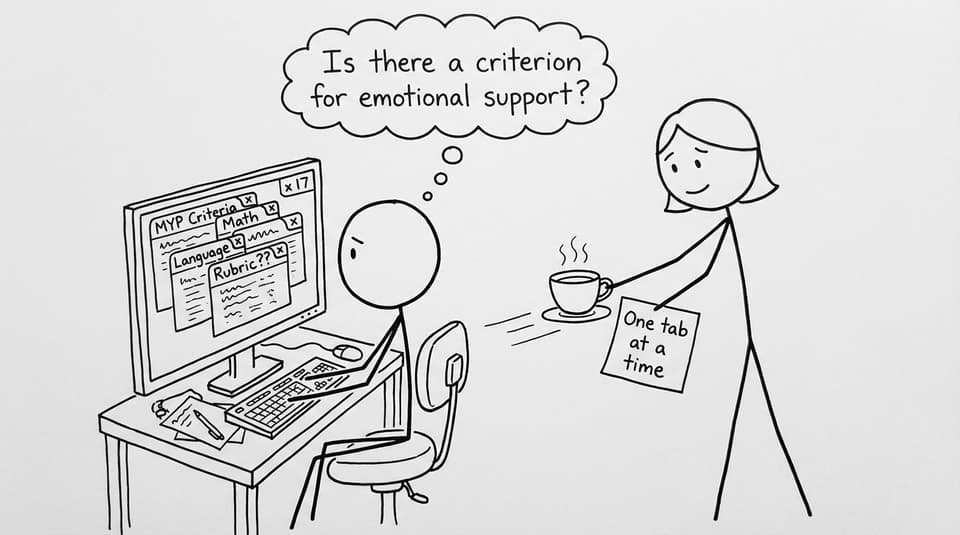
The MYP parent checklist (simple, not perfect)
If your family does only these things, your MYP life gets calmer fast:
- Learn how MYP criteria work (so feedback becomes useful)
- Protect a consistent weekly routine (sleep, study blocks, catch-up time)
- Ask coaching questions instead of fixing the work
- Use exam-style practice early (not only right before assessments)
- Make reflection and organization normal, not dramatic
- Use one trusted system for revision materials and progress tracking
A student doesn't need a parent who knows every subject. They need a parent who can help them build repeatable habits that make MYP demands feel manageable.
Why the MYP feels harder than it "should"
The MYP doesn't just test content knowledge. It tests whether you can use knowledge under constraints: time, unfamiliar contexts, command terms, and criteria-based marking.
That's why a student can understand a topic and still score lower than expected. In the MYP, the difference between "I get it" and "I can prove it in the rubric" is the whole game.
Parents can help most by understanding the basics of the programme's structure. Even a short skim of a clear overview makes conversations at home more accurate and less emotional.
If your family needs a quick reference point, start with Middle Years Program (MYP) | RevisionDojo and the explainer-style IB MYP: Frequently Asked Questions. You don't need to read everything. Just enough to speak the same language.
What "good support" looks like in the MYP (and what it doesn't)
Support that works: the coach mindset
In the MYP, parents are most effective as coaches. Coaches don't run onto the field and take the shot. They:
- help the player see patterns
- create training routines
- review performance calmly
- make adjustments for the next game
That mindset maps perfectly to MYP revision.
Support that backfires: the rescuer mindset
Rescuing looks loving in the moment. But in the MYP, it's expensive.
- Parents rewrite an introduction "just to help"
- Parents plan the project timeline "so it's not stressful"
- Parents correct every sentence "so it's clearer"
The student gets a short-term boost, but loses the long-term skill: owning process, meeting criteria, and reflecting honestly. And those are the exact skills the MYP rewards.
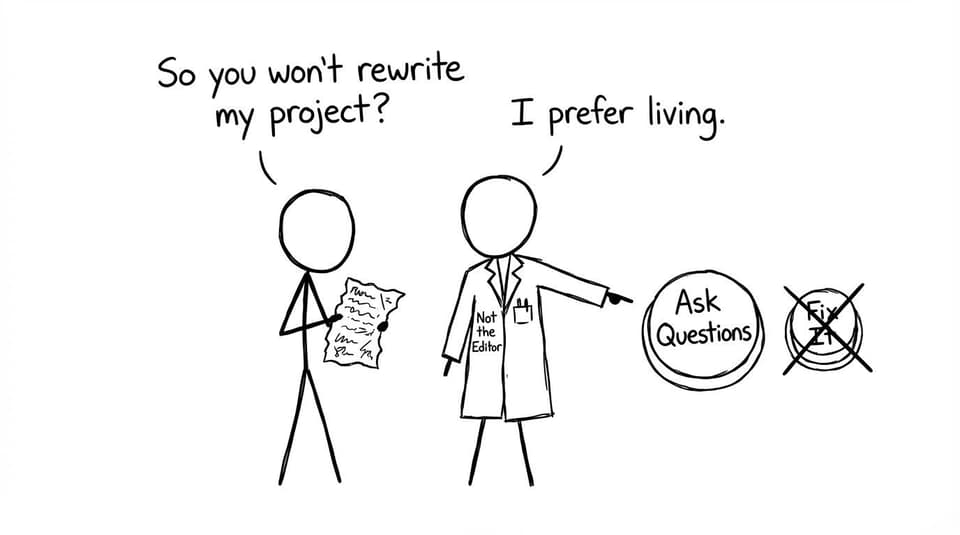
Build the home routine that the MYP quietly rewards
The MYP is like compound interest: small actions repeated weekly matter more than occasional heroic effort.
Here are routines parents can support without needing to understand every subject.
Weekly planning, not daily nagging
Ask for one planning conversation per week:
- "What are the big deadlines this week?"
- "Which task is most likely to get stuck?"
- "What does 'done' look like according to the rubric?"
- "When will you do exam practice?"
Then step back.
Students preparing for exams often confuse being busy with being ready. Weekly planning helps separate the two.
If your family wants a structured revision approach, MYP Revision Guide: Study Tips for Success is a solid starting point.
A two-zone study environment
Parents can help by making two zones feel normal:
- Deep work zone (45–60 min): no phone, one task, timer
- Light work zone (10–20 min): flashcards, quick review, organization
This matters because MYP success comes from a balance: long thinking tasks and short recall cycles.
RevisionDojo's Study Notes and Flashcards support the two-zone system naturally: notes for understanding, flashcards for daily retention.
Help your child translate "feedback" into "action"
In the MYP, feedback is everywhere, but students often don't know what to do with it. Parents can make feedback practical with a simple method.
The 3-line feedback loop
After any marked task, ask your child to write:
- One rubric phrase that explains the score (in teacher language)
- One skill to practice (in student language)
- One next action (a concrete step in the next 72 hours)
That's it.
This turns feedback into training. It also reduces the emotional spiral that happens when students experience grades as identity instead of information.
For families who want to understand how reporting works, Evaluation and Reporting in the MYP: Best Practices helps decode the system.
Exam readiness in the MYP: parents can support the boring parts
The hardest part of exam preparation is rarely the content. It's consistency.
Parents can help most by supporting the boring, repeatable mechanics of exam readiness.
Make exam-style practice normal (early)
Students often wait until they feel "ready" to practice. In the MYP, practice is what creates readiness.
A parent can ask one powerful weekly question:
- "Which exam-style questions did you do this week?"
RevisionDojo's Questionbank is built for this, because it lets you practice by topic and then repeat weak areas without losing track.
If your child is doing on-screen assessments, the practical guide Tips for Success in MYP eAssessments is worth a careful read.
Practice reflection like a skill (because it is)
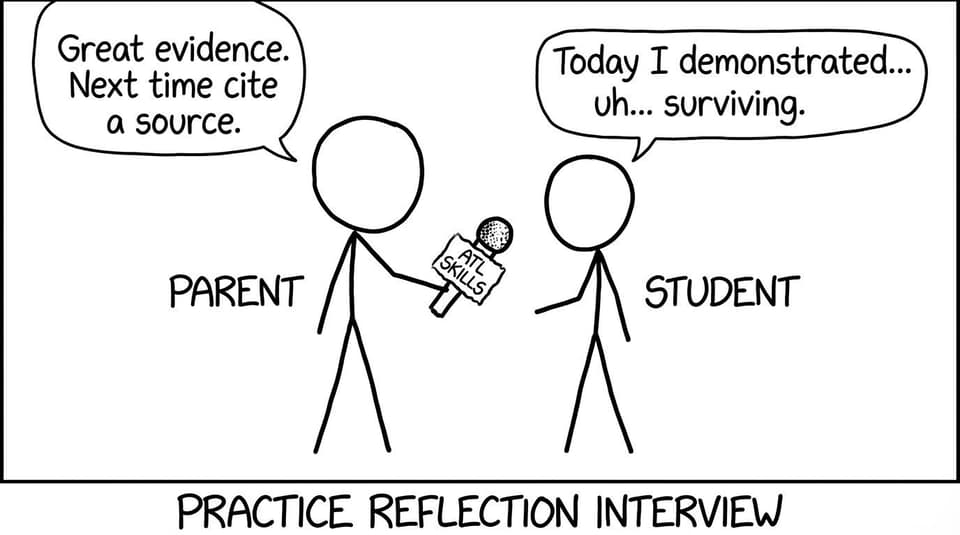
Reflection in the MYP isn't fluff. It's evidence.
Parents can support reflection by asking about process, not personality:
- "What strategy worked?"
- "What didn't work, specifically?"
- "What will you try next time?"
- "What evidence can you show?"
That last question matters. Evidence is the currency of the MYP.
The line between helping and taking over (a practical boundary)
Parents can safely help with:
- time planning and prioritization
- asking clarifying questions about criteria
- helping a student rehearse explanations out loud
- checking that sources are cited and organized
- creating calm accountability (not surveillance)
Parents should avoid:
- rewriting or heavily editing content
- choosing the project topic or structure
- doing research "to save time"
- emailing teachers to negotiate grades (unless there's a serious issue)
A simple boundary phrase that works:
- "I can help you think, but I can't do it for you."
That sentence builds independence, which is one of the most reliable predictors of MYP success and a smoother transition into DP.
Use RevisionDojo as the "third voice" at home
The best study conversations have three voices:
- the student's experience
- the parent's support
- a neutral system that shows what to do next
RevisionDojo plays that third role well.
- Study Notes help students rebuild understanding quickly.
- Flashcards create daily momentum with spaced repetition.
- Questionbank makes exam-style practice measurable.
- Jojo AI Chat gives instant explanations when a student is stuck at 10 p.m.
- Grading tools can give rubric-aligned feedback loops for writing and coursework.
- Predicted Papers and Mock Exams create realistic rehearsal without guesswork.
- The Coursework Library shows what strong work looks like, which reduces uncertainty.
- Tutors add targeted human support when a subject needs deeper intervention.
If your parent wants to understand what the platform actually includes, point them to RevisionDojo and the overview of Jojo AI.
A calm strategy for MYP stress (for students and parents)
Stress in the MYP often comes from three hidden causes:
- unclear expectations (criteria feel vague)
- lack of visible progress (effort doesn't feel like improvement)
- too many simultaneous deadlines
Parents can reduce all three by making expectations explicit, progress trackable, and time visible.
A practical tool: a shared weekly "load map" with three columns:
- Due this week
- In progress
- Blocked
When a task is "blocked," parents can help by asking what's unclear: the rubric, the content, or the time.
The goal isn't to remove difficulty. It's to reduce confusion, because confusion is the kind of stress that drains students fastest.
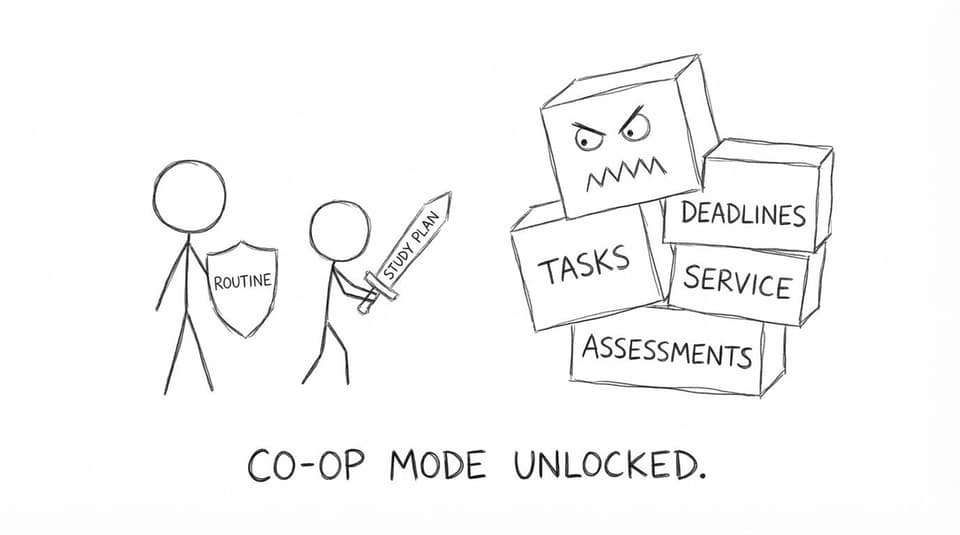
Closing: the best MYP support is quiet and consistent
The MYP is a programme that rewards what you practice repeatedly: organization, reflection, communication, and application under pressure.
Parents don't need to master every subject to help. They need to protect the conditions where practice is possible: a steady routine, calm accountability, and tools that turn confusion into next steps.
If you're a student preparing for exams, send this to your parent and pick two habits to try this week. If you're a parent, choose one routine you can support without taking over.
And if you want a system that reduces arguments and increases clarity, build your MYP routine around RevisionDojo: Study Notes for understanding, Flashcards for daily memory, Questionbank for exam practice, Jojo AI Chat for quick help, Grading tools for feedback loops, and Mock Exams and Predicted Papers when you're ready to rehearse. The MYP becomes much easier to carry when you're not carrying it alone.