
The moment you realise your revision isn’t working (and why that’s useful)
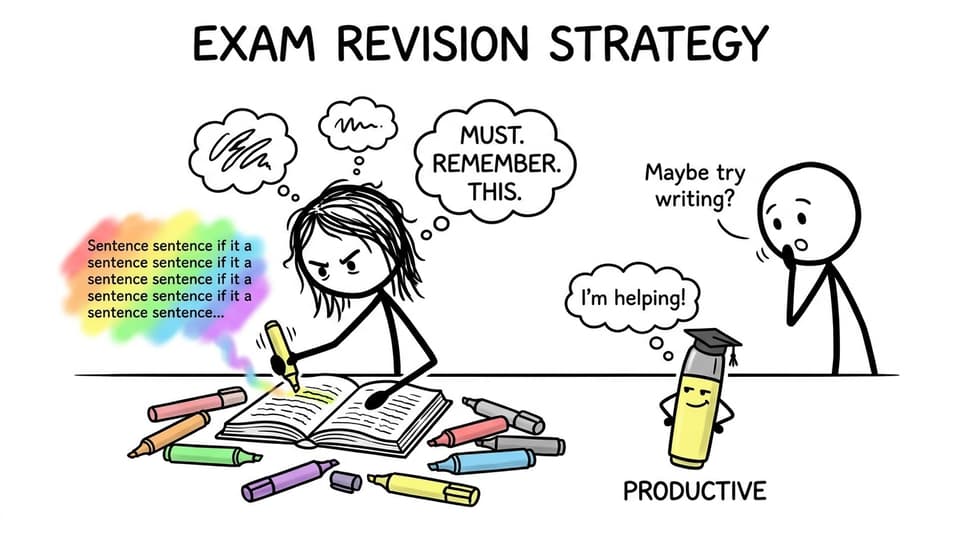
The night before a Language and Literature assessment, lots of MYP students do the same ritual: reread class notes, highlight a few “good” quotes, and promise themselves they’ll write a better essay tomorrow.
Then the task arrives. It’s an unseen extract. Or a new text type. Or a prompt that demands audience and purpose, not memory. And suddenly the revision you did feels like packing for the wrong trip.
That’s the quiet truth of MYP Language and Literature: progress doesn’t come from knowing more about the text. It comes from doing the thing the course is actually scoring: analysis, structure, and control.
A quick checklist: what effective MYP revision looks like
Use this as your north star for MYP Language and Literature revision:
-
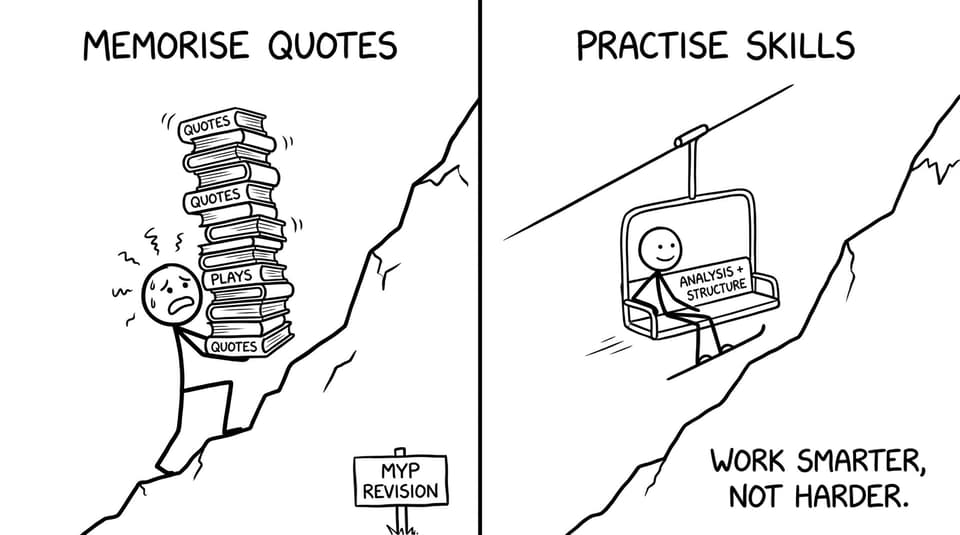
Practise skills more than you reread texts
-
Train short responses before long ones
-
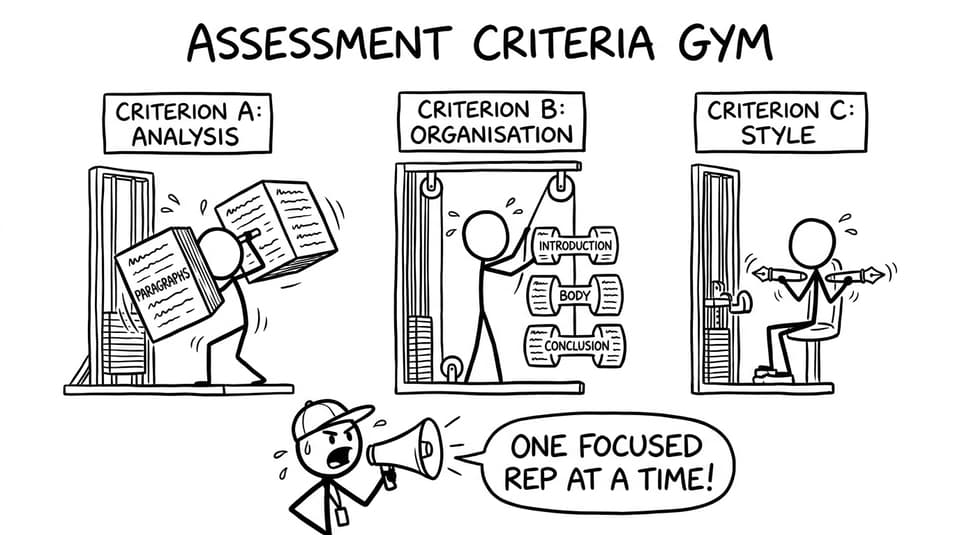
Revise by assessment criteria (one focus at a time)
-
Use unseen texts regularly to avoid “familiarity confidence”
-
Turn feedback into one specific rewrite, not a full re-do
-
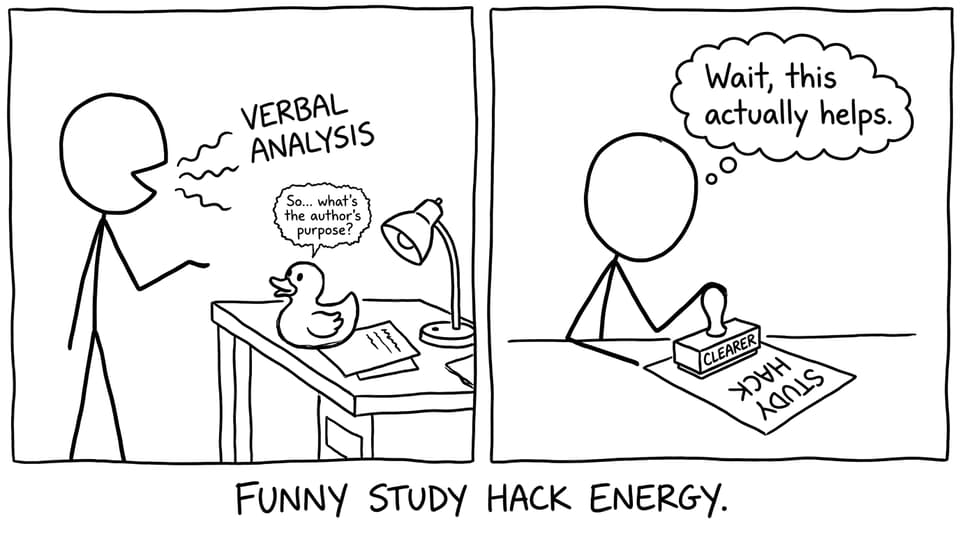
Speak your analysis out loud to catch weak reasoning
If you want a structured place to run that loop, start at the MYP hub and keep your practice in one system.
Why MYP Language and Literature rewards skills, not memory
In MYP, texts are the material. Skills are the target.
That changes everything. When markers read your response, they’re not thinking, “Did this student remember the quote?” They’re thinking, “Did this student explain how authorial choices create meaning, and did they build a clear, controlled response for the right audience and purpose?”
A helpful way to revise is to name the skills you’re actually training:
-
Analysing authorial choices (language, structure, tone, visuals)
-
Organising ideas into a logical argument
-
Producing text that fits purpose, audience, and text type
-
Using language clearly and accurately
RevisionDojo’s Study Notes can help you rebuild those foundations quickly, especially when you’re rusty on a specific technique or framework: Study Notes.
Practise short analytical responses (micro, then macro)
Long essays feel serious, but they can hide bad habits. In MYP Language and Literature, your biggest marks often live inside a single paragraph: the moment you move from “the author uses imagery” to “this imagery positions the audience to feel X, which supports the purpose Y.”
Try a 12-minute micro-drill:
-
2 minutes: pick one authorial choice (diction, structure, juxtaposition, symbolism)
-
3 minutes: choose one precise piece of evidence
-
7 minutes: write one paragraph that explains effect and meaning
Repeat that three times a week and you’ll build analytical fluency faster than writing one exhausting essay you never review.
Need technique refreshers? Use targeted notes like Evidence Selection (MYP) to tighten the evidence-to-explanation ratio.
Revise by criterion: one lever at a time
Most MYP students revise “everything” at once, which usually means nothing improves.
Instead, isolate a single criterion focus for a session:
When you train analysis
Only score yourself on how well you explain authorial choices. Use the “what -> why -> so what” chain. If you struggle with viewpoint, practise with Bias (MYP) Notes.
When you train organisation
Plan before you write. Build a repeatable paragraph structure (PEEL or similar) and make your topic sentences do real work.
When you train language control
Aim for clarity under pressure: precise verbs, consistent tense, and controlled sentence length. The goal is to sound like you know what you mean.
RevisionDojo helps here because you can practise in the Questionbank, then use AI Chat to interrogate your reasoning, and use Grading tools to get rubric-aligned feedback that actually points to the skill you need next: Questionbank.
Use unseen texts to build real exam confidence
Familiar texts can make your brain feel safe. But MYP assessments often demand transfer: new extracts, new contexts, new tasks.
So make “unseen” your weekly habit:
-
1 unseen extract per week (literary or non-literary)
-
1 timed plan (5 minutes) and a short response (15-20 minutes)
-
1 improvement round (10 minutes) where you upgrade only the weakest part
If you’re working with multimodal texts, revise the right skills using Visual Analysis (MYP) Notes.
Turn feedback into one rewrite that changes your habits
Feedback only matters if it changes what you do next time.
A high-leverage MYP routine:
-
Pick one recurring comment (e.g., “too descriptive,” “unclear thesis,” “weak links to purpose”)
-
Rewrite one paragraph only
-
Add a one-sentence rule to your error log: “Next time, I will…”
This is where RevisionDojo’s Mock Exams (for pressure practice), Flashcards (for high-frequency terminology), and Coursework Library (to see what strong work looks like) fit into the same loop: practise, get feedback, adjust, repeat.
For a broader schedule you can adapt, use this guide: MYP eAssessments: 30-Day Study Plan That Works.
Talk your analysis out loud (the fastest way to catch weak thinking)
Writing can hide confusion because sentences keep moving even when ideas don’t.
Speaking forces clarity. Take a paragraph you wrote and explain it to a pretend listener:
-
What is the author doing?
-
Why are they doing it?
-
What effect does it have on the audience?
-
How does it connect to the purpose and overall meaning?
If you can’t say it simply, you probably can’t write it clearly yet.
A simple weekly plan (that actually moves your MYP mark)
Try this five-part MYP routine:
-
Two micro-analysis paragraphs (12 minutes each)
-
One organisation session (plan + topic sentences)
-
One unseen text timed response
-
One feedback-based paragraph rewrite
Keep it small enough to repeat. Keep it focused enough to measure.
When you’re ready to make that loop easier, RevisionDojo brings everything together: Questionbank for practice, Study Notes for clarity, AI Chat for coaching, Grading tools for criteria-aligned feedback, plus Mock Exams, Predicted Papers, the Coursework Library, and Tutors when you want expert eyes on your writing.
If your revision doesn’t change how you answer the next question, it isn’t revision. In MYP Language and Literature, the win is learning to think clearly on demand, and practising that until it feels normal.