
The hardest part of MYP Individuals and Societies is rarely remembering one more definition. It is knowing what to do with what you remember: analyse a source, justify a research question, connect evidence to an argument, or explain why two perspectives differ.
So, is RevisionDojo good for MYP Individuals and Societies? Yes, particularly for structured topic review, active recall, question practice, and criteria-focused exam preparation. Its main strength is that notes, flashcards, questions, and feedback can form one connected revision loop. Its limitation is equally important: MYP schools can organize subject content differently, so students should match the platform's resources against their own unit plans and teacher guidance.
If you searched for RevisionDojo MYP Individuals and Societies, the practical answer is not simply that the platform contains resources. It is that those resources are most valuable when you use them to move from knowing content to applying it under assessment conditions.
RevisionDojo MYP Individuals and Societies at a glance
The dedicated MYP Individuals and Societies resource hub brings together topic-based learning and practice materials. The current resource page includes a Questionbank, exam builder, Study Notes, lessons, Flashcards, cheatsheets, and key definitions.
A useful evaluation checklist looks like this:
- Topic coverage: Does it overlap with the history, geography, economics, sociology, and global issues taught by your school?
- Criteria alignment: Does your revision develop Criteria A, B, C, and D rather than factual recall alone?
- Active practice: Can you answer questions and use feedback instead of only rereading notes?
- Year-level fit: Is the complexity appropriate for your current MYP year?
- Exam readiness: Can you practise source analysis, argument construction, communication, and timed responses?
RevisionDojo performs strongly across these areas, but no external platform should replace your school's unit outline. The MYP is a framework, not one globally fixed sequence of identical topics.
What MYP Individuals and Societies actually assesses
The IB describes Individuals and Societies as a broad subject group that may draw from disciplines including history, geography, economics, sociology, political science, and related social sciences. Students collect and analyse information, investigate societies, interpret sources, and examine relationships between people, institutions, and environments.
Assessment is organized around four equally weighted criteria, each with a maximum achievement level of 8:
| Criterion | What students need to demonstrate |
|---|---|
| A: Knowing and understanding | Accurate terminology plus factual and conceptual understanding |
| B: Investigating | Focused questions, research planning, appropriate methods, and evaluation |
| C: Communicating | Clear organization, suitable formats, audience awareness, and documentation of sources |
| D: Thinking critically | Analysis, synthesis, source evaluation, supported arguments, and perspectives |
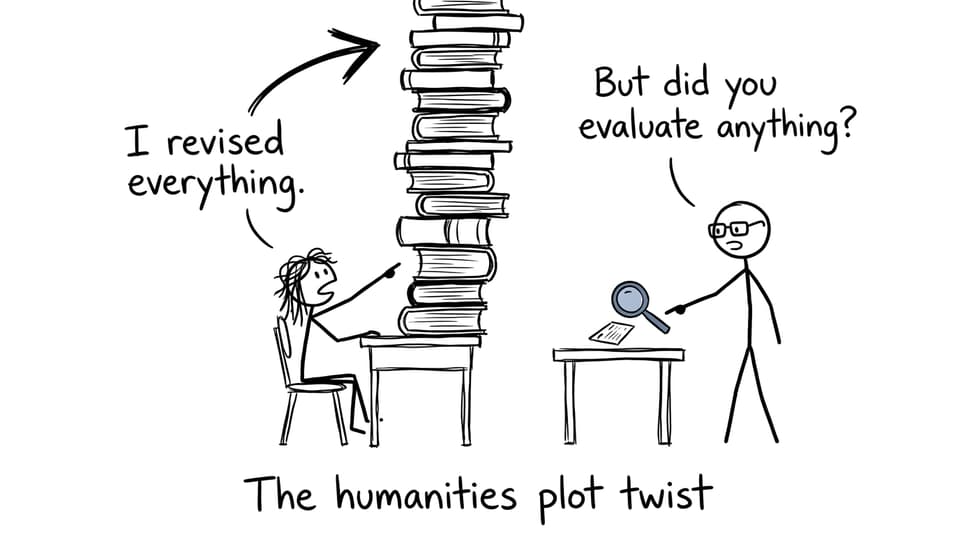
RevisionDojo's guide to the MYP I&S criteria is valuable because it translates these broad labels into visible features of stronger responses. That matters. A student can understand urbanization yet still lose marks by presenting evidence without analysis or by ignoring the requested format.
How well does RevisionDojo cover I&S topics?
The platform's subject hub spans several major areas commonly encountered across MYP Individuals and Societies. These include social groups and identity, empires, environmental change, population and urban systems, economic decision-making, global trade, development, resources, sustainability, and changing worldviews.
This is broad, useful coverage. However, topic titles should not be mistaken for a compulsory year-by-year IB syllabus. Schools design courses within the MYP framework and may select different disciplinary or interdisciplinary contexts.
Social organization, identity, and conflict
Students can review social groups, identity formation, social norms, institutions, and group conflict. These topics support questions about how communities influence individuals and how political, economic, military, or ideological pressures create tension.
The identity formation Study Notes demonstrate the platform's concept-led approach. Rather than treating identity as a definition to memorize, the material connects it with culture, institutions, roles, norms, agency, and social structure.
Empires, power, and historical change
Historical coverage includes the origins, structures, governance, economies, expansion, decline, and collapse of empires. These areas can help students compare systems of power and examine causation, continuity, consequence, and perspective.
The value here depends on application. Knowing several causes of imperial decline is Criterion A territory. Weighing their relative significance, recognizing competing interpretations, and building a supported conclusion moves toward Criterion D.
Population, cities, and environmental systems
RevisionDojo also covers population growth, demographic transition, migration, urbanization, environmental pressures, resource depletion, pollution, conservation, resilience, and sustainable planning. These topics lend themselves to maps, graphs, demographic data, case studies, and policy evaluation.
Students should therefore practise reading visual evidence rather than memorizing summaries alone. A concise note can rebuild understanding, but an unfamiliar graph reveals whether that understanding can travel.
Economics, trade, development, and resources
Economic topics include scarcity, resource allocation, production, specialization, productivity, opportunity cost, economic systems, trade, interdependence, development indicators, and standards of living. The MYP Individuals and Societies glossary is especially helpful when precise terminology is the barrier.
Definitions are only the beginning. Students should connect economic concepts to decisions, stakeholders, consequences, and contrasting perspectives. That is where a remembered term becomes an analytical tool.
Coverage and skills across MYP year levels
The IB publishes criteria expectations for Years 1, 3, and 5, with schools using these reference points to support progression. The four criteria remain stable, but the expected independence, precision, range, and analytical sophistication increase.
| Stage | Likely learning emphasis | Best use of RevisionDojo |
|---|---|---|
| MYP Years 1-2 | Core vocabulary, clear descriptions, basic research planning, main ideas, and simple comparisons | Short notes, glossary review, introductory flashcards, and guided questions |
| MYP Year 3 | Broader terminology, focused research questions, structured communication, source comparison, and supported arguments | Topic lessons, mixed flashcards, paragraph practice, and criteria-based feedback |
| MYP Years 4-5 | Developed explanations, independent investigation, varied evidence, synthesis, source evaluation, and nuanced perspectives | Timed Questionbank sets, exam building, extended responses, and full simulations |
These are developmental priorities, not a universal content timetable. A Year 2 class may study trade while another studies ancient societies. Students should begin with their school's scope and sequence, then use RevisionDojo to strengthen the concepts and skills inside it.
The progression is most visible in language. Earlier learners may identify a perspective; later learners are expected to interpret perspectives and their implications. Earlier investigations may involve following a plan with support; by Year 5, students should be able to justify a focused question, use appropriate and varied information, and evaluate both process and results.
The strongest RevisionDojo features for I&S
Study Notes, Flashcards, and key definitions
Study Notes help rebuild an incomplete topic without requiring students to produce another enormous set of copied notes. The dedicated MYP I&S Flashcards then turn concepts into active recall.
Use them together: read one concept, close the explanation, retrieve it from memory, and give an original example. If you cannot explain how the concept affects people, systems, or environments, you do not yet understand it deeply enough.
Questionbank, exam builder, and grading feedback
The RevisionDojo Questionbank supports topic-focused practice and AI feedback. This is more useful than passive review because it exposes the precise gap between what a student knows and what a response communicates.
After each answer, classify the weakness: missing knowledge, misread command term, unsupported claim, shallow source evaluation, weak structure, or poor timing. Then rewrite one section. Feedback without a second attempt is information; feedback followed by revision becomes learning.
AI Chat and human support
AI Chat can clarify a concept, generate retrieval prompts, or challenge a claim by asking for evidence and alternative perspectives. It should not replace the student's reasoning or be treated as an authoritative source for an investigation. Important factual claims still need reliable sources and proper documentation.
RevisionDojo's broader IB ecosystem also includes Grading tools, Mock Exams, Predicted Papers where available, a Coursework Library, and Tutors. Availability can vary by course and resource type, but the larger advantage is choice: automated support for immediate practice, examples for understanding conventions, and human guidance when a recurring problem needs diagnosis.
How to build an effective I&S revision loop
A productive 60-minute session can be simple:
- Spend 10 minutes retrieving definitions and examples with Flashcards.
- Use 15 minutes to repair one weak concept through Study Notes.
- Complete a 20-minute Questionbank set focused on one criterion.
- Spend 10 minutes reviewing feedback and updating an error log.
- Use the final 5 minutes to rewrite the weakest paragraph or source evaluation.
Once a week, replace the targeted set with mixed or timed practice. The 30-day MYP eAssessment study plan offers a broader structure for moving from diagnosis to simulation.
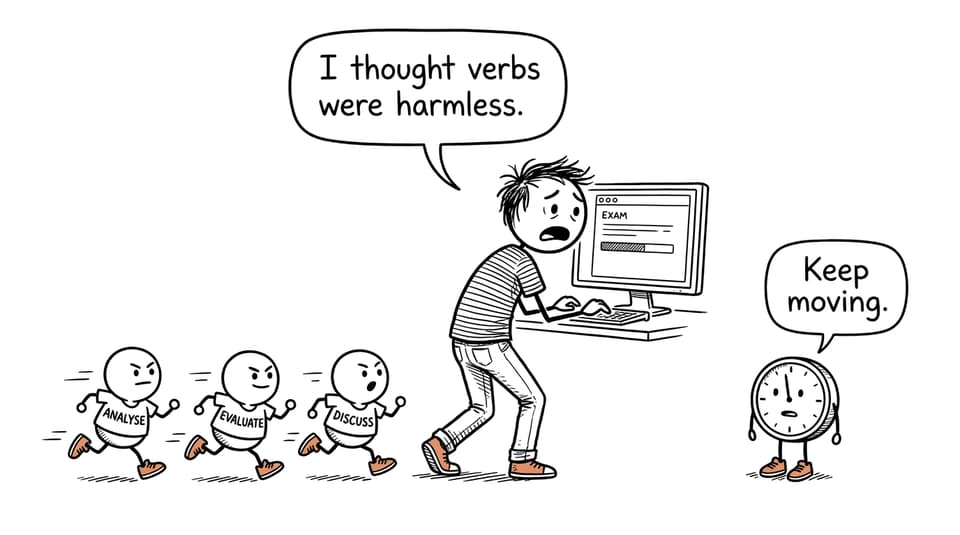
Command terms deserve deliberate attention. Analyse requires more than description; evaluate requires a reasoned judgment; discuss requires a considered examination of ideas or arguments. RevisionDojo's high-scoring MYP I&S essay structure can help students turn those demands into organized responses.
For students approaching an on-screen assessment, digital habits matter too. Practise reading sources on a screen, outlining before typing, monitoring time, and editing for clarity. The MYP eAssessment success guide provides practical advice for making the format familiar before exam day.
Where RevisionDojo has limits
RevisionDojo is not a substitute for your teacher's unit plan, task-specific clarification, or school-selected case studies. It also cannot guarantee that every topic in its library appears in your course or assessment.
AI feedback should be read critically. Compare it with the task instructions, criteria descriptors, teacher comments, and reliable evidence. For investigations, you still need to locate credible sources, record them accurately, and make your own judgments.
The platform works best as a structured practice environment, not an answer machine. Students who only read explanations may feel fluent without becoming assessment-ready. The decisive step is producing an answer, receiving feedback, and trying again.
The verdict
RevisionDojo is a strong resource for MYP Individuals and Societies because it connects content review with recall, application, feedback, and exam practice. Its coverage crosses major historical, geographical, social, economic, and environmental themes, while its skills resources address the four MYP criteria.
The best starting point is modest: open the MYP Individuals and Societies hub, choose one topic from your current school unit, and answer a question before reviewing the notes. That first attempt tells you what revision is actually needed.
RevisionDojo becomes the ultimate IB resource not when every tool is opened at once, but when the right tool follows the right problem: Study Notes for understanding, Flashcards for retrieval, the Questionbank for application, grading feedback for correction, Mock Exams for pressure, and Tutors for the obstacles that require a human eye.