
The night before a big test, most students don’t fear the content.
They fear the moment the screen loads and their brain goes oddly quiet. The question looks familiar, but not in the way they practiced. The clock feels louder than it should. And suddenly, the thing you thought you “knew” becomes the thing you can’t quite prove.
That moment is exactly what MYP eAssessments are built to create: not panic, but evidence. Evidence that you can apply ideas, handle unfamiliar contexts, and communicate clearly under time.
This guide shares practical, calm strategies to help you succeed in MYP eAssessments, including what to practice, how to pace yourself, and how to make the on-screen format feel normal long before exam day.
MYP eAssessments in 60 seconds
MYP eAssessments are optional external assessments at the end of MYP Year 5 that can contribute to the MYP Certificate. They’re designed to measure understanding and transfer, not just recall.
You’ll usually see two assessment types:
-
On-screen exams (often around two hours): digital exams for subject groups such as Language and Literature, Individuals and Societies, Sciences, and Mathematics.
-
ePortfolios: curated digital submissions for subjects such as Design, Arts, and Physical and Health Education.
Everything is assessed externally against criteria-based descriptors, so your job is to produce responses that clearly match what the criterion rewards.
If you’re building a consistent plan, the MYP posts hub can help you navigate by topic and subject: All MYP posts.
A quick checklist for MYP success
Before you go deep, run this short MYP checklist:
-
I know my exam components (on-screen exam vs ePortfolio) and what skills each one prioritizes.
-
I can explain the big concepts, not just define them.
-
I practice with command terms until they feel automatic.
-
I train timing with real constraints (not “when I feel ready”).
-
I’m comfortable typing, editing, and navigating tools quickly.
-
I review using criteria language, not just “right/wrong.”
That’s the whole game: build proof, not vibes.
Understand the format like it’s part of the content
In MYP eAssessments, format is not decoration. It changes how you think.
On-screen exams may ask you to interpret sources, manipulate data, drag and drop, write short structured responses, or build longer explanations. If you only revise content, the interface will still slow you down.
A simple strategy:
-
Do at least two full “screen-length” practices where you don’t pause, don’t look things up, and don’t restart.
-
After each attempt, write a tiny “friction list”: where did you lose time? scrolling? typing? reading the scenario? second-guessing?
If you want a realistic plan that builds these habits, use: MYP eAssessments: 30-Day Study Plan That Works.
Study concepts first, then train application
A quiet truth about MYP: memorization can feel productive because it’s clean. But the exams are messy on purpose.
Instead of revising unit-by-unit, revise concept-by-concept:
-
What is the concept (change, systems, relationships, global interactions, etc.)?
-
What does it look like in this subject?
-
What would it look like in a new context you haven’t seen?
This approach is especially powerful in Sciences where questions often ask you to interpret data or explain unfamiliar scenarios. A strong guide for this mindset: How to Revise for MYP Sciences Without Memorising Everything.
And if you’re in Language and Literature, application means practicing skills on unseen texts, not re-reading the same annotations. Try: MYP Language & Literature: Best Revision Strategies.
Command terms are the steering wheel
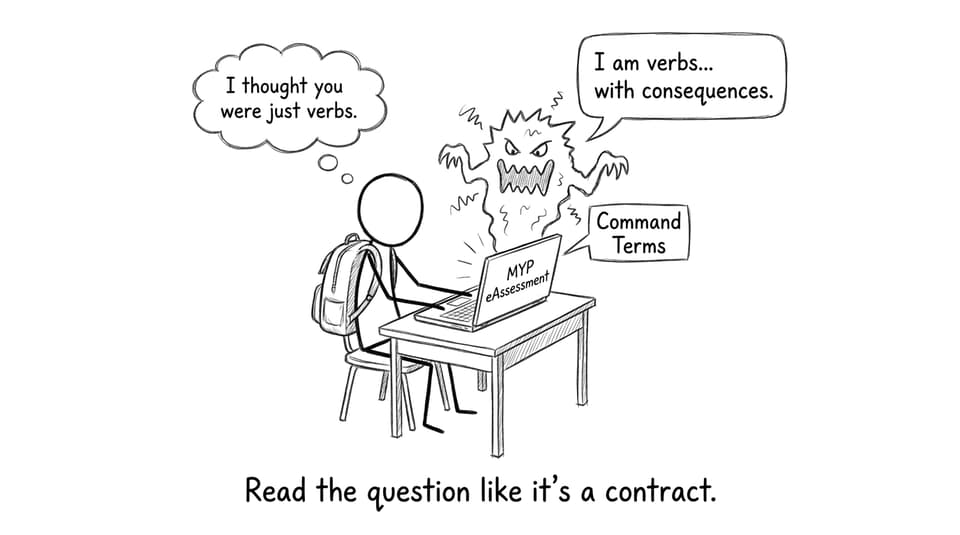
In MYP eAssessments, command terms are not hints. They’re instructions.
When a question says analyze, it’s asking for relationships and reasoning. When it says evaluate, it’s asking for judgment with evidence. When it says explain, it’s asking for “why/how,” not a list.
Try this micro-drill:
-
Take any practice question.
-
Rewrite the command term in your own words.
-
Write a one-sentence answer plan that matches it.
That tiny pause prevents the most common MYP mistake: writing something correct that doesn’t actually answer the question.
For more practice ideas across subject groups, explore: Sample MYP Assessment Tasks for Every Subject Group.
Time management: build a pace you trust
Time pressure feels personal, but it’s usually structural. If you haven’t trained with time, your brain treats the clock like a threat.
A better approach for MYP eAssessments:
-
Two-pass method: First pass answers what you can quickly and confidently. Second pass returns to heavier questions.
-
Time boxes: Decide a maximum time for each section and move on when it’s done.
-
End buffer: Save a few minutes to check that every response actually matches the command term.
The goal isn’t speed. It’s predictability.
Digital fluency is part of exam technique
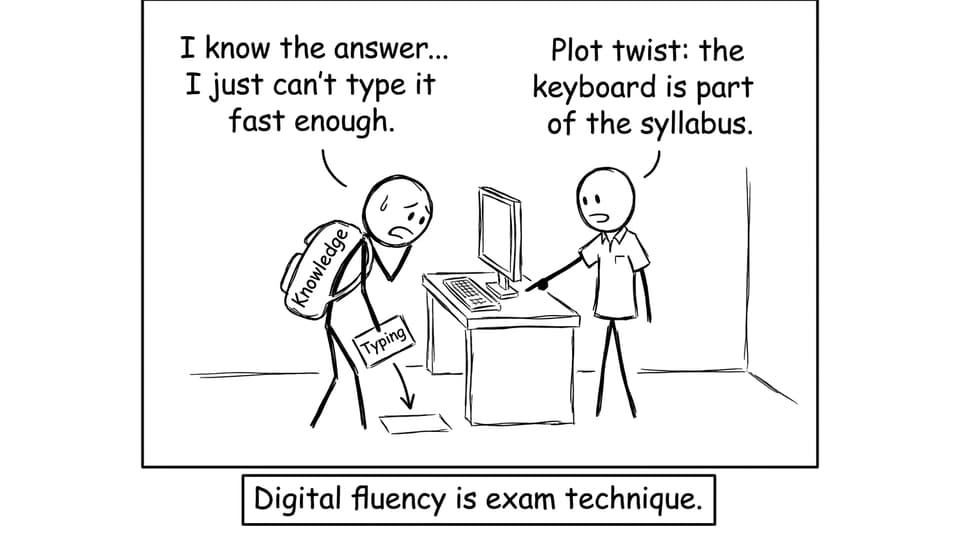
Because MYP eAssessments happen on screen, typing, editing, and navigating become part of your performance.
Train these deliberately:
-
Practice writing short structured paragraphs quickly.
-
Learn simple keyboard shortcuts for editing (cut, paste, undo, select).
-
Get used to reading sources on screen without “losing your place.”
It can feel unfair at first. Then it becomes an advantage, because you stop wasting mental energy on mechanics.
Use RevisionDojo to turn practice into progress
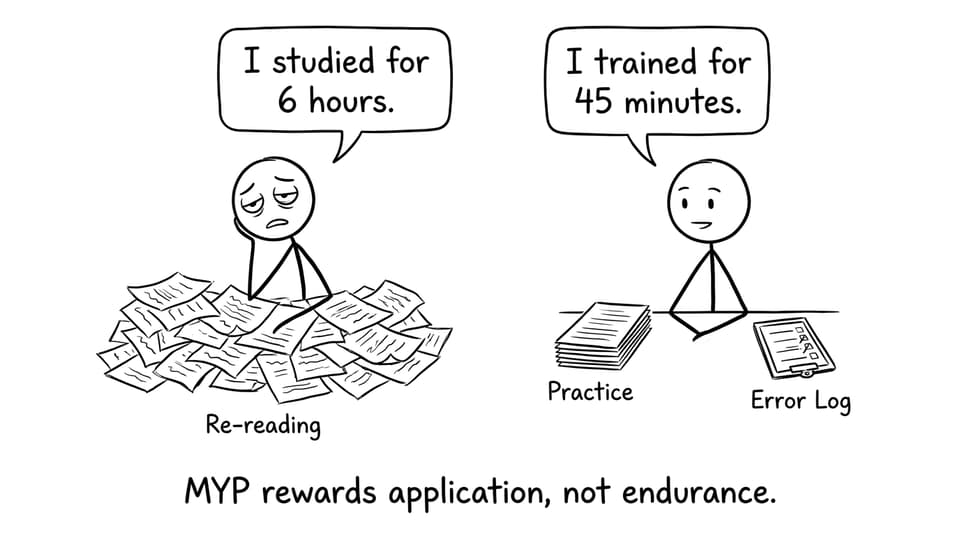
Most students don’t struggle because they avoid studying. They struggle because they can’t tell which practice creates marks in MYP.
RevisionDojo is designed to make that loop visible:
-
Use the Questionbank to drill exam-style questions and build familiarity with how MYP asks.
-
Use Flashcards for daily active recall (definitions, processes, command terms, key examples).
-
Use Study Notes to clarify confusing concepts quickly (so you don’t spend an hour stuck).
-
Use AI Chat when you need a fast explanation or a harder follow-up question that forces application.
-
Use Grading tools for rubric-aligned feedback, especially when your writing is “almost there” but not scoring as high as it should.
-
Use Mock Exams and Predicted Papers (where available) to rehearse pacing and pressure.
-
Use the Coursework Library to see what strong work looks like in ePortfolio-style tasks.
-
Use Tutors when you need a human to spot your pattern and reset your strategy.
If you want a broader picture of how those tools fit together, this overview helps: RevisionDojo App: The Smarter Way to Prep for IB Exams.
Stress management that doesn’t waste your time
The best MYP exam prep includes recovery. Not because it’s nice, but because it changes your output.
Three high-return habits:
-
Sleep as revision: Your brain consolidates skills after practice. Without sleep, you keep relearning the same lesson.
-
Short breaks: 5 minutes every 25-40 minutes keeps focus sharper than one long break.
-
A calm taper: The final days should be lighter, with review and timed mini-sets, not all-day marathons.
If you’re balancing many subjects, this is worth reading: Best Practices for Balancing Eight Subject Groups in IB MYP.
The calm version of MYP success
MYP eAssessments reward students who can do one simple thing under pressure: apply what they know in a new context, clearly and on purpose.
Build that ability the same way you build strength in anything else: a few focused sessions each week, regular timed practice, criteria-based review, and enough rest to make it stick.
If you want a single home base to run that system, RevisionDojo brings it together in one place: Questionbank, Study Notes, Flashcards, AI Chat, Grading tools, Predicted Papers, Mock Exams, Coursework Library, and Tutors. Start small today, and make exam day feel familiar on purpose.